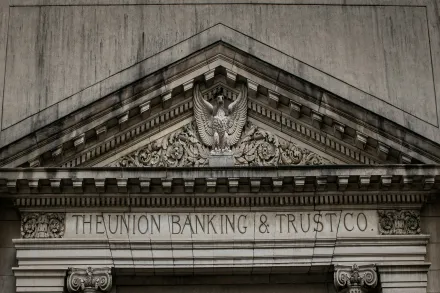
In the long arc of economic history, the concept of banking emerges not as a single invention but as a gradual layering of practices that transform how people store value, how they lend, and how communities coordinate risk. The journey begins with simple acts of safe storage and evolves into sophisticated systems that coordinate capital across continents. The earliest forms of money storage were intimate affairs rooted in trust and daily life, where individuals deposited valuables with trusted custodians and withdrew them when needed. Over centuries these arrangements hardened into more formal arrangements, with rules, tokens, and contracts that allowed strangers to engage in trade despite not knowing one another personally. The story of banking, then, is a story of how trust moves from the personal to the institutional, how the symbols of value become standardized, and how technology continually reshapes what a bank can be and do for society.
From the earliest days, the exchange of goods required a backing of confidence. People who held coins or bullion faced the risk of loss through theft, misplacement, or miscount. A practical solution emerged in the form of protected storage offered by trusted individuals and craftsmen who kept valuables and issued receipts. These receipts acted as promises to deliver a specified weight of metal and could be traded as a form of proxy money. In many towns, goldsmiths became renowned for the precision of their weights and the security of their vaults. It was not merely the storage of wealth that attracted clients; it was also the assurance that the metal would be available on demand. Yet the receipts themselves gradually gained value beyond the physical gold they represented: they became tokens that could be used in trade, accepted across marketplaces as a reliable substitute for coin when liquidity mattered more than the exact mass of metal in a vault.
As merchants moved farther afield and commerce grew in scale, the need for more flexible arrangements intensified. Receipts began to circulate not only as evidence of banked metal but also as instruments that could be transferred to another party through endorsement or simple transfer. A merchant who needed credit or who wished to settle a debt with someone far away could rely on the reputation of the issuing goldsmith to honor the obligation. In this way, banking began to resemble a social technology: it was as much about confidence in the issuer as it was about the physical reserve behind the note. The practice of lending money, while still grounded in the weight of metal, expanded as cashiers and clerks recognized that a portion of the vault could be lent to others without undermining the promise to redeem deposits on demand. Interest on such loans compensated for the risk and the opportunity cost of holding funds idle, and the system slowly grew to accommodate more borrowers and more savers alike.
With time, these early arrangements took on a more formal character. City centers witnessed the emergence of regulated markets in which money, bills of exchange, and promissory notes circulated with increasing frequency. The medieval landscape of banking was not a single, unified institution but a tapestry of merchant bankers, moneylenders, and money changers who served travelers, rulers, and merchants across borders. They provided not only storage and liquidity but also a rudimentary form of risk management. By offering to exchange different currencies, monetize exchange rates, and forward funds for future delivery, these practitioners began to create the rudiments of a modern financial system. While this world was far from universal in its reach—many communities operated entirely outside such networks—it established a crucial pattern: trust backed by collateral, the use of written records to formalize obligations, and the idea that money could be moved across distances through a network of agents and instruments rather than solely through physical transport of coins.
As the infrastructure of credit expanded, so did the demand for more resilient and scalable institutions. The growth of mercantile empires and the expansion of long-distance commerce created complexities that required more standardized processes. The practice of issuing receipts, maintaining ledgers, and reconciling balances became an organizational discipline rather than mere bookkeeping. In many places, guilds and municipalities began to regulate money changers, setting standards for weights, measures, and the credibility of the custodians who held customers’ valuables. The parameter of trust shifted gradually from personal reputations to formalized records and sanctioned authorities. In this sense, banking matured from a craft into a profession that depended on a blend of technical skill, legal recognition, and sustained public confidence. The stage was set for a broader transformation: the bank would increasingly become a mediator between savers who wished to preserve wealth and borrowers who sought to deploy capital for productive ends, knitting together disparate parts of the economy through the delicate balance of risk and reward.
The Early Modern Transformation: Bills, Deposits, and the Birth of Credit
The Renaissance and early modern periods accelerated changes in how money could be used and moved. Banking centers in places such as Florence, Venice, and later Amsterdam began to combine secure custody with sophisticated financial instruments. The deposit grew from a simple storage for valuables into a broader claim on wealth that could support ongoing trade. Receipts could be endorsed, transferred, or discounted, making it possible for merchants to finance voyages, shipments, and large buys without needing to physically transport every coin. The practical logic behind this evolution is straightforward: as economies scaled, instruments that could substitute for metal and reduce the friction of exchange became more valuable. Bills of exchange, letters of credit, and other negotiable instruments began to function as promises that a given amount would be available on demand in a different place and at a future date. This separation of ownership from the physical form of money opened the door to a cosmopolitan flow of capital that linked distant markets and allowed risks to be spread across networks of traders, insurers, and lenders.
In this era, banks also found themselves performing a crucial public function beyond private profit: they served as depositories for the wealth of merchants and governments alike. When rulers sought to finance wars, public works, or the administration of kingdoms, they often turned to moneylenders who could leverage deposits, issue notes, and extend credit to the treasury. The resulting interactions helped to align the interests of private bankers with the needs of the state, creating a shared incentive to maintain the stability of the monetary system. It was in these cross-border transactions that the idea of a monetary authority began to coalesce, not as a single institution, but as a constellation of practices and rules that would later be codified into more formal institutions. The modern notion of bank as a central steward of credit and liquidity has its origins in those early partnerships between private wealth and public necessity, a relationship that would become more complex as governments and financial markets grew in scale and sophistication.
From the perspective of the ordinary person, the early modern transformation offered new ways to secure prosperity. Savings could be pooled, and capital could be allocated to ventures with greater potential reach than any single individual could achieve. The perception of money shifted from being a finite stock of metal to a dynamic flow that could be controlled, mobilized, and reallocated. The tools of credit, risk management, and liquidity provided by banks enabled larger-scale commerce, funded explorers who crossed oceans, and supported urban growth as markets become more interconnected. Yet alongside these benefits, the era also confronted societies with the dangers of mismanagement, inflation, and the fragility of trust underpinning the system. Banks learned that their credibility depended on prudent risk controls, transparent accounting, and a credible promise of redeemability—principles that would be refined over centuries and would eventually lead to regulatory frameworks designed to protect the public and ensure financial stability.
The evolution during this period also included the emergence of banking families and merchant houses that embedded themselves in municipal life. These institutions built reputations for reliability, kept detailed records, and cultivated relationships with international partners. The accumulation of experience among these actors generated a repertoire of practices that would later be generalized into more formalized banking operations. The balance sheet began to tell a story not merely of coins and deposits but of credit lines, interest accrual, and the ability to translate financial promises into actual resources for commerce and industry. In this sense, early modern banking was not merely about money but about the architecture of economic trust that makes large-scale exchange possible across space and time. It was a bridge between the local and the global, between the household budget and the grand projects of empire, between the immediate need to pay a craftsman and the long-term investment in infrastructure that shaped cities and regions.
The Rise of Central Banking and the Stabilization of Monetary Systems
As economies continued to grow in complexity, the idea of a centralized authority to manage currency and credit gained traction. Early central banking efforts appeared in fits and starts, often as a response to financial crises, wars, or the need to provide liquidity when private banks faced runs. The emergence of national banks and state-backed monetary instruments gradually established a measure of stability that private banks alone could not guarantee. These institutions assumed responsibilities such as issuing banknotes in an accepted national unit, supervising the banking sector to prevent excessive risk, and coordinating with the government on fiscal policy. The central bank came to symbolize a public trust in money itself, offering lenders a lender of last resort and depositors a sense of security that the financial system would be able to withstand shocks. The evolution toward central banking did not occur overnight; it unfolded through episodes of reform, negotiation, and sometimes conflict between private interests and public policy. Each era refined the tools of monetary management, from reserve requirements to open market operations, in ways that sought to balance growth with resilience.
In many countries, the central bank's authority was shaped by delicate political compromises. Legislatures and citizens weighed the benefits of independent monetary policy against the demands of fiscal policy, trade balances, and the distribution of wealth. The historical tension between the desire for prosperity and the need for prudence created a dynamic environment in which rules and norms were continuously revised. Yet the central bank's enduring goal remained relatively stable: to ensure the reliability of money, to moderate the effects of business cycles, and to provide a framework within which banks could operate with confidence. The credibility of a monetary system depended on the transparent functioning of the central bank, its capacity to communicate policy, and its willingness to act decisively in times of stress. As the centuries progressed, the central bank would become a principal architect of the modern financial system, coordinating with commercial banks to maintain the flow of credit that powerfully underpins economic activity and social welfare.
Alongside the centralization of monetary authority, developments in payment systems gradually enabled broader participation in finance. Governments and banks designed and refined instruments that allowed individuals to settle obligations without the immediate exchange of coins. The establishment of standardized banknotes, the growth of agency networks to distribute these instruments, and the creation of clearing systems that reconciled transfers across institutions all contributed to a more efficient, accessible marketplace. The modern economy began to rely less on physical cash and more on digital representations of value and the networks that move and verify them. This transition did not erase the importance of trust and credit; instead it reconfigured them into new forms, including complex contractual arrangements, risk modeling, and regulatory oversight that could ensure that promises made in one place would be honored in another. In this sense, central banking did not stand apart from commercial banking but rather provided a durable scaffolding that supported a thriving, interconnected system of financial intermediaries.
The centralization movement also spurred financial innovations that would echo through centuries. During times of war or rapid growth, governments used longer-term debt instruments that funded development while exposing investors to a broad range of risks. The emergence of sovereign bonds, the diversification of credit markets, and the development of standardized regulatory frameworks all reflected a deeper understanding that money is not merely a private contract but a social instrument whose integrity depends on credible governance. The interplay between public policy and private enterprise created a fertile ground for innovations in risk sharing, capital allocation, and financial inclusion that would lay the groundwork for the diversification of the banking landscape in the modern era. The bank centuries thus traveled from a trusted custodian of valuables to a sophisticated, systemic pillar of national economies, capable of absorbing shocks, enabling investment, and shaping the contours of everyday life for people across the social spectrum.
Industrialization, Global Trade, and the Expansion of Credit
The industrial revolution accelerated the expansion of banking in multiple directions. Large-scale factories required substantial capital, and banks responded by offering specialized services to finance construction, machinery, and the supply chains that fed industrial growth. The ability to mobilize savings from a broad base of investors and channel them into infrastructure projects beyond the reach of a single merchant or town became a defining feature of modern finance. Bank lending moved beyond episodic credit for merchants to the provision of long-run capital for factories, railways, and urban development. The banking system’s role as a coordinator of risk was enriched by new tools such as credit agreements, collateral structures, and underwriting practices tailored to large-scale ventures. In this period, banks also became more deeply embedded in international commerce, handling foreign exchange, importing and exporting financing, and supporting national exports through trade credits and guarantees. The scale of operations grew, and with it the need for stronger governance and standardization across borders.
As cities burgeoned and commerce crossed oceans, the payments landscape transformed. The use of banknotes and sight deposits evolved toward more formal clearinghouses and payment networks that reduced settlement times and increased the security of transfers. The emergence of joint-stock banks allowed for broader ownership and greater capacity to absorb risk, while stock markets emerged as a separate but linked mechanism for mobilizing capital. These changes did not occur in uniform fashion; different regions advanced at varying speeds and under distinct regulatory regimes. Yet the common thread was clear: as economic activity intensified, the banking system needed to become more adaptable, more transparent, and more robust to sustain the momentum of growth. The diversification of financial products—mortgages, corporate bonds, syndicated loans, and specialized funding facilities—began to define the modern relationship between banks and the real economy, aligning the interests of savers, borrowers, workers, and policymakers in a more integrated financial ecosystem.
With the expansion of global trade came new risks and new opportunities. Banks pioneered instruments for hedging currency exposure, financing long voyages, and distributing the credit risk of risky ventures across a wider pool of investors. The global architecture of finance began to take shape as banks opened branches abroad, established correspondent networks, and learned to navigate differing regulatory landscapes. The exchange of ideas across continents encouraged innovations in risk management, inventory financing, and supply chain finance. The era also tested the limits of regulation, as speculative excess sometimes led to crises that exposed the fragility of credit systems. Each crisis taught lessons about reserve adequacy, supervisory capacity, and the need for a discipline of consistent rules. In the long run, these experiences helped to shape a banking system capable of supporting industrial ambition while preserving the stability that modern economies require for daily life to proceed without disruption.
Twentieth-Century Shifts: From Banknote Dominance to a Modern Financial System
The twentieth century brought profound changes to the nature of banking. Banknotes that had once symbolized immediate, tangible claims on wealth gradually became part of a broader ecosystem in which deposits, electronic transfers, and central bank operations dominated. The growth of mass-market banking enabled broader sections of society to participate in financial life. Insurance of deposits through public confidence, more formal consumer protections, and the advent of consumer credit opened pathways for households to purchase homes, education, and goods that required considerable investment over time. Banks evolved from primarily funding and intermediary roles into dynamic institutions offering a spectrum of services: savings accounts, current accounts, payment processing, investment advisory, and complex corporate financing. This diversification allowed families and firms to plan with greater assurance and to manage risk with more sophisticated instruments. The social value of banking expanded beyond financing business to include enabling personal financial security and broader economic resilience in the face of shocks and uncertainty.
Central banks during this era served as anchors for both monetary stability and policy coordination. The mechanisms of monetary control—open market operations, reserve requirements, and policy rate adjustments—became familiar tools in the hands of policymakers. The overarching aim was not merely to maintain price stability or employment goals but to create a climate in which households and businesses could make long-term plans with reasonable confidence about the future. The financial system also faced new vulnerabilities, including the risks that accompanied rapid credit expansion, asset bubbles, and debt crises. The responses to these challenges forged a better understanding of macroprudential policy, deposit guarantees, and crisis management. The modern banking environment thus emerged as a tapestry of public governance and private enterprise, where the stability of the currency and the reliability of payment systems were essential for everyday life and economic progress alike.
Innovations in technology accelerated the pace of change. The core functions of banking began to migrate from physical branches to digital channels, where customers could access accounts, transfer funds, and manage investments through screens and devices. ATMs emerged as a transformative convenience, but the deeper shift lay in the automation of back-office processes, the digitization of records, and the development of scalable information systems that could handle millions of transactions per day. Banks invested heavily in data centers, cybersecurity, and risk analytics to protect customer assets and to understand the behavior of markets and clients more precisely. The interplay between technology and finance gave rise to a new category of services and institutions—online banks, investment platforms, and fintech companies—that challenged traditional models while expanding access to financial products. The century ended with a sense that banking was no longer confined to a single building or a traditional set of practices but was a distributed, dynamic, and highly interconnected system that could respond rapidly to the evolving needs of a global society.
The Digital Revolution: From Online Banking to Platforms and Fintech
The late twentieth and early twenty-first centuries brought an accelerated wave of digital transformation that reshaped what it means to act as a bank. The move to online banking transformed everyday banking from a matter of visiting a branch to a matter of managing money through a screen and a secure connection. Customers could check balances, pay bills, apply for loans, and engage in complex financial planning without leaving home. The operational benefits were clear: reduced costs, faster processing, and improved accuracy as automation replaced repetitive manual tasks. For banks, the shift opened opportunities to redesign products around digital customer journeys, to use data more effectively, and to build more scalable and resilient infrastructures that could support increasingly demanding expectations. For customers, digital access began to dissolve geographic constraints, enabling new patterns of consumer financial behavior and greater financial literacy across diverse populations.
However, the digital age also introduced new risks and complexities. As payment ecosystems expanded to include mobile wallets, contactless payments, and instant transfers, the importance of cybersecurity and fraud prevention rose correspondingly. Banks faced the continuous challenge of safeguarding vast networks of accounts and data against increasingly sophisticated threats. At the same time, the regulatory landscape responded by elevating standards for privacy, consumer protection, and systemic risk oversight. The tension between convenience and security required banks to invest in robust authentication methods, secure architectures, and resilient disaster recovery capabilities. The result was a more sophisticated set of controls and governance practices that aimed to balance openness and innovation with reliability and trust. The digital transition did not merely automate existing processes; it redefined the architecture of banking, enabling new business models, such as peer-to-peer lending, crowdinvesting, and digital asset custody, while also preserving the essential features of money, credit, and trust that have governed finance for centuries.
In parallel with the rise of digital channels, financial technology companies emerged as powerful actors shaping the evolution of how money is issued, moved, and managed. These companies often specialized in particular niches—payment rails, consumer credit, lending platforms, or wealth management—and leveraged data analytics, cloud computing, and network effects to deliver services at scale. They pushed traditional banks to respond with partnerships, acquisitions, or rapid digital enhancements. This era underscored an important insight: the banking system thrives when it remains adaptable, interoperable, and user-centric. It also raised questions about the appropriate boundaries of regulation and the appropriate allocation of responsibilities among incumbent institutions, new entrants, and policymakers who aim to protect consumers and maintain financial stability. The result has been a more plural and innovative financial landscape, where the definition of a bank can encompass a spectrum of institutions that collectively support the flow of capital in the modern economy.
Beyond payments and consumer services, banks have continued to expand their value proposition through sophisticated investment products, advisory services, and sustainable finance. The integration of environmental, social, and governance considerations into lending and investment decision-making reflects a broader shift in how finance interacts with social objectives. Banks now coordinate with regulators, industry groups, and civil society to promote responsible growth and shared prosperity. The digital ecosystem has enabled more granular risk assessment, faster settlements, and greater transparency in pricing and terms, allowing customers to compare options more easily and to make informed choices about where to place their savings or obtain credit. That transparency, paired with the power of digital channels, has the potential to democratize access to financial services, enabling a wider portion of the population to participate in the economic life of their communities and nations. The path forward remains a balance among innovation, ethics, and accountability, a balancing act that will define the quality of banking for generations to come.
Looking Ahead: The Future of Banking and the Ongoing Transformation
As we look to the future, the trajectory of banking seems likely to continue weaving together the established strengths of traditional institutions with the pace and creativity of new technologies. The next frontier may involve even more seamless integration of financial services into everyday life, with intelligent assistants, ubiquitous data integration, and personalized financial planning that anticipates needs before they arise. The potential for banks to act as guardians of long-term financial resilience rests on advances in risk modeling, adaptive regulation, and the capacity to deploy capital in ways that promote stability, inclusion, and sustainable growth. The ongoing shift toward platform-based banking—where customers encounter a suite of linked services provided by a network of partners under a trusted umbrella—could redefine the meaning of a bank as a collaborative ecosystem rather than a single institution. In such a world, the lines between traditional banking services and broader financial and non-financial offerings may blur, with the bank becoming a central node in a complex web of digital services that support personal and institutional goals alike.
Yet the core essence of banking remains anchored in a simple, enduring principle: the allocation of scarce resources through trusted mechanisms that enable exchange, investment, and risk management. The history traced here—from the physical security of goldsmith vaults to the abstract architecture of digital ledgers and instant payments—reflects humanity's persistent desire to coordinate what we owe to one another. Each innovation, whether a receipt, a note, a check, a ledger, or an API, is a response to the same fundamental question: how can we move value efficiently and securely among strangers who share a common need for cooperation? The answer has always required more than clever technology. It demands a commitment to stability, to fair access, and to the protection of those who rely on the system for their daily livelihoods. The history of banking, in its many forms, is a testament to collective ingenuity and the ongoing effort to align ambition with the discipline necessary to sustain trust over time.
As we continue to write the next chapters of this story, it is essential to remember that banking is not merely about money in accounts. It is about the social contracts that enable people to save for the future, to fund education and entrepreneurship, to weather unforeseen emergencies, and to participate in the transformation of their communities. The evolution from goldsmiths to digital banks is not a tale of machines replacing humans, but a narrative of how human collaboration, imagination, and responsibility have built a system capable of supporting vast economies while adapting to new challenges. In this sense, the history of banking is a continuous dialogue between tradition and innovation, between the prudence that guards value and the creativity that expands opportunity. The future, while unpredictable in detail, is likely to be shaped by how well institutions harmonize technical capability with ethical stewardship, how they embrace openness without sacrificing security, and how they ensure that progress serves broad-based prosperity rather than narrow interests. That is the enduring task of banking: to turn trust into system, risk into opportunity, and potential into progress for people across all walks of life.