Net asset value, commonly abbreviated as NAV, is a central concept in modern investment management. It functions as a per share measurement that represents the value of a fund’s underlying assets after deducting liabilities. For investors, NAV serves as a reference point that helps gauge how much each share of a fund is worth at a given moment in time. Although the term is widely used in relation to mutual funds and exchange-traded funds, the underlying idea is broader: it is a formal statement of the total net assets owned by an investment veh...
Investing

Government bonds are debt securities issued by a government to borrow money for public needs. They are generally considered among the safest forms of investment, backed by the government's ability to tax and to print currency in many jurisdictions, though safety is not absolute and depends on the issuer, the currency, and the economic stability of the country. Investors typically seek government bonds for predictable income, capital preservation, and portfolio diversification, especially in uncertain markets where riskier assets may retreat. Un...

Corporate bonds represent a class of debt issued by companies to raise capital for growth, operations, acquisitions, or refinancing existing obligations. When you purchase a corporate bond, you are effectively lending money to a corporation in exchange for a promise of regular interest payments and the return of principal at a predetermined maturity date. Unlike government securities, corporate bonds carry credit risk tied to the issuer’s ability to service debt and meet obligations, which means the yields on these instruments generally reflect...

Farmland has long stood as a quiet pillar of tangible value in diversified investment portfolios. It combines the physical reality of land with long term cash flows from leases, potential appreciation in land value, and the possibility of revenue diversification through multiple crops, yields, and agricultural cycles. The appeal is not merely the hope of a rising price tag attached to a plot of arable ground, but a blend of steady income from rent, potential upside from improved soil health and productivity, and the ability to participate in a ...

In the world of investing, portfolio drift is a term that captures a subtle but persistent phenomenon: over time, the actual composition of a portfolio diverges from the intended or benchmark exposure. This drift can occur for many reasons and can influence risk, return, and alignment with an investor's objectives. Understanding drift requires moving beyond surface-level performance numbers to examine how the weights of assets, sectors, and factors shift as markets move, as cash flows occur, and as decisions about rebalancing are executed. The ...

Hedge funds are a distinctive breed of investment vehicles that operate within the financial system with a purpose that extends beyond simply seeking market returns. They are designed to pursue positive performance in a variety of market environments, often by combining sophisticated investment ideas with flexible trading strategies. The defining feature of a hedge fund is not a fixed mandate or a single style, but rather a framework that seeks to manage risk while pursuing alpha, the excess return that beats a benchmark or a baseline expectati...
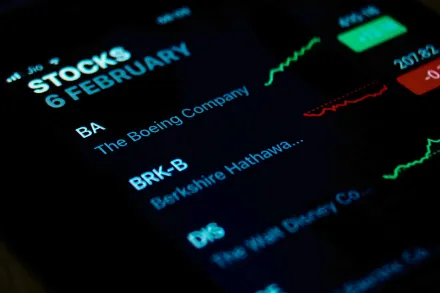
Commodities are the raw materials and basic goods that drive broad sections of the economy, from energy and metals to agricultural products and livestock. They are tangible resources that can be consumed, transformed, and traded, and their movements are often shaped by patterns of supply and demand that echo through many sectors of business and daily life. Investors are drawn to commodities for a number of reasons that include diversification benefits, a potential hedge against inflation, and the chance to participate in cycles of global growth...

Exchange traded funds have become a central instrument for people seeking a simple, scalable, and cost effective path to long term wealth building. The premise of passive investing rests on the idea that broad market returns over extended periods are more reliably captured than by attempting to pick individual winners or time market cycles. In this context an ETF acts as a vehicle that provides access to a diversified basket of assets, tracks an index, and trades on an exchange much like a stock. The practical effect is that an investor can gai...

Every investor confronts a silent but powerful force that can shape outcomes over the long haul, and that force is not market speed or luck alone but the cumulative effect of fees. Fees act like a constant drain that diminishes the compound growth of wealth even when asset prices rise steadily. The intuitive idea is straightforward: if you pay more for the same potential upside, your net return after costs will be lower. Yet the reality is often more nuanced, because different fee types interact with tax considerations, trading costs, and the b...

Investing in silver and other precious metals has long been a topic that intrigues individuals seeking to diversify portfolios, preserve wealth, and participate in markets that are less directly tied to the day to day machinations of stocks or bonds. The appeal of metals lies not only in their historical role as stores of value but also in the practical and psychological factors that shape investor behavior. Some see metals as a hedge against inflation and currency devaluation, others as a form of wealth that can be carried, traded, and stored ...