The realm of derivatives sits at the intersection of mathematics, finance, and real world outcomes. A derivative is a contract whose value derives from the performance or value of an underlying asset or reference variable. The underlying asset can be a stock, a bond, a commodity, a currency, an index, an interest rate, or even something less tangible like weather patterns or credit quality. What makes derivatives powerful is not the instrument itself but the way it converts one form of risk or expectation into a more manageable or more transfer...
Investing


Put options are a type of financial contract that grants the holder the right, but not the obligation, to sell a specific quantity of an underlying asset at a predetermined price, known as the strike price, within a defined period of time. This basic mechanism sits at the intersection of risk management, market speculation, and strategic portfolio design. In practice, investors use put options for a variety of reasons that reflect different outlooks on price direction, time horizons, and risk tolerance. The essential feature that distinguishes ...

Wealth building over three decades begins with a clear frame. A long horizon demands patience, discipline, and a philosophy that small, consistent actions compound into meaningful change. The purpose of this plan is not to chase dramatic gains overnight but to create a steady, resilient path that withstands adversity and embraces opportunity across market cycles. By grounding your approach in values, risk awareness, and practical habits, you turn a vague dream into a structured journey that you can follow year after year.

Growth investing denotes a discipline within finance that seeks to identify companies capable of delivering above average expansion in sales, earnings, and cash flows over time. Investors who embrace growth strategies look beyond the present profitability and short term cycles to focus on the potential that a business has to multiply its size and influence. This approach rests on the belief that the power of scaling, when harnessed effectively, can produce wealth that compounds over many years. In practice, growth investors tend to look for sig...

In the landscape of personal finance, the tax posture of an investment plan can be as decisive as the choice of assets themselves. Investors often focus on asset allocation, risk tolerance, and expected returns, while taxes quietly erode a significant portion of gains and income over time. A thoughtful approach to tax efficiency does not seek to dodge taxes but to align investment decisions with the tax code in a way that preserves more of the wealth generated. This requires both structural choices and ongoing discipline, because tax outcomes a...
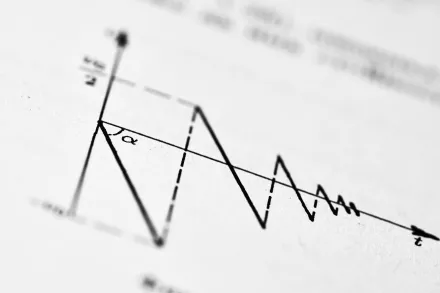
Volatility is a fundamental property of financial markets that captures the speed and magnitude of price changes. In practical terms it measures how wildly asset prices swing over a given period, and it is both a diagnostic and a predictor of risk. For traders, investors, policymakers, and researchers, volatility is a window into uncertainty and a signal that markets are rebalancing, reacting, or anticipating events. The concept of volatility emerges from the mathematics of random processes, but its implications are deeply human as well as nume...

In times of market stress and geopolitical uncertainty, many investors look for places where capital can be shielded from sudden losses and abrupt shifts in sentiment. Safe-haven assets are those instruments that historically exhibit resilience when risk appetite deteriorates, and that often attract demand precisely because they behave differently from more cyclical or speculative assets. The appeal of safe havens lies not in spectacular growth but in reliability, predictability, and the ability to preserve purchasing power during turbulence. T...

Cash in investment thinking is more than a simple holding of money; it represents a deliberate stance toward risk, timing, and the ability to act when market conditions become favorable or unfavorable. The essence of cash is liquidity, but its role extends beyond readiness to move; it is a shield against impulsive decisions and a lever that can amplify long-term portfolio resilience. When embedded within a broader strategy, cash functions as a dynamic asset that interacts with other holdings, influencing risk-adjusted returns, withdrawal planni...

Tax efficiency matters because taxes are a cost that reduces net returns over time. The idea is to minimize the drag of taxes through careful choices about accounts, investments, and timing. A tax-advantaged portfolio is not about avoiding taxes entirely, but about aligning every asset decision with tax outcomes in a way that preserves more of your investment growth for the long term.
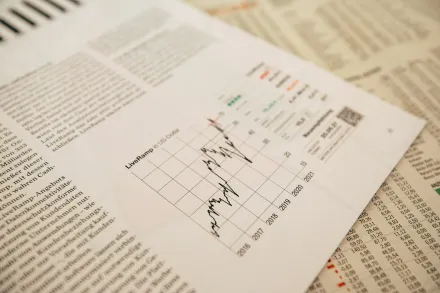
Investors often approach portfolios as a collection of heterogeneous assets with the aim of achieving growth, income, and durability through time. Yet markets move at different speeds and in different directions, creating a natural drift from the initial plan. Portfolio rebalancing is the deliberate process of returning a portfolio to its target allocation after those moves push the mix away from the designed risk and return profile. Rebalancing rests on a simple premise: by periodically restoring the original balance between asset classes, an ...