In the world of investing, diversification is often presented as an unequivocal good. It is celebrated as a shield against idiosyncratic risk, a method to smooth returns, and a way to protect capital in uncertain times. Yet the practical reality is more nuanced. Diversification has a sweet spot, beyond which additional assets contribute increasingly less to risk reduction and may even dilute the quality of a portfolio. The art and science of avoiding over-diversification lie in assembling a coherent set of exposures that capture the meaningful ...
Investing


An initial public offering, commonly called an IPO, is a process by which a privately held company offers its shares to the public for the first time and becomes a listed company on a stock exchange. This transition from private to public ownership involves a complex set of steps that blend regulatory compliance, investor communication, and market dynamics. For many companies, the move to public status is motivated by a desire to raise capital for growth, to provide liquidity for founders and early investors, and to increase the company’s visib...

Across the decades and across continents, investors who achieved enduring success tended to share a stubborn devotion to clarity, discipline, and a willingness to learn from mistakes. They did not rely on luck or charisma alone; instead they cultivated inner raincoats against impulsive moves when markets turned noisy and uncertain. The stories of Warren Buffett, Benjamin Graham, Peter Lynch, George Soros, Ray Dalio, and many others reveal patterns that persist beyond the specifics of any era. In studying these patterns, a reader can discover a ...

In recent years a quieter transformation has been occurring in the housing market, one that blends affordability with mobility, sustainability with creativity, and finance with lifestyle choices. Tiny homes, once a niche movement among enthusiasts, have evolved into a serious investment category that appeals to a wide range of buyers, developers, and portfolio managers. This article delves into what it means to invest in tiny homes, why the concept has gained traction, and how a careful, disciplined approach can translate into meaningful return...

In real estate investing, the central aim is to understand how capital deployed into a property translates into measurable value over time. ROI, or return on investment, is a broad compass rather than a single fixed number, because the profitability of a property unfolds through multiple channels. It encompasses cash flow generated after ownership costs, the pace and magnitude of appreciation, tax advantages, and the leverage created by financing. A thoughtful ROI framework recognizes that investors often care about both the immediate, recurrin...
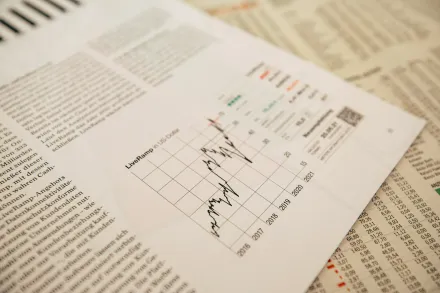
Correlation is a fundamental concept in finance that helps describe how different assets move relative to one another. Put simply, it is a statistical measure of the degree to which two returns move in tandem. When two assets display a high positive correlation, their prices tend to rise and fall in the same direction over comparable time horizons. A high negative correlation implies that one asset tends to move in the opposite direction of the other. A correlation near zero suggests little or no linear relationship in their movements. While th...

Diversification stands as a foundational principle in risk management that transcends specific markets and disciplines. It rests on the simple intuition that spreading exposure reduces the impact of any single adverse event, much like not putting all of one’s eggs in a single basket. In financial markets, this idea translates into mixing different asset classes, geographies, and investment styles so that the poor performance of one element does not overwhelm the overall portfolio. Yet diversification is not a magical shield that eliminates risk...

Digital assets emerge from the intersection of cryptography, decentralized networks, and digital economies that exist beyond the traditional financial infrastructure. They include a broad spectrum of tokens and rights that use public ledgers to record ownership, transfer value, or grant access to services. Investors encounter digital assets as portable forms of value that can be transferred across borders with relative speed and often without intermediaries, a feature that challenges conventional settlement and custody processes. This paradigm ...
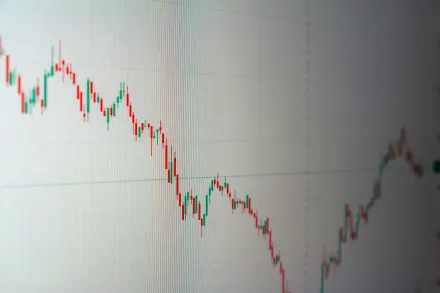
Leveraged exchange traded funds are engineered instruments that attempt to deliver a multiple of the daily returns of an underlying index or benchmark. They achieve this through a combination of financial engineering, portfolio construction, and daily rebalancing processes. The allure for some investors lies in the prospect of amplifying gains during favorable market conditions and achieving rapid exposure to momentum moves. Yet the same mechanisms that enable potential outsized gains on up days also introduce a complex web of risks that can er...

Investment checklists are structured guides that help investors maintain discipline, reduce cognitive biases, and align decisions with long term goals. They act as a compass in markets that are noisy and unpredictable, allowing a person to focus attention on the factors that truly drive outcomes rather than on fleeting impulses or sensational headlines. A well crafted checklist is not a rigid rulebook but a dynamic framework that can be adapted to different asset classes, time horizons, and levels of risk tolerance. In practice, such checklists...