Actuaries occupy a unique position at the intersection of mathematics, finance, and risk management within the insurance industry. Their work touches almost every facet of how insurance products are designed, priced, reserved, and governed. From the earliest moments of setting a premium to the ongoing evaluation of company capital in adverse scenarios, actuaries bring a disciplined, evidence based approach to uncertainty. The aim is not merely to predict the future but to quantify the uncertainties that shape profitability, solvency, and the su...
Navigating the world of finance can be challenging — that’s why our platform is dedicated to delivering high-quality, easy-to-understand financial content you can rely on. We publish expert-crafted articles, guides, and analyses covering everything from personal finance and investing to global markets, fintech innovations, taxation, and long-term wealth strategies.
Our mission is simple: to help readers make smarter financial decisions. Whether you're a beginner looking to build a strong foundation or an experienced investor seeking deeper insights, our site provides accurate, well-researched information designed to empower you.
We focus on clarity, transparency, and real-world value. Every article is written with attention to detail, supported by verified data, and tailored to keep you informed in a rapidly changing financial landscape.


In most tax systems around the world, political contributions are treated differently from charitable gifts or business expenses. The central reality is that money donated to political campaigns or to political committees is generally not deductible against income taxes. This basic rule is intended to separate civic participation from tax policy, ensuring that individuals are not rewarded with tax breaks for political stances or for supporting candidates. The article that follows explores how political contributions are categorized, what the ty...

The way you think about money shapes every choice you make long before you sit down with a budget or open a bank app. A strong money habit begins not with a pile of numbers but with a quiet shift in identity, a decision to see yourself as someone who respects resources, plans for the future, and acts with intention rather than impulse. When you begin to tell yourself that financial discipline is part of your character rather than a temporary restriction, you create a stable platform on which all practical techniques canstand. This mindset invit...

The moment you decide to examine your finances on a regular cadence, you begin a transformation that extends beyond numbers and into daily life. A monthly money check-in routine is not about panic over balances or guilt over past choices, but about clarity, curiosity, and momentum. It is a dedicated space in time where you pause, breathe, and observe your financial landscape with honest eyes and a steady hand. This article will guide you through building a sustainable ritual that fits into real life, respects your time, and yields practical ins...

Net asset value, commonly abbreviated as NAV, is a central concept in modern investment management. It functions as a per share measurement that represents the value of a fund’s underlying assets after deducting liabilities. For investors, NAV serves as a reference point that helps gauge how much each share of a fund is worth at a given moment in time. Although the term is widely used in relation to mutual funds and exchange-traded funds, the underlying idea is broader: it is a formal statement of the total net assets owned by an investment veh...

In times when loan payments loom overhead, the first step is to take a clear, honest inventory of income, expenses, debts, and available assets. A thorough snapshot helps distinguish which debts are urgent and which costs are optional or reducible. Start by listing all regular sources of money, such as wages, benefits, child support, and any passive income, and then map out fixed obligations like rent or mortgage, utilities, insurance, transportation, groceries, and minimum debt payments. A disciplined appraisal will reveal gaps between cash in...
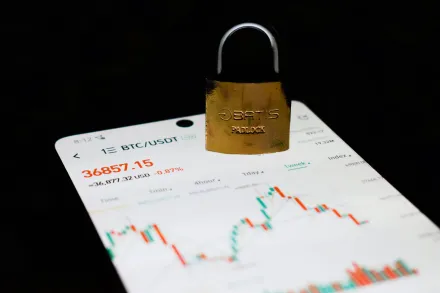
In the financial technology ecosystem, the arrival of powerful quantum computers promises a transformation that extends beyond speed to the very foundations of how data is protected. The core concern is not merely faster calculations but the potential to break widely used public key cryptosystems that have secured digital identities, transactions, and sensitive records for decades. When a sufficiently capable quantum computer emerges, algorithms such as those based on integer factorization and discrete logarithms could render current key exchan...
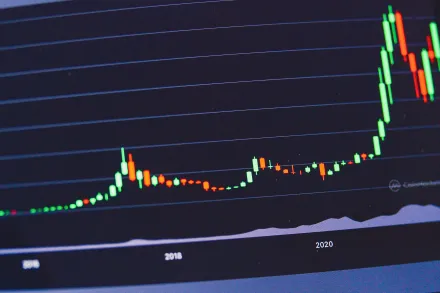
Futures trading is a system built on standardized contracts that obligate the purchase or sale of a specific asset at a predetermined price on a defined future date. It exists at the intersection of risk management, price discovery, and speculative activity, and it operates within a framework that emphasizes clarity, discipline, and accountability. The essence of futures markets lies in translating expectations about future prices into a formal agreement today, thereby transferring and sharing risk among diverse market participants. By design, ...

In recent years, the insurance industry has witnessed a shift from traditional premium models toward data driven approaches that reflect how people actually use and protect their homes. Usage based insurance for homes, or UBI for homeowners, leverages data collected from devices, sensors, and approved service providers to adjust premiums and coverage in ways that reward prudent behavior and accurate risk assessment. This approach sits at the intersection of connected technology, risk management, and consumer transparency, offering a pathway to ...

Artificial intelligence has moved from a theoretical concept to a practical engine that shapes how organizations summarize financial dynamics, communicate performance, and make decisions. AI-generated financial reports are not merely fancy dashboards; they combine data pipelines, linguistic generation, and governance controls to produce documents that read with clarity, precision, and accountability. In this exploration, we will unfold what these reports look like, how they are constructed, the benefits they deliver, and the responsibilities th...