Auto insurance is a contract between you and an insurance company that helps protect you from financial losses related to driving a vehicle. At its core the idea is simple: you pay a premium each period, and in exchange the insurer agrees to cover certain costs if something goes wrong. The coverage you choose shapes how broad or narrow that protection is, and the premium you pay reflects the risk the insurer takes on by insuring you and your car. For a beginner, the essential purpose of auto insurance is to transfer risk from a single driver or...


Money is a language that speaks in many steps and symbols, and teaching budgeting begins long before a child handles a debit card. The core idea is to connect values to choices, linking the idea of scarce resources to the power of planning. When a child understands that money represents time, effort, and patience, they start to see budgeting not as a constraint but as a tool for achieving goals. This foundation helps children grow from passive spenders into active planners who think about tradeoffs, priorities, and the consequences of short ter...

An insurance adjuster is a professional who plays a central role in the claims process, guiding a policyholder through the complex terrain of loss, liability, and compensation. The job blends investigative work, financial calculation, policy interpretation, and interpersonal communication. At its core, an adjuster seeks to determine what losses are covered by a policy, the extent of those losses, and an appropriate amount of compensation that aligns with contract language, applicable law, and fair handling standards. The position sits within th...

In a world saturated with budgeting apps and sophisticated software, the skill of understanding how money moves through your life without relying on external tools can be both empowering and grounding. This article explores a disciplined, reflective approach to analyzing spending using only your attention, a notebook, and honest observation. Rather than chasing precision, the aim is to cultivate awareness that informs smarter decisions and removes the mystery from everyday purchases. By learning to read the stories your money tells, you can rev...
Coordination of benefits is a term that often surfaces in conversations about health insurance, but its meaning can be elusive for many people. At its core, coordination of benefits is the system hospitals, clinics, insurers, and pharmacies use to decide which plan pays first, how much each plan contributes, and how to prevent duplication of payments when an individual has multiple credible sources of coverage. The purpose of this mechanism is not merely administrative; it is designed to protect patients from paying twice for the same service a...
The end of a life marks the beginning of a process that intertwines family, law, banking policies, and the administration of an estate. Bank accounts are not simply repositories of funds; they are contracts and instruments shaped by the choices of the account holder and the laws that govern property, probate, and succession. When a person dies, financial institutions respond according to a mix of options that may include ordinary transfers, survivorship arrangements, and arrangements designed to keep assets out of the probate system. In many ca...

Impermanent loss is a phenomenon that affects anyone who provides liquidity to automated market makers, and understanding it deeply is the first step toward effective mitigation. In simple terms, impermanent loss occurs when the relative prices of the two assets in a liquidity pool diverge from the moment you deposit liquidity. In a typical constant product AMM, such as a pool that follows the equation x times y equals a constant, trades continuously rebalance the ratio of the two tokens to reflect external market prices. As price movement occu...
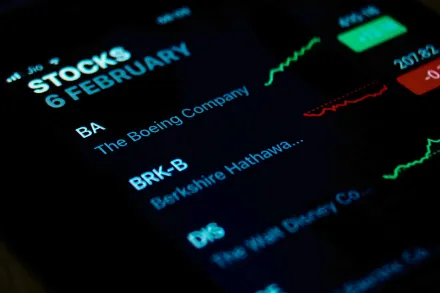
Commodities are the raw materials and basic goods that drive broad sections of the economy, from energy and metals to agricultural products and livestock. They are tangible resources that can be consumed, transformed, and traded, and their movements are often shaped by patterns of supply and demand that echo through many sectors of business and daily life. Investors are drawn to commodities for a number of reasons that include diversification benefits, a potential hedge against inflation, and the chance to participate in cycles of global growth...
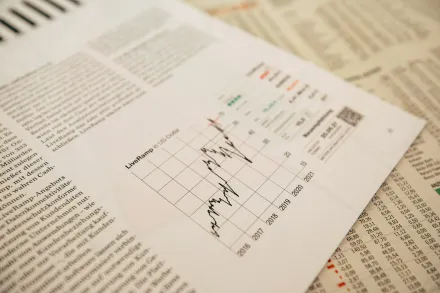
Paper trading refers to the practice of simulating buy and sell trades using virtual money rather than real capital. It is a controlled environment where a trader can test ideas, refine strategies, and learn the mechanics of the market without risking actual funds. The key feature of paper trading is the absence of financial consequence for mistakes, which creates a space for experimentation that would be unacceptable in live trading. Yet the experience is not merely a game; it is a serious educational tool designed to build discipline, improve...

A burn address is a special kind of cryptocurrency address that is deliberately chosen because its private key is unknown, unobtainable, or irrecoverable. The core idea behind a burn address is to create a destination for funds that cannot be spent again, effectively removing those funds from circulation. In practice, a burn address serves as a permanent sink where users can send tokens or coins with the expectation that they will never be retrieved or utilized for any future transaction. The concept relies on the cryptographic property that co...