Inflation has a way of eroding the purchasing power of money over time, quietly eating into the real value of savings and investment returns. For investors who want to shield a portion of their portfolios from the corrosive effects of rising prices, inflation-protected securities offer a distinct approach. These instruments are designed to adjust their value in response to changes in price levels, aiming to preserve the real wealth of the investor rather than simply delivering nominal returns that can be outpaced by inflation. Inflation-protect...
Investing


Investing begins long before you place a single trade or buy a fund, because the foundation of any successful approach is a clear understanding of your own financial landscape. A thoughtful assessment starts with a candid look at how much money you can allocate without compromising essential needs, how patient you are willing to be, and how much discomfort you can endure when portfolios experience volatility. This inner map includes your time horizon, your future obligations, and your layered priorities, because risk is not merely a statistical...

Stock dividends represent a corporate action in which a company distributes additional shares to its shareholders instead of paying a cash dividend. This mechanism rebalances ownership without transferring wealth out of the firm immediately, and it often arises from a deliberate choice by management to conserve cash for operations, investments, or debt reduction while still recognizing shareholder value. In practice, stock dividends can take various forms, from modest percentages that add a few percent to a shareholder's stake to sizable splits...

The dividend payout ratio is a fundamental concept in financial analysis that helps investors understand how a company allocates its profits between paying shareholders and reinvesting in the business. At its core the payout ratio expresses in percentage terms how much of a companys earnings or cash flow is distributed to investors as dividends. By translating profits into a tangible stream of income the ratio provides a simple frame of reference for evaluating the sustainability and policy of a dividend program. In practice the payout ratio se...

Covered calls represent a nuanced strategy used by investors who seek to combine the ownership of an asset with the strategic sale of options against that asset. At its core the approach involves holding a long position in a security, typically shares of stock, while simultaneously writing call options that give someone else the right to purchase those shares at a predetermined price within a defined time frame. The simplicity of this arrangement masks a tapestry of considerations that touch on income generation, risk management, capital protec...

In the world of investing, diversification stands as a central principle that helps investors navigate uncertainty by spreading risk across different assets, markets, and instruments. Exchange traded funds, or ETFs, present a practical vehicle for achieving diversification because they bundle a broad set of securities into a single tradable instrument. Unlike a single stock or a handful of bonds, an ETF can replicate the performance of an entire market, a region, or a specific sector with a single purchase. This structural advantage means that ...
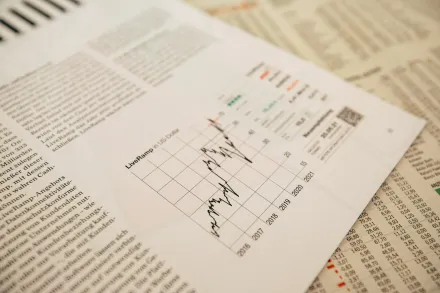
Earnings reports are quarterly documents that reveal a company's operational and financial performance during a defined period. They are compiled from the company's accounting records and audited where possible, and they are released in a formal manner through investor relations channels, regulatory filings, and press briefings. The primary purpose of these reports is to provide shareholders and potential investors with a transparent view of how the business performed, what went right, and what did not, within the framework of generally accepte...

In the financial landscape, a defensive portfolio stands as a deliberate shelter designed to withstand volatility while preserving capital and delivering a reasonable level of return over time. The aim is not to chase spectacular gains in buoyant markets but rather to reduce drawdowns when sentiment turns south, to maintain liquidity for opportunities when markets are distressed, and to provide a steady backbone for an investor’s long term plan. Achieving this balance requires clarity about risk tolerance, a disciplined approach to asset select...

Inflation acts as a pervasive force that touches nearly every corner of financial markets, shaping how investors think about risk, return, and capital allocation. It alters the real value of future cash flows, changes the relative attractiveness of different asset classes, and influences the behavior of institutions, households, and governments. In practical terms, inflation creates a moving target for expected returns, requiring discipline, discipline, and a robust framework for decision making that can adapt as price levels shift over time. W...

Venture capital is a distinctive form of financing that enables high growth startups to scale their ideas into enduring companies. It sits at the intersection of entrepreneurship, finance, and strategic value creation, bridging the gap between early enthusiasm and scalable operations. In many economies venture capital has become a central mechanism by which ambitious founders access the capital, networks, and expertise necessary to move from prototype to product-market fit and beyond. The dynamic is built on trust, risk sharing, and a long hori...