In the complex ecosystem of modern finance, the counterfeit check poses a persistent threat to individuals and institutions alike. Banks invest heavily in layered defenses that combine physical inspection, electronic screening, and behavioral analytics to distinguish legitimate instruments from fraudulent imitations. The challenge is not merely about spotting a single telltale sign, but about synthesizing many signals gathered from paper characteristics, automated systems, historical patterns, and the depositor’s typical behavior. The result is a dynamic defense that adapts to new fraud schemes while remaining efficient enough to handle millions of daily transactions with consistent accuracy, speed, and fairness for customers who rely on checks for everyday payments and payroll.
Physical examination as the first line of defense
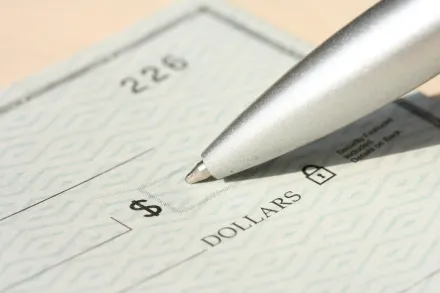
At the point of inspection, whether a check is deposited at a branch or via an image-enabled mobile app, professionals and automated tools scrutinize the physical attributes of the instrument. The intelligent deposit workflow begins with capturing the visible details, including the issuer’s name, the date, the amount written in words and numbers, and the payee line. Clerks and machine vision systems look for inconsistencies such as misspelled names, unusual spacing, or misaligned ink that may signal tampering. The paper quality can also reveal attempts to imitate legitimate stock; a suspicious roughness, an unusual brightness, or a texture that feels nonstandard can prompt a closer look. In counterfeit scenarios, the counterfeiters may rely on inferior paper or outdated printing techniques that show through under certain lighting conditions or when scanned at high resolution, giving trained eyes and machines ample cues to reject the item.
Beyond texture, a critical element is the microstructure embedded in the check. Genuine checks often display microprinted lines along the borders or in the background patterns that are difficult to reproduce convincingly. Any blurring, smudging, or irregularities in these microprinted areas becomes a red flag for fraud screening systems and human reviewers. Another visible signal is the presence and arrangement of security features that some issuers embed deliberately, such as color-shifting inks, dual-layer backgrounds, or holographic elements that change appearance as the item is tilted. When these features fail to align with the issuer’s standard template or appear inconsistently across the document, the likelihood of deception increases and triggers deeper verification steps.
In addition to the surface details, the bank often checks the alignment of the MICR line itself. The MICR (Magnetic Ink Character Recognition) line, located at the bottom of most checks, carries essential data including the routing number, account number, and check number. The physical ink used for MICR is designed to be read reliably by specialized readers; any deviation in the ink’s color, height, or spacing can impede automatic processing and raise concerns about authenticity. The alignment of the MICR line with the rest of the check’s layout can also reveal suspicious alterations, especially if the routing or account digits do not correspond to the issuing bank or to the account that is supposed to be associated with the check. A well-formed MICR line is a strong indicator of legitimacy, while anomalies in its presentation encourage more rigorous analysis.
Security-conscious banks also consider the check’s distinctive features, such as watermarks that become visible when held up to light, or special fibers embedded in the paper that are visible under ultraviolet light. While not every issuer employs the same security measures, the presence or absence of these features provides a context for evaluating risk. If a deposited check lacks expected watermarks or shows signs of tampering around the signature line, both the bank’s automated checks and human reviewers may treat it as high risk and delay or reject the item to prevent a loss. The overarching principle is not to hinge on a single attribute but to weigh multiple physical characteristics in conjunction with other signals to form a robust judgment about authenticity.
Another aspect of physical verification involves the handwriting and the print characteristics used for the amounts and the payee line. Deliberate attempts to alter numbers or words often leave telltale transitions where ink density changes or where overwritten characters create slight misalignments. In many cases, criminals will attempt to overwrite the amount or the recipient name, expecting to camouflage the alteration among the other printed elements. Trained reviewers examine such regions for signs of scuffing, layering, or inconsistent ink flow that would indicate tampering. In practice, the combination of physical scrutiny and automated imaging helps to detect a broad spectrum of manipulation attempts, from crude counterfeit reproductions to more sophisticated modifications that aim to deceive a casual observer before a more thorough check is completed.
Digital imaging, encoding, and automated data extraction
In the era of remote deposit capture and real-time check imaging, banks rely on high-resolution digital representations of checks to perform automated analyses. The imaging systems extract key fields such as the date, the amount in words and numbers, the payee, the issuing bank, the MICR data, and endorsements. Image quality is paramount; banks require a minimum resolution to preserve critical details for subsequent verification steps. If the capture of an image falls below standard quality thresholds due to glare, motion blur, or partial captures, the item may be flagged for manual review or rejected for processing until a clearer image is obtained. The emphasis on image fidelity ensures that subtle cues indicating forgery or alteration are not lost in the digital translation of the physical check.
Automated systems use optical character recognition to interpret printed letters and numbers, but they also apply machine-learning models to assess how typical checks from a given issuer look in terms of layout, font, spacing, and the relative positioning of elements like the date line and the amount boxes. Any significant deviation from established templates can trigger an alarm that prompts a human analyst to inspect further. In addition, banks cross-check the extracted data against the depositor’s profile, the issuing bank’s records, and internal fraud indicators. The integration of imaging with data verification creates a powerful network of checks that can catch anomalies early in the process, reducing the probability that a counterfeit item passes unnoticed into the broader financial system.
Check processing workflows also leverage the security of the networks that convey image data to and from correspondent banks, clearinghouses, and settlement systems. Secure channels and traceable audit trails help ensure that digital copies of checks are not tampered with after capture. The metadata associated with each image, such as time stamps, device identifiers, and channel information, supports post-event investigations if fraud is later discovered. By combining image data with robust metadata and cross-institution verification, banks can more reliably discern legitimate deposits from fraudulent presentations and preserve the integrity of funds flow for their customers and counterparties.
Pattern detection, risk scoring, and rule-based screening
Beyond the physical and digital features, banks employ sophisticated risk scoring engines that assign a probability that a given item is fraudulent. These models weigh a constellation of factors, including how long the account has been active, the depositor’s normal transaction patterns, the typical deposit sizes, and the geographic origin of the item. If a check appears from unusual locations, especially when the depositor has limited history with the bank or has recently opened an account, the system may assign higher risk scores and trigger additional verification steps. The models also monitor for velocity—the frequency and size of checks deposited within a short window—as rapid anomalies can indicate systematic schemes designed to exploit float periods or to launder funds through multiple accounts. The scoring is not static; it adapts as new fraud scenarios emerge and as banks observe how fraud rings evolve their tactics.
Rule-based screening complements the probabilistic models by encoding known fraud patterns into automated checks. For example, items that are drawn on unfamiliar issuers with questionable legitimacy, checks that have been previously reported as stolen or altered, or endorsements that do not align with the payee’s identity can trigger automatic holds or returns. These rules are designed to be precise enough to minimize friction for legitimate customers while being sensitive to suspicious conditions. In practice, a check may pass many simple rules but fail a composite set that considers the broader context of the depositor, the issuer, and the item’s payload. The strength of this approach lies in its ability to apply a consistent, auditable standard across millions of transactions while remaining flexible to host emerging threats.
To reduce false positives and preserve a positive customer experience, banks often calibrate their risk models using historical data, including known fraud cases, legitimate deposits, and outcomes of prior investigations. The calibration process seeks to optimize detection effectiveness while controlling the impact on customer service metrics. In parallel, banks continually update their fraud indicators as criminals experiment with new techniques. The adaptive nature of the risk scoring ecosystem means that what is considered anomalous today may be standard tomorrow as legitimate patterns evolve and as institutions expand into new markets or product lines. The result is a continuous loop of data collection, model refinement, and process improvement that strengthens the defense against counterfeit checks and related fraud schemes.
It is important to emphasize that risk scoring is typically applied at multiple stages in the clearing process. Some items may pass initial imaging checks but be held for review when the financial institution confirms inconsistent data with the customer’s known information. Others may be flagged only after additional verification steps, such as contacting the depositor for additional documentation or confirming the legitimacy of the issuing bank. This multi-tier approach helps ensure that fraud is detected without causing unnecessary disruption for customers who legitimately use checks to receive payments and carry out everyday transactions.
Signature validation, payee alignment, and endorsement handling
The signature area on a check is a frequent target for fraudulent modification or forgery. Banks deploy both automated signature verification technologies and human review to assess whether the signature on the item aligns with the known patterns of the account holder. The natural variation in a real person’s signature complicates automated judgments, so systems are typically trained to recognize plausible deviations while still flagging signatures that resemble known counterfeits or questionable forgeries. When endorsements appear different from the account holder’s typical practice, or when the endorser is inconsistent with the payee information, reviewers scrutinize the item for potential tampering or misrepresentation.
Endorsement handling also includes checks against endorsements that seem to belong to someone other than the payee, or endorsements that suggest the item has passed through multiple hands with altered value. Banks may require the depositor to provide corroborating documentation or to validate the source of funds in such cases. The robust handling of endorsements helps prevent schemes where stolen or altered checks are redirected or resold, and it reduces the risk of funds being misdirected to unauthorized recipients. In practice, endorsement scrutiny is a critical layer of verification that operates in concert with other checks to preserve the authenticity of the instrument and protect both the depositor and the financial institution from loss.
Special attention is given to altered checks where the amount or the payee line has been intentionally modified after printing. In these cases, the system may compare the handwriting characteristics of the alteration and the surrounding text to determine whether the change is authentic or forged. If the alteration process appears to have left irregularities in ink density or line quality, the item may be routed to specialized forensic analysis or returned with a clear explanation to the depositor. This meticulous approach reduces the risk that small tampering efforts slip through the cracks and enables a prompt response that preserves customer confidence in the bank’s safeguards.
Fraud typologies the industry confronts
Fake checks come in several distinct forms, each with its own telltales and risk implications. Counterfeit checks are newly manufactured instruments that imitate legitimate checks from a real issuer or bank, sometimes using stolen account identifiers to appear credible. Altered checks involve legitimate items that have had essential fields, such as the amount or the payee name, changed after printing. Fake or stolen endorsements are used to misattribute the item or to conceal the true owner of the funds. In some cases, fraudulent items are created through more sophisticated means, including data breaches at retailers or financial service providers that enable criminals to request checks or to glean account details for counterfeit creation. The detection framework must be capable of recognizing patterns across these variations, understanding how each type tends to manifest in the deposit process, and responding with proportionate actions that limit risk while serving customers fairly.
Another prevalent scheme is check washing, where criminals remove ink from legitimate checks using solvents to alter the amount or the recipient. This type of fraud leaves chemical signatures and ink behavior that can be detected by specialized analyses in the back-office environment or by forensic examiners. Some of the more complex frauds involve the use of remotely created checks, where the item is digitally authored to resemble a real instrument, reducing the dependence on physical forgery and relying more on data manipulation. Banks must stay vigilant across these categories by combining physical inspection, data integrity checks, and cross-institution information sharing so that each new tactic is confronted with an appropriate countermeasure that minimizes harm to customers and institutions alike.
To counter these varied threats, banks implement checks across the entire lifecycle of the item—from initial capture and verification during presentment to the final settlement stage. The defense is not a single shield but a layered architecture that includes real-time screening, hold decisions, manual review when necessary, and post-issue investigations to identify and address any residual risk. This approach ensures resilience against fraud while maintaining the efficiency expected by customers who rely on checks for payments, payroll, and remittances. It also creates a feedback loop that informs policy adjustments, training programs for staff, and enhancements to detection technology that collectively strengthen the financial system's integrity.
The role of funds availability and holds in fraud mitigation
When a deposit is accepted, banks often place holds on funds based on the risk profile of the item, the depositor’s history, and the type of check presented. Holds serve a dual purpose: they provide time for more thorough verification without disrupting the depositor’s need to access legitimate funds, and they create space for investigators to complete any required analysis before funds are released. In cases where the item proves to be counterfeit or significantly tampered with, the bank can return the item unpaid and recover any disbursed amounts through its settlement channels. The policies governing holds are designed to comply with regulatory requirements and to balance customer expectations with the obligation to protect both the bank and the customer from financial loss. Transparent communication about the reason for a hold and the anticipated timeframe helps preserve trust while ensuring appropriate risk controls are in place.
A hold decision often hinges on the composite risk score of the item along with the depositor’s profile, the depositor’s account history, and the documented provenance of the check. If the item has high-risk features, the system may automatically extend the hold and demand additional information from the depositor, such as a photo of the check or correspondence from the issuer validating the transaction. When the item is found to be legitimate, funds are released promptly according to the bank’s funds availability policy. The ability to apply holds judiciously is a critical defense mechanism that protects both customers and the institution from including counterfeit or altered checks in the circulating payments system.
In parallel with holds, banks may implement risk-based segmentation of check types. For example, checks drawn on unfamiliar issuers or those issued from outside the depositor’s normal transactional geography may trigger longer review times. Conversely, checks from trusted issuers with established relationships and a strong deposit history may pass more quickly through the pipeline. This pragmatic approach optimizes processing efficiency while maintaining rigorous safeguards against fraud. The net effect is a more predictable experience for customers who have established accounts and a more robust deterrent for criminals seeking to exploit trust in the banking system.
Customer education and cooperative fraud awareness
Technology and policy alone cannot eliminate fraud; educated customers play a vital role in early detection and prevention. Banks invest in educational resources that explain how to spot common red flags of counterfeit or altered checks, such as unexpected requests for money within a short period, inconsistencies between the amount in words and the numeric field, or missing or mismatched data on the check. Clear guidance to customers helps them verify the legitimacy of checks received by mail or as part of a business transaction, reducing the likelihood that a compromised payee becomes an unwitting participant in a fraud scheme. Toward that end, institutions often share best practices through secure channels, such as customer advisories, training materials for business clients, and targeted communications that address widely observed fraud patterns in the region or industry.
In addition to general guidance, banks emphasize the importance of safeguarding personal and corporate banking information. Customers are reminded to avoid sharing sensitive data, to promptly report suspected fraudulent activity, and to furnish requested verification materials when there is reasonable doubt about a check’s authenticity. Through consistent education and transparent remediation steps, banks foster a culture of vigilance that complements the technical safeguards in place. The collaboration between customers and banks creates a more resilient financial environment where fraudulent checks are identified earlier, and the consequences for victims are minimized through timely action and supportive service from the financial institution.
From a security perspective, customer education also encompasses digital deposits. As people increasingly submit checks through mobile applications, banks explain how to verify the integrity of the app, how to ensure proper photographic capture, and how to recognize when an image appears unusual or suspicious. The goal is to empower customers to participate in the fraud defense by being attentive to details, confirming the legitimacy of the issuer, and practicing prudent banking habits that reduce the chances of exposure to counterfeit checks. By combining education with state-of-the-art detection systems, banks create a comprehensive defense that protects the broader ecosystem of payments and deposits.
Rules, regulations, and interbank collaboration
The detection of fake checks operates within a framework of regulatory guidance and industry standards designed to maintain the integrity of the payments system. Regulations governing funds availability, return items, and the timely processing of checks shape how banks handle suspect items and communicate with customers. In addition, interbank information sharing and networks for flagging stolen or counterfeit checks help banks recognize items that cross institutional boundaries. Participation in fraud-information sharing initiatives enables banks to receive alerts about new schemes and to adapt detection strategies quickly, reducing the time criminals have to exploit loopholes across the network. This collaboration extends to law enforcement and judicial authorities, where incident reports and forensic findings support investigations and, ultimately, the prosecution of fraud schemes that rely on counterfeit checks.
Within banks, risk management teams collaborate with operations, information security, and compliance to ensure that detection processes align with legal requirements and internal policies. Ongoing training for staff includes understanding the latest fraud typologies, recognizing subtle signs of manipulation, and applying standardized procedures when suspicious items are encountered. The governance framework surrounding check fraud detection emphasizes accountability, traceability, and continuous improvement, with periodic audits and performance reviews that validate that the bank’s checks and balances remain effective against evolving threats. This regulatory and governance backbone underpins the practical, day-to-day work of frontline tellers, automated systems, and back-office investigators who together combat counterfeit and altered checks.
Emerging threats, evolving defenses, and the future of check verification
The landscape of check fraud continues to evolve as criminals adapt to new technologies and as legitimate banking channels expand. The rise of virtual accounts, digital wallets tied to traditional checks, and cross-border payments introduces new vectors that require vigilance. Banks respond by upgrading imaging technologies, refining machine learning models, and investing in forensic capabilities that can detect increasingly sophisticated forgery techniques. They also explore the potential of advanced analytics to identify macro patterns across markets, such as seasonal spikes in certain fraud types or correlations with particular vendors or payees. The goal is to stay ahead of the curve while maintaining a high standard of customer service, ensuring that legitimate transactions are processed smoothly and securely.
In practice, this means periodic refreshes of the security feature inventories used by issuers, the deployment of more robust MICR readers, and investments in enhanced image capture technologies that preserve fidelity across devices and channels. It also means strengthening the feedback loop between detection outcomes and training programs so that reviewers, bankers, and investigators become more proficient at recognizing fraudulent cues. The more sophisticated the detection framework becomes, the better it is able to minimize false positives that disrupt legitimate commerce while maintaining a strong shield against counterfeit operations. The ongoing partnership between banks, customers, and industry organizations remains essential to sustaining trust in the checks-based portion of the payments system.
Ultimately, the question of how banks detect fake checks centers on the integration of multiple defensive layers that complement each other. Physical inspection informs image-based verification, which feeds into automated risk scoring, which in turn prompts advisory or remediation steps such as holds, returns, or requests for additional documentation. Human expertise provides judgment when automation reaches its limits, and regulatory and industry collaborations ensure that the system remains coherent, fair, and resilient. Together, these elements form a comprehensive approach that protects assets, reduces losses, and preserves the reliability of one of the oldest and most widely used instruments in commerce, while still embracing the innovations that keep the financial ecosystem robust in the face of evolving fraud methods.
As the banking industry continues to advance, the core aim remains clear: to detect deception without compromising the speed, convenience, and accessibility that customers expect from their financial institutions. Checks retain their practical value for many individuals and businesses, yet with that value comes a responsibility to guard against misuse. By combining meticulous physical inspection, precise digital verification, adaptive risk scoring, careful handling of holds, and ongoing customer education, banks can sustain a resilient system that deters counterfeiters and supports legitimate financial activity with confidence and clarity.