Biometric authentication has become a cornerstone of modern banking, redefining how customers prove their identity while interacting with financial services. In an ecosystem where mobile devices, wearable technology, and rapidly evolving digital channels connect customers to their money, biometrics offer a way to balance ease of use with strong security. This article delves into the inner workings of biometric authentication in banking, explaining the technologies involved, how data is captured, processed, stored, and protected, and what this means for customers, institutions, and the broader financial system. The aim is to provide a clear, technically grounded picture that helps readers understand why biometrics are increasingly integrated into everyday banking tasks, from logging in to authorizing high‑value transactions, and how banks manage risk, privacy, and user experience in practical terms.
Foundations of biometric authentication in finance
At its core, biometric authentication is about recognizing something unique to an individual and using that recognition as a gatekeeper for access to protected resources. Unlike traditional knowledge factors such as passwords or PINs, biometrics rely on physical or behavioral traits that are tied to a person. In banking, this approach is deployed across a spectrum of channels, including mobile banking apps, branch kiosks, and even some ATM interfaces. The essential idea is to replace or augment something the user knows with something the user is or does, creating a security profile that is inherently tied to the person rather than to a device alone. The banking industry emphasizes reproducibility, reliability, and convenience, because financial services hinge on trust and the ability to verify identity quickly under varying circumstances, such as in a crowded branch, during a mobile session, or when a customer is on the move.
Biometric modalities commonly adopted in banking
Fingerprint recognition remains one of the most widespread biometric modalities in banking. The technology relies on the unique pattern of ridges and valleys on an individual's fingertip, which can be captured by capacitive, optical, or ultrasonic sensors. In practice, a finger is pressed onto a sensor, a series of data points is captured, and a template is generated that encodes distinctive features. This template is then compared against a stored reference to determine a match. For many devices the enrollment process is guided and secure, often requiring the user to perform several captures to create a robust representation of their fingerprint. The template is typically stored in a secure component of the device or, in some cases, encrypted and stored on a server with a strict privacy framework. This modality offers fast recognition and is resistant to casual observation, but it can be affected by external factors such as moisture, skin condition, or sensor quality, which banks mitigate through multiple attempts and fallback authentication paths.
Facial recognition has grown from a research novelty to a mainstream consumer option that banks leverage to simplify access to digital services. Modern facial recognition often combines multiple cues, including 3D geometry, texture analysis, and infrared data, to distinguish a real person from a replica or photo. Enrollment typically requires the customer to gaze into the camera in a controlled sequence, sometimes with guidance to create a multi‑frame model. On devices with advanced sensors, the processing can occur on the device to preserve privacy, while in other architectures parts of the computation may be performed remotely in a secure environment. When implemented with care, facial recognition can work at various angles and lighting conditions, but it also benefits from continuous authentication signals and liveness checks to prevent spoofing using photographs or videos.
Iris and ocular biometrics represent a specialized category that banks may deploy selectively, especially in high‑security settings or specialized devices. Iris recognition relies on the unique textures of the iris, often captured by infrared illumination. The data captured is highly distinctive and stable over time, which makes iris templates robust for long‑term use. Enrolling an iris profile requires careful alignment of the eye with the camera, and the verification process tends to be precise and fast. Because iris sensors are more specialized, adoption tends to be more common in environments where high security is paramount, rather than as a universal login method across all customer touchpoints. When deployed, iris authentication is complemented by other modalities to provide a balanced security posture and a smooth user experience.
Voice biometrics uses the unique patterns of a person’s voice, including pitch, cadence, and spectral features, to authenticate identity within phone channels or voice‑enabled interfaces. Banks deploy voiceprint systems that capture a voice sample during enrollment and generate a voice model that can be queried during subsequent interactions. Voice authentication is particularly relevant for call centers and IVR (interactive voice response) systems, where customers may not have access to a smartphone or digital app. The technology must contend with background noise, changes in a customer’s voice due to illness, and potential spoofing through recorded messages, which motivates the use of anti‑spoofing cues and multimodal verification when appropriate.
Behavioral biometrics expand the concept of identity verification beyond static physical traits. This category includes dynamically captured signals such as typing rhythm, mouse or touch dynamics on a screen, how a user holds and moves a device, gait in mobile contexts, and even how often a user pauses or accelerates during a transaction. Behavioral patterns are inherently continuous and can provide ongoing assurance about whether the current user matches the profile associated with the account. Banks leverage these signals to flag anomalies, temporarily adjust authentication requirements, or trigger additional verification steps when behavior diverges from established norms. The strength of behavioral biometrics lies in its unobtrusiveness, but it also requires careful calibration to avoid false alarms and to respect privacy expectations.
Enrollment and template creation
Enrollment is a critical phase in biometric systems, establishing the baseline that subsequent authentication attempts will compare against. In a banking context, enrollment can occur during the onboarding process for digital channels, when a customer first links a payment card to a mobile wallet, or during a branch visit where a device with a secure enclave is used to capture biometric data. The data captured during enrollment is not the raw biometric image itself, but rather a structured representation called a template. A template encodes essential features that uniquely identify the individual while omitting unnecessary or sensitive raw data. Banks typically apply transformations and encryption to templates so that even if the storage is breached, the raw biometric data remains protected. The enrollment process is designed to be user‑friendly, but it also seeks to prevent spoofing by requiring multiple captures, stable lighting conditions, or multi‑modal inputs to ensure durability across time and contexts.
Once a template is created, it is matched against incoming biometric samples to determine whether there is a sufficient similarity to permit access or authorize a transaction. The quality of enrollment data directly affects future performance, so banks emphasize clean captures, consistent lighting, and proper positioning during enrollment. In some deployments, enrollment is walleted within the device so that biometric comparison can occur locally, supporting faster response times and stronger privacy guarantees. In other setups, templates may be stored in a secure server environment with robust access controls, audit trails, and potential cryptographic protections such as template binding to a cryptographic key. The choice of where to store templates or perform matching depends on risk appetite, regulatory requirements, device capabilities, and the desired balance between privacy and convenience.
Matching, verification, and authentication flow
During a typical banking authentication flow, the customer presents a biometric sample by activating the device’s sensor, placing a finger on a sensor, looking into a camera, speaking into a microphone, or performing a behavioral action. The system extracts the relevant features from the sample and creates a live template that is compared to the stored reference. If the similarity score exceeds a predefined threshold, the system considers the sample a match and proceeds to the next step, which could be granting access or authorizing a financial operation. The thresholds are calibrated to balance false acceptance rates, where an unauthorized user is mistakenly granted access, and false rejection rates, where a legitimate customer is denied access. Banks tune these thresholds according to the sensitivity of the resource, the channel used, and the risk model of the application, often allowing for adaptive behavior where the threshold can be adjusted in real time based on contextual signals such as location, device integrity, and recent account activity.
In mobile banking contexts, the processing often leverages edge computing on the device itself, enabling rapid verification without revealing biometric data to external servers. This on‑device processing reduces latency and can improve privacy by ensuring templates and comparisons stay within the user’s device. Server‑side matching remains an option for complex scenarios or when multi‑modal fusion requires centralized coordination, but it introduces additional considerations regarding data transit, storage, and cross‑border data flows. The design of the matching workflow also takes into account accessibility, ensuring that users with disabilities can still complete critical banking tasks through alternative verification pathways when biometric methods are not feasible.
Liveness detection and anti‑spoofing measures
One of the central challenges in biometric security is distinguishing authentic, live biometric input from counterfeit or replayed data. Banks implement liveness detection to mitigate spoofing attempts that rely on photographs, video replays, masks, or molded replicas. Liveness checks can analyze cues such as subtle micro‑movements, 3D depth information, heartbeat‑related signals in a face scan, or acoustic properties in a voice sample. Some devices overlay random prompts or require the user to perform specific actions to verify presentation integrity. Anti‑spoofing measures also extend to fingerprint and iris modalities, where specialized sensors and processing algorithms look for signs of presentation attacks, such as texture artifacts, spectral analysis, or sensor‑level checks. Liveness detection is typically designed to run quickly and transparently, preserving a smooth user experience while maintaining a robust security posture.
From a banking perspective, combining liveness with a risk engine that considers context is common practice. A biometric match may be enough to unlock a digital wallet in a low‑risk scenario, but in high‑risk situations, the system can require additional authentication, such as a one‑time passcode, a device attestation, or a secondary biometric check. This layered approach helps reduce the likelihood that attackers can bypass the protection through spoofing or stolen credentials, providing a defense in depth that is aligned with modern security principles. As technology advances, liveness detection continues to evolve, incorporating more sophisticated sensory data, improved interpretable models, and more resilient defenses against increasingly realistic spoofing techniques.
Data protection, privacy, and secure storage
Biometric data is highly sensitive because it is intrinsic to a person and cannot be easily changed if compromised. Banks therefore place a strong emphasis on protecting biometric templates through a combination of encryption, isolation, and governance. Templates are typically stored in secure enclaves or trusted execution environments on devices, and when server storage is used, templates are associated with strong cryptographic protections, often in the form of protected references rather than raw biometric data. The system design emphasizes minimizing exposure: raw biometric samples are rarely transmitted or stored beyond what is necessary for matching, and any data transfer is protected with end‑to‑end encryption and strict authentication of endpoints. Privacy‑by‑design practices guide the handling of biometric information, including clear user consent, explicit purposes for data usage, limited retention periods, and options for customers to review or delete their biometric data in accordance with applicable laws and regulations.
In the banking sector, regulations concerning data sovereignty, cross‑border data transfers, and the right to erasure shape how biometric data is managed. Banks often implement data minimization strategies, ensuring that only the minimum necessary biometric cues are captured and used for authentication within a defined scope. They also pursue robust auditability, enabling traceability of access decisions, the sources of biometric data, and the outcomes of matching events. The security architecture frequently includes layered controls such as device attestation, secure channels, tamper‑evident logs, and independent third‑party assessments to validate that biometric handling complies with governance standards and consumer protection expectations.
System architecture: on‑device versus server side processing
The architectural decision to process biometric data on the device or in a centralized server has a profound impact on security, privacy, latency, and user experience. On‑device processing keeps sensitive templates close to the user, reduces exposure, and often yields faster authentication cycles that feel seamless in the mobile context. It also aligns with privacy expectations by keeping biometric data within the user’s own environment, subject to the device’s security controls. However, on‑device systems may rely on the device’s hardware support and software updates to maintain performance across evolving threat landscapes. Server‑side processing can offer more uniform control over the authentication workflow, central threat intelligence, and easier implementation of cross‑channel policies. It enables consistent multi‑modal fusion and centralized risk assessment but introduces additional considerations around secure transmission, data governance, and potential latency. Banking deployments frequently use a hybrid approach: critical checks or high‑risk operations may involve server‑side verification, while routine logins or moderate‑risk tasks can be handled entirely on the device, with encrypted synchronization to maintain a cohesive security model across channels.
The choice of architecture is shaped by device diversity, the expectations of customers, and the regulatory environment. Banks must ensure that whichever path is chosen, it provides traceability, the ability to revoke access if a device is compromised, and the means to recover a customer’s identity in a controlled and auditable manner. The system should also be designed to adapt as devices are upgraded, sensors improve, and new biometrics become viable, maintaining long‑term compatibility while protecting customers from evolving threats.
Template storage, revocation, and recovery mechanisms
Biometric templates are not immutable in the sense that a password is. If a template is compromised, the system must have mechanisms to revoke or reissue biometric credentials. Banks implement revocation or re enrollment workflows that allow customers to reset their biometric references in a controlled manner. This process can involve validating the customer’s identity through alternative channels, re‑capturing biometric data with enhanced protections, and linking the new template to the customer’s account in a way that preserves continuity of access. Recovery pathways are designed to be resilient against social engineering or device loss, ensuring that legitimate customers can regain access while preventing attackers from exploiting weak points in the identity verification chain. The balance between swift recovery and thorough verification is critical to maintaining trust and minimizing friction for customers who must regain access after a device change or data loss.
In multi‑channel banking ecosystems, template management must also account for differences in modality availability across devices. For instance, a fingerprint template captured on a mobile device may need to interoperate with a facial recognition framework in a branch setting or a voice authentication path in a call center. Harmonizing these modalities through a consistent policy framework ensures that identity remains verifiable even when the customer shifts from one channel to another. A central governance model helps enforce standards around data retention, deletion, and the lifecycle of biometric references, aligning with privacy regulations and customer expectations.
Trust, risk, and regulatory considerations
Biometric authentication in banking operates within a landscape of risk management, legal requirements, and consumer protection norms. Banks assess risk not only for unauthorized access but also for potential biases, accessibility challenges, and the implications of incorrect matches. They monitor false acceptance and false rejection rates across modalities and channels to refine thresholds, improve sensor quality, and optimize user experience. Regulators increasingly expect banks to demonstrate that biometric systems are secure, auditable, and respectful of user privacy. This includes showing that data handling is privacy‑preserving, that consent is obtained and documented, and that customers have visible options to manage their biometric data. Compliance programs integrate biometric risk into broader enterprise risk management, with periodic assessments, third‑party validations, and ongoing monitoring for vulnerabilities that could be exploited by criminals or misused by internal actors.
Beyond data protection, there is a broader societal dimension to biometrics in finance. Banks are attentive to fairness and accessibility, making sure biometric systems do not disproportionately fail certain populations or create barriers for people with disabilities. They invest in alternative authentication methods when biometrics are unsuitable, and they design experiences that progressively educate customers about how biometrics work, what data is stored, and how it is protected. The overarching objective is to build a secure, inclusive system that customers trust and that financial institutions can defend against emerging threats while delivering a convenient user experience.
Practical use cases across banking channels
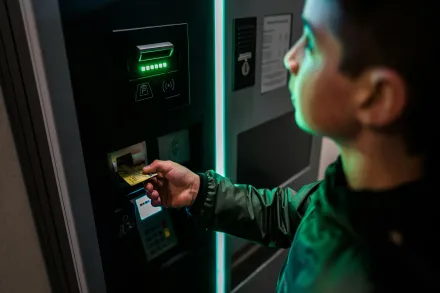
In mobile banking apps, biometric authentication often serves as the primary logon mechanism, enabling customers to access accounts, approve payments, or configure security settings with minimal friction. Some banks offer biometric sign‑in for merchant payments, enabling customers to authorize transactions by simply confirming their identity with a fingerprint, face, or voice cue. In branch environments, biometric readers can be used for customer verification when opening accounts, processing certain requests, or enabling access to restricted services. ATM networks are increasingly experimenting with biometric enrollment and verification, combining features such as fingerprint or facial recognition to enhance security while maintaining speed for customers who prefer not to carry cards or PINs. In contact centers, voice biometrics can speed authenticating customers and routing calls to the appropriate specialist, while ensuring that sensitive information remains protected by restricting access to verified individuals. Across all these contexts, biometrics often operate as part of a multi‑factor authentication strategy that reduces reliance on knowledge factors and strengthens overall security posture.
In the area of fraud prevention, biometric analytics contribute to real‑time risk scoring. A match that aligns with the customer’s known biometric profile may trigger normal processing, while unusual or anomalous inputs can prompt additional verification steps or require manual review. This dynamic approach helps banks respond to evolving threats, such as account takeover attempts or unusual login patterns, while preserving a smooth experience for legitimate customers. Banks also explore multi‑modal fusion, where two or more biometric signals are combined to provide stronger evidence of identity than any single modality could offer. Fusion can occur at the device level or in the cloud, depending on technical feasibility, latency constraints, and governance policies, but the result is a more robust authentication outcome that is harder to spoof or bypass.
End‑user experience, accessibility, and inclusivity
The success of biometric authentication in banking depends not only on technical strength but also on how seamlessly it fits into a user’s daily activities. Banks invest in clear onboarding experiences, transparent explanations of what data is captured, and easy alternatives for those who cannot use biometric methods due to cosmetic, medical, or personal reasons. Accessibility features ensure that visually impaired users, those with motor challenges, or customers in regions with limited device support can still perform essential banking tasks. The goal is to remove friction without compromising security, and to provide meaningful choices so that every customer can select an authentication path that suits their needs while maintaining consistent protection across channels. As devices evolve and sensors improve, the customer experience should become progressively smoother, with authentication becoming a transparent background guardrail that activates only when necessary to protect sensitive actions.
Threat landscape and defensive strategies
Criminals continually adapt to the defenses provided by biometric systems, exploiting weaknesses in device security, social engineering, or gaps in risk management. Common attack vectors include attempts to spoof sensors with sophisticated replicas, inject malicious software to capture biometric samples, or leverage stolen credentials in multi‑factor configurations where biometrics are used as one component. Banks counter these threats with layered defenses that include strong device attestation, continuous monitoring of behavioral signals, rapid revocation procedures, and the ability to escalate authentication requirements when risk indicators are elevated. They also pursue threat intelligence sharing with industry peers and regulators to stay ahead of emerging spoofing techniques, such as deepfake audio, synthetic fingerprints, or novel presentation attacks. Training, awareness campaigns, and robust incident response plans form essential parts of the overall security architecture, ensuring that the organization can respond quickly and effectively to incidents while maintaining customer trust.
In addition to technical safeguards, governance plays a vital role. Banks implement policies that define how biometric data is captured, used, stored, and deleted, and how customers can exercise rights related to their data. They perform regular security reviews, penetration testing, and independent audits to validate that biometric systems remain secure over time. The combination of technology, policy, and governance helps create a resilient system that can withstand the evolving threat environment while delivering a reliable and convenient service to customers who rely on these capabilities for everyday banking tasks.
Future trends and ongoing research
The field of biometric authentication in banking continues to advance on multiple fronts. Researchers are exploring more robust forms of behavior‑based authentication, including continuous verification that analyzes subtle, ongoing cues rather than a single snapshot. Multi‑year trends point toward deeper multimodal fusion, where information from several modalities is integrated to form a comprehensive identity model that remains accurate under challenging conditions. Advances in secure enclaves, homomorphic encryption, and privacy‑preserving machine learning promise to enhance the protection of biometric data while enabling more sophisticated analysis in a privacy‑respecting manner. Industry players are also looking at interoperability standards that would allow customers to carry their biometric credentials across service providers, but such shifts require careful governance to prevent scope creep in data sharing and to maintain customer control over their personal information. The banking sector envisions a future where authentication becomes so seamless that customers can perform routine tasks without friction, yet with strong assurances that every action is attributable to the rightful account holder and protected against unauthorized use.
Implementation challenges and operational considerations
Deploying biometric authentication at scale is not without challenges. Banks must address device fragmentation, ensuring compatibility across a wide range of smartphones, tablets, and specialized hardware. Latency matters, especially in high‑value transactions or when customers expect immediate results in digital channels. The onboarding burden must be minimized so that customers are not discouraged from enrolling and using biometrics. Data management is complex, involving secure storage, encryption key management, and careful control of data life cycles. Performance monitoring is essential to detect drift in biometric models, which can occur as people age, experience injuries, or as sensor quality changes. Banks also face supply chain security considerations, making sure that the sensors and hardware used in devices are produced and maintained with integrity, and that software updates are delivered securely to prevent exploitation of vulnerabilities. All these factors must be harmonized with user education and transparent privacy practices to maintain a customer‑centered approach while meeting enterprise risk objectives.
Practical guidance for customers navigating biometric banking security
Customers benefit from understanding that biometrics are not a solitary shield but part of a broader security ecosystem. It is prudent to keep devices updated with the latest software patches and to review permission settings that govern how biometric data is used within the banking app. Customers should be aware of fallback options and ensure alternative authentication methods are available and functioning. It is also wise to observe how enrollment occurred and to validate that biometric prompts align with expected actions, such as logging in or authorizing a payment. In cases of device loss or suspected compromise, customers should promptly report the issue to their bank and follow the prescribed reset and revocation processes to protect their accounts. The ongoing goal is to empower customers to participate actively in their own security while benefiting from the convenience and speed that biometrics provide in everyday banking tasks.
Ethical considerations and accessibility in biometric banking
Ethics and inclusivity play a meaningful role in how biometric systems are designed and deployed in the financial sector. Banks strive to minimize biases that could affect certain user groups, ensure equitable access, and avoid inadvertent exclusion of customers who may have unique physiological characteristics or accessibility needs. This involves testings across diverse populations, providing alternative authentication routes, and maintaining open channels for customers to raise concerns or request adjustments. The industry also recognizes the potential implications of biometrics for civil liberties, emphasizing clear consent, strict purpose limitation, and transparent disclosure about how biometric data enhances security. By upholding these ethical principles, banks work to sustain trust while delivering practical benefits that come from leveraging biometric capabilities in a responsible, customer‑focused manner.
Cross‑channel coherence and identity continuity
An important organizational objective is ensuring identity continuity across different channels and touchpoints. A customer might enroll biometrics on a mobile device for app login, rely on voice authentication during a call to the bank, and use facial recognition at a branch kiosk. A coherent identity verification framework ensures that the customer experience remains smooth while the underlying security architecture remains robust. This requires standardized data representations, consistent policy enforcement, and secure interfaces between channel systems. The ultimate aim is for the customer to feel that their identity is reliably recognized no matter where they decide to engage with the bank, with security measures adapting in real time to the risk landscape and the specific context of the interaction.
Summary of core principles driving biometric banking today
Biometric authentication in banking embodies a balance between strong security, user convenience, privacy protection, and regulatory compliance. It relies on a mix of physical and behavioral traits, validated through robust enrollment, secure template management, and precise matching calibrated to risk. Liveness detection and anti‑spoofing are essential layers that strengthen defenses against deception. The architectural decision between on‑device processing and server‑side matching informs latency, privacy, and governance. Data protection, consent management, and transparent user controls underpin customer trust, while ongoing research, ethical considerations, and inclusive design ensure that biometrics remain a practical, trustworthy tool for safeguarding financial assets in an ever‑changing technological landscape. Together, these elements shape how banks implement biometric authentication to support secure access, authorized activity, and a humane customer experience that aligns with modern expectations of privacy, convenience, and choice.