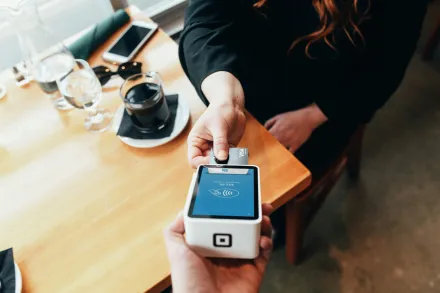
In the digital age, contactless payments have emerged as a convenient, fast, and secure way to complete transactions without swiping a card or inserting a chip. At its core, contactless payment is a way to exchange payment data using short range wireless technology, usually near field communication, so that a merchant's reader can recognize a payment account when a device is brought close to it. The idea is simple in principle, but the underlying technologies, standards, and security practices are layered and sophisticated, designed to protect the customer, the merchant, and the network that processes the payment.
From a shopper's smartphone to a dedicated contactless card or a wearable, the wallet can hold payment credentials that can be transmitted safely to a terminal. The purchase experience resembles a nod to the traditional card world, yet with contemporary cryptography, tokenization, and cloud based verification that add multiple layers of protection. A user taps or holds the device near a reader, and a handshake begins that negotiates the right credential to use for that specific payment, without revealing the actual account details.
Overview of the experience
When a consumer initiates a contactless payment, the journey starts with the user bringing a device or card into proximity with a point of sale terminal. The terminal and the device communicate using a short range radio technology, typically within a few centimeters, to establish a secure channel. The terminal then requests permission to process a payment for a certain amount in the local currency. The end result is a transaction that can be authorized quickly, often in a matter of seconds, which is part of why contactless methods have gained popularity in busy retail environments and transit hubs where speed matters.
Behind the scenes, there is a delicate balance between convenience and protection. The device does not expose sensitive bank account numbers to the merchant. Instead, it uses a token or encrypted form of the payment credential. If the token is intercepted or misused, it has limited value, and the system can detect anomalies. In parallel, the merchant's system receives a transaction request that appears as a normal payment to the acquiring processor, which routes it through the payment networks to the issuer for approval. The network orchestrates a complex set of checks, accounts for risk, and returns an authorization result that the merchant can relay to the shopper almost instantly.
Key technologies that enable contactless payments
Two foundational technologies power most contactless payments: near field communication and tokenization. Near field communication enables the short range exchange of information between the device and the reader through radio waves, but it does not require an active internet connection at the moment of transaction. Tokenization replaces sensitive account details with a non sensitive string known as a token. This token can be validated by the payment network and issuer without revealing the actual card or account number, so even if the data is compromised, it cannot be used to access funds in another context.
Every device that participates in a contactless payment relies on secure elements or secure encodings that store the tokens and cryptographic keys in a protected area. A secure element can be embedded in a device, or hosted in a trusted execution environment, or provided by a secure cloud service. The goal is to ensure that the credentials used for a payment are never exposed in plain form to the merchant's system or to potential eavesdroppers. In addition to tokenization, dynamic cryptograms are generated for each transaction. These cryptograms are unique to that moment and amount, tying the authorization to a single use so replay attacks are prevented.
Another important technology is the payment standard that governs how data is formatted and interpreted across different networks. The most widely deployed standards for contactless payments built on card data are derived from EMV specifications, which describe how chip based cards communicate and authenticate with readers. In a contactless context, the EMV standard is extended to support NFC or similar wireless modalities, enabling devices that carry EMV compatible credentials to be read without physical contact. Unified standards ensure that a wallet from one provider can work with a wide range of readers and merchants around the world, creating a consistent experience for customers and a reliable settlement pipeline for merchants.
How an actual transaction flows from tap to authorization
The kickoff of a contactless transaction happens when a shopper brings a device near the reader. The reader detects the device and powers up a secure channel. A short exchange occurs in which the reader requests payment credentials. The device responds with a token that encodes the payment account and may also convey additional information such as a cryptographic indicator that confirms the device is recognized as a valid contributor for the current environment. The terminal then passes the token and the transaction details to the payment processor ecosystem, where a series of checks are performed to determine whether the merchant can be paid for the purchase amount.
In many cases, the issuer, which is the bank that issued the consumer’s card or account, must authorize the payment. The authorization step involves verifying that the account is in good standing, that sufficient funds or credit are available, and that the transaction does not trigger a fraud alert. This verification is performed using the cryptographic data included with the token, a dynamic cryptogram, and metadata such as the merchant category code, the terminal identifier, and the transaction amount. If everything checks out, the issuer returns an approval response back through the network to the merchant’s payment processor, which then confirms the payment to the point of sale. The entire flow is designed to be nearly instantaneous for the user, while preserving privacy and security behind layers of cryptographic protections.
Depending on the arrangement, some contactless transactions may be authorized offline, especially in cases where the terminal can validate a token and cryptogram against stored issuer data without an immediate online check. In offline scenarios, the terminal may rely on locally stored risk rules or secure elements to assess risk. If the offline check passes, the terminal can approve small value transactions without immediately connecting to the network. Once the device regenerates data or reconnects, any remaining checks are completed to ensure alignment with the issuer’s accounts and fraud controls. This offline capability adds resilience for times when connectivity is unreliable, such as underground transit tunnels or remote locations, while still preserving robust security guarantees overall.
Security foundations that protect every tap
Security in contactless payments rests on a triad of elements: encryption, tokenization, and risk based authorization. Encryption ensures that data transmitted between the device and the reader is unintelligible to outsiders. Tokenization protects the actual account by substituting it with a token that has value only within the payment ecosystem. Risk based authorization introduces intelligent checks that consider context, including merchant location, device usage patterns, and recent transaction history, to determine whether a payment should be allowed, challenged, or declined. These layers work together so that even if a single component is compromised, the overall system maintains a strong defense against fraud.
Devices that support contactless payments often implement a secure element or trusted component that stores sensitive keys. The tokens are bound to a specific device, issuer, and payment network, so attempting to reuse a token in a different context becomes invalid. The use of dynamic cryptograms means that each transaction has a unique signature that cannot be re used in future payments. The networks also deploy advanced monitoring to detect unusual activity and can request additional verification when risk is flagged. This combination of technology and oversight makes contactless payments both convenient and resilient against attempts to misuse credentials.
Who participates in a typical contactless transaction
Several parties typically participate in a contactless payment, including the cardholder, the merchant, the acquirer, the payment processor, the card network, and the issuer. The cardholder’s device or card carries credentials and cryptographic keys. The merchant’s point of sale communicates with an acquirer who routes transaction data to the payment network. The network forwards the data to the issuer for authorization and then returns the result for settlement. Each participant has a defined role, and the interactions are governed by industry standards and contracts that determine liability, settlement timing, and fees. A well designed system minimizes the need for the customer to manage complex details and instead focuses on a simple, fast, and secure user experience.
In practice, the experience feels seamless to the customer. The reader or reader capable device emits a brief signal that powers up and recognizes the presence of a legitimate credential. The customer does not need to unlock their phone in every scenario, although some wallets offer optional authentication for certain transactions to provide an extra layer of assurance. Merchants configure their systems to accept contactless payments across a range of devices, from smartphone wallets to dedicated contactless card readers. This interoperability helps merchants expand the ways they can accept payments while keeping a consistent checkout experience for customers.
Tokenization and dynamic data in everyday use
Tokenization is a core concept that interests many observers because it decouples the payment instrument from the transaction data. The token stands in for the actual account number, so the merchant never handles real card data. This reduces exposure in the event of a data breach and simplifies compliance with data protection regulations. The token itself is only meaningful within the context of the payment network and the issuer that issued the token. In practice, if a thief captures token data, it cannot be used to create counterfeit payments elsewhere, because the token is bound to a particular device, merchant, and session. Dynamic data, such as cryptograms and transaction counters, further tie the payment to that specific event and prevent reuse across different situations.
For consumers, tokenization is often invisible. They can tap their phone, watch, or card and have a reliable experience, while the underlying infrastructure dynamically swaps credentials behind the scenes. The combination of tokenization and dynamic cryptograms is a powerful shield against many common forms of fraud, and it enables merchants to operate with reduced risk while offering faster checkout experiences to shoppers.
What devices can participate in contactless payments
Today, a wide array of devices can participate in contactless payments. Dedicated contactless cards, often issued by banks and linked to a customer’s account, are still widely used, particularly in transit and quick service retail. Smartphones equipped with digital wallets, such as those that consolidate multiple card accounts into a single application, are perhaps the most visible evolution. Wearables such as smartwatches and even rings with embedded credentials have started to become commonplace in some markets, offering a convenient alternative for users who prefer a hands free approach. In all cases, the device stores encrypted credentials and performs the cryptographic work required to generate a usable token for each transaction, synchronizing with the payment network as needed.
From the merchant perspective, supporting a diverse set of devices requires flexible software that can parse a range of token formats, confirm merchant eligibility, and manage the lifecycle of tokens as customers add or remove payment methods. The business rules that govern acceptance across channels must be carefully designed so that a shopper who uses a different device for the same account receives the same dependable experience. This uniformity is a key factor in the broad adoption of contactless payments across different sectors and regions.
Merchant acceptance and the role of point of sale technology
The point of sale environment is a critical piece of the equation. Modern readers are compact devices that can be connected to cash registers or integrated into mobile devices, enabling fast and secure payments. The reader must be able to detect the presence of a valid device, verify the legitimacy of the token or credential, and communicate with the processor using a secure channel. Merchants benefit from rapid authorization times, which shorten line lengths and improve customer satisfaction. In addition, point of sale systems can be configured to apply policies such as maximum contactless payment limits, require customer authentication for high value transactions, or adapt to different risk profiles in various market conditions.
Beyond the reader, the entire back end includes software that reconciles payments, manages settlement, and interfaces with reconciliation tools and accounting systems. The data that flows through these systems is governed by the same tokens and cryptograms that protect customer information, ensuring that sensitive data does not need to be exposed in back office processes either. The security minded design of these systems has facilitated a broad ecosystem where banks, networks, merchants, and technology providers can collaborate to deliver safe and scalable payment experiences.
Offline capability and resilience
Some contactless payment setups permit offline acceptance, which means that a merchant can approve transactions even when network connectivity is temporarily unavailable. This capability is typically limited to small dollar amounts and relies on pre loaded risk rules and locally stored data. When the connection is restored, any outstanding transactions are validated against the issuer to determine whether they can be settled as usual. Offline capability helps in environments where connectivity is sporadic or where the payment terminal resides in a location with limited internet access, such as certain transit stations or remote retail spaces. The intent is to preserve the speed and reliability of the shopping experience while maintaining strong security controls.
To prevent abuse, offline capability is tightly controlled through device level security, token validity windows, and risk assessment. If a transaction exceeds a defined risk threshold or a token has reached its offline limit, the reader will prompt the customer to complete the payment in a fully online mode. This blend of offline and online processing allows for robust operation while preserving the integrity of the broader payment network.
Standards, governance, and interoperability
The success of contactless payments depends on consistent standards that enable interoperability across devices, readers, networks, and borders. The EMV standards for chip and contactless modes provide the foundational rules for data structures, cryptography, and transaction lifecycles. Payment networks define the rules for token formats, cryptograms, and authorization messaging, while card issuers implement their own risk controls and policy settings. Governance bodies coordinate testing, certification, and updates to ensure broad compatibility. The outcome is a payment floor that feels uniform to a consumer whether they are in a small town or a large metropolitan area across different countries. In practice this means a wallet from one region can be used at a merchant in another, with the same expectations for speed and security.
Retailers and technology providers participate in ongoing certification programs to ensure that new readers, devices, and wallet updates continue to align with the agreed standards. This process helps reduce the fragmentation that could otherwise undermine user confidence. The net effect is a robust, scalable, and adaptable ecosystem that can evolve as new devices, networks, and regulatory requirements emerge, while keeping the customer experience consistently simple and reliable.
Privacy considerations and data handling
Privacy is a central concern in any modern payment system. In contactless payments, the customer’s actual card numbers are rarely transmitted in the clear. Tokenization and cryptographic protections reduce the visibility of sensitive information during the transaction. Additionally, many wallets implement measures to minimize the amount of data sent to merchants, focusing on the necessary transaction details such as merchant identity, amount, and authorization status rather than personal demographics. Users should review the privacy policies of their wallet provider and issuer to understand how data is stored, used, and shared, and to learn about controls they can exercise, such as device authentication requirements or the ability to disable certain payment methods if desired.
From a safety perspective, the fact that tokens are device specific helps prevent the misuse of credentials if the device is lost or stolen. Modern wallets often include features to remotely suspend or wipe tokens, quickly invalidating access. In addition, the networks and issuers monitor unusual patterns that could indicate credential compromise, and they can respond by blocking transactions, initiating fraud investigations, or prompting customers for additional verification. This layered approach to privacy and security enables customers to feel confident while enjoying the benefits of a faster checkout experience.
Future directions and evolving use cases
The landscape of contactless payments continues to broaden beyond traditional retail. In transit systems, contactless cards and mobile wallets allow riders to board quickly using a tap rather than fumbling with tickets or cash. In hospitality, event venues, and entertainment parks, contactless methods simplify entry and purchases, often integrating with loyalty programs to reward continued use. As devices become more capable, wallets can provide smarter features such as automated top ups, context aware offers, and richer customer profiles that support personalized service. The underlying security framework remains the backbone that ensures these enhancements do not compromise safety or consumer trust.
Additionally, the move toward open banking and ecosystem collaborations opens opportunities for new payment arrangements where merchants can accept a broader set of tokens and credentials, including emerging digital currencies or bank led payment tokens, while still relying on the same robust networks to settle funds. Industry researchers and standards bodies are actively exploring enhancements to speed, privacy, and resilience, including improvements to offline capability, fraud detection algorithms, and cross border settlement efficiency. The direction remains clear: contactless payments are moving toward being the default option for everyday commerce, with continual improvements in user experience and security reinforcing their appeal across demographics and geographies.