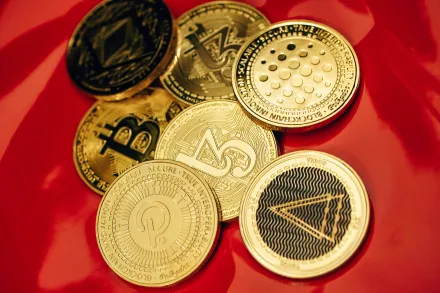
Governance tokens are digital assets that confer voting rights within a blockchain protocol or decentralized organization. These tokens are designed to align incentives among users, developers, investors, and other stakeholders by giving them a say in how the network grows, what features are prioritized, how budgets are allocated, and how risks are managed. The basic idea is to move decision making from a centralized team into an ongoing democratic process that is encoded in code and secured by cryptography. In practice, governance tokens often live on top of smart contract platforms and interact with other on chain mechanisms such as token staking, liquidity provision, and automated enforcement. This creates a new layer of governance that mirrors the codified rules of the protocol while adapting to real world conditions like participation, market dynamics, and evolving risk profiles. The result is a governance culture that blends technical design with organizational behavior, requiring careful attention to incentives, participation, and transparency.
Origins and motivation
The concept of governance tokens emerged from a desire to decentralize control over digital communities and the protocols that run on them. Early experiments in decentralized finance and autonomous networks demonstrated that code can not only automate transactions but also govern the evolution of the system itself. Governance tokens provide a mechanism for stakeholders to influence decisions in a way that scales with the community and the network’s growth. The motivation is pragmatic: centralized control can become a bottleneck that slows innovation and creates single points of failure. By distributing power through tokens, networks aim to democratize the prioritization of improvements, risk management, and the allocation of scarce resources such as developer time, security budgets, and user incentives. Yet this distributed approach also introduces new complexities, including how to balance influence among large holders with the interests of smaller participants and how to ensure that the process remains constructive under stress.
Core mechanics: voting power and weight
At the heart of governance tokens is the concept of voting power, which translates the quantity and sometimes the duration of holdings into influence over proposals. In many designs, voting power is proportional to the amount of governance tokens a participant controls, creating a direct link between economic stake and decision rights. Some models introduce time based or stake based weight, where locks or vesting periods amplify or reduce influence to encourage long term commitment and discourage rapid flips that could destabilize the system. The mechanics may also incorporate minimum thresholds, quorum requirements, and deadline windows to ensure that proposals receive enough attention and that outcomes reflect a broad consensus rather than a vocal minority. This structure aims to align incentives so that those who bear the consequences of decisions have a fair say in them, while also safeguarding the process against manipulation through sudden, short term accumulations of tokens.
Delegation and representative governance
One of the most influential adaptations in governance token design is the ability to delegate voting power to trusted representatives. Delegation allows participants who may not have the time or expertise to engage deeply to entrust their stake to someone they believe will vote in their best interests. Representation can improve turnout and elevate the quality of debate by ensuring that proposals are evaluated by participants who are more engaged or informed. The delegation mechanism itself becomes an important governance feature, with controls that enable revocation, re delegation, or multiple delegations across different domains within a protocol. While delegation can enhance efficiency and expertise, it also raises concerns about centralization, as powerful delegates could accrue disproportionate influence. Consequently, many projects implement safeguards such as multiple independent delegates, open voting records, and minimum community oversight to preserve accountability and transparency.
Voting models: one token one vote, quadratic, and beyond
Governance tokens can support a spectrum of voting frameworks, each with its own advantages and trade offs. The simplest model is one token one vote, where each holder’s influence scales in direct proportion to their stake. While intuitive, this approach can lead to plutocratic outcomes where large holders dominate decisions, potentially sidelining smaller participants and eroding broad participation. To counterbalance this tendency, some designs employ quadratic voting, a mechanism that reduces the marginal impact of each additional token while still rewarding long term investment. Another approach uses stake weight, where the duration of stake affects voting power, aligning influence with commitment rather than sheer volume. Some systems mix on chain voting with off chain deliberation, allowing community discourse to shape proposals before formal votes occur. These variations reflect a core tension: achieving efficient, informed decision making while preserving broad, inclusive engagement across a diverse ecosystem.
Proposal lifecycle and execution
Most governance processes revolve around a lifecycle that begins with a proposal, followed by discussion, voting, approval thresholds, and execution by smart contracts. A proposal often includes technical changes, budget allocations, or policy updates. The discussion phase invites community feedback, critique, and refinement, leveraging the open nature of blockchain ecosystems to surface diverse perspectives. Once voting occurs, the outcome is determined by the voting rules and any delay mechanisms such as timelocks or multisignature approvals that guard against impulsive changes. Execution may be automatic upon approval or require a separate governance contract or security check. The lifecycle is designed to be auditable, with transparent records of proposals, votes, and outcomes so participants can learn, contest, or revisit decisions as circumstances evolve. A key design goal is to ensure that the path from idea to action is both predictable and resilient to sudden, destabilizing events.
Security and economic design
Governance tokens sit at the intersection of economics and cryptography, and their security hinges on both the integrity of the underlying blockchain and the resilience of the governance layer. A major concern is the potential for governance attacks or capture, where an attacker seeks to accumulate enough voting power to push through harmful proposals, drain treasury funds, or disable security upgrades. To mitigate such risks, projects incorporate multiple layers of protection, including timelocks that delay execution to allow review, pause gates that can halt critical actions, and multi party approvals for sensitive changes. Economic design also matters: token inflation or distribution schedules shape incentives to participate, while the availability of rewards or penalties influences long term behavior. In practice, robust governance requires a careful blend of cryptoeconomic design, security engineering, and community norms that discourage manipulation and encourage constructive participation even when stakes are high.
Legal and regulatory considerations
As governance tokens become more central to how projects operate, they attract scrutiny from regulators who assess whether token holders have investment characteristics, voter rights, or other features that could trigger securities laws. The line between a governance token and a security can blur when token holders receive profits from the performance of the protocol or benefit from exclusive access to governance resources. Jurisdictions vary in how they treat decentralization, with the degree of decentralization often used as a factor in determining whether a token is a security. Projects must balance openness with compliance, implementing transparency about token distribution, governance rights, and revenue sharing mechanisms. This involves careful documentation, disclosure of incentives, and ongoing engagement with the community to reflect evolving regulatory expectations without compromising decentralization goals.
Case studies: patches from the real world
In practice, governance tokens have shaped the evolution of several prominent networks. A project like Compound introduced a governance token that enabled stakeholders to vote on expansions of the protocol and the allocation of the reserve pool. MakerDAO leveraged a system where MKR holders vote on risk parameters and collateral types, directly influencing the stability and resilience of the system. Uniswap’s governance experiments showcased how a broad base of participants could influence major protocol updates and treasury investments. Aave demonstrated how a combination of governance votes and time locked actions could guide the direction of liquidity mining programs and risk parameters. Each case illustrates that governance is not merely about casting votes; it is a continuous process of dialogue, testing, and adaptation to changing economic and technical realities. These examples also reveal the challenges of aligning incentives, preventing capture by a few participants, and maintaining an accessible pathway for new users to engage meaningfully with governance decisions.
Tokenomics of governance tokens
The economic design of governance tokens involves how they are issued, distributed, and rewarded. Initial distributions often aim to bootstrap an engaged community by allotting tokens to developers, early users, and contributors, sometimes paired with vesting schedules to reduce rapid sell offs. Ongoing emissions or drip models can ensure liquidity and participation over time, though excessive inflation may erode value and trust. Treasury management policies determine how funds are allocated to development, security audits, user growth, and research. A well tuned token economy aligns long term protocol health with participant incentives, encouraging steady participation and thoughtful proposal crafting rather than opportunistic voting. Transparent treasury rules, clear voter expectations, and adaptive mechanisms help sustain momentum as the network matures and new stakeholders enter the ecosystem.
Participation, usability, and governance UX
One of the persistent challenges of governance tokens is lower participation relative to potential interest. User experience matters: the process of discovering proposals, understanding technical implications, and casting votes must be accessible to non experts. Interfaces that provide clear summaries, risk analyses, and confidence intervals can empower a wider audience to participate without requiring extensive domain knowledge. Educational initiatives, community discussions, and mentorship programs help diffuse complex topics and improve decision making. Onchain voting can exist alongside off chain conversations, but a smooth handoff between deliberation and formal voting is essential. Design choices such as voting window lengths, feedback mechanisms, and the visibility of proposal histories influence how engaged participants feel and whether the governance process becomes attractive to a broad cross section of stakeholders rather than a niche cadre of power users.
Interoperability and cross chain governance
As ecosystems accumulate multiple blockchains and layer two solutions, governance increasingly extends beyond a single chain. Cross chain governance enables a protocol to coordinate updates, treasury decisions, or risk parameters across different networks, sometimes using standardized messaging, relay nodes, or bridging solutions. This complexity adds new vulnerabilities and latency concerns but also offers opportunities for more resilient and diverse participation. Cross chain schemes require trust models that balance decentralization with pragmatic security, including clear upgrade paths and contingency plans for asynchronous execution. The governance approach must account for the unique characteristics of each connected chain, ensuring that decisions made on one chain reflect the broader health and strategic goals of the overall ecosystem rather than serving a narrow local interest. Thoughtful cross chain governance can align incentives across communities while preserving the integrity and coherence of the protocol as a whole.
Best practices and future directions
Looking ahead, governance tokens are likely to evolve toward more sophisticated and resilient models that reduce the risk of capture while preserving broad participation. Best practices include enforcing time delays on critical actions, separating decision making from execution through multi signature and timelock mechanisms, supporting continuous improvement by allowing iterative proposals, and ensuring robust audit trails that enable accountability. Projects may explore hybrid models that combine on chain voting with off chain deliberation to benefit from human insight while preserving the security and verifiability of on chain processes. The future of governance tokens may also involve greater emphasis on inclusivity, education, and community governance norms that reward constructive debate, long term investment in the project’s success, and responsible risk management across quickly changing technical landscapes. These trajectories point toward governance that is more collaborative, more transparent, and better prepared to adapt to novel challenges without losing its decentralized essence.
As governance tokens continue to mature, it becomes clear that their success depends not only on the size of a treasury or the number of supporters but on the quality of discourse, the fairness of the voting process, and the resilience of the system to shocks. The relationship between token holders, developers, auditors, and users must be cultivated through ongoing dialogue, transparent decision making, and a shared commitment to the protocol’s long term health. In practice, this means building ecosystems that reward careful proposal drafting, rigorous risk assessments, and proactive monitoring of outcomes after votes are implemented. It also means acknowledging and addressing the ways in which incentives can diverge among participants, and creating mechanisms that harmonize short term gains with long term stability. The evolution of governance tokens is thus not merely a technical challenge but a social one that requires deliberate design, continuous experimentation, and an enduring ethos of collaboration across diverse communities.