Token burning is a mechanism by which a portion of tokens is intentionally removed from circulation, reducing the total supply over time. This practice, embraced by many blockchain projects, aims to create scarcity, influence market dynamics, and sometimes reward long-term holders. At its core, burning is a deliberate act that makes tokens inaccessible by design, often by transferring them to an address that cannot be spent or by invoking a function within a smart contract that permanently reduces the total number of tokens in existence. The motivation behind token burning varies from project to project, but the common thread is the desire to manipulate supply and, in turn, influence price signals, liquidity, and incentives for participants to hold rather than swiftly trade assets. Understanding token burning requires stepping through the mechanics, the economic rationale, and the practical considerations that projects weigh as they decide whether and how to burn tokens.
Foundations of burning tokens
The concept of burning tokens rests on a simple economic intuition: when the supply of a good becomes scarcer while demand remains constant or increases, the value of the remaining units tends to rise. In the context of cryptocurrency, this scarcity mechanism is harnessed by creating a permanent reduction in circulating supply. A burn is not the same as a mere transfer between wallets; a burn is an irreversible act that takes tokens out of circulation and, in most designs, out of the measurable supply. The exact impact depends on the token’s economics, including the initial supply, the distribution model, and the presence of other inflows or outflows that happen concurrently. A well-executed burn can signal confidence in a project’s long-term plan, reassure stakeholders that the team is aligned with value creation, and establish a visible, auditable event that participants can track. However, burning alone does not guarantee higher prices, and it must be considered in the broader context of demand, utility, and network effects that sustain a token’s value over time.
At a technical level, burning is typically recorded as a reduction in circulating supply on-chain. In many systems, tokens exist in a total supply ledger and a circulating supply ledger. The act of burning lowers the circulating supply by moving tokens to a burn address or by decrementing the totalSupply counter when the burn happens inside a smart contract. The burn address is generally a cryptographic sink with no known private key, which means that tokens sent there cannot be moved again. In other designs, the burn is achieved by a smart contract function that reduces totalSupply and increases a burn tally, making the event auditable and transparent. The visibility of burn events is essential, because participants monitor these events to understand how scarcity is evolving and to assess whether further burns might be expected in the future. As a result, the governance and communication around burns are almost as important as the technical implementation itself.
Mechanisms and implementation details
Explicit burn addresses are one of the most straightforward mechanisms. A project may specify that a certain fraction of every transaction, or a fixed quantity from specific operations, is sent to a burn address. This approach creates a transparent, ongoing reduction in supply that participants can observe in real time on blockchain explorers. The simplicity of this model, coupled with its auditable nature, makes it a popular choice for many tokens that want to embed burn mechanics directly into their transaction flow. The downside can be a predictable downward pressure on liquidity if burns consume a sizable portion of circulating supply without corresponding mechanisms to maintain or grow liquidity elsewhere. When implemented carefully, burn rates can be calibrated to balance scarcity with market depth, ensuring that the token remains usable for trades and payments even as scarcity increases over time.
Smart contracts enable more sophisticated burn schemes. A token contract may include a dedicated burn function that allows holders to destroy their own tokens, thereby reducing both their individual balance and the contract’s totalSupply. Some projects implement automatic burns as part of every transfer, where a small percentage is diverted to a burn address or burned within the contract logic. A more dynamic approach is the buyback-and-burn model, where the project uses revenue or profits to buy tokens on the open market and then permanently remove them from circulation. Buybacks can be funded from fees generated by the ecosystem, from treasury assets, or from profits earned by the project. The rationale is to create a sustained cycle of scarcity that aligns the interests of treasury managers with those of long-term token holders. The technical implementation of buybacks often involves an automated bot or a governance-approved mechanism that executes trades on decentralized exchanges and then triggers a burn function to remove the acquired tokens. In some ecosystems, burning and buybacks are integrated with governance proposals, enabling community members to influence burn levels in response to market conditions and strategic priorities.
Economic rationale and market impact
The core economics of token burning revolve around how scarcity interacts with demand and utility. When a token’s supply is reduced, the remaining tokens become relatively more scarce, which can support a price appreciation if demand remains stable or grows. However, the price impact is not guaranteed. Markets are driven by a complex mix of liquidity, trading activity, user adoption, and macroeconomic sentiment. Burn events can serve as signals that the project’s leadership is committed to increasing value through scarcity, which may attract long-term investors. Yet burns can also have unintended consequences. If a burn reduces liquidity significantly or concentrates ownership among a small group, it can increase price volatility and reduce the ease of entering or exiting positions for ordinary users. Therefore, effective burn strategies often have accompanying measures to maintain healthy liquidity, such as liquidity pools, market-making arrangements, or periodic reviews that adjust burn rates in response to liquidity conditions and trading activity.
Another important consideration is the interaction between burning and other tokenomics levers, such as minting, staking rewards, and governance. In deflationary models, burning and staking rewards can work in tandem to reward holders who lock up their assets, while burn events discourage short-term trading by reinforcing the perception of a shrinking supply. Some ecosystems pair burns with upgrade milestones or platform achievements, using the burn to celebrate progress and to align incentives with the delivery of promised features. This synergy can amplify the perceived value of the token, but it also places a premium on the credibility of the project’s roadmap. Projects typically publish burn schedules, traces of past burns, and projected burn trajectories to help investors form expectations. The transparency around such forecasts—often published in governance forums or official whitepapers—becomes part of the social contract between the project team and its community, shaping behavior in the market and contributing to the overall narrative around scarcity and value creation.
Burn models in practice
In practice, there are several model archetypes that projects frequently adopt. A fixed-percentage burn at every transaction creates a steady, predictable downward adjustment to circulating supply. This model can be easy to understand and to simulate, but it requires careful monitoring to avoid excessive liquidity withdrawal or price suppression if the burn rate becomes too aggressive. A fixed-amount burn tied to a periodic cadence—such as a monthly or quarterly burn—gives the market time to absorb changes and can be planned in advance within treasury and governance workflows. A hybrid approach combines per-transaction burns with periodic additional burns during favorable market periods or after hitting specific milestones. Automated burns triggered by on-chain events, such as hitting a liquidity threshold or achieving a minimum trading volume, create a responsive mechanism that aligns scarcity with usage patterns. Each of these models has distinct implications for price discovery, liquidity risk, and participant behavior. The choice of model is typically dictated by the token’s purpose, the maturity of the ecosystem, and the governance structure that the project uses to approve changes to burn rates.
In addition to on-chain burns, some networks use cross-chain or layer-2 mechanisms to realize scarcity. For example, a token minted on a main chain may be burned when moved to a side chain, or a portion of fees paid on a layer-2 network might be burned to reflect the economics of cross-chain usage. Such arrangements require careful cross-chain accounting to prevent discrepancies between chains and to ensure that the total burned amount is auditable in a way that users can trust. Technically, cross-chain burns demand robust verification, often via oracles or bridge contracts, to confirm that tokens were burned on one chain before a corresponding action occurs on another. The added complexity can introduce security and latency considerations, but it also expands the design space for scarcity-driven incentives in multi-chain ecosystems.
Burning, governance, and transparency
Governance plays a crucial role in determining whether and how much to burn. In many projects, token holders vote on proposed burn events, burn rates, or amendments to the burning mechanism. This governance dynamic helps align the community with the economic objectives of the project and reduces the risk of unilateral decisions. Transparency is essential; communities rely on verifiable on-chain data to audit burns, track totalSupply, and observe the effects on circulating supply. Reputable projects publish independent audit reports or third-party analytics showing the burn history, the current burn rate, and the projected impact on supply curves. A robust governance framework also includes clear rules for emergency actions in the event that market conditions change abruptly, such as during severe volatility or liquidity crises. When governance processes are well designed, burns become a shared mechanism of value management rather than a unilateral act by leadership, strengthening trust and long-term alignment among participants.
From a user perspective, burns should be understandable and predictable to avoid confusion. Clear documentation, dashboards that display burn events in real time, and educational resources about what a burn does and does not do are essential. Users often want to know how much supply will be burned this year, how much remains in circulation, and how burns interact with staking, rewards, and fees. The combination of transparent data, rational governance, and predictable mechanics tends to reduce perceived risk and enhances the credibility of scarcity-based incentives. In contrast, opaque or ad hoc burns can lead to suspicion and volatility, undermining the intended economic effects and potentially eroding trust in the project’s stewardship over the token’s future supply trajectory.
Risks, criticisms, and limitations
Token burning, while powerful in concept, does not solve all economic or liquidity challenges. One criticism is that burning can be used more as a marketing signal than a serious attempt to improve economics. If a burn is small relative to the overall market activity, its effect on price may be negligible, leading to disappointment among participants who expected a meaningful shift in scarcity. Additionally, burns can distort incentives for traders, encouraging short-term speculation on burn announcements rather than long-term adoption of the platform. There is also the risk that burning reduces liquidity to the point where large holders gain outsized influence over price movements, especially if a substantial portion of tokens becomes illiquid or concentrated in few wallets. A further limitation is that burning can interact with other tokenomic levers such as staking or minting in ways that may counterbalance the intended effects, particularly if new token issuance continues at a pace that overwhelms the burn rate. These dynamics require ongoing monitoring and careful balancing to avoid unintended consequences that could undermine the desired scarcity or undermine network utility.
From a technical standpoint, burns rely on the correct implementation of smart contracts and on the integrity of the supply accounting. If a burn function contains a bug or an oracle feeds inaccurate data about the circulating supply, the resulting economic signals can mislead participants and create mispricing. Moreover, in some designs, certain tokens may have non-transferable components or complex vesting schedules that interact with burns in non-obvious ways. Projects must anticipate edge cases, such as treasury recovery, token swaps, or retroactive distribution schemes, to ensure that burning does not accidentally erode legitimate balances or undermine planned distributions. Security considerations also come into play: burn mechanisms must be resilient to exploitation or governance capture that could weaponize burns for improper purposes. In short, while burning is a powerful tool for shaping scarcity, it requires disciplined design, comprehensive testing, and transparent governance to realize its intended benefits without introducing fragilities into the ecosystem.
Technical considerations for developers and auditors
For developers, implementing a burn mechanism involves careful coding practices, explicit testing, and clear documentation. When creating a burn function within a token contract, developers must ensure that the burn operation reduces the balance of the caller and decreases totalSupply in a consistent, auditable way. Tests should cover edge cases such as burning zero tokens, burning more than balance, and interactions with other internal functions like transfers, approvals, and staking. Auditors look for risks such as integer overflow, reentrancy vulnerabilities, and potential race conditions when burns are tied to external calls or governance actions. In burn-on-transfer designs, the contract must ensure that a percentage deduction is applied correctly for each transfer, that the burned amount is immutable, and that the user can clearly see the proportion of burn in real-time. On the user side, reliable dashboards and explorer integrations help participants verify burn events and confirm that the totalSupply metric is updating as expected. The chain’s tooling, such as event logs and indexers, plays a vital role in delivering accurate, timely burn data, which in turn supports trust and informed decision-making among the community and investors.
Auditors also examine how burns interact with tax or accounting considerations in different jurisdictions. Some jurisdictions treat burns as a form of value destruction that could have tax implications for token holders, brokers, or exchanges. Although the tax treatment varies by jurisdiction and is outside the technical scope of a burn's mechanics, it is important for projects to provide stakeholders with accessible explanations and references to professional guidance. By aligning technical implementation with transparent, policy-aware communication, projects reduce confusion and help token holders understand the financial implications of burns in their local context. In addition, developers need to consider upgrade paths. If a token contract is upgraded, there must be a clear migration plan that preserves burn integrity, ensures no backward incompatibilities, and maintains auditable burn history across versions. The best-practice approach is to lock down burn functionality behind governance and to publish test results showing that burns continue to behave correctly after any upgrade, thereby protecting the economic design from regressions or unintended behavior.
Cross-chain and layer-2 burn considerations
As ecosystems expand across multiple chains, burn mechanics may travel with assets through cross-chain transfers or layer-2 scaling solutions. Cross-chain burns require careful accounting to ensure that burns on one chain correspond to valid reductions on another. This often involves a trusted or semi-trusted bridge, or a robust dual-verify mechanism that guarantees the burn event on one chain matches a mint or cancellation event on the other. Layer-2 solutions introduce additional complexity related to how fees and transfers are processed off-chain and then reconciled on the main chain. In such setups, a portion of the transaction cost may be allocated to a burn on the main chain, while corresponding activity occurs on the layer-2 network. The design challenge is to avoid divergences between chains, maintain a consistent burn metric, and provide users with reliable visibility into the total amount burned across the entire ecosystem. Security considerations are magnified in cross-chain contexts, because a breach in one bridge or a vulnerability in cross-chain verification can undermine the entire scarcity model and erode trust among participants.
From an architectural perspective, some projects elect to centralize burn events to a treasury or governance contract that orchestrates burns across chains. Others pursue fully autonomous, decentralized burn mechanisms embedded in the token contract itself, with cross-chain reconciliations handled via transparent, auditable procedures. The choice depends on the project's risk tolerance, the maturity of the cross-chain infrastructure, and the level of trust the community places in centralized coordination versus decentralized automation. Regardless of the path chosen, clear governance rules and rigorous testing remain essential to ensure that cross-chain burns deliver the intended scarcity benefits without introducing new vectors for mispricing or operational risk.
Examples and case studies in practice
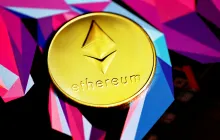
Ethereum’s EIP-1559, which introduced a base fee that is burned, provides a notable real-world example of a burn mechanism embedded in a major blockchain protocol. The rationale behind this approach is to create ongoing scarcity that is tied to network usage rather than to a single project’s treasury decisions. The effect is a measurable reduction in the net issuance rate of ETH over time, which has contributed to long-running discussions about ETH’s monetary policy and its potential implications for price dynamics. Other successful cases include tokens that implement periodic burn events following specific milestones, such as platform upgrades, user growth thresholds, or revenue targets. In many instances, these burns accompany other value-creation activities like improvements to governance, enhancements to the user experience, or expansions of the ecosystem, making the burn a visible symbol of progress rather than a standalone action. Examining concrete burn histories and governance transcripts can reveal how communities respond to scarcity signals and how burn cadence correlates with changes in liquidity, trading volume, and long-term holder behavior. While no single burn model guarantees a particular market outcome, well-documented burn programs that are coherently integrated with a token’s broader economics tend to foster a more informed and resilient investor base.
There are also cautionary tales in the space. Projects that announced large burns but failed to sustain accompanying liquidity or utility often saw only temporary price moves followed by renewed selling pressure. In some cases, burn events were perceived as attempts to distract from weaker fundamental metrics, such as dwindling usage or a lack of real-world adoption. These examples underscore the importance of aligning burns with tangible improvements in product-market fit and with transparent, credible communication about how scarcity interacts with actual network value. They remind developers and communities that scarcity alone is not a substitute for competitive advantages, and that a token’s success ultimately rests on its utility, governance, and the health of its ecosystem rather than on supply destruction alone.
Future directions and research avenues
Looking ahead, researchers and practitioners continue to explore how different burn strategies interact with liquidity provision, price discovery, and network growth. One area of interest is the optimization of burn rates through adaptive algorithms that respond to real-time market conditions, while maintaining governance safeguards to prevent rapid, unpredictable changes. Another area concerns the relationship between burning and staking: how bundling burn events with staking rewards can create durable incentives for long-term holding while ensuring that the market remains sufficiently liquid for normal trading activity. There is also interest in exploring how cross-chain burns can be made more robust, with improved verification, dispute resolution, and standardization of accounting across ecosystems. As layer-2 networks mature, there is a growing possibility that burning mechanisms will become more nuanced, leveraging advanced cryptographic techniques to prove scarcity without compromising user privacy or transaction throughput. The ongoing convergence of token economics, governance, and technical innovation suggests that burns will remain a central tool in the toolbox of scarce-token design, even as projects experiment with increasingly sophisticated and context-specific approaches to scarcity management.
Ultimately, the success of token burning as a mechanism depends on thoughtful design, transparent communication, and a holistic view of how scarcity interacts with utility, liquidity, and adoption. When executed with care, burns can align incentives, signal confidence, and contribute to a sustainable economic framework that supports long-term value creation for holders, users, and builders alike. The best practices emphasize explicit governance, rigorous auditing, and continuous education so that participants can make informed decisions, monitor burn activity, and understand how scarcity will shape the token’s trajectory in the years to come. In such an environment, token burning becomes not merely a mechanic but a narrative about stewardship, resilience, and the commitment of a community to nurture a thriving digital economy through deliberate, accountable action.