Overview of Whale Tracking
Whale tracking is a field that combines biology, technology, and careful field practice to uncover the journeys of some of the ocean's largest and most enigmatic travelers. At its core it seeks to answer questions about where whales go across seasons, how long they linger in particular habitats, and which habitats act as critical waystations during migrations. Researchers collect data from multiple sources and synthesize patterns that reveal migratory corridors, seasonal residency areas, feeding grounds, and breeding locales. This information is not only scientifically interesting but also essential for guiding protections, reducing human–whale conflicts, and informing maritime planning. The practice rests on patience, meticulous observation, and a willingness to adapt methods as technology and ecological understanding evolve.
Biological Foundations
Understanding whale movements begins with biology. Different species exhibit distinct life histories, with baleen whales often undertaking long, seasonal migrations between high-latitude feeding grounds and warmer subtropical or tropical breeding areas, while other species may roam more locally or follow prey aggregations along continental shelves. Whales depend on strong social structures, wide-ranging sensory capabilities, and energy-conserving strategies for long-distance travel. Their movements are influenced by prey availability, sea surface temperature, ocean productivity, prey migration timing, and oceanographic barriers such as currents or ice. Interpreting movement data therefore requires anchoring observations in ecological context and recognizing that a single track may reflect a complex web of decisions driven by seasonal prey pulses and risk avoidance.
Data Sources and Technologies
To illuminate the paths of whales, researchers rely on a diverse toolkit that blends traditional field observations with cutting-edge technology. Satellite tags attached to the skin or blubber provide positional data as the animal travels, offering broad geographic coverage though often with gaps when tags shed or drift. Acoustic sensing complements visual data by detecting the vocalizations of whales and, in some cases, localizing their positions through networks of hydrophones distributed across an area. Photo identification, using distinct fluke patterns or tail markings, allows researchers to recognize individuals and build long-term life histories. Coastal radar, drone footage, and shipboard observations contribute to presence data, while environmental datasets such as sea surface temperature, chlorophyll concentration, and ocean current models provide the ecological backdrop that helps explain observed movements. When combined, these sources create a more complete and robust picture of whale behavior than any single method could achieve.
Satellite Tagging and Telemetry
Satellite tagging and telemetry represent one of the most powerful approaches for tracking wide-ranging marine megafauna. Tags come in several forms, including pop-off archival tags that store data and detach after a set period, and satellite relay tags that transmit location data whenever the whale surfaces. The data streams typically include geographic coordinates, depth, and time, with occasional measurements of body temperature, heading, and speed. The deployment process requires careful ethical consideration, minimizing tagging impact on the animal and following established permits and guidelines. Once in place, the tag begins to communicate with satellites, producing a stream of data that can be analyzed to reconstruct movement paths, identify migratory routes, and detect behavior changes such as deeper foraging dives or prolonged surface intervals. Analysts often face challenges such as data gaps due to tag loss, drifts in location estimates, and the need to correct for geolocation biases arising from environmental conditions.
Acoustic Monitoring
Acoustic monitoring uses hydrophone arrays and autonomous recorders to listen for whale vocalizations and, in some cases, to localize calls in space. Passive acoustic monitoring can capture seasonal presence, population density proxies, and even social interactions that are not visible from sight alone. When multiple hydrophones are deployed, time-difference of arrival calculations can triangulate the approximate position of vocalizing whales, enabling researchers to infer movement patterns over large distances and challenging weather conditions. Acoustic data are particularly valuable for tracking baleen and toothed whales during periods when visual sightings are scarce, such as open-ocean migrations or deep, remote habitats. Integrating acoustic detections with satellite and visual data helps produce a more resilient understanding of where whales go, why they pause, and how their acoustic behavior correlates with feeding and breeding events.
Photo-Identification and Visual Tracking
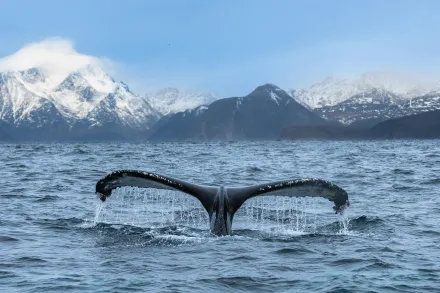
Photo-identification relies on the unique contours of a whale’s tail fluke, dorsal fin, or other markings to recognize individuals across time and space. Building and maintaining catalogs of identified whales enables researchers to track site fidelity, re-sightings, and social networks. Longitudinal identification studies can reveal patterns such as preferred calving grounds, repeated returns to particular feeding zones, and the social structure of offshore communities. Field researchers document sightings with careful notes on time, location, weather, and group composition, while digital databases store the images alongside metadata. Because marking and identifying whales is noninvasive when conducted responsibly, photo-identification remains a cornerstone of movement studies, especially for species with distinctive, individual traits that are stable across years. The technique also supports insights into life histories, such as age at first reproduction and mating season timing, which in turn relate to movement decisions throughout a whale’s lifetime.
Environmental and Oceanographic Context
Movement data gain depth when interpreted against the backdrop of environmental conditions. Ocean fronts, eddies, thermoclines, and nutrient upwellings create patches of high prey abundance that often attract whales. Researchers examine sea surface temperature, chlorophyll concentration, prey distributions, and the structure of currents to understand why whales migrate along certain corridors or linger in particular regions longer than expected. Climate variability, such as El Niño or decadal shifts, may alter prey availability or habitat suitability, prompting adjustments in migratory timing and routes. Integrating oceanographic variables with tracking data helps explain deviations from expected paths, identify potential habitat hotspots under future climate scenarios, and guide management decisions about which areas deserve protection or seasonal restrictions for human activities such as shipping, fishing, or seismic exploration.
Ethics and Conservation Implications
Ethical considerations are central to all tracking work. Researchers strive to minimize disturbance during tagging, tagging procedures, and observational activities, especially during sensitive life stages such as calving or nursing. Welfare guidelines emphasize reducing handling time, employing noninvasive approaches when possible, and ensuring that research benefits justify any potential risks to the animals. Conservation implications arise from movement data that reveal critical habitats, migratory corridors, and seasonal bottlenecks where ship strikes, fishing gear entanglement, or noise pollution pose elevated threats. Sharing results with policymakers, maritime authorities, and the public can accelerate protective measures, regulate industrial activities in important habitats, and promote safer shipping lanes. Responsible data stewardship, including clear attribution, transparent methodologies, and open communication about uncertainties, strengthens the trust between scientists and communities that rely on healthy whale populations.
Interpreting Movement Data
Interpreting whale movement data involves translating raw location points, dive profiles, and vocalization records into meaningful ecological narratives. Analysts examine trajectories to identify migratory corridors, stopover areas, and home ranges, and they use statistical and modeling approaches to estimate rates of travel, pauses in movement, and responses to environmental covariates. Visualization plays a crucial role, enabling researchers to track routes over time and compare individual life histories within a population. Multi-year datasets reveal consistency or change in behavior, such as shifts in timing of migration or the adoption of alternative routes in response to environmental pressures. Model-based analyses can forecast potential future movements under different climate and sea-state scenarios, while uncertainty quantification remains essential to ensure that management decisions are precautionary yet science-based.
Case Studies and Practical Scenarios
Consider a coordinated tracking program that aims to understand how a population of humpback whales uses a coastal region during the overwintering period. Researchers might deploy a combination of satellite tags on a subset of individuals, deploy acoustic arrays near known feeding hotspots, and maintain a field-based photo-identification effort to track the same whales across years. Over several seasons, the integrated dataset could reveal consistent migration timing, the location of crucial feeding areas, and periods of high residency near the coast that overlap with increased vessel traffic. The practical workflow would include careful ethics approvals, collaboration with local communities and fisheries, standardized sighting reports, and a data management plan that ensures accessibility to researchers, conservationists, and, where appropriate, policymakers. Such a case demonstrates how diverse data streams converge to illuminate movement mechanisms and inform protective measures for important habitat during vulnerable life stages.
Technological Challenges and Limitations
Tracking the movements of whales is technically demanding, and researchers must navigate a range of limitations. Tag deployment can be logistically difficult in rough seas or protected environments, and tags may detach prematurely or fail due to biofouling, tagging method limitations, or animal behavior. Data gaps are common, particularly in open-ocean contexts where satellite coverage is imperfect and acoustic detections depend on sensor reliability. Geolocation methods face uncertainties that can widen when whales surface infrequently or travel at high speeds. Environmental conditions, such as wave action or shallow shelf regions, can degrade signal quality and complicate accurate position estimation. The interpretation of movement data must therefore explicitly acknowledge uncertainties and avoid over-precision in route delineations. Researchers continually refine attachment techniques, battery life, data compression, and analytical methods to mitigate these challenges and improve the robustness of movement inferences.
Citizen Science and Community Involvement
Non-scientists can play a meaningful role in tracking whale movements through citizen science projects, standardized sighting reports, and participation in local monitoring efforts. Community engagement helps expand spatial and temporal coverage, particularly in regions where professional research resources are limited. Enthusiasts and harbor communities can contribute by documenting sightings, photographing flukes for identification, and sharing observations about behavior, group size, and interactions with coastal activities. Training resources may cover safe boating practices, ethical observation guidelines, and how to submit data that integrates with professional databases. When designed thoughtfully, citizen science fosters stewardship, broadens public awareness of conservation concerns, and complements formal research by filling gaps that would be difficult to address with limited expeditions or funding.
Future Directions in Whale Tracking
The future of tracking whale movements is likely to be shaped by advances in autonomy, data analytics, and collaborative data sharing. Miniaturization of sensors, improvements in energy efficiency, and innovations in biodegradable or easily detachable tagging systems could reduce ecological impact while extending data collection windows. Artificial intelligence and machine learning are poised to enhance pattern recognition in noisy datasets, detect subtle behavioral shifts, and predict migratory responses to environmental changes with higher confidence. Open data platforms and standardized metadata will facilitate cross-regional analyses, enabling researchers to assemble large-scale, comparable movement datasets that reveal global connectivity among whale populations. Additionally, partnerships with maritime industries, conservation organizations, and Indigenous knowledge holders can enrich interpretation, leading to more effective, culturally respectful, and scientifically robust management strategies that safeguard whales and the ecosystems they inhabit for generations to come.