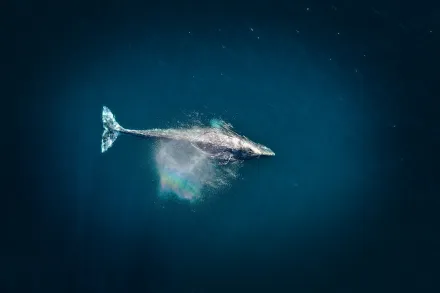
Whale manipulation is a broad phrase that people use to describe the ways in which behavior, physiology, and ecological patterns of whales are influenced by internal biological processes, social structures, and external forces. In this article, we explore manipulation not only as a deliberate act by humans or predators, but also as a natural phenomenon that emerges from the anatomy of cetaceans, their communication systems, and the cultural transmission that characterizes many whale populations. To understand manipulation, we must define the spaces in which influence takes root: sensory processing that alters perception, decision making under uncertain environmental conditions, and the cascading consequences of small behavioral shifts on migration routes, feeding strategies, and social bonds. This framing helps clarify why manipulation can be a double-edged sword, offering adaptive advantages in some contexts while imposing costs in others.
Historical context and concept of manipulation
Throughout maritime history, humans have observed whales not as passive creatures but as highly interactive actors whose choices shape their own fate and that of the communities around them. Early whaling eras centered on hunting priorities and resource extraction, yet even in those periods, observers noted moments when whales appeared to alter their movements in response to boats, noise, or the presence of gear. As science advanced, researchers began to describe manipulation in more nuanced terms: cetaceans adjusting vocalizations to avoid predators, altering dive patterns to optimize foraging given changing prey fields, and transmitting culturally learned behaviors from one generation to the next. In this evolving view, manipulation became not only an external force exerted on whales but also an intrinsic property of social systems, where influence is exerted, resisted, learned, and sometimes inverted. Academics often frame manipulation as a spectrum that ranges from simple reflexive adjustments to complex, deliberative choices influenced by memory, prediction, and social context. The historical arc reveals how our understanding has shifted from seeing whales as objects of human use to recognizing them as dynamic agents within ecosystems that respond to and shape their environments.
Biology of whales and how they perceive the world
Whales occupy a unique place in the animal kingdom, not only because of their size and longevity but also due to the sophisticated sensory and cognitive tools they rely on to interpret their world. The majority of large whales live in a three-dimensional milieu of air, water, prey, and human activity, where acoustic information dominates perception. Sound travels farther and more efficiently through seawater than vision in many contexts, so communication and echolocation are central to how whales find mates, locate prey, avoid danger, and coordinate with kin. A whale’s auditory system is integrated with complex neural circuits that support long-term memory, learned association, and social decision making. In social species such as orcas and some baleen whale populations, vocal traditions, complex social hierarchies, and culture-like learning processes shape how individuals respond to stimuli, select mates, and migrate. Visual cues, tactile contact, and even chemical signals in the ocean contribute to a multimodal perception that makes manipulation a layered phenomenon: external perturbations are filtered through perception, interpreted by cognition, and then acted upon in a way that affects survival and reproduction. The combination of sensory acuity, memory, and social influence creates a landscape in which whales continually adapt, negotiate, and sometimes resist external pressures.
Natural social dynamics that shape behavior
In the wild, whales live within intricate social networks that extend across generations, with groups that differ in composition, tone, and learned practices. Social dynamics can wield a powerful form of manipulation that is organic and self-generated. Calves acquire foraging techniques, vocal dialects, and migratory knowledge from experienced elders, sometimes customizing these lessons to local ecological conditions. Mature individuals may modify group structure through alliances, dominance displays, or mentoring behaviors that improve collective success. In such systems, manipulation operates not as coercion from a single actor but as distributed influence—soft power that emerges from reputation, success in foraging, and the accumulation of social capital. In some species, mothers play a pivotal role, guiding offspring along migratory routes and teaching them how to interpret complex acoustic landscapes laden with calls from other pods. The result is a dynamic tapestry where behavior is shaped by peer pressure, kin selection, and the uncertain calculus of long-term fitness, rather than a single mind imposing a unilateral plan. Understanding these natural forms of manipulation helps separate ecological realism from sensational narratives about mind control or puppet-like compliance.
Human-induced manipulation: acoustic environments
One of the most pervasive avenues of manipulation in the modern era is the alteration of acoustic environments. Whales rely on sound to navigate, feed, and connect with others across vast distances. When ships move through critical feeding or breeding grounds, or when military or industrial activities generate loud, persistent sounds, the acoustic landscape changes in ways that can disrupt communication, mask important signals, and shift prey distribution. Think of a chorus of distant explosions or a freight train of ship noise that travels across hundreds of miles; for a whale, detecting a predator or a conspecific call becomes more difficult, and the cost of misinterpreting a signal increases. This form of manipulation is often subtle and cumulative, gradually eroding the reliability of social contact, altering timing of dives and stomach content sampling, and prompting shifts in migratory timings to less noisy corridors. In some cases, the disruption is acute, causing stranded or disoriented individuals, while in others the effects accumulate across populations, reducing growth rates and altering reproductive success. The ethical and conservation implications of acoustic manipulation have spurred international dialogues about marine protected areas, noise budgets, and the deployment of technologies designed to minimize interference. This area sits at the crossroads of science, policy, and responsibility, calling for interdisciplinary collaboration to balance human needs with the resilience of whale populations.
Human-induced manipulation: physical interactions with gear and captivity
Beyond sound, physical interactions with gear, nets, lines, and vessel traffic pose tangible challenges that amount to manipulation of whale behavior and welfare. Entanglement events can force a whale to alter its movement, energy budget, and social contacts, sometimes trapping individuals in areas that increase susceptibility to predation or vessel strikes. The mere presence of fishing gear in crucial feeding areas can deter or redirect foraging, forcing whales to expend more energy or switch prey species. In captivity, the dynamic is inverted: humans curate the environment, training routines, and social exposures, which can significantly influence behavior, stress levels, and health outcomes. The ethics of captivity and the potential for shaping a whale’s behavior through routine, enclosure size, and social grouping raise important questions about welfare and the species’ long-term plasticity. While some argue that captivity enables research and public education, others caution about the costs to natural behavior, social structure, and stress physiology. In the broader context, human manipulation through physical means intersects with legal frameworks, community livelihoods, and the global push toward sustainable, respectful treatment of sentient marine life.
Ethics and conservation implications
Ethical considerations surrounding manipulation of whales revolve around respect for autonomy, noninvasive research, and the preservation of ecological integrity. The distinction between observation and manipulation becomes critical when designing studies that seek to understand behavior without unduly altering it. Conservation science emphasizes minimizing harm, avoiding intrusive interventions, and ensuring that any action taken in the name of research does not compromise the survival and well-being of individuals or populations. Philosophically, the question extends to the broader role of humans as stewards of the oceans: do we claim knowledge and intervene for the benefit of ecosystems, or do we risk imposing our own goals at the expense of the animals’ natural developmental trajectories? The practical dimension includes evaluating risk-benefit trade-offs, securing informed consent by proxy through robust ethical review processes, and implementing safeguards that limit unintended consequences. In addition, climate change intensifies manipulation pressures by altering prey availability, shifting ranges, and changing ocean chemistry, thereby compounding the effects of noise and gear interactions. Conservation strategies increasingly rely on adaptive management, where scientists monitor outcomes, adjust actions in light of new evidence, and involve stakeholders from coastal communities, fisheries, and indigenous groups who hold traditional ecological knowledge. The overarching aim is to harmonize human activity with the intrinsic needs and resilience of whale populations, recognizing that manipulation, in its most responsible form, should minimize harm while supporting long-term ecological balance.
Case studies: sonar and beaked whales
Beaked whales provide a stark illustration of how anthropogenic sound can influence whale behavior and well-being. Disturbances from mid-frequency sonar, used in naval exercises, can trigger rapid, extreme dives in beaked whales as they attempt to avoid perceived threats, sometimes leading to decompression injuries or strandings. Observations from field studies and controlled experiments reveal that even distant noise can prompt changes in communication patterns, movement, and feeding efficiency. In some instances, humpback and sperm whale groups display altered singing behavior or migratory timing in response to sustained noise, suggesting that manipulation operates across species through common sensory channels. These cases underscore the complexity of assessing causality in wild populations, where multiple stressors—noise, pollution, prey scarcity, and climate variability—converge. The lessons from beaked whales have shaped policy debates about noise regulation, marine protected areas, and the necessity of baseline acoustic ecology to evaluate the health of oceanic ecosystems. They also highlight the ethical imperative to reduce unnecessary disturbance in critical habitats, particularly during sensitive life stages such as calving or peak feeding periods.
Case studies: migration, feeding, and social disruption
Migration corridors for several baleen and toothed whales traverse busy coasts and international waters, exposing animals to a mosaic of human activities. Shipping lanes, offshore construction, and resource extraction projects can all perturb customary routes, timing, and feeding grounds. When prey distributions shift due to warming oceans or overfishing, whales may alter their foraging strategies, as well as their social interactions, with ripple effects on calf survival and pod cohesion. Social disruption is another consequence of manipulation: when acoustic or physical disturbances fragment groups, pods may lose access to culturally important knowledge, such as routes learned from elders or specific calls used to coordinate mating displays. Researchers have documented changes in singing herds, shifts in alliance structures among orcas, and altered male competition dynamics in response to external pressures. The cumulative impact of these disruptions may compromise reproductive success and genetic diversity over time, emphasizing the need for proactive management that preserves not only individual welfare but also the integrity of long-standing social and cultural processes within whale populations. This body of evidence reinforces the view that manipulation is not a mere nuisance but a determinant of population resilience in rapidly changing maritime environments.
Methods for studying manipulation
Studying manipulation requires a careful blend of observational science, experimental design, and noninvasive instrumentation. Longitudinal observations across seasons enable researchers to distinguish between natural variability and systematic shifts associated with human activity. Passive acoustic monitoring, tag-based data collection, and population genetics analyses provide a multi-layered picture of how whales sense, remember, and adapt to their surroundings. Modern techniques include non-invasive tagging that records motion, depth, and sound exposure while minimizing stress, as well as drone-assisted surveys that capture behavioral context without direct interference. Comparative studies across species reveal which traits—such as social learning capacity, vocal learning, or foraging flexibility—predict higher susceptibility to manipulation. Finally, ethical review boards and marine mammal protection regulations shape the scope of permissible experiments, pushing the field toward approaches that prioritize welfare and ecological relevance. The synthesis of these methods helps disentangle direct effects of human actions from natural variability, enabling more accurate assessments of risks and more effective, targeted conservation interventions.
Technologies and future directions
Technological advances hold promise for both mitigating manipulation and enhancing our understanding of whale behavior. Developments in quiet-technology propulsion, route optimization for ships to reduce noise footprints, and acoustic camouflage strategies are areas of active research aimed at reducing anthropogenic disturbance. Simultaneously, advances in machine learning, biomechanics, and noninvasive remote sensing expand the ability to detect subtle behavioral changes, identify culturally transmitted patterns, and forecast population responses to environmental change. The future may see adaptive management frameworks that integrate real-time acoustic data with oceanographic models to guide policy decisions and shipping practices. Public-facing initiatives that share whale-friendly practices with fisheries, shipping industries, and coastal communities can translate scientific insights into practical behavior, encouraging responsible stewardship without curtailing the essential human uses of marine space. Embracing interdisciplinary collaboration across ecology, engineering, anthropology, and policy will be crucial to balancing the needs of humans with the complex social and ecological realities of whale life.
Myths, misinterpretations, and critical thinking
Popular narratives often sensationalize the idea of mind control or manipulation by distant technologies, leading to misunderstandings about how whales respond to human activities. A careful, evidence-based approach clarifies that what appears as manipulation is typically the result of broad patterns: noise masking, energy trade-offs during foraging, shifting prey availability, and adaptive adjustments to social signals rather than a single actor coercing many individuals. Critically, any claim about manipulation must be anchored in measurable indicators—changes in movement patterns, vocal behavior, feeding success, or reproductive metrics—across defined time frames and ecological contexts. This science requires humility and restraint: researchers should acknowledge uncertainty, avoid overgeneralization across species with diverse ecologies, and present information in a way that informs policy without creating fear or fatalism. When media and stakeholders engage in responsible communication, the public gains a more accurate understanding of how whale behavior responds to a noisy, changing ocean, and why thoughtful, science-based management matters for the persistence of these remarkable marine mammals.
Integrated perspectives: synthesis for stewardship
To appreciate whale manipulation in its full complexity, one must weave together physiology, cognition, culture, environment, and human responsibility. Whales do not exist in isolation from the ecosystems that sustain them, and their responses to external pressures reveal the intricate dependencies that characterize marine life. A holistic view considers how social learning shapes behavior across generations, how acoustic environments modulate communication networks, and how policy choices either cushion or amplify the impacts of human activity. By integrating knowledge from field observations, laboratory experiments, theoretical modeling, and community-based monitoring, researchers can identify leverage points where interventions yield the greatest benefits with the least risk. For instance, scheduling industrial activities to avoid peak feeding windows, designing quieter marine technologies, and expanding protected areas that preserve song traditions and migratory routes can collectively reduce manipulation's adverse effects. In this sense, conservation becomes a collaborative practice grounded in science, ethics, and respect for cetacean autonomy, aimed not at controlling whales but at sustaining the conditions under which they can thrive.
Closing reflections on a living ocean of influence
The topic of whale manipulation ultimately invites us to reflect on the responsibilities that accompany our power to affect the living world. Whales are not mere subjects of study; they are complex, sentient beings whose lives unfold within a dynamic ocean where forces external and internal constantly intersect. Our exploration of manipulation—how it arises, how it manifests, and how we can mitigate harmful forms while acknowledging legitimate scientific and conservation aims—leads to a practical ethic: act with precaution, measure with rigor, and engage with humility. When we acknowledge the subtle ways in which our presence can shape cetacean behavior, we are better prepared to design policies, technologies, and collaborations that minimize harm while honoring the intrinsic value and resilience of these giants of the sea. The path forward rests on listening to the animals themselves through careful observation, on reducing unnecessary disturbance, and on building a global community that prioritizes ecological health, cultural heritage among whale populations, and the long arc of ocean stewardship.