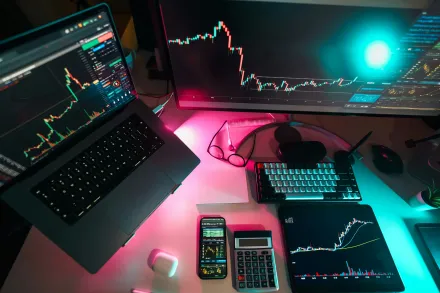
Technical analysis in crypto trading is a disciplined approach to understanding price movements, market dynamics, and probability based upon price data, traded volume, and the visible structure of charts. It is not a guarantee of future results, but a framework that aims to reveal patterns, momentum, and probable paths of price action by studying historical information. In the cryptocurrency markets, where headlines, sentiment, and speculative participation can drive rapid shifts, technical analysis seeks to quantify the likely direction and the potential magnitude of moves over various time horizons. The core idea is that all known information, including expectations about regulation, technology updates, and macroeconomic factors, is reflected in the price and volume of a given asset, and that repeating patterns emerge as buyers and sellers interact under the influence of those shared beliefs.
At its heart technical analysis rests on the premise that price discounts all known information and that price action alone can reveal the collective psychology of market participants. Although some critics emphasize the role of fundamentals in evaluating value, many traders prefer to focus on charts because price dynamics respond quickly to changing conditions and often display self-reinforcing tendencies. Crypto markets present unique opportunities and challenges for technical analysts, including round-the-clock trading, a wide variety of assets with differing liquidity levels, and frequent bursts of volatility that can both create powerful trends and generate sudden retracements. In this setting, technical analysis becomes a practical toolkit rather than an abstract theory, enabling traders to identify trends, gauge strength, and assess risk in a way that aligns with their specific time horizons and risk tolerances.
To engage effectively with technical analysis in crypto, a reader should appreciate that charts are not a crystal ball but a map of probabilistic outcomes. Traders translate visual information into quantitative signals, such as an upward slope in a price chart indicating an uptrend or a contraction in volatility suggesting a potential period of consolidation. This mapping from color and line to probability requires discipline, careful observation, and a clear set of rules that govern when to enter, exit, or adjust a position. The art lies in recognizing which signals have a meaningful edge given the asset’s liquidity, the current stage of the market cycle, and the trader’s risk management framework. The science involves understanding the reliability of different indicators, how to combine multiple signals to reduce false positives, and how to adapt to changing market regimes without abandoning a well-tested plan.
In crypto markets, technical analysis often begins with a broad view of trend and momentum. A trend can be identified by the alignment of price and indicators over distinct periods, letting a trader observe the prevailing direction and the rhythm of pullbacks. Momentum helps quantify the speed of movement and whether buyers or sellers are gaining control. Together, these concepts create a platform from which more granular techniques can be layered. Chartists study patterns that reflect crowd sentiment, such as ranges where buyers and sellers repeatedly test price levels, or breakouts when price decisively moves through a resistance barrier accompanied by rising volume. Each of these manifestations provides clues about the likely next moves and the level of conviction behind those moves. The crypto market’s 24/7 nature adds complexity, requiring attention to how events in a given asset can quickly influence the flow of capital and the resulting chart signals across different timeframes.
Analysts use a spectrum of tools that range from visually intuitive methods to more formalized quantitative measures. On the visual side, trendlines, support and resistance zones, and chart patterns like channels and triangles help identify structural features of price action. Trendlines connect significant highs or lows to reveal the validity and strength of a trend, while support and resistance mark price levels where supply and demand historically shift. Chart patterns are configurations that appear repeatedly as the market tests boundaries, and although they are not certainties, they embody collective expectations about potential outcomes. The quantitative side adds indicators that interpret price data through mathematical formulas, producing numerical values that can guide decisions. Moving averages smooth out noise to reveal longer-run direction, oscillators measure overbought or oversold conditions, and volume-based indicators assess the participation behind a move. The credible application of these tools rests on understanding their assumptions, their limitations in fast-moving crypto environments, and how to interpret conflicting signals in a coherent way.
A practical perspective on technical analysis in crypto trading emphasizes the relative nature of its signals. Signals do not exist in isolation but in the context of a trader’s chosen time frame, risk tolerance, and portfolio composition. A signal that looks compelling on a short time frame may be less reliable when viewed through a longer horizon, just as a bright pattern on a low-liquidity asset may fail during a period of high volatility when orders cannot be filled at expected prices. Seasonality, macroeconomic surprises, and technological events such as network upgrades or changes in tokenomics can shift the baseline behavior of a chart, making it essential to adapt methods to regime shifts rather than cling to a single, static set of rules. This adaptive mindset does not reject the value of established patterns but acknowledges that their predictive strength can wax and wane with changing market conditions, liquidity availability, and participant behavior.
One common approach within technical analysis is to start with a broad overlay of trend across multiple timeframes to obtain a composite view of the market context. For crypto traders, it can be beneficial to examine a longer horizon to determine the dominant bias, then zoom into shorter periods to refine entry and exit plans. This multi-timeframe perspective helps align the macro view with tactical decisions, reducing the likelihood of esoteric signals pulling a trader into contradictory trades. In addition, traders frequently consider the relationship between price action and volume, recognizing that price moves accompanied by healthy volume tend to have higher probability than moves on thin liquidity. The interpretation of volume varies across assets and exchanges, yet the core idea remains: participation confirms the strength or weakness behind price changes, adding a layer of validation to signals derived from price alone. Understanding this relationship can prevent mistaking a temporary spike for a durable breakout or mistaking a quiet market for the absence of opportunity.
Within the toolbox of technical analysis, moving averages serve as a bridge between the raw price data and the trader’s perception of trend. A moving average smooths fluctuations by averaging price over a defined period, providing a delayed but often clearer signal of direction. Shorter moving averages respond quickly to price changes but can produce more false signals; longer moving averages respond more gradually and tend to filter out noise, offering a steadier read on trend. Many traders watch crossovers where a shorter moving average crosses above or below a longer one, interpreting these events as potential inflection points. While these crossovers can be informative, they should not be used in isolation, as whipsaws are common in volatile crypto markets and can trap unprepared participants. The judicious combination of multiple indicators, with attention to the asset’s liquidity and trading hours, cultivates a more robust approach to trend identification and follow-through.
Momentum indicators provide another layer of insight by measuring the speed of price changes rather than the level alone. Relative Strength Index and similar oscillators, for example, quantify whether a market is overbought or oversold, offering a framework to assess the probability of a mean-reversion or a continuation. Traders often use momentum in conjunction with trend analysis to determine whether a breakout is likely to be sustained or whether it may exhaust quickly. In crypto markets, momentum can be amplified by speculative enthusiasm or by the rapid absorption of information, making it imperative to calibrate thresholds to the asset’s historical behavior and to avoid over-reliance on any single metric. When used thoughtfully, momentum indicators can help identify high-quality entry points and disciplined exit points, including the careful placement of stop losses that reflect the expected pace of price changes and the trader’s risk appetite.
Beyond moving averages and momentum, chart patterns like triangles, flags, wedges, and head-and-shoulders formations offer a narrative about how buyers and sellers interact over time. These patterns are not guarantees but signposts that summarize a complex sequence of decisions into a concise visual form. The interpretation of a pattern depends on its context, prior price action, and the accompanying volume profile. A breakout accompanied by rising volume can signal a stronger conviction behind the move, whereas a break on low volume may indicate a lack of follow-through. Crypto traders often pay close attention to how patterns play out near significant price levels such as round numbers, historical highs, or well-defined support and resistance zones that have shown repeated relevance. The story told by chart patterns is individualized to the asset and market phase, and successful practitioners integrate pattern recognition with other evidence to improve the likelihood of favorable outcomes.
Another essential element is the use of volume-based indicators that examine the relationship between price and participation. On-chain metrics, while not traditional chart patterns, can complement technical analysis by shedding light on the behavior of market participants, particularly in crypto markets where on-chain data provides a window into activity such as wallet movement, token spend velocity, and liquidity changes across exchanges. The insight gained from the interaction of price and on-chain signals can help a trader distinguish between a genuine trend and a speculative blip, enabling more informed decisions about when to enter, scale, or exit a position. While on-chain metrics introduce a different data environment with its own limitations, integrating them with conventional chart analysis can provide a richer, multi-dimensional view of market dynamics that is particularly valuable in the crypto arena.
Time Frames and Market Context
Time frame selection shapes every technical analysis decision in crypto trading. Some traders operate on ultra-short horizons where every minute or hour matters, while others pursue medium-term or long-term perspectives aligned with a more patient approach. The choice of time frame influences which signals are considered meaningful, how signals are filtered, and where risk controls are placed. A short-term trader may focus on intraday volatility, rapid order flow, and patterns that unfold in a few candles, whereas a longer-term trader might prioritize sustained trends, periodic retracements, and the durability of support and resistance levels across weeks or months. The key is to harmonize the time frame with the trader’s objectives, liquidity constraints, and capacity to monitor markets without becoming overwhelmed by noise or fatigue. In the crypto space, where price action can swing rapidly in response to news, it is particularly important to acknowledge that short-term signals may be less reliable during periods of heightened uncertainty and that longer-term assessments can provide steadier guidance during such episodes. A coherent time frame strategy reduces the risk of chasing false signals and helps maintain consistency across trades.
In practice, traders often begin with a broad, higher-timeframe analysis to establish the dominant trend and potential zones of interest, then drill down into lower time frames to validate entries and refine exit points. This approach balances perspective and precision, allowing for an alignment between major market structure and tactical execution. The broader view helps prevent premature entries that fail to capture the larger context, while the finer view supports more efficient risk management and better timing. Crypto markets demand vigilance because structural shifts can occur quickly due to external events or internal market dynamics. Maintaining a flexible yet disciplined approach to time frames helps traders adapt to evolving conditions and avoid being blindsided by abrupt developments in liquidity or sentiment.
Market context also includes the awareness of different phases of a market cycle, such as accumulation, markup, distribution, and markdown. Recognizing these phases can guide both signal interpretation and risk management, as certain setups may be more reliable in one regime than another. For example, in a strong uptrend, pullbacks that find support near a rising moving average may offer favorable entry points with an attractive risk-reward profile. Conversely, in a prolonged downtrend, breakouts that occur on light volume may be less trustworthy, and traders may favor triggers aligned with confirmations from multiple indicators. The ability to read the market cycle and to adjust expectations accordingly is a crucial skill for technical traders who operate within the crypto ecosystem, where regimes can shift with news, technology developments, or macro forces that influence risk appetite and liquidity conditions.
Pattern Recognition and Psychological Underpinnings
Chart patterns are practical expressions of collective behavior. They reflect how participants react to price levels, how risk is allocated, and how information is absorbed by the market. When a rising price forms a series of higher highs and higher lows, it signals a buyer-driven environment where momentum can sustain itself for a period. Conversely, a decline with lower highs and lower lows points to a seller-dominated phase where fashion, fear, or uncertainty may be driving selling pressure. Patterns such as wedges, triangles, and flags capture periods of consolidation where buyers and sellers are in a tug-of-war, waiting for new information or a change in sentiment to push the price decisively in one direction. The psychology behind these patterns is rooted in expectations: participants anticipate the outcome implied by the pattern, and their actions collectively move the price toward that outcome, validating or invalidating the pattern as time passes. Recognizing the psychological rhythm behind a pattern allows traders to interpret signals with a sense of probability rather than certainty, encouraging flexible risk management and adaptive decision making.
In addition to classic patterns, crypto markets display unique manifestations of crowd psychology. The speed at which information disseminates, the impact of social sentiment, and the presence of influential market makers can create rapid shifts that may not be rapidly accounted for in traditional technical frameworks. This reality invites caution and a preference for signals that demonstrate consistency across time and context. Traders often test multiple signals against different market states to see whether a given setup holds up under diverse conditions. They also pay attention to the reliability of the signal in relation to liquidity, since a pattern that looks strong on a chart may fail if an asset cannot absorb the volume needed to sustain momentum. By integrating an understanding of psychology with chart-based evidence, technical practitioners in crypto increase their ability to distinguish meaningful opportunities from transient noise.
Another dimension of psychology touches risk appetite and position sizing. Even when a technical signal is compelling, a trader may choose to reduce exposure to guard against misreads or unexpected shifts in narrative. This mindset helps protect capital and supports a longer trajectory of learning and refinement. It also underlines the fact that technical analysis is part of a broader discipline that includes risk control, emotional discipline, and adherence to a well-defined trading plan. By acknowledging the influence of psychology on decision making and by leveraging robust signal processing and risk controls, traders in crypto can pursue a disciplined approach that improves the consistency of outcomes over time.
Volume, Liquidity, and Market Microstructure
Volume is a practical proxy for market participation and strength behind price movements. In crypto markets, where liquidity can vary substantially between assets and exchanges, volume analysis becomes a critical tool for validating signals. A breakout that occurs on strong volume is generally regarded as more trustworthy than one that happens with tepid participation, because it implies a broader base of buyers and sellers endorsing the move. Conversely, a breakout on light volume may indicate a lack of conviction and a higher likelihood of a false breakout or a rapid retracement. Traders often examine volume in conjunction with price action to assess the probability of continuation versus reversal. The distribution of volume across time, the presence of spikes, and the relationship to notable price levels all contribute to a more nuanced understanding of the market’s current tempo. A nuanced view of liquidity, including depth of order books and the capacity to absorb sizable orders without significant slippage, helps refine risk management and trigger placement, especially in markets with thinner liquidity or during periods of stress when price moves can become exaggerated.
Market microstructure in crypto includes the mechanics of order flow, exchange execution, and the impact of routing and slippage on trade outcomes. The way orders are filled, canceled, or executed at different price points can influence the realized performance of a trade, particularly for larger positions or for assets that experience fragmented liquidity across multiple venues. Traders who recognize these realities may incorporate practical checks such as expected slippage into their risk calculations and may prefer to execute in venues with stable liquidity profiles during times of heightened volatility. While it is not possible to eliminate execution risk entirely in fast markets, a thoughtful consideration of where and how trades are executed can improve the reliability of the technical signals and the overall effectiveness of a trading plan in the crypto environment.
In addition to on-exchange liquidity, on-chain activity for certain assets provides another lens on liquidity and potential price movement. On-chain metrics can reveal the rhythm of token circulation, the behavior of large holders, and the pace at which new demand is entering the market. While these metrics are not charts in the traditional sense, they reinforce the interpretation of chart-based signals by indicating whether the price trend has underlying support from network activity and capital inflows. Integrating on-chain insights with price-based technical analysis can yield a more comprehensive perspective, helping to discern whether a move reflects genuine demand or is primarily driven by speculative trading. It also highlights the importance of understanding the data environment in crypto, where multiple data sources and data quality considerations can influence signal reliability.
Practical Steps to Apply Technical Analysis in Crypto
Applying technical analysis in real trading requires a careful sequence of steps that emphasizes discipline, repeated practice, and a clear framework for decision making. A practical approach begins with clarifying the objective and the time horizon, because the same asset may support different strategies depending on whether one is seeking a quick intraday opportunity or a longer-term growth narrative. The next step involves selecting a liquid asset with reliable data and a healthy trading history, since liquidity reduces execution risk and improves the reliability of signals. After choosing the asset, a trader establishes a primary directional bias by examining the longer time frame for trend orientation and key support and resistance levels that may shape the path of least resistance. This broad view provides the foundation for the subsequent, more granular analysis on shorter time frames, where entries and exits are refined through a combination of indicators, price patterns, and situational awareness. The process includes identifying a setup that aligns with the trader’s risk parameters and the asset’s behavior, followed by a plan for risk control such as stop placement, position sizing, and an exit strategy that captures profit while limiting losses. The emphasis on plan, test, and adjust ensures that technical analysis remains a living process rather than a static set of rules. Practically, a trader may confirm a potential entry with a confluence of signals from trend direction, a recognized chart pattern, and a supporting volume pattern, then implement a stop that accommodates the likely range of price fluctuations given the asset’s volatility.
Risk control is a cornerstone of effective technical trading in crypto. Position sizing should be aligned with the portfolio’s risk tolerance, so that a single trade does not jeopardize overall capital. A common approach is to limit the risk per trade to a small percentage of the total capital, based on the distance to the stop loss and the position size. This principle helps ensure that a string of unfavorable outcomes does not erode the entire trading capital and allows for continued participation in the market across different regimes. The stop loss should reflect both the volatility of the asset and the structure of the setup and should be placed at a logical level, such as a clear previous swing high or low, a breach of a defined support or resistance zone, or a calculated percentage distance that accommodates market noise. The take profit targets can be set using projected price ranges derived from measured volatility, measured moves from a pattern, or the proximity of a next significant price level. A disciplined approach to exit planning reduces the emotional burden of decisions during active trades and supports adherence to the trading plan even in turbulent markets.
The day-to-day practice of technical analysis also benefits from a structured routine. A routine may involve a steady process of scanning multiple charts to identify new opportunities, performing quick sanity checks to ensure that the asset’s liquidity and data quality meet the thresholds for reliable signals, and documenting the rationale for each trade. Keeping a journal helps track what setups succeed and which ones fail, supporting ongoing learning and refinement. The practice can incorporate backtesting as a way to estimate the historical effectiveness of a strategy over a defined sample period, while recognizing that past performance does not guarantee future results. A mature approach uses backtesting not as a guaranteed predictor but as a means to estimate probabilities, to measure risk-adjusted expectations, and to understand how different market conditions may affect a strategy’s performance. Backtesting should be complemented by forward testing in a live, small-scale environment to observe how signals translate into outcomes under real-time conditions, including slippage, latency, and changes in liquidity that are characteristic of crypto markets.
Common Pitfalls and Limitations of Technical Analysis
Despite the appeal of technical analysis, practitioners should understand its limitations, especially in the crypto arena where volatility can be extreme and market structure can shift rapidly. A central pitfall is overfitting, where a trader tailors a strategy to past data so precisely that it loses predictive power in new conditions. Overfitting often arises when too many indicators or too many rules are combined, producing a model that explains historical outcomes but performs poorly in live trading. To mitigate this risk, many traders emphasize simplicity, robust risk controls, and the use of signals that have demonstrated resilience across multiple periods and environments. A related risk is the misinterpretation of random patterns as actionable signals, a danger heightened by the vast amount of data available in crypto markets. Traders can counter this by testing hypotheses across different assets and time frames, maintaining skepticism toward signals that lack coherence across contexts, and by requiring a reasonable degree of confirmation before acting.
Another limitation concerns data quality and market microstructure. Crypto markets involve disparate liquidity across exchanges, asynchronous price feeds, and occasional data gaps that can distort technical readings. Traders need to be aware of the data sources they rely on, the potential for latency, and the possibility that one venue remains more liquid than another, leading to slippage that diminishes the reliability of a setup. This reality argues for cross-checking signals against multiple data points, including price action on different exchanges and, when possible, volume patterns that reflect the overall market participation rather than a single venue snapshot. It also invites caution around patterns that depend on thin liquidity or unusual order book dynamics, where a seemingly clear breakout could be an artifact of synthetic or manipulated activity rather than a robust move supported by genuine demand.
Another significant caveat is the presence of external shocks and regime changes. Crypto markets can react strongly to regulatory developments, technological upgrades, or changes in competing networks, which can abruptly alter the probability landscape for existing setups. Technical analysis does not guarantee protection against such events, but it can be used to adjust risk posture in light of new information. Traders should be prepared to exit or reduce exposure when the market narrative shifts in a way that renders prior signals less reliable. Understanding the limits of technical inference in the face of exogenous shocks is essential for maintaining cautious, resilient trading practices rather than becoming overconfident in historical patterns that may no longer apply.
In addition to these concerns, the behavioral aspect of market participants can lead to self-fulfilling prophecies. When a large number of traders react to the same signals, their collective actions can amplify price moves and create the conditions that the signal suggested, at least temporarily. While this phenomenon can create profitable opportunities, it also risks sudden reversals if the crowd loses conviction or if new information shifts sentiment. Recognizing the social and psychological dynamics behind chart signals fosters a more nuanced approach to technical analysis, encouraging traders to consider signal strength, duration, and corroboration across multiple indicators rather than relying on a single cue in isolation.
Backtesting and Strategy Evaluation
Backtesting is the process of evaluating a trading idea using historical data to estimate its potential performance. In crypto, backtesting can illuminate how a strategy would have behaved across different market conditions, including bull runs, bear markets, and periods of high volatility. The value of backtesting lies in identifying plausible edge, assessing risk and return characteristics, and revealing weaknesses that require adjustment before live deployment. However, backtesting must be undertaken with care. The quality of the data, the representativeness of the sample period, and the realism of the execution assumptions all influence the reliability of results. Traders should consider transaction costs, slippage, and the impact of liquidity on fills, since ignoring these elements can yield overoptimistic expectations. A disciplined approach to backtesting includes using walk-forward testing, which involves adjusting a strategy based on one portion of data and testing it on another, helping to guard against overfitting and revealing how the strategy might generalize to unseen conditions.
Beyond static backtests, forward testing in a live but controlled environment provides a more faithful test of a strategy’s viability. Forward testing allows traders to observe how signals perform in real time, with actual market dynamics, while keeping risk exposures modest. This form of testing helps reveal implementation challenges, such as the exact timing of entries and exits, the responsiveness of signals to fast-moving markets, and the real-world impact of slippage on profitability. A robust evaluation framework combines backtesting and forward testing, using out-of-sample data to verify that the edge observed in historical data continues to hold in practice. By adopting a rigorous and iterative testing regime, a trader can gain confidence in a strategy and build a durable approach to technical trading in crypto markets.
Integration with Fundamental Considerations and Sentiment
While technical analysis centers on price and volume, it does not exist in a vacuum. Crypto markets react to news, regulatory updates, technological advances, and shifts in investor sentiment, all of which can drive sudden changes in price behavior. Integrating qualitative factors with quantitative signals creates a more holistic view of market conditions. For example, a bullish fundamental development, such as a major network upgrade delivering improved scalability, could support a sustained uptrend that technical indicators eventually reflect through rising momentum and higher highs. Conversely, negative news can trigger rapid declines, where technical signals may serve as confirmation of a shift in sentiment or as early warning signals of a trend reversal. The effective analyst maintains an awareness of the broader context, uses technical signals as evidence within a larger information set, and remains prepared to adjust the approach when fundamentals or sentiment shift meaningfully. This synergy enhances decision making and reduces the risk of operating in a vacuum, which is particularly important in the dynamic and fast-moving crypto ecosystem.
Sentiment analysis, including the study of social media trends, exchange flows, and crowdfunding patterns for new tokens, can complement chart-based indicators by offering a probabilistic view of how the market may respond to evolving narratives. Although sentiment data should be treated carefully due to potential noise and manipulation, it can provide useful context when signals from price and volume align with shifts in collective mood. The goal is not to equate sentiment with price direction but to understand how it may influence the probability distribution of future moves. A disciplined trader uses sentiment as one input among many, integrating it with technical evidence and risk controls to produce well-considered decisions rather than impulsive responses to headlines or hype.
Risk Management and Mindset for Technical Traders
Risk management is the backbone of sustainable performance in technical crypto trading. The most important objective is to protect capital while maintaining the capacity to participate in favorable opportunities. A core practice is to limit the amount of capital at risk on any single trade, ensuring that even a string of losers does not erode the entire portfolio. Position sizing, stop placement, and the spread between entry and target are all components of a risk-aware framework. Stops should be located at levels that reflect the asset’s volatility and the structure of the trade, not at arbitrary price points. This disciplined approach helps manage the emotional strain that arises from rapid market swings and reduces the likelihood that fear or greed will drive irrational decisions. A further dimension is the maintenance of a trading journal and a consistent review routine. Recording the rationale for each trade, the outcome, and the lessons learned fosters continuous improvement, helping a trader evolve from reaction to deliberate, evidence-based practice. A balanced mindset—one that remains patient in the face of drawdown and persistent in the face of opportunity—supports long-term success in the unpredictable realm of crypto markets.
In practice, risk management also involves diversifying exposure across assets, timeframes, and strategies to reduce the impact of any single event. A diversified approach helps mitigate idiosyncratic risk and provides opportunities to participate in various market regimes. Yet diversification should be practical, aligned with liquidity considerations and the trader’s capacity to monitor positions effectively. The mental discipline required to adhere to a plan during periods of drawdown is a common differentiator between durable performance and brittle results. Traders who cultivate a robust routine, maintain humility in the face of uncertain outcomes, and remain open to revising their assumptions as data accumulate tend to develop a more resilient practice. The goal is not to avoid risk entirely but to align risk with probability, to manage exposure prudently, and to preserve the ability to continue learning from each market cycle.
Choosing Tools, Platforms, and Data Quality
The technical analyst’s toolkit includes software platforms that provide charting capabilities, data feeds, and the capacity to apply a range of indicators. When selecting tools, traders weigh factors such as data quality, latency, reliability, and the breadth of assets available for analysis. A robust platform should offer clean chart rendering, accurate time stamps, and dependable historical data to support backtesting and ongoing monitoring. Data quality matters because inaccurate prices, inconsistent cadence, or missing data can distort signal interpretation and lead to erroneous decisions. In crypto markets, where data can be fragmented across exchanges and networks, it is prudent to cross-validate signals using multiple sources and to be aware of discrepancies that may arise in real time. Traders may also consider the integration of external resources such as news feeds, on-chain metrics, and sentiment indicators, provided they are integrated in a way that preserves clarity and avoids information overload. The ideal setup is one that enhances signal recognition without creating analytical noise that impairs timely and disciplined execution.
Platforms may also differ in terms of order execution quality, slippage, and the ability to implement risk controls, which can materially affect the realized performance of a strategy. Traders should test the practical aspects of their plan on the chosen platform, including order types, slippage assumptions, and the behavior of stops during volatile periods. A thoughtful approach to tool selection emphasizes reliability, transparency, and the capacity to reproduce results across different market conditions. It also recognizes the value of staying updated on platform improvements and market structure changes that could affect how signals translate into trades. In the fast-evolving world of crypto, a well-chosen set of tools can become a competitive advantage, enabling more precise interpretation of signals and more controlled execution, while still preserving the essential emphasis on risk management and strategic discipline.
Crafting a Personal Trading Plan Based on Technical Analysis
A personal trading plan formalizes the methods by which a trader translates technical analysis into action. It describes the assets to trade, the time frames to monitor, the rules for entering and exiting trades, and the metrics used to assess performance. A well-constructed plan reflects the trader’s risk tolerance, capital base, and the environment in which they operate. It emphasizes consistency, which is often achieved through clearly defined criteria for signal quality and confidence thresholds, combined with a structured approach to position sizing and exit planning. The plan should also delineate conditions under which a trader reduces exposure or refrains from trading, to prevent overtrading during uncertain periods. Importantly, a good plan includes a process for ongoing refinement, inviting periodic evaluation of what is working, what is not, and why. The objective is to cultivate a robust, adaptive practice that preserves capital, respects market realities, and supports steady advancement in the understanding and application of technical analysis within the crypto space.
The final ingredient of a personal plan is a focus on continuous learning. Markets evolve as new assets emerge, liquidity shifts, and participants adapt to changing incentives. A skilled technical analyst remains curious about how different indicators perform under various conditions and remains vigilant for signs that established relationships may be weakening. This lifelong learning mindset helps ensure that a trader’s approach remains relevant and resilient, providing a path toward more reliable decision making in a complex, dynamic market environment. The true value of technical analysis in crypto trading lies not in predicting every move with certainty but in building a structured framework that improves the probability of favorable outcomes over time, respects risk, and supports disciplined, thoughtful engagement with one of the most vibrant and challenging markets in the financial world.