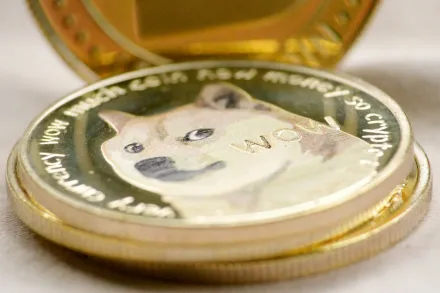
In the modern ecosystem of digital finance, meme coins have risen from the margins of speculative chatter to a pervasive social phenomenon that captures the attention of novices and seasoned traders alike. Their ascent is not merely a function of clever branding or random luck; it is the product of a complex interplay between psychology, online communities, media dynamics, and market mechanics. The phenomenon sits at the crossroads of culture and commerce, where a shared joke can become a shared investment thesis, and where the speed of information exchange through social platforms magnifies both enthusiasm and risk. This article delves into the factors that drive the rapid adoption of meme coins, the mechanisms by which they sustain momentum, and the realities that shape their trajectory in a volatile financial landscape.
At the heart of the meme coin surge lies a compelling narrative engine. Memes are not merely images with captions; they are portable stories that convey meaning with remarkable efficiency. A meme distills a concept into a recognizable symbol, often layered with humor, irony, and an implied social contract. When a meme coin adopts a character or inside joke, it becomes a vessel for collective identity. The moment the narrative aligns with broader online conversations—whether about decentralization, community ownership, or a quirky sense of rebellious humor—the token gains a foothold in the consciousness of online audiences. This narrative resonance lowers psychological barriers to participation, turning casual observers into engaged participants who want to be part of the story. The speed with which such stories spread on platforms that encourage rapid remixing, such as image boards, short-form video, and live streaming, amplifies the reach and accelerates the feedback loop that propels a meme coin from novelty to near-ubiquity.
Community is the lifeblood of meme coins. The sense of belonging cultivated in online circles provides a powerful motivation to buy, hold, and discuss the token even when more conventional investment theses might offer clearer financial fundamentals. Communities create shared rituals, signaling norms, and informal governance practices that give participants a sense of agency. When members feel heard and seen, their commitment deepens, and they become ambassadors who recruit others into the fold. The social fabric of these groups often extends beyond trading cues into cultural participation, such as meme creation, parody music, and collaborative art. This social dimension is not an incidental feature; it is a central engine that sustains engagement and fosters a perception of value that goes beyond price alone. The social contract within a meme coin community can also shape behavior during downturns, as collective optimism or stubborn loyalty can dampen panic selling and maintain a base level of demand that cushions volatility.
Accessibility and low barriers to entry are inherent advantages of meme coins. In many cases, a meme coin is priced at fractions of a cent, allowing virtually anyone with a smartphone to participate with a modest investment. This affordability creates a sense of inclusivity and signals that even small contributions can be meaningful within the larger community narrative. The ease of participation, coupled with the entertainment value of memes, lowers the cognitive obstacles to entry for new participants who may be overwhelmed by traditional technical analyses or complex tokenomics. The intangible nature of meme culture—where ownership is as much about identity as about financial stake—helps to democratize participation, at least in the early stages of a token’s life cycle. However, this very accessibility also widens the field of entrants with varying levels of experience and risk tolerance, creating a wider spectrum of outcomes and a greater need for education and responsible investment practices.
Media amplification serves as a turbocharger for meme coins. The attention economy rewards novelty, rapid virality, and endorsement from prominent voices. When a high-profile influencer, celebrity, or media outlet engages with a meme coin, the price and user base can experience a sudden, sharp uptick as new participants rush to join the conversation. The amplification effect is not solely about endorsement; it is also about the narrative fragments that media can package for consumption. Short videos, meme compilations, and hot takes can distill complex ideas into digestible portions that resonate with audiences across demographics. This cross-channel propagation creates a feedback mechanism in which every new adopter becomes a potential content creator, further fueling visibility. In this dynamic, the quality of discourse around the token often matters less than the sheer volume and velocity of coverage, which can sustain momentum even in scenarios where fundamentals are unclear or developing more slowly than the price action suggests.
Liquidity and market structure play a pivotal role in the popularity of meme coins, sometimes more than underlying technology or utility. The existence of active trading venues, decentralized exchanges, automated market makers, and incentives such as liquidity mining can create a self-reinforcing cycle. As trading volume increases, the token becomes easier to buy and sell, attracting more participants who want to join the liquidity pool or capitalize on short-term opportunities. This liquidity creates price discovery, albeit in a highly sensitive and sometimes non-linear manner, where price moves can be driven by sentiment rather than structural information. The perception of ease of exit is itself a driver of participation, especially when participants fear missing out on a potential rally. Yet the same liquidity that enables rapid ascent can also accelerate a sudden reversal when sentiment shifts, creating a precarious balance between opportunity and risk that characterizes much of the meme coin phenomenon.
Technically, meme coins often embrace lightweight, modular design choices that align with the speed and openness of internet culture. The tokenomics may emphasize rapid minting, automated liquidity provisions, and playful features that reinforce the social narrative. In some cases the supply dynamics are designed to loop back into the community through burn mechanisms, rewards, or referral incentives that keep engagement high. The technical storytelling around these choices is itself part of the appeal, because it allows participants to frame their involvement as part of a shared experiment rather than a conventional investment with fixed boundaries. The combination of simple onboarding, memorable branding, and flexible token mechanics lowers the cognitive load for participation and sustains curiosity, inviting more experimentation and social signaling within the community. While these configurations can be entertaining and accessible, they also demand critical scrutiny, as token design may include trade-offs that affect long-term value, governance, and risk exposure for ordinary users who might misread the connections between hype and fundamental value.
The Psychology of Participation and Fear of Missing Out
Human psychology plays a central role in the meteoric rise of meme coins. The fear of missing out, or FOMO, is a powerful motivator that can override rational analysis and long-term planning. When stories of overnight wealth fill online feeds, the emotional pull to participate becomes very strong, especially among audiences who are new to investing and who perceive meme coins as a path to financial empowerment or social recognition. The social proof generated by a growing number of holders, positive sentiment, and visible price movement acts as a reinforcing loop: more participants lead to more liquidity, which can drive further price appreciation, which in turn attracts even more participants. This loop can persist even in the absence of a clear, sustainable fundamental story beyond the meme itself, because the market rewards attention and momentum more than it rewards conventional metrics of value creation. The psychology of thrill and risk is intimately tied to the communal nature of meme coin ecosystems, where collective sentiment can be a powerful proxy for perceived momentum and potential gains.
But psychology is a double-edged sword. When a narrative is highly contingent on ongoing hype, any interruption in momentum can provoke a rapid shift in sentiment, triggering a sell-off that compounds as other participants react to the new mood. The emotional volatility becomes sticky, with fear driving quick dispositions to exit and greed fueling re-entry, sometimes on the same day. This volatility is amplified by the ease with which new participants can enter and exit, the lack of heavy regulatory or fundamental guardrails in initial stages, and the tendency for meme coins to be traded on platforms with lower friction and fewer frictions to entry. In such environments, the emotional cost of misjudgment can be high, and the learning curve for responsible participation may be steep for those who approach meme coins with a mix of curiosity, entertainment value, and financial aspiration. Recognizing this dynamic is crucial for anyone who seeks to understand why meme coins captivate minds even when the longer-run economics are uncertain or precarious.
Another psychological driver is identity signaling. People often use meme coins as a way to signal affiliation with a trend, a community, or a set of shared values such as skepticism toward central authorities or a playful embrace of nonconformist digital culture. The act of buying and holding a meme coin can function as a social badge, a visible demonstration of participation in a culture rather than a mere financial act. This signaling dimension matters because it reinforces a sense of community ownership and belonging, which in turn stabilizes engagement and encourages ongoing dialogue, content creation, and peer-to-peer influence. The social and personal rewards embedded in this signaling ecosystem help sustain interest long after initial novelty has worn off, though they also introduce a layer of complexity in distinguishing genuine commitment from performative involvement.
Marketing, Branding, and the Ground Up Growth Engine
Marketing strategies surrounding meme coins often reflect the collaborative, bottom-up nature of internet communities. Rather than relying on formal advertising campaigns, meme coin projects frequently cultivate organic growth through memes, challenges, and community-driven events. The branding is typically crafted to be instantly recognizable, modular, and easy to remix, enabling participants to participate as co-creators. This user-generated content approach aligns perfectly with the participatory ethos of online platforms where content creation is democratized, allowing even casual observers to contribute to the brand narrative. The result is a marketing machinery that scales with community size, leveraging the enthusiasm of early adapters to attract new users who see themselves as part of a growing movement rather than passive observers of a corporate campaign. The decentralized, participatory branding approach can produce remarkable reach at a relatively low cost, though it also means that the quality and consistency of messaging can vary widely, creating a landscape where hype can outpace substance and where misalignment between brand promise and product reality becomes a real risk.
In many cases the marketing is intimately connected with the meme itself. A coin that embodies a joke or a social ritual becomes thinly veiled advertising for a culture rather than a product alone. The interplay between humor, cultural reference, and financial speculation creates a unique kind of attention economy where the success of the coin depends as much on the cultural energy of the community as on any particular use case. This phenomenon can produce a durable sense of belonging even in the absence of traditional utility, which helps to sustain interest through fluctuations in price. Yet it also raises questions about long-term value creation, governance, and the responsibilities of promoters who may optimize for attention and participation rather than for fundamental outcomes. The best projects navigate this tension by prioritizing transparency, community consent, and responsive communication, even as they continue to lean into the lighthearted, meme-driven core that gave them their initial spark.
The aesthetic and emotional resonance of a meme coin also matters. The art, sound, and visual language associated with a token can become a recognizable shorthand that travels across platforms and cultures. When that aesthetic becomes a shared cultural symbol, it reinforces memory and recall, making it easier for new participants to identify the token and engage with it. This effect mirrors branding in traditional markets but with a twist that reflects the compact, participatory, and quickly evolving nature of online culture. The result is a cyclical relationship between meme culture and market attention where each refresh of the meme reinforces interest in the token and invites another wave of derivatives, parodies, and related communities to spring up around the same theme. This ecosystem fosters continuous discovery and reinvention, sustaining momentum even as external conditions shift and new fashions in internet culture emerge.
Risks, Skepticism, and the Regulatory Horizon
As meme coins explode in popularity, they bring a suite of risks that demand sober attention. The same social dynamics that elevate a token can also magnify susceptibility to manipulation, misinformation, and outright scams. Pump-and-dump schemes can arise when a core group coordinates promotional bursts to inflate demand, followed by rapid selling by insiders who capture gains at the expense of late buyers. Because meme coins often lack established fundamental use cases or steady revenue streams, price movements become more sensitive to social sentiment and speculative leverage, rather than clear value creation. This environment makes due diligence essential, not optional, for participants who want to understand the underlying mechanics, token supplies, distribution, and governance processes that shape a project’s viability beyond its social aura. Awareness of potential risks includes recognizing concentration risk in a small number of wallets or a single promoter, understanding the impact of liquidity pool dynamics, and maintaining a clear distinction between entertainment and investment objectives.
Regulatory scrutiny has grown as meme coins have moved from fringe curiosities toward more mainstream visibility. Authorities around the world are examining issues such as consumer protection, market manipulation, anti-money laundering compliance, and the appropriate boundaries between promotional content and investment advice. This regulatory trajectory can influence meme coin dynamics in meaningful ways, from impacting the ability of influencers to discuss certain assets to shaping the boundaries of permissible marketing practices. For participants, staying informed about evolving rules and adopting responsible investment habits—such as diversified exposure, principled risk management, and cautious use of leverage—can help cushion the potential impact of regulatory shifts. The evolving safety net around meme coins underscores the importance of transparency, governance clarity, and verifiable disclosures that help ordinary users assess risk more accurately in an arena that rewards rapid action and rapid storytelling as much as careful analysis.
Lessons for the Long Run: Building Resilient Communities and Sustainable Momentum
Despite the alluring velocity of meme coins, there is a growing realization that durability in this space requires more than viral momentum. Communities that aim for longevity tend to invest in mechanisms that align enthusiasm with responsible practice, governance that invites broad participation, and educational resources that empower newcomers to understand risk, liquidity, and market structure. A resilient meme coin community often develops a culture of transparency around token distribution, project roadmaps, and decision-making processes, even as the underlying meme remains central to its identity. When communities codify norms that promote constructive discourse, discourage scams, and encourage honest communication about both opportunities and limitations, the project can weather periods of disillusionment or sudden shifts in sentiment. The most durable memes manage to translate vibrant social energy into enduring value by maintaining a clear, honest narrative about what the token stands for, how it evolves, and how participants can contribute to a healthier ecosystem without sacrificing the playful essence that gave it life in the first place.
Ultimately the popularity of meme coins underscores a broader truth about digital culture in the financial age: attention and community shape value in ways that conventional metrics may underestimate. The explosion of meme coins reveals how social dynamics, storytelling, and shared identity can turn a simple joke into a social and economic phenomenon. It also reveals the responsibilities that come with such influence, including the duty to educate, to protect vulnerable participants, and to maintain a governed space where anticipation does not eclipse prudence. As the landscape continues to evolve, the most compelling meme coins will likely be those that balance the contagious energy of humor and participation with a thoughtful approach to risk, governance, and long-term value creation. In this evolving tapestry, the currency may continue to spread, but the contours of what makes a lasting impact will depend on the integrity of communities, the clarity of information, and the collective choices of participants who decide how far the meme will take them and what kind of footprint it will leave behind.
In closing, the explosion of meme coin popularity is not merely a sudden wave of speculation; it is a reflection of how digital culture, social networks, and human psychology converge to create new pathways for collective experimentation. The phenomenon speaks to a desire for shared story, rapid participation, and a sense of belonging in a borderless online world. As participants navigate this evolving terrain, they carry with them a responsibility to balance curiosity with caution, to celebrate creativity with critical thinking, and to engage with markets in a way that respects both the playful spirit that gave rise to these memes and the real-world consequences of financial action. The trajectory of meme coins will be shaped by the communities that sustain them, by the information that informs their decisions, and by the governance structures that emerge as they scale. The cultural energy remains undeniable, and the question now is how much of that energy translates into durable value, responsible innovation, and inclusive participation that can endure beyond the next viral moment.