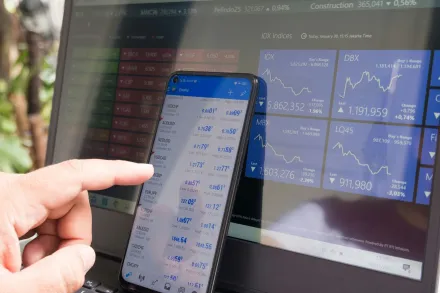
Real-time data and volatility tracking
In any trading app the heartbeat of operation during volatile times is the ability to ingest and process real time data with minimal delay, because every millisecond can translate into an executed order or a missed opportunity. Modern platforms pull data from multiple venues and data suppliers, harmonize different price feeds, and present a coherent state of the market despite rapid shifts in sentiment and price. This involves a combination of direct feeds, standardized contracts, and time synchronized clocks that align quotations from exchanges with internal latency budgets. When volatility spikes, the precision of time stamps becomes more critical, as traders rely on the order in which events arrive to determine whether to adjust a stop loss, escalate a margin check, or reroute an order to another venue. The engineering challenge is not only to fetch data quickly, but to validate it, to filter out noisy ticks, and to expose volatility signals in a way that can be understood by users who may range from cautious beginners to algorithmic traders deploying sophisticated strategies. In practice this means computing volatility metrics on the fly, such as realized variance over short windows, intraday standard deviation, and context that contrasts current movement with historical baselines. Traders expect to see indicators like rolling volatility, the breadth of price moves across instruments, and the rate at which liquidity is being consumed, all of which influence decisions under pressure. The architecture behind this capability must gracefully handle bursts of activity, maintain data integrity, and avoid cascading failures when feeds momentarily lose synchronization or when a sudden price gap appears across multiple venues.
Beyond raw numbers, reliable volatility tracking also relies on translating streams of incoming data into meaningful narratives. Applications implement dynamic dashboards that highlight anomalous activity, such as rapid price acceleration, widening bid-ask spreads, or sudden changes in implied liquidity. These narratives are often augmented with lightweight analytics that estimate the probability of a continuation of the move versus a reversal, relying on historical patterns while accommodating current order book shape. The system must maintain a stable state while presenting fresh, sometimes conflicting, information from different sources. As a result, developers emphasize data fusion capabilities that can weigh sources differently based on historical accuracy, latency, and known biases. Users benefit from visual cues that reflect recent volatility, the direction of risk, and the likelihood of price reversion. In this setting, risk controls and user preferences intersect with data quality, because a trader’s chosen risk tolerance should be informed by the reliability and immediacy of the underlying data. The ultimate objective is to empower users to respond quickly yet thoughtfully, avoiding impulsive decisions driven by a single dramatic tick and instead focusing on the larger pattern that volatility reveals.
Order types and execution strategies
Trading apps must adapt execution mechanics to the realities of volatile markets, where order visibility, latency, and price impact interact in complex ways. A basic order type such as a market order may seem attractive for speed, but in a burst of volatility it can suffer slippage as the best available price moves away from the quoted price between the moment the user clicks and the moment the order is actually transmitted. Consequently, sophisticated platforms expose a spectrum of order types that balance immediacy with price certainty, including limit orders, stop orders, stop limit orders, trailing stops, and conditional orders that trigger only when specific market conditions are met. Dynamic routing algorithms play a central role here by evaluating venues in real time for liquidity depth, fee structures, and historical fill probabilities. In high-volatility environments these algorithms adjust routing decisions on the fly, preferring venues with tighter spreads or deeper order books when available, while also accounting for latency to ensure that the expected fill quality remains acceptable. The execution engine also contends with partial fills, which often occur in volatile periods as liquidity dries or becomes uneven across price levels. To mitigate the risk of excessive partial fills the system can implement fill or kill logic, time-based constraints, or adaptive order sizing that scales with observed liquidity. The resulting experience for users blends technical optimization with clear communication, so that traders understand why an order filled partially or not at all and what next steps are advisable given the evolving market.
The human trader and the automated system frequently interact in these environments, and the design philosophy aims to respect both perspectives. For manual traders, the app offers intuitive controls that allow quick adjustments to risk parameters, such as updating a stop distance, tightening a trailing stop, or rethinking order urgency in response to a moving market. For algorithmic traders, the platform supplies robust APIs, low-latency messaging, and deterministic behavior under concurrency, ensuring that automated strategies remain stable even as price feeds flash across screens. A key consideration is the way slippage estimates are computed and presented, since real time execution costs are often the most visible form of volatility impact to a user. By providing transparent expectations about fill probabilities and likely price ranges at different time horizons, the app helps traders calibrate their expectations and manage the emotional dimension of trading during rapid market swings. This clarity, combined with reliable execution paths, is fundamental to sustaining trust when volatility renders simple heuristics less reliable.
Risk management and margin requirements
In volatile markets risk management becomes the central discipline that keeps both individuals and institutions from overreaching beyond their declared appetite for risk. Trading apps incorporate calibration mechanisms that translate market conditions into actionable constraints on position sizes, leverage, and margin utilization. These controls may be expressed as dynamic margin rates, maintenance margins, and horizon-based stress tests that project how much price movement could erode equity and trigger risk alerts. A key feature is the ability to adapt risk thresholds to the user profile; a cautious investor might see more conservative margin guidance and tighter position limits, whereas an experienced trader could opt into greater exposure with explicit disclosures about potential losses. The platform often presents dashboards that visualize risk in real time, showing how current exposure compares to available buying power, how close a portfolio is to automatic risk reductions, and how a sudden shift in prices could impact margin calls. The calculation logic must incorporate not only current mark prices but also potential future moves, correlations among holdings, and the effect of volatility on hedging costs. For example, if an instrument is highly volatile relative to the rest of the portfolio, the system may request an increase in margin requirements or reduce permissible leverage for that asset class to maintain overall risk parity. In addition to these quantitative safeguards, the app enforces policy boundaries that reflect regulatory expectations and the platform’s own risk appetite, including automated notifications when risk metrics breach predefined thresholds and, in extreme cases, temporary reductions in tradable instrument sets or the imposition of circuit breakers to prevent cascading losses.
Portfolio level risk management extends beyond single positions to require a mature view of exposure across asset classes, regions, and account types. The app aggregates positions, theoretical P&L, and realized versus unrealized gains into a consolidated risk score that can be sliced by time horizon, sector, or geographic region. In volatile conditions this synthesis helps traders understand whether an adverse move in one part of the portfolio could magnify risk elsewhere. As part of this process, stress testing with hypothetical shocks, scenario analysis, and backtesting against historical volatility regimes support more disciplined decision making. The platform also supports hedging capabilities that allow users to reduce risk without exiting positions, such as by introducing offsetting trades, buying protective options, or adjusting existing exposure via correlated instruments. The challenge lies in pricing and maintaining hedges in the face of rapidly changing liquidity and changing correlation estimates, which require the system to be both fast and numerically stable. Providing transparent explanations of hedge effectiveness, potential costs, and the likelihood of achieving the intended outcome helps users evaluate whether hedging makes sense in a given volatility regime.
Circuit breakers and market halts
During periods of extreme market activity the trading ecosystem often relies on circuit breakers and market halts to prevent disorderly trading and to give participants time to reassess information. Trading apps must honor these built-in pause mechanisms and present the state of the market to users in a clear, consistent manner. The app detects triggering conditions such as rapid price moves beyond certain thresholds, abnormal trading volumes, or regulatory halts and responds by temporarily suspending certain operations or by slowing the acceptance of new orders. In practice this means routing logic and risk engines must understand the current market state, automatically adapt to paused conditions, and avoid generating orders that would be immediately rejected or filled under confiscated rules. The user experience during a halt is also critical; the app communicates the reason for the pause, the expected duration, and any implications for active orders, such as unfilled market orders or pending stop orders that may become invalid if a halt persists. When normal trading resumes, the platform may replay market events to reconstruct a coherent picture of what happened during the pause and to ensure the continuity of an executed strategy. From a technical perspective, circuit breakers introduce discontinuities in data streams and order flow, so robust state management, precise event sequencing, and idempotent processing are essential to avoid double fills or missed opportunities as markets reopen.
Market halts and trading suspensions can also be triggered by external regulatory actions, exchange specific policies, or by a platform’s internal risk controls. In such cases the app must present authoritative guidance on next steps, including whether existing orders remain valid, how to adjust alert thresholds after the halt, and when it is appropriate to re-enter the market. A well designed system treats these events not as isolated incidents but as part of a broader risk management posture that continuously adjusts to the evolving volatility landscape. The user interface communicates the interplay between external pauses and internal risk measures, helping users recalibrate their expectations and reduce the likelihood of impulsive reactions when normal trading resumes. The overarching aim is to preserve market integrity while enabling informed participation even in environments characterized by abrupt and sometimes unpredictable price movements.
Liquidity provision and market making
Liquidity dynamics play a critical role in how trading apps handle volatility, because the availability of buyers and sellers directly affects price discovery, execution quality, and the cost of trading. Prudent apps partner with multiple liquidity providers and, in some cases, implement internal liquidity pools that can be drawn upon when external liquidity is thin. In volatile markets, the depth of the order book can fluctuate rapidly, and the platform needs to monitor bid-ask depth, quote stability, and the distribution of resting orders across price levels. Systems can then adapt by widening spreads in an orderly fashion, reducing exposure to sudden price jumps, or routing to venues with better depth even if their fees are marginally higher. The interplay between price improvement and speed is carefully balanced to ensure that users obtain the most favorable net fill, considering both the quoted price and the cost of slippage. When liquidity evaporates, algorithmic components may detach from passive quoting strategies and instead adopt aggressive protective behavior, such as momentarily reducing order size, retracting nonessential quotes, or switching to more aggressive execution tactics that prioritize real-time fill probabilities over pristine price points. On the investor side, intelligent apps provide visibility into liquidity conditions, showing the current depth of book layers, recent trades, and the estimated impact of a sizable order on the prevailing market. These insights empower traders to decide whether to proceed with a large execution, break it into smaller pieces, or wait for a more favorable window.
Market making and liquidity provisioning also intersect with risk controls that monitor the potential for adverse selection, inventory risk, and fee considerations. A well designed system tracks the profitability of liquidity provision strategies under volatile regimes, including the opportunity costs of holding inventory in fast moving markets. When the market becomes particularly capricious, the platform can adjust its liquidity stance to reduce the risk of accumulating an outsized inventory that could be punished by sudden reversals. From a user perspective, this translates into more reliable pricing, fewer abrupt quotes, and a stronger sense of trust that the app is managing liquidity in a responsible and prudent manner, even when the environment is challenging. The combination of diversified liquidity sources, adaptive quoting, and transparent execution metrics helps maintain orderly markets and supports better outcomes for end users during periods of high volatility.
Technology infrastructure to cope with volatility
Underpinning all the above capabilities is a resilient technology stack designed to withstand the stress of volatile markets. The architecture typically relies on a modular, service oriented design with microservices that can scale independently as demand shifts. Event-driven messaging, asynchronous processing, and high throughput queues allow the system to absorb spikes in data volume and order flow without saturating critical components. Redundancy is implemented across multiple regions and data centers to minimize the risk of a single point of failure, and automated failover mechanisms ensure that both data integrity and user access are preserved during outages or performance degradations. Latency budgets are carefully defined for each path in the system, from data ingestion and processing to order routing and execution confirmation, because even small delays can compound into meaningful differences in trading outcomes during bursts of volatility. Caching strategies are employed to deliver fast access to frequently requested information such as last traded prices, volatility indicators, and risk metrics, while ensuring that stale data does not mislead traders in fast moving markets. The system design also includes robust telemetry, real time monitoring, and anomaly detection to identify and respond to latency spikes, data feed interruptions, or unexpected order rejections before they escalate into user-facing problems. In addition to performance, security remains a central priority; encryption, authentication, authorization, and regular security assessments protect sensitive financial information from evolving threats, and incident response playbooks are tested to ensure rapid containment and recovery in the event of a security incident.
The physical and logical separation of concerns helps teams evolve capabilities without creating unintended dependencies. For example, data normalization and feed validation live in a separate layer from the user interface, so that if a data provider changes its formatting or experiences outages, the downstream components can continue to operate with minimal disruption. Observability is built into the fabric of the platform with end to end tracing and structured logging that makes it possible to reconstruct events during volatile episodes and to perform post mortem analyses that improve resilience over time. As the market evolves with more participants, faster data feeds, and increasingly automated strategies, the infrastructure must be ready to scale horizontally, be adaptable to new data sources, and provide consistent performance across diverse geographies. This requires disciplined engineering culture, rigorous change management, and continuous verification through testing that mirrors real world volatility without compromising safety or compliance.
The technical design also contemplates graceful degradation; when components cannot meet their performance targets due to extreme load, the system reduces non essential features, prioritizes core order processing, and maintains a baseline of data integrity and order routing. This approach ensures that even in the midst of volatility, users retain access to essential functionality, such as the ability to monitor risk, modify positions, and execute critical trades, while more resource intensive features are temporarily scaled back. The end result is a platform that can uphold reliability and predictability when market conditions are most unpredictable, turning volatility from a chaotic force into a manageable, understandable set of dynamics that traders can anticipate and respond to with confidence.
User experience and alerts during volatility
During periods of market turbulence, user experience becomes a central dimension of how effectively a trading app supports decision making. The interface must convey a coherent picture of rapidly evolving price action while avoiding information overload. This is achieved through a combination of visual cues, concise textual alerts, and contextual guidance that helps users interpret the signals they are seeing. Real time price streams are complemented with volatility heat maps, dynamic risk dashboards, and adaptive notifications that can be tuned to the user’s preferences. For example, a trader might receive an alert when implied volatility for a watched instrument exceeds a predefined threshold or when the ratio of buy to sell orders shifts in a way that suggests growing momentum in one direction. Alerts are delivered through multiple channels, including in-app banners, push notifications, and email summaries, while ensuring that critical messages are prioritized and delivered with minimal latency. The goal is to strike a balance between being informative and not producing alert fatigue, so users can act decisively without becoming overwhelmed by noise. The design philosophy also emphasizes clarity around the potential impact of volatility on orders, such as the likelihood of slippage, the possibility of partial fills, and the expected time to execution, so that decisions can be grounded in a practical understanding of current conditions.
Educational resources and guided workflows support users who want to learn how to navigate volatility with discipline. In practice, this can include simulated scenarios or “what if” simulations where traders can explore how different order types would behave under specific volatility regimes. Accessible risk tools empower users to test their risk tolerance and to calibrate parameters such as stop distances, price targets, and hedging strategies before real capital is put at risk. The best trading apps integrate these educational components with real time data so that users can translate theory into practice in a controlled, informed manner. On the execution side, the interface provides transparent feedback about execution quality, including expected versus actual fill prices, the observed slippage, and any changes in liquidity that might influence future trades. This combination of timely information, actionable controls, and supportive learning resources helps users maintain a steady, thoughtful approach rather than reacting impulsively to every tick.
Regulatory considerations and compliance
Volatility environments intensify the importance of compliance and regulatory alignment, because rapid price moves can interact with rules governing best execution, fair access, and market integrity. Trading apps must embed compliance into real time decision making, ensuring that order routing, execution quality, and disclosure practices adhere to the applicable jurisdictional requirements. The platform records detailed audit trails for orders, quotes, and risk decisions, enabling regulators and internal compliance teams to review activities after volatile episodes. Best execution policies demand that traders obtain the most favorable terms reasonably available given the circumstances, and the system supports this by maintaining visibility into venue performance, latency, and liquidity across destinations. In volatile markets these considerations are particularly salient, as the cost of not meeting best execution standards can be amplified by speed and slippage. To assist users in meeting their own obligations, the app presents clear disclosures about execution quality, potential conflicts of interest, and the limitations of automated decision making under rapid market shifts. Clear labeling and easy access to regulatory notices help ensure that participants understand the framework within which volatility is managed and how it may affect their trading decisions.
The platform also adheres to data privacy requirements and security standards that are tested and validated in high pressure situations. Access controls, encryption in transit and at rest, and robust authentication protocols protect sensitive trading information during volatile periods when attacks and fraud attempts can intensify. Incident response drills, regular third party audits, and transparent breach notification processes reinforce a culture of accountability. Compliance workflows are integrated into the operational fabric so that, even as markets roar and systems strain, the organization can demonstrate responsible behavior and maintain the trust of users, counterparties, and regulators alike. The net effect is a trading app that not only performs under stress but also upholds the rules designed to maintain orderly markets and protect participants across a wide range of volatility scenarios.
Data accuracy and model governance
As volatility shapes the decisions of dozens of stakeholders, the accuracy of data and the reliability of predictive models come under intense scrutiny. Trading apps rely on a combination of reproducible data pipelines, backtesting frameworks, and governance processes to ensure that risk metrics and execution strategies reflect reality. Model governance includes documentation of assumptions, version control for algorithms, and periodic validation against out-of-sample data to guard against overfitting to past volatility regimes. In volatile times, models are stress tested against extreme but plausible scenarios to observe how performance might degrade and to identify potential failure modes. The platform keeps human oversight in the loop for changes that would alter risk assessment, ensuring that new features or algorithmic approaches are vetted for safety and consistency before they go live in production. This discipline extends to real time analytics that guide execution; volatility surfaces, liquidity estimators, and price impact models are maintained with clear lineage to data sources and transformation rules so that discrepancies can be traced and corrected swiftly. Traders benefit from the confidence that the tools reflecting volatility are built on a foundation of transparent, auditable processes and careful quality control.
In addition to model governance, data accuracy initiatives focus on source reliability, reconciliation across feeds, and the handling of missing or delayed data. The system detects anomalies such as sudden data gaps, outliers, or conflicting quotes and responds with fallback rules that preserve the integrity of risk calculations and order processing. The results are achieved not merely through automated logic but through an ongoing collaboration between data engineers, quants, compliance officers, and front line traders who rely on these tools every day. By aligning technical rigor with practical trading needs, the platform ensures that volatility signals remain meaningful and trustworthy, enabling users to navigate turbulent markets with better information and steadier nerves.
Future trends in volatility handling
The evolution of trading apps in response to market volatility is shaped by advances across data science, cloud infrastructure, and user experience design. Artificial intelligence and machine learning are increasingly employed to refine volatility forecasts, detect regime shifts, and optimize execution across a web of venues with adaptive strategies that learn from ongoing market feedback. These systems may incorporate alternative data sources, sentiment indicators, and event-driven signals to enrich the picture of what drives price moves beyond traditional technical factors. At the same time, the push toward edge computing and localized data processing may reduce latency even further, enabling more responsive risk controls and faster order routing decisions. As regulatory expectations evolve, platforms must also align with enhanced transparency and explainability for automated decisions, offering users clearer rationales for routing choices and for how risk limits are applied. The ongoing integration of robust security practices, privacy protections, and governance frameworks will help users trust increasingly sophisticated volatility management capabilities. The ultimate aim is to provide a trading experience that not only withstands the shocks of volatile markets but also educates and empowers participants to engage with risk in a disciplined, informed manner.
In the near term, we can expect continued refinement of dynamic margin models, more nuanced hedging tools, and richer visualization of liquidity and volatility. Users will likely gain access to more granular risk metrics that illuminate how individual trades affect portfolio broadening or compression of risk, along with scenarios that illustrate how small, well-timed adjustments might dramatically alter outcomes during a run of high volatility. The convergence of better data, smarter routing, and more thoughtful risk communication promises a future where volatility is not simply a foe to tolerate but a signal to understand, allowing trading apps to serve as capable partners in navigating complex markets with clarity and credibility.