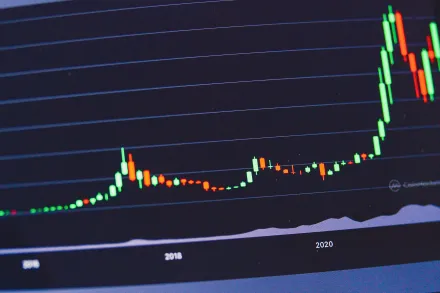
In modern financial markets, data arrives from more channels than ever before, and traders increasingly rely on signals derived not only from prices and volumes but also from the mood expressed in text. Sentiment analysis in algorithmic trading sits at the intersection of computational linguistics and quantitative finance, translating human opinions and emotions into numerical cues that can be incorporated into trading strategies. The appeal is intuitive: markets react to new information, and the way participants interpret that information is often as important as the information itself. The challenge is to convert ambiguous, noisy language into robust, timely indicators that survive the frictions of live trading, including latency, data quality issues, and model risk. The field has evolved from simplistic word lists to sophisticated neural models that can capture context, sarcasm, and evolving slang while aligning with the unique semantics of financial discourse. This evolution has accelerated as the data backbone supporting high-frequency and algorithmic strategies has grown denser and more accessible, enabling researchers and practitioners to test ideas across equities, commodities, and foreign exchange in near real time.
The early spark for using textual information in markets came from the simple idea that headlines, news commentary, and social chatter portend price moves. Traders and researchers first relied on handcrafted features and rule-based systems that counted words with positive or negative polarity, then moved to probabilistic frameworks that tried to estimate the likelihood that a statement would coincide with a price reaction. As computing power expanded and streaming architectures matured, the field embraced more data sources, more sophisticated representations, and more rigorous evaluation paradigms. The historical arc includes a shift from static, once-a-day assessments to continuous, near real time signals that can be recalibrated as new information arrives. The result is a layered approach in which sentiment informs risk budgets, position sizing, and timing decisions alongside traditional microstructure signals and macroeconomic triggers.
The last decade has witnessed an unprecedented scale of data integration, with social media, institutional press releases, and regulatory filings feeding into sentiment engines alongside traditional news wires and earnings call transcripts. On the social side, platforms such as microblogging services, investor forums, and discussion boards provide a pulse check on market mood and crowd sentiment. News articles contribute structured narrative about events and expert opinions, while transcripts from earnings calls reveal forward guidance and hedged statements that can diverge from published numbers. The challenge is not merely collecting these streams but harmonizing them into a coherent signal. Linguistic noise, multilingual content, and the uneven quality of sources require robust preprocessing, provenance tracking, and methods that adapt to shifting language use over time. In practice, sentiment systems must filter out noisy campaigns, fabricated posts, and coordinated manipulation while preserving signals that truly anticipate price responses.
Origins and evolution of sentiment signals in markets
Sentiment signals in markets emerged from a pragmatic need to quantify the qualitative wisdom embedded in news and discussion. Early practitioners argued that market participants’ interpretation of information could be as consequential as the information itself, especially during periods of uncertainty. The evolution began with simple lexicons and rule sets that assigned polarity to words and phrases, sometimes augmented by syntactic rules to manage negation and intensifiers. As data science matured, researchers extended sentiment to consider the intensity of opinions, the scope of statements, and the presence of hedges or speculative language. The emergence of machine learning brought data-driven methods that could learn from labeled examples, generalizing beyond predetermined word lists and capturing contextual cues that indicate whether a sentence expresses optimism or caution. With the advent of deep learning, models could analyze long-range dependencies and subtle linguistic patterns, enabling more precise alignment with market outcomes while maintaining the flexibility to adapt to new domains and languages. The historical arc thus moved from heuristic sentiment to data-centric, adaptive frameworks that integrate seamlessly with real-time trading pipelines and risk management systems.
Data sources for sentiment in finance
The backbone of sentiment analysis in trading is the data itself, and financial practitioners collect across a spectrum of channels to maximize coverage and timeliness. News wires provide authoritative, event-driven narratives that can capture surprises and consensus views, while headlines and article bodies offer access to the broader interpretation of events by editors and commentators. Earnings transcripts and call remarks reveal management’s tone and the probability distribution of future outcomes, often including explicit guidance that traders can map to expected performance. Social media supplies a more speculative, real-time barometer of sentiment, including crowd reactions, meme propagation, and rapid sentiment swings that may anticipate headlines. Regulatory filings and official statements add a layer of credibility and accountability, sometimes containing carefully curated language designed to signal policy changes or strategic shifts. A robust sentiment program blends these sources through a well-engineered data lake, with rigorous sequencing, deduplication, and lineage tracing to ensure that the signal originates from trusted inputs and that audit trails exist for compliance purposes. In practice, the data architecture must support high-throughput streaming, fault tolerance, and scalable feature engineering to keep pace with the velocity of markets while maintaining reproducibility and safety.
Methodological foundations
Methodologically, sentiment analysis in finance spans a spectrum from lexicon-based approaches to end-to-end neural architectures. Lexicon-based methods rely on curated dictionaries that tag words with polarity and sometimes intensity, adjusted by heuristics to account for negation, intensifiers, and domain-specific terminology. While these methods offer interpretability and lightweight computation, they can struggle when language evolves or when domain-specific phrases carry different sentiment in a financial context. Supervised learning frameworks take labeled data—where sentences or documents are annotated with sentiment classes or continuous scores—and train classifiers or regression models that predict sentiment from text. The superiority of these models lies in their ability to learn context, syntax, and word interactions, but they require carefully curated, representative labeled data and continuous updating to stay current. More recently, deep learning and transformer-based models have achieved remarkable performance by encoding complex linguistic patterns and long-range dependencies, often leveraging domain-adaptive pretraining on financial corpora. These models can be fine-tuned for tasks such as sentence-level polarity, event extraction, and sentiment-mignal alignment with price movements, enabling more nuanced signals than earlier approaches. A mature sentiment system often combines multiple components: a robust preprocessing pipeline, a sentiment estimator calibrated against market outcomes, and a calibration layer that maps sentiment scores to position-sizing and risk controls. The overarching goal is to create signals that are timely, interpretable, and robust to noise, with clear methods to test and monitor signal quality over time.
From lexicons to neural networks
The journey from lexicon-based sentiment to neural architectures in finance mirrors broader trends in natural language processing. Lexicon methods still serve as a fast, interpretable baseline and are valuable in environments where computational resources are constrained or where explainability is paramount for governance. However, the dynamic, domain-specific language of finance often renders generic sentiment tools less effective, prompting the creation of financial lexicons and tailored models that capture jargon like "beat," "miss," "guidance," and "guidance raises questions," where the sentiment is tightly coupled to context. Neural networks, particularly transformers such as BERT and its financial adaptations, excel at understanding polarity in the presence of negation, sarcasm, or hedging. FinBERT and similar domain-specific variants demonstrate how pretraining on financial text improves performance on sentiment tasks, event detection, and summarization. The practical deployment of these models requires careful attention to data quality, latency budgets, and interpretability for risk governance. In addition, ongoing research explores multi-task learning where a single model simultaneously predicts sentiment, event polarity, and potential market impact, thereby reducing drift and enabling more coherent decision-making across multiple parts of a trading system.
Natural language processing pipelines in trading systems
A robust NLP pipeline in trading environments begins with ingestion, normalization, and de-duplication of streams, followed by language detection, tokenization, and normalization that normalize domain-specific terms. Core components include part-of-speech tagging, named entity recognition to identify companies, products, and events, and negation and sentiment scope detection to ensure phrases like "no surprise" or "not good news" are properly interpreted. A challenge unique to finance is sarcasm and speculative language, which require specialized detectors or domain-adapted models. The pipeline then folds into sentiment estimation at the appropriate granularity, whether sentence-level, paragraph-level, or document-level, depending on the trading task and the available latency. Feature engineering often includes time-aware aggregation across sources, weighting by source credibility, and alignment with market microstructure windows. Finally, the output is synchronized with the trading system's risk controls and backtesting framework, enabling on-the-fly adjustments to exposure and hedging strategies. Operational considerations include monitoring drift, updating models with fresh data, validating signals against a holdout sample, and ensuring regulatory compliance for automated decision-making based on textual information.
Sentiment signals and market microstructure
Connecting sentiment to price dynamics requires careful treatment of timescales, information flow, and the liquidity regime. Sentiment can act as a leading indicator when it captures unpriced information before it becomes visible in prices, or as a reinforcing signal when it confirms price moves already underway. The relationship is often nuanced by the speed of information dissemination, the heterogeneity of market participants, and the presence of confounding macro factors. Short-horizon signals derived from rapid social chatter can be attractive for high-frequency strategies but are highly susceptible to noise and manipulation. Medium-term sentiment signals need to be evaluated for their correlation with fundamental revisions and earnings surprises, while longer horizons require mindful aggregation to avoid overfitting to transient chatter. A sound approach integrates sentiment with order flow, liquidity metrics, and volatility regimes to determine when a sentiment-based signal should contribute to a trading decision, how aggressively, and for how long. Experience shows that the most robust sentiment signals are those that are reconciled with structural factors, incorporating checks for stability across market regimes and resilience to sudden data surges that could overwhelm the system.
Evaluation and backtesting challenges
Assessing sentiment signals in a way that translates into real-world profitability is a delicate exercise. Traditional metrics like accuracy or AUC provide insight into a model’s predictive capability, but in finance the ultimate test is the signal’s contribution to risk-adjusted returns after trading costs and slippage. Backtesting sentiment-driven strategies requires careful handling of data snooping, look-ahead bias, and the temporal alignment of text data with price data. The choice of aggregation window, the method of translating sentiment scores into action, and the treatment of transaction costs can dramatically affect apparent performance. Event studies are often used to gauge the signal around specific news or earnings announcements, but they must be complemented by cross-validation across different market states and assets. Realistic evaluation also demands out-of-sample testing in a live or sandboxed environment to observe how sentiment interacts with evolving liquidity conditions and regime changes. Maintaining transparency about the model’s decision process, including the sources used and the time-lateness of the signal, helps reduce the risk that a strategy relies on spurious correlations that break during stress conditions.
Risks, challenges, and limitations
As powerful as sentiment signals can be, they carry several inherent risks. Data quality is a constant concern: sentiment readings are only as reliable as the underlying text, and inaccurate language detection, mislabeling, or source biases can distort outcomes. Market impact of sentiment signals may differ across asset classes and time zones, making cross-sectional calibration essential. There is also a risk of model degradation when language evolves or when events produce atypical linguistic patterns that the model has not seen during training. Algorithmic systems are susceptible to overfitting, where a model captures noise in historical data rather than genuine signal. Additionally, sentiment signals can be weaponized by coordinated campaigns designed to influence perceptions, requiring continual monitoring, anomaly detection, and governance that includes human oversight when needed. The opacity of deep learning models can complicate risk assessments, necessitating surrogate explanations and post-deployment auditing to satisfy compliance requirements and internal risk policies. Finally, latency, computation costs, and data licensing constraints can erode the economic viability of sentiment-based strategies if not managed with disciplined architecture and clear performance objectives.
Practical deployment considerations
Implementing sentiment analysis in a live trading system demands disciplined operational practices that balance speed, accuracy, and safety. Data pipelines must ensure low latency while preserving data provenance and quality controls, including checks for missing inputs, source outages, and time synchronization across streams. The deployment architecture typically involves streaming queues, scalable processing clusters, and a tight feedback loop with the risk management module to adjust exposure in response to sentiment volatility. Model maintenance is crucial: continuous monitoring for drift in language use, periodic re-training with fresh labeled data or domain-adapted corpora, and tests that validate that sentiment signals still lead to the intended market effects. Governance processes should document model choices, parameter settings, and the rationale for signal thresholds, with clear procedures for rollback in case of unexpected behavior. In practice, teams invest in synthetic data generation, backtesting across historical regimes, and staged rollouts to limit the impact of faulty updates. The economic viability of sentiment strategies depends on choosing sensible calibration targets, such as minimum expected return under adverse conditions, maximum drawdown limits, and robust risk budgeting that protects capital during periods of sentiment fatigue or regime shifts.
Future directions and research horizons
Looking ahead, sentiment analysis in algorithmic trading is likely to grow in sophistication by embracing multimodal learning, where text is combined with price trajectories, order book dynamics, social network diffusion, and visual information such as charts. Cross-lingual sentiment analysis will enable coverage of global markets, while domain-adaptive pretraining and continual learning will help models stay current with evolving financial vocabulary and regulatory disclosures. There is growing interest in causality-aware approaches that seek to distinguish signal from noise by testing whether sentiment changes precede price moves in a statistically robust way across assets and regimes. Researchers are also exploring more transparent architectures that provide interpretable saliency maps or rule-based explanations for high-stakes decisions, addressing concerns about accountability in automated trading. The integration of sentiment with other alternative data streams could yield more resilient signals, especially when combined with robust risk controls and transparent backtesting methodologies. Finally, advances in streaming infrastructure, edge computing, and on-device inference may reduce latency further, enabling sentiment-driven strategies to operate at finer timescales while complying with regulatory and governance requirements. The ongoing challenge is to maintain performance without compromising safety, fairness, or the integrity of markets as the vocabulary of finance continues to evolve in real time.
As researchers and practitioners continue to push the boundaries, the essence of sentiment analysis in algorithmic trading remains a dialogue between linguistic nuance and market dynamics. The most durable systems will be those that respect the complexities of language, acknowledge the uncertainty inherent in human expression, and translate that understanding into disciplined, auditable decision-making. They will also be built upon data-centric engineering that emphasizes reproducibility, resilience, and continuous learning, ensuring that signals adapt rather than decay as markets change. In this sense, sentiment analysis is not a single technique but a living ecosystem that blends linguistic insight with financial discipline, a partnership between the art of interpretation and the science of risk management that seeks to illuminate the subtle currents that move prices beneath the visible surface of trades and orders. The future of sentiment in algorithmic trading will, therefore, hinge on thoughtful integration, cautious experimentation, and a persistent emphasis on responsible innovation that protects investors and preserves market integrity while unlocking the latent information locked in human language.