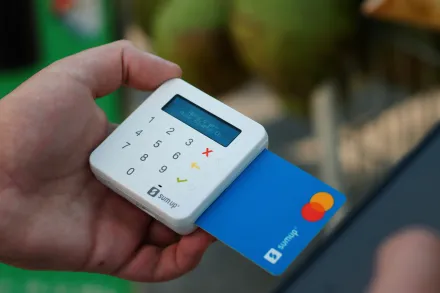
Contactless payments have emerged as a pervasive and convenient way to complete everyday transactions, allowing customers to glide a card, a smartphone, or a wearable over a reader to initiate a payment in a matter of seconds. Behind this streamlined experience lies a complex, carefully designed stack of technologies that blend radio frequency communication, secure computation, cryptography, and global standards. The technology is not a single invention but a layered ecosystem in which hardware, software, networks, and business processes collaborate to deliver speed, safety, and interoperability in crowded, high-stakes environments such as shops, transit systems, and vending kiosks. In this article, we will explore the core ideas, the historical context, the practical mechanisms, and the evolving landscape that underpins contactless payments, with attention to how different players contribute to a seamless user experience while maintaining robust security guarantees.
At the heart of contactless payments is the idea of data exchange without physical contact between the payment instrument and the reader. This requires a short-range radio technology capable of power-efficient data transfer, secure processing, and rapid authentication. Unlike traditional swipe cards that presented static magnetic stripes, contactless instruments operate in a mode that enables secure communication even when the devices are powered down or momentarily out of range. The evolution of standards, regional regulatory requirements, and consumer expectations has driven a rapid adoption of near field communication technology, and the ecosystem has matured to support billions of transactions per year across diverse contexts. To understand why contactless payments work so reliably, we must examine the platform components that handle the exchange of information, the cryptographic protections that defend it, and the governance structures that ensure universal compatibility across vendors and regions.
One of the defining features of contactless payments is the use of short-range wireless communication to carry instructions from the user’s instrument to the merchant’s reader. Near field communication, or NFC, operates at very close distances, typically up to a few centimeters, and it is designed to be simple to initiate, with minimal user interaction required. NFC builds on the same radio principles as other forms of wireless communication but emphasizes near-field coupling, quick initialization, and low power operation. This combination makes NFC ideal for payment use cases because it allows the reader to energize the instrument sufficiently to read essential data while maintaining strict proximity constraints that reduce the risk of interception or accidental reads. The practical effect is that the reader knows the payment device is intentionally present, and the device can activate a secure channel in a controlled, predictable way. This controlled interaction is a cornerstone of the reliability and safety that customers expect during a payment experience, whether the purchase is a coffee, a transit fare, or a high-value purchase at a storefront.
While NFC is the most visible technology in many consumer experiences, the underlying architecture of contactless payments spans multiple layers that coordinate from the moment you initiate the payment to the final confirmation by the issuer. The first layer is the payment instrument itself, which may be a card with embedded circuitry or a mobile device that presents a virtual card. The second layer is the secure element, a tamper-resistant environment where sensitive data is stored and cryptographic operations are performed. The third layer concerns the payment network and the issuer institutions that authorize transactions, guarantee funds, and manage risk. The final layer encompasses the merchant’s point-of-sale terminal and the software that orchestrates the transaction, including tokenization services, dynamic data generation, and the user interface that communicates status to the customer. Each layer has a distinct role, and together they form a robust, end-to-end system that can be audited, certified, and upgraded without disrupting the entire ecosystem.
Historically, the journey of contactless payments began by extending the familiar magnetic stripe card concept into a contactless form factor. Early experiments demonstrated that it was possible to carry the card data, check for cardholder verification, and authorize payments through secure channels. Over time, industry bodies created standardized rules and testing procedures to ensure that cards, readers, and wallets could reliably work together regardless of the manufacturer. The resulting standards define how data is formatted, how cryptographic keys are managed, how risk is assessed, and how to present a consistent user experience across geographies. With these standards in place, issuers can deploy cards in new physical formats, wallets can manage a portfolio of tokens, and merchants can adopt readers without worrying about compatibility. This standardization is vital in an ecosystem as diverse as the global retail landscape, because it reduces the complexity of integration and increases confidence that a given payment instrument will work at the point of sale anywhere in the world.
In modern contactless payments, the concept of tokenization plays a central role in protecting sensitive data. Rather than transmitting real card numbers, a payment token is used to represent the card in the transaction. The token is a surrogate value that stands in for the actual account details, and it can be restricted to a specific merchant, a particular device, or a given transaction type. Tokenization reduces the exposure of actual card data in case of a breach and allows more flexible control over how data is used. Tokens can also be dynamic, meaning that the value used in a transaction changes with each use or each session, further limiting the window of opportunity for misuse. The tokenization framework is reinforced by secure key management, where cryptographic keys used to generate or validate tokens are stored in protected environments and rotated on a schedule that minimizes risk while avoiding service interruptions. The result is a payment experience that feels immediate and seamless to the user while benefiting from layered security that is hard to replicate by attackers who might try to intercept data or replay old messages.
The physical and electronic components of a contactless payment system must be able to operate under real-world constraints, including a crowded retail environment, bustling transit hubs, and the constraints of mobile devices with limited battery life. This requires careful consideration of power efficiency, latency, error handling, and user experience. A reader must be able to detect a nearby instrument promptly, establish a secure channel, exchange a minimal amount of information necessary to authorize the transaction, and complete the process within a few seconds. On the device side, the payment instrument must be capable of performing cryptographic operations, generating unique session data, and presenting the appropriate payment credentials while preserving privacy and complying with regulatory requirements. Achieving this balance is not trivial, and it reflects decades of collaborative development among hardware manufacturers, software engineers, financial institutions, and standards bodies who have refined the best practices for performance and safety in a shared environment.
From a systems perspective, the technology stack can be thought of as a layered set of abstractions that isolates complexity and enables scalable deployment. At the bottom, the physical layer governs the electromagnetic interactions and the protocol used to discover, connect, and communicate between devices. Above that sits the secure element or trusted execution environment, where critical secrets are protected from tampering and from unauthorized access. Above this layer, tokenization services, cryptographic libraries, and dynamic data generation engines perform the computations that keep data confidentiality intact while enabling rapid authorization. At the top level, the payment networks and issuing banks provide authorization, settlement, risk controls, and customer service, guided by policy and compliance requirements. The elegance of this architecture is in its modularity: you can upgrade or replace one component, such as the mobile wallet software or the tokenization service, without needing to overhaul the entire system. This modularity is essential for the ecosystem’s evolution as security standards tighten, user expectations shift, and new business models emerge around contactless payments.
In terms of user experience, contactless payments aim to minimize friction while maximizing trust. The typical user journey begins with bringing the instrument near a reader, a brief exchange to establish trust, and the confirmation of a payment that is usually instant or near-instant. The speed is achieved by optimizing the cryptographic protocol to minimize rounds of communication and by employing preauthorization steps that can determine whether funds are available before the reader requests final confirmation. The friction is kept low through intuitive interfaces in wallets and cards, which may show a simple tick mark or the familiar green light when the transaction succeeds. Even as the pace of transactions accelerates, the underlying technology remains mindful of privacy and security, making sure that the data that travels between the instrument and the reader does not reveal more than what is necessary to complete the payment, preserving user anonymity where possible and enabling traceability for legitimate financial purposes where required by law and policy.
The devices used in contactless payments are diverse, reflecting a broad ecosystem that encompasses physical cards, smartphones, smartwatches, and other wearables. Cards often embed a secure chip or a specialized module that provides a robust environment for processing payments. Smartphones can leverage secure elements or use host card emulation to present a virtual card that behaves like a physical instrument. The security architecture must address the possibility of lost or stolen devices, ensuring that control over tokens can be revoked quickly and that transactions from unknown devices are prevented. This is typically achieved through device-based authentication, token lifecycle management, and the ability to remotely disable access to payment credentials. From a design perspective, manufacturers and wallet developers must balance the need to protect sensitive data with the requirement to deliver a fast, user-friendly experience. The dynamic tension between security and usability is an ongoing focus of product development, regulatory oversight, and customer feedback, informing updates to performance, privacy controls, and risk management strategies across generations of devices and software.
Fundamental principles and the anatomy of a transaction
To appreciate how a contactless transaction unfolds, it helps to outline the fundamental steps in a typical flow. First, the user presents the instrument to the reader in a controlled manner, ensuring the device is within a few centimeters, which triggers the device to wake and communicate. Second, the reader establishes a contactless channel, enabling bidirectional data exchange using a protocol designed for low latency and high reliability. Third, the card or wallet responds with a cryptographic voucher known as a cryptogram or an authorization request cryptogram, depending on the stage of the transaction and the network. This cryptogram is computed with keys stored securely on the device and is validated by the issuer’s system, which consults account status, available balance, and fraud risk before granting or denying authorization. Fourth, in a successful scenario, the issuer approves the transaction, sends a cryptographic approval message back through the network, and the merchant’s terminal completes the sale, often updating the customer display with a confirmation. Fifth, afterward, capture and settlement personnel begin the processes that move money from the issuer to the merchant, updating accounts and ensuring that the transaction is settled in a way that preserves the integrity of the ledger. The elegance of this sequence is that each step is optimized to require minimal user effort while maintaining strong cryptographic protections and auditable trails of evidence in case of disputes or regulatory inquiries.
The cryptographic foundation of these steps relies on a combination of symmetric and asymmetric techniques. Symmetric keys enable fast, efficient computation of cryptograms and session keys, while asymmetric techniques provide secure key exchange and digital signatures that authenticate the origin of messages. The use of ephemeral keys and poles of trust, such as secure elements or trusted execution environments, creates a microcosm of security at the device level. On the network side, the payment networks integrate risk scoring, anomaly detection, and policy-based decisioning to mitigate fraud while maintaining a positive customer experience. The result is a payment system that is simultaneously fast, scalable, and resilient, capable of handling the volume of daily retail transactions while deterring attempts to exfiltrate data or impersonate a legitimate customer.
Tokenization, as a centerpiece of this architecture, serves as a shield that decouples the merchant from the actual account details. The token is specific to the issuing bank, the card type, and often the merchant or the device, which means that even if a token is compromised, it cannot be easily reused to perform unauthorized transactions. The token’s lifecycle includes creation, mapping to the actual account data, and controlled revocation in case of loss or compromise. In many modern solutions, tokens are not constant but rotate or transform with each transaction or session, adding an additional layer of defense. This design aligns with privacy-by-default principles, as tokens reduce the exposure of sensitive personal information across the ecosystem and support compliance with data protection rules across different jurisdictions. As consumers increasingly demand privacy, tokenization stands out as a practical mechanism to minimize information leakage while enabling a seamless checkout experience.
Security is a multi-faceted concern in contactless payments, covering hardware integrity, software reliability, data protection, and process governance. Hardware protections may include tamper-evident packaging, anti-counterfeiting measures, and secure boot processes that ensure the device starts in a trusted state. Software protections emphasize secure coding practices, regular updates, patch management, and defense-in-depth strategies that include encryption for data in transit and at rest, as well as strong user authentication for sensitive actions. Data protection encompasses minimization, ensuring only the minimum necessary data is transmitted, and applying cryptographic protections to prevent eavesdropping, tampering, or replay attacks. Process governance involves compliance with regulatory standards, risk management frameworks, and ongoing testing, including penetration testing and independent validation, to verify the resilience of the system against evolving threats. In combination, these layers help maintain customer trust, a critical asset for any payments ecosystem that seeks to scale globally and endure the test of time in a marketplace that is characterized by rapid technological change and sophisticated adversaries.
NFC technology specifics and protocol flow
At a technical level, NFC sits at a specialized intersection of radio frequency engineering, digital signal processing, and secure computation. The communication between the instrument and the reader typically uses a standardized protocol that defines data exchange rates, framing, error correction, and sequencing of commands. The most important practical aspects for payment are how the reader and the device authenticate each other, how data is protected during transit, and how the authorization steps are carried out in a manner that minimizes latency. The initial handshake helps confirm proximity and intent, after which data elements are exchanged in tightly scoped messages that are sized to prevent unnecessary overhead while providing enough context for authorization. The network then uses these data elements to determine whether to approve the transaction and to generate any required tokens or cryptograms for the final settlement steps. The technical efficiency of this handshake matters; readers are designed to respond within a fraction of a second, and devices are optimized to compute cryptograms rapidly using hardware-accelerated cryptography where available. This optimization is essential for experiences such as rapid transit or high-volume retail, where customer patience is a critical factor and where delays can cascade into longer queues and reduced throughput.
In practice, there are some variations to how NFC can be deployed, depending on whether the payment instrument uses a secure element embedded in a physical card, a secure element in a mobile device, or a software-based solution called host card emulation. In the embedded secure element model, the card itself stores credentials in a dedicated secure chip and uses dedicated interfaces to perform cryptographic operations. In the host card emulation model, the mobile device presents itself as a virtual card to the reader, relying on the device’s operating system and secure environment to handle key management and cryptographic computations. In software-based approaches, tokens and credentials are managed by the wallet application, which has to ensure strong isolation from other apps, maintain permission models, and provide resilience against app-level tampering. Each deployment path has its own trade-offs in terms of cost, deployment speed, physical form factor, and security model, but all converge on the need to deliver the same user experience with high reliability and strong protection for sensitive data.
With respect to the reader side, merchants must implement hardware that can energize the card or device, initiate the protocol, and manage the user interface cues that indicate success or failure. The hardware must be rugged enough to endure repeated use, resistant to environmental variability, and capable of remaining calibrated for precise proximity detection. The software that runs the reader must be able to interpret the protocol correctly, initiate authorization requests with the payment network, and handle edge cases such as offline or semi-offline scenarios in which offline transactions are either restricted or require alternative processing routes. Over the years, readers have become more capable and more affordable, enabling widespread deployment across diverse retail settings, including small shops, vending machines, and transit stations. The result is a heterogeneous but interoperable ecosystem, where a single payment method can function in a variety of environments by adhering to the shared protocol and security expectations established by industry standards.
Secure elements, trusted execution environments, and card emulation
The secure element is a dedicated piece of hardware designed to store keys and perform cryptographic operations in an environment isolated from the device’s main processor. This isolation helps prevent attackers from extracting secrets even if the host system is compromised. In cards, the secure element is often part of the chip itself, while in mobile devices, secure elements may exist as an embedded chip, a removable secure element, or a software-implemented security domain with strong isolation. In recent years, host card emulation has enabled mobile devices to mimic a physical card without requiring a dedicated secure chip, using the device’s secure enclave, trusted hardware, or secure operating system features to isolate critical code and data. This approach allows wallets to provide card-like functionality while leveraging the mobile platform’s flexibility and fast iteration cycles. For merchants and networks, these different architectures still share a common promise: that payment credentials remain protected and that cryptographic operations remain reliable across devices and contexts. The policy decisions and technical choices surrounding secure elements influence factors such as how updates are performed, how credentials are provisioned and rotated, and how revocation is enforced when devices are lost or compromised.
Card emulation effectively enables a device to act like a payment card during the NFC interaction. The device presents the correct application and credentials to the reader, which then proceeds with the normal authorization path through the payment network. The use of emulation requires careful orchestration to ensure that the correct card is selected, that the relevant credentials are used for the specific merchant, and that the transaction adheres to cardholder verification rules where required. In this sense, the emulation model is a bridge between the traditional card-issuing world and the modern, device-centric ecosystem, allowing consumers to use both physical cards and digital wallets with a common set of payment networks and merchant acceptance criteria. The security considerations are equally important in emulation, because the device must ensure that only authorized applications can prompt the reader to initiate a transaction and that the data sent to the reader is restricted to what is necessary for authorization and token validation. The mechanisms that govern these protections range from secure boot and code signing to robust permission controls and controlled access to cryptographic keys, all designed to reduce the risk that a counterfeit instrument could pass as legitimate in a real-world scenario.
Tokenization, cryptograms, and dynamic data
Tokenization is a central pillar because it decouples the merchant's view of the transaction from the customer’s actual financial data. A token is a surrogate value that can be interpreted only within the issuer’s and network’s domain, and it can be bound to a device, a merchant, or a transaction type. In practice, tokens are generated at provisioning time, which could occur when a card is added to a wallet for the first time or when a new virtual card is created. The token’s lifecycle includes periodic rotation and risky-limiting controls that reduce exposure if a token is ever compromised. In some schemes, a token may be restricted to a specific merchant or terminal type, further limiting potential misuse. This architecture enables a wide set of business models, including token-as-a-service for third-party wallets and cross-brand acceptance at merchants who want to support multiple payment networks with a single instrument footprint.
A critical cryptographic element in contactless payments is the cryptogram, a piece of data produced through cryptographic operations that proves the authenticity of the transaction. The cryptogram is typically calculated using keys stored inside the secure element or trusted execution environment and is validated by the issuer or the network. The predictable yet dynamic nature of cryptograms protects against replay attacks and ensures that each transaction bears a unique cryptographic fingerprint. In combination with tokens, cryptograms help guarantee that the transaction cannot be forged or reused. Dynamic data, such as a one-time code or a transaction-specific parameter, further reinforces the security by ensuring that the same exact message cannot be reused in future attempts. The design goal is to make each payment cryptographically unique while preserving the speed and simplicity that users expect when they tap their card or device at a reader. This delicate balance between cryptographic rigor and user experience is a core reason why contactless payments have gained such broad adoption across cultures and regions with varying levels of security maturity.
As technology evolves, tokenization and cryptograms continue to become smarter and more flexible. Some schemes use multi-token environments, where several tokens can be active for different contexts such as in-app purchases versus in-store purchases, or different tokens for different merchants to limit potential damage if a token becomes compromised. Other innovations include network-based cryptograms that can be validated without requiring the device to reveal the full card data, a design choice that improves privacy while maintaining the necessary traceability for fraud detection and dispute resolution. The net effect is a robust, agile, and privacy-conscious system that can adapt to new payment patterns, offer new services such as loyalty integration, and scale to support ever-expanding volumes of daily transactions without sacrificing security or speed.
Standards, governance, and interoperability
Interoperability across brands, devices, and regions is achieved through a network of standards bodies and compliance programs that define how payments operate. The primary players include organizations that specify the communication protocols, the data formats, the cryptographic requirements, and the testing procedures that ensure consistent behavior in diverse environments. Standards empower both issuers and merchants to participate in a shared ecosystem without being locked into a single vendor or technology path. They also enable rapid innovation by allowing new services to be layered on top of a stable core. Certification processes verify that devices, wallets, and readers comply with the agreed-upon rules, maintaining a baseline level of security and reliability that can be trusted globally. In practice, this means a merchant in one country can adopt a reader that functions with a wallet from a different country, provided both adhere to the same standards. The governance model typically includes periodic updates to reflect advances in cryptography, changes in risk management practices, and evolving regulatory requirements. The result is a dynamic but predictable framework that supports growth, competition, and consumer protection across the payments landscape.
The landscape of standards is also enriched by collaborations between the major payment networks and technology platform providers. These collaborations help resolve real-world challenges such as how to handle cross-border transactions, how to implement offline capability during network outages, and how to manage the privacy implications of tokenized data in transit. By working together, stakeholders harmonize the user experience, minimize integration complexity for merchants, and reassure regulators that the ecosystem remains resilient to abuse attempts. For developers and engineers, understanding these standards is essential for building trustworthy wallets, secure readers, and reliable provisioning services that all operate under a single, shared language of data exchange and cryptographic assurance. The emphasis on open, robust standards is a key driver of the widespread adoption of contactless payments around the world, enabling rapid deployment while preserving the safety and accountability that the financial system demands.
Security architecture and privacy considerations
Security architecture for contactless payments is a layered discipline that blends hardware protections, software safeguards, and operational policies. On the hardware side, devices rely on tamper-resistant components, secure channels, and controlled environments for key storage and cryptographic operations. On the software side, applications must adhere to secure development practices, rely on isolation and sandboxing where appropriate, and implement secure update mechanisms to fix vulnerabilities without compromising the overall system. Privacy considerations are central to the design: tokens reduce exposure of actual card numbers, dynamic data minimizes the utility of captured data, and risk controls limit how and when credentials can be used. Additionally, techniques like differential privacy and consent-based data sharing may be employed to balance the business needs of merchants and issuers with the rights of consumers to control how their data is used. In practice, these privacy and security measures are reinforced by continuous monitoring, incident response capabilities, and regular security assessments that help detect and remediate threats before they can cause harm. The practical effect is a payments environment that customers can trust, where even seemingly simple taps are backed by a sophisticated, hardening set of protections designed to protect both funds and personal information.
From a regulatory vantage point, data protection rules and financial crime controls influence how contactless payments are implemented and operated. Organizations must implement appropriate controls for identity verification, data minimization, and secure handling of credentials. They must also maintain audit trails and preserve evidence that can be used in disputes or investigations. The synergy between compliance requirements and technical design ensures that the system is not only technically sound but also aligned with the legal and social expectations of the communities in which it operates. This alignment between technology and policy is a major reason why contactless payments have grown to become a mainstream payment method in many parts of the world, providing a practical, scalable, and secure means of conducting everyday exchanges.
Real-world deployment, adoption drivers, and ecosystem roles
The successful deployment of contactless payments depends on collaboration among a diverse set of participants, including card manufacturers, wallet developers, payment networks, banks, merchants, point-of-sale equipment vendors, and regulatory authorities. Each stakeholder contributes a unique expertise: hardware engineers bring the reliability and robustness of the secure element, software developers craft user-friendly wallet experiences and reliable provisioning flows, networks provide risk management and settlement, and merchants deliver the front-end experience that people encounter in stores or on transit. Adoption is driven by several factors, including the need for faster checkout, reduced handling of cash, improved hygiene in shared devices, and the convenience of integrating loyalty programs directly into a payment flow. Over time, more devices have gained NFC capability, more merchants have deployed compatible readers, and more wallets have embraced tokenization schemes, leading to a virtuous cycle of increased acceptance and improved user experience. The ecosystem’s vitality also stems from the ability to iterate quickly: wallets can update interfaces and security models, readers can be replaced or upgraded to support new standards, and issuers can extend tokenization coverage or add new risk controls without disrupting existing relationships. This adaptability is essential in a market that continually evolves as new devices enter the arena and as consumer expectations shift toward ever more frictionless payments.
Emerging trends, challenges, and the path forward
Several trends are shaping the future of contactless payments, including the rise of multi-factor and autonomous payment experiences, expanded offline capabilities to support areas with limited connectivity, and the incorporation of advanced cryptographic techniques such as memory-hard keys, secure enclaves, and hardware-assisted key generation to strengthen security postures. The ongoing push toward broader adoption in transit and retail, along with the emergence of new form factors like wearables and non-contact credentialing, suggests that the technology stack will continue to expand in scope. From a security perspective, the challenges include staying ahead of increasingly sophisticated fraud techniques, ensuring that privacy protections keep pace with new data use cases, and maintaining a resilient infrastructure that can withstand outages, regulatory changes, and supply chain disruptions. Addressing these challenges requires ongoing collaboration among standards bodies, industry groups, and the broad ecosystem of stakeholders who rely on contactless payments for daily transactions. As the tech evolves, we can expect stronger hardware-based protections, smarter tokenization schemes that better adapt to risk signals, and more seamless integrations with other financial services. Ultimately, the durable value of contactless payments will lie in the balance between speed, security, and adaptability, enabling users to move through life with minimal friction while maintaining a robust shield against misuse and abuse.
In addition to core improvements, there is growing interest in how contactless payments interface with other digital experiences. This includes bridging online and offline channels, enabling seamless cross-channel wallets, and enabling loyalty, subscriptions, and microtransactions to be processed through the same secure framework. The cross-pollination of ideas across mobile wallets, payment platforms, and physical card programs is accelerating the rate of innovation, leading to increasingly capable devices, more flexible tokens, and richer user experiences that still preserve the fundamental attributes of speed, privacy, and reliability. The technology behind contactless payments is thus not only about the moment of payment itself but also about how the entire financial experience can be streamlined and harmonized across contexts and devices, delivering a consistent, trustworthy, and empowering way for people to pay in everyday life.
As adoption continues, the educational dimension becomes more important as well. Consumers benefit from understanding, at a high level, how the system works and why certain steps are taken to protect their data. Merchants benefit from clear guidance on how to maintain readers and ensure reliable service, while developers benefit from thorough documentation on APIs, data formats, and conformance requirements. The education and transparency that accompany technological progress help build trust, which is essential for the long-term success of contactless payments. By focusing on user-centric design, rigorous security, and clear governance, the ecosystem can continue to deliver fast, secure, and convenient payment experiences that meet the evolving needs of people around the world while reinforcing the resilience and integrity of the financial system as a whole.