Understanding the core idea of each approach
Fundamental analysis is a method that seeks to understand the intrinsic value of an asset by examining the underlying factors that drive its long term worth. It rests on the premise that markets may misprice assets temporarily due to noise, emotional trading, or information asymmetries, but over time the price tends to reflect a rational assessment of a business’s earnings power, asset base, cash flow generation, competitive position, management quality, capital structure, and the broader macroeconomic environment. In contrast, technical analysis concentrates on price movement, volume, and market psychology as reflected in charts and statistical indicators. It treats historical price patterns as a lens through which future price action can be inferred, assuming that patterns, trends, and cycles tend to repeat themselves due to recurring human behavior and the functioning of supply and demand. The fundamental approach asks what a business is worth and why, while the technical approach asks where the price is likely to go in the near to medium term and when it might move, regardless of the underlying business narrative. The two viewpoints have different epistemologies, but they are not inherently opposed; they can be complementary, with each offering distinct insights about different dimensions of market behavior and investment outcomes. The fundamental perspective emphasizes durable competitive advantages, earnings trajectory, and valuation frameworks that capture long run cash generation, whereas the technical view emphasizes momentum, trend strength, and price discovery mechanisms in the shorter horizon. The juxtaposition of these methods invites a broader reflection on how intelligence about markets is generated, how information is processed, and how traders and investors formulate decisions under uncertainty. When practiced with discipline, fundamental analysis can provide a robust base for a thesis about value and growth, while technical analysis can provide timing discipline, risk controls, and an objective reading of price action that may confirm or challenge the narrative derived from fundamental factors. The dialogue between these approaches has shaped investing behavior across eras, from the simplest price charts to sophisticated models that blend earnings insight with momentum signals, and the ongoing evolution of markets continues to test the resilience and relevance of each paradigm in different economic regimes. The ultimate aim of both methods is to help an investor allocate capital in a way that aligns with risk tolerance, time horizon, and the probability of achieving favorable outcomes, recognizing that neither approach guarantees success in every market environment.
Perspective on data sources
Fundamental analysis relies on a broad spectrum of data about the operating environment and the financial condition of a business. This includes revenue growth, cost structure, gross margins, operating leverage, earnings quality, free cash flow, and the sustainability of competitive advantages over time. It also considers balance sheet strength, solvency, asset base, and the capacity to fund future growth without compromising financial stability. Beyond these financial metrics, fundamental analysts examine management team's track record, corporate governance practices, capital allocation decisions, and the alignment between leadership incentives and long term shareholder value. Macroeconomic indicators, such as interest rates, inflation, gross domestic product growth, and currency dynamics, are integrated to assess how the external environment will influence demand, pricing power, and capital costs. Industry structure, competitive dynamics, regulatory developments, and technological change are treated as drivers of future cash flows and risk. On the other hand, technical analysis gathers data primarily from price and volume. It studies chart formations, trendlines, support and resistance levels, and a variety of momentum and oscillatory indicators that attempt to quantify market sentiment and the speed at which price information is incorporated into market prices. Historical price data, trade volume, bid-ask spreads, and the sequence of trades inform expectations about supply and demand imbalances. The data are often processed through statistical tools to uncover patterns, mean reversion tendencies, or structural breaks, and analysts may examine time frames ranging from minutes to years depending on their objectives. The fundamental data set invites a narrative about business viability and fair value, while the technical data set invites a probabilistic assessment of near term price paths, with both streams contributing to a more textured understanding of market dynamics. The coexistence of these information streams reflects the complexity of markets, where neither macroeconomic fate nor microstructural price action can be fully understood in isolation without acknowledging their interactions and feedback loops. A seasoned practitioner may curate a data ecosystem that respects the integrity of each source while testing whether price movements reflect the underlying business reality or rather reflect speculative phenomena that could reverse as new information becomes available. The careful selection and weighting of data are crucial, because biased data interpretation can tilt decisions toward one side or the other, leading to mispriced bets and unnecessary risk taking. The interplay between data sources thus becomes an essential instrument in constructing a robust investment approach that remains adaptable to changing market conditions and resilient under stress.
Valuation vs price action
Fundamental analysis formats its verdict in terms of valuation—a thoughtful estimate of what a business should be worth based on expected future cash flows, growth prospects, competitive dynamics, and capital requirements. Valuation methods such as discounted cash flow analysis, dividend discount models, and multiple-based approaches attempt to translate business fundamentals into a numerical figure that can guide buy or sell decisions relative to the current market price. The core idea is that if the present value of expected future cash flows, as calculated with reasonable assumptions and risk adjustments, exceeds the price, the asset may be undervalued; conversely, if the price appears to exceed intrinsic worth, the asset could be overvalued. Yet valuation is inherently sensitive to assumptions about growth rates, discount rates, and horizon length, and therefore subject to error. Technical analysis, by contrast, centers on price action itself as the most immediate expression of market consensus about value. It treats price not as a direct statement about business potential but as a synthesis of supply and demand impulses, momentum, liquidity, and participant psychology. Price patterns, trend continuities, and reversal signals are studied with the belief that waves and cycles exist in markets, and that past behavior of prices can reveal the probabilities of future moves. While fundamental analysts look for a margin of safety by estimating intrinsic value and waiting for a favorable setup, technical analysts seek to time entry and exit with statistical confidence in the near term. The tension between valuation and timing is a recurrent theme in market history, as investors attempt to reconcile what a business is truly worth with when the market is most likely to recognize that worth in a way that favors their holdings. The practical implication is that investors often blend both perspectives to determine not only which assets to own but also when to enter or reduce exposure, always mindful that future outcomes remain uncertain and subject to shifting conditions.
Time horizons and decision making
Fundamental analysis tends to operate on longer horizons, sometimes spanning years or even decades, because the forces it emphasizes—competitive advantage, capital allocation choices, product cycles, and macroeconomic trajectories—unfold gradually. Investors aligned with a fundamental framework may tolerate short-term price volatility if the underlying thesis remains intact, focusing on durable earnings growth and the realization of fair value over an extended period. Technical analysis, by contrast, often emphasizes shorter horizons where patterns in price movement can be exploited for profit during days, weeks, or months. Momentum can carry prices in a directional move for a stretch, and technical traders frequently adjust positions in response to breakouts, reversals, or volatility spikes. Both perspectives acknowledge that markets are dynamic and that time matters; fundamentalists cannot ignore timing entirely, while technicians must not overlook the story behind the price. The most robust approach, therefore, blends a patient assessment of fundamental drivers with a disciplined sensitivity to timing signals derived from price behavior, a combination that helps manage both decision quality and execution risk. In practice, a long-term investor may establish a thesis grounded in a business’s durable earnings power and then use short-term technical signals to identify opportune moments to initiate or add to a position, while periodically reassessing the fundamental premise in light of new information. The balance between staying invested through cycles and recognizing when narrative changes require adjustment is a central challenge in portfolio management. The discipline to maintain a clear framework for both analysis modes, along with a rigorous process for updating beliefs as data evolves, is what distinguishes adaptable investors from those who rely on a single dimension of market behavior.
Indicators and metrics used in fundamental analysis
Fundamental analysis deploys a suite of metrics that capture different aspects of a business’s performance and financial health. Revenue growth provides a measure of demand expansion and market penetration, while gross margin reflects pricing power and cost discipline in production. Operating margin reveals operating leverage and efficiency in the core business, and EBITDA or EBIT can be used to compare profitability across firms with diverse capital structures. Free cash flow serves as a critical barometer of the cash that could be returned to shareholders, reinvested for growth, or used to reduce debt, and it often signals the resilience of a business model. Balance sheet strength is examined through leverage ratios, liquidity positions, and asset quality, conveying the degree to which a company can withstand adverse conditions and fund investment without compromising financial stability. Valuation multiples such as price-to-earnings, price-to-sales, enterprise value to EBITDA, and price-to-cash-flow offer relative benchmarks for comparing stocks within sectors, while adjusted earnings and non-GAAP measures require careful interpretation to avoid overstating performance. Analysts also review management compensation structures, ownership stakes, and the alignment of incentives with long term value creation. They assess regulatory exposure, competitive moat durability, and potential catalysts that could alter the trajectory of earnings. In summary, fundamental metrics synthesize a story about how a business converts resources into cash, how that cash sustains growth, and how investors are rewarded for bearing the uncertainties that accompany ownership. When interpreted with nuance, these indicators illuminate why a stock might be fairly valued today or why it could be mispriced if future cash flows diverge from market expectations. The challenge lies in integrating a diverse set of signals into a coherent narrative that withstands changing conditions and avoids overconfidence in any single metric.
Indicators in technical analysis
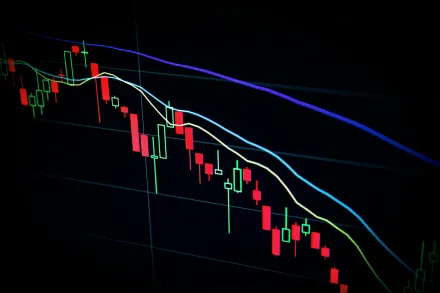
Technical analysis draws on a toolbox of indicators designed to quantify patterns, momentum, volatility, and trend strength. Moving averages smooth out short term price fluctuations to reveal underlying direction, while crossovers such as the golden or death cross have historically carried psychological significance for traders seeking to confirm trend changes. Momentum oscillators, including the relative strength index and stochastic indicators, attempt to gauge overbought or oversold conditions and the pace at which prices are advancing or retreating. Trend-following techniques, such as price channels and breakout signals, aim to identify persistent directional moves that traders may ride with defined risk controls. Volume analysis adds a dimension of conviction to price moves; spikes in volume at breakouts may indicate stronger participation and the potential for durable moves. Some practitioners employ volatility measures like the average true range or Bollinger bands to understand price dispersion and potential compression or expansion regimes. Price action itself, often distilled into candlestick patterns or chart formations, serves as a narrative about supply and demand dynamics that may precede larger price moves. The technical discipline emphasizes probabilistic thinking and risk management through stop levels, position sizing, and adherence to defined entry and exit criteria. It is essential to recognize that technical signals reflect collective psychology and market microstructure, which can change with evolving market regimes, liquidity conditions, and regulatory constraints. When used appropriately, technical analysis can enhance timing and risk control, especially in environments where price formation is dominated by trend and momentum rather than fundamental reassessment.
Market efficiency and limitations
The question of market efficiency lies at the heart of both fundamental and technical analysis. If markets perfectly reflect all available information instantly, then generating superior returns from either approach would be challenging, and the best strategy would be to invest in low-cost, diversified vehicles and accept market returns. In practice, however, no market is perfectly efficient at all times. Fundamental analysis can uncover mispricings when information about a company’s profitability or growth prospects is not fully incorporated into prices, whether due to gaps in analysis, delays in information flow, or cognitive biases among investors. Technical analysis seeks to exploit patterns created by collective behavior, which can lead to short-term inefficiencies even in efficient markets. The limitations of each method become apparent in different regimes: fundamental analysis may underperform during sudden shifts in sentiment or when information releases are systematically misinterpreted, while technical analysis may produce false signals in choppy markets or during periods of abrupt regime change where price action diverges from established patterns. A disciplined investor recognizes that neither approach guarantees success in isolation and that markets can exhibit periods of trend persistence as well as rapid reversals. The practical implication is not to rigidly adhere to one paradigm but to understand how each framework explains price behavior in a given context and to adjust the investment process accordingly. In turbulent markets, risk management, liquidity considerations, and transparent decision rules become as important as the choice of analytical lens. The recognition that both fundamental and technical insights have limits invites a pragmatic stance: use fundamentals to form a credible thesis about value, use technicals to calibrate timing and risk controls, and maintain a flexible posture when new information arrives that challenges established beliefs.
When to rely on fundamentals vs technicals
The decision to rely more heavily on fundamental analysis or on technical analysis depends on the investor’s objectives, time horizon, and tolerance for uncertainty. For long term investors focused on building wealth through structural growth and durable cash flows, fundamental analysis often provides a stable anchor. The emphasis is on identifying businesses with sustainable competitive advantages, robust capital allocation, and the potential to generate cash that compounds over many years. In such a framework, fluctuations in price may be endured because the central premise is that the business will eventually be recognized by the market at a more accurate valuation. For traders and shorter term investors seeking to exploit price movements and volatility, technical analysis can offer a practical toolkit to time entries and exits, manage risk, and avoid being swept up in impulsive reactions to news events. Technicals can also assist in risk management by signaling when a trend is weakening, a momentum shift is occurring, or liquidity conditions are tightening. In practice, the most effective approach often blends both perspectives: a fundamental thesis is established to define what a fair value might be and what catalysts could drive changes in that value, while technical signals are monitored to identify more precise moments to participate and to manage exposure as the price evolves. The synthesis requires discipline to keep the two systems from pulling in opposite directions and humility to revise the thesis when data contradicts the initial assumption. The choice between relying more on fundamentals or favoring technicals should reflect the investor’s role, whether as a long term allocator, a tactical trader, a risk manager, or a hybrid participant who adapts to market regimes. Above all, the prudent practitioner remains aware that markets are complex systems in which information flows, sentiment, and structure interact in nonlinear ways, and that a well-designed process must accommodate uncertainty while preserving core principles of value assessment and prudent risk control.
Integrating both approaches into a unified process
A coherent investment process that integrates fundamental and technical analysis begins with a clear framework for how each component contributes to decision making. The fundamental component establishes a view on value and growth by assessing revenue trajectories, profit margins, return on capital, balance sheet integrity, and the durability of competitive advantages. It articulates a thesis about where the business is headed, what risks could derail that path, and at what price the market might fairly value the future cash flows. The technical component, meanwhile, imposes a set of rules about when to place trades, how to manage risk, and how to adjust exposure in response to trend, momentum, and price action signals. A practical integrated process might start with a qualitative and quantitative fundamental assessment that yields an initial range of fair value and a plausible catalyst or scenario that would unlock the thesis. Only after this assessment has been framed would a technical overlay be applied to determine a favorable entry point, a stop level, and a target price that aligns with risk-reward expectations. The timing discipline gained from price action analysis can be particularly valuable during periods of high market uncertainty or when a stock has had a sharp move that may not yet reflect the fundamental recalibration of the business. In such moments, technical signals can help avoid premature commitment while the fundamental thesis matures or when volatility presents attractive risk-reward opportunities. Risk management remains central in an integrated approach, with position sizing calibrated to the confidence in the thesis, and the use of hedges or diversified exposure to mitigate the potential adverse outcomes of events that could alter fundamentals or degrade technical setups. The process also requires continuous monitoring and a structured mechanism for updating assumptions: if new earnings reports, regulatory changes, or competitive dynamics alter the narrative, the fundamental case should be revised, and the technical framework should be adjusted to avoid stubborn adherence to an outdated price interpretation. A well-designed hybrid process respects the strengths and limitations of both methods and emphasizes discipline, process over intuition, and ongoing learning from outcomes.
Case study: A hypothetical company
Imagine a hypothetical technology company with a strong product market fit, expanding gross margins, and a clear path to cash flow positive status within a couple of years. The fundamental analysis would begin by mapping the business model, assessing the size of addressable markets, evaluating the durability of the company’s competitive advantages, and examining the capital expenditure requirements to sustain growth. It would analyze revenue growth rates, gross margins that are trending upward due to scale, operating leverage, and the trajectory toward free cash flow positivity. It would also consider the balance sheet, cash reserves, debt levels, and the potential impact of regulatory developments on pricing and interoperability. If the fundamental thesis points toward a compelling deep value created by accelerated growth and robust cash generation, the investor would estimate a plausible intrinsic value using discounted cash flow models, consider relative valuations against peers, and form a thesis about catalysts such as product launches, partnerships, or market expansion. Meanwhile, the technical overlay might analyze the stock’s price action relative to its moving averages, note a sustained uptrend with increasing volume during a stretch of several weeks, and observe a breakout above resistance accompanied by a surge in participation. The technical framework would set risk controls, indicating a stop below a defined support level or a failure to sustain momentum, and would define a target price that aligns with the risk-reward calculus backed by the fundamental upside. If the stock delivers in line with fundamentals but traders fail to push prices higher due to macro headwinds or transitional liquidity, the technical signal might show a consolidation phase that calls for patience or a wait for a clearer breakout. In such a synthesis, the investor remains vigilant for changes in the competitive environment, the pace of innovation, or shifts in the macro landscape that could alter the thesis, while using price dynamics as a practical guide for timing. This example illustrates how fundamental and technical insights can be complementary rather than exclusive, providing a more resilient framework for decision making and risk management.
Common myths and how to avoid them
One common myth is that fundamentals alone guarantee success because true value will eventually be recognized by the market. While long run earnings and cash flow are powerful drivers, markets can remain irrational longer than an investor can stay solvent, and mispricings can persist for reasons that are not purely rational, including liquidity constraints, capital allocation cycles, or shocks that temporarily disrupt the discounting of future cash flows. A second myth is that charts can predict exact tops and bottoms with precision. In reality, technical signals are probabilistic and reflect the weight of market opinions at a given moment; they help identify favorable moments to participate or to reduce exposure but do not guarantee that a price peak or trough will occur at a particular date. A third myth suggests that combining the two approaches eliminates risk entirely. In truth, risk never disappears; it is managed through diversification, position sizing, and disciplined adherence to a well defined process. A fourth misconception is that one approach is inherently superior in all environments. Markets go through cycles where momentum trading may outperform in trending markets, while valuation-based strategies may outperform when fundamentals reassert influence about intrinsic value after a period of noise. The safest stance is to recognize that no single framework can capture all market dynamics; the prudent practitioner uses both perspectives as tools to illuminate different dimensions of risk and opportunity and remains ready to adapt when conditions change. To avoid the pitfalls associated with overconfidence or dogmatic thinking, it is essential to document the thesis, test assumptions with data, maintain transparent criteria for entry and exit, and continuously review outcomes against expectations. The ability to learn from mistakes and to refine the decision framework over time is a hallmark of mature investment practice that transcends any single method.
The role of risk management and portfolio construction
Regardless of which analytical method dominates a practitioner’s approach, robust risk management and thoughtful portfolio construction are essential. Fundamental analysis can generate a strong conviction about a stock’s potential, but the realization of that potential depends on the investor’s ability to tolerate drawdowns, diversify across industries, and avoid concentration risk that could magnify losses if a thesis fails to materialize. Technical analysis contributes to risk management by providing evidence on when momentum is waning, when volatility is escalating, or when liquidity conditions may constrain trading. A disciplined risk framework includes predetermined stop levels, defined maximum losses per position, and limits on leverage or exposure to highly correlated assets. Portfolio construction then translates these individual ideas into aggregated allocation decisions that balance the expected return with the spectrum of risks faced by the investor. The process often involves calibrating capital allocation sizes based on the confidence in each thesis, ensuring that the combined exposure reflects a diversified set of drivers such as growth, value, quality, and momentum across different sectors and geographies. It also requires ongoing monitoring of correlations and potential contagion effects in market shocks, as well as a repeatable routine for rebalancing in light of new information. A mature approach to risk management treats uncertainty as an inherent feature of markets and builds protective measures that preserve capital while preserving the flexibility to pursue opportunities when they arise. The art of combining fundamental and technical analysis with a disciplined risk framework is, in many ways, a practical expression of responsible investing, one that seeks to align capital with thoughtful expectations while maintaining humility about the limits of predictive certainty.
Technological evolution and future prospects
The landscape of both fundamental and technical analysis is evolving with advances in data availability, computational power, and analytical methodologies. Fundamental analysts increasingly incorporate alternative data sources, such as satellite imagery for retail parking trends, supply chain indicators, and foot traffic analytics, to augment traditional financial statements. They may leverage scenario analysis, probabilistic forecasting, and machine learning tools to stress test earnings trajectories under various macro regimes, while still maintaining the discipline of human judgment in interpreting qualitative signals like management quality and strategic shifts. Technical analysts benefit from high-frequency data, algorithmic trading signals, and sophisticated volatility models that capture the behavior of markets during events and regimes that depart from historical norms. The advent of automated screening, backtesting, and robust risk controls enables practitioners to test hypotheses across diverse market conditions and to implement systematic strategies with explicit rules. However, the abundance of data also raises concerns about overfitting, data snooping, and the risk that complex models may lose resilience when confronted with unprecedented events or regime changes. The future of analysis lies in balancing innovations with principled skepticism, ensuring that models remain interpretable, robust, and aligned with the core objectives of risk-adjusted return and capital preservation. As markets continue to evolve with new products, regulatory developments, and shifting participant behavior, the integration of fundamental insight with technical discipline is likely to become more nuanced, requiring ongoing education, disciplined process design, and a commitment to adaptive learning. The overarching trend is toward more informed decision making that respects both the narrative of business value and the science of price formation, while recognizing that uncertainty will always be a central feature of markets.
Practical mindset for investors and ongoing learning
A practical mindset for investors who navigate fundamental and technical analysis emphasizes curiosity, skepticism, and disciplined experimentation. It starts with clarity about goals, time horizon, and risk tolerance, followed by the development of a formal thesis that links observable business dynamics to expected financial outcomes. It continues with a defined process for updating this thesis as new information arrives, including a clear protocol for reevaluating parameters, revising assumptions, and deciding when to.Participate or to step back. A crucial habit is documenting the rationale behind each investment decision and subjecting it to periodic review that compares outcomes with expectations. This reflective practice helps separate outcomes driven by luck from those attributable to a coherent analytical framework. Investors should also cultivate emotional discipline to resist the pull of short term noise, while remaining nimble enough to adjust positions when evidence warrants. Education remains central: reading quarterly reports, listening to earnings calls, studying case studies, and analyzing historical episodes where fundamental and technical signals converged or diverged. At the same time, practical experience matters: learning how different markets react to macro shocks, how liquidity conditions shape price action, and how transaction costs influence the incentives to trade. A well rounded practitioner seeks to build a robust toolkit that can be deployed across regimes, recognizing that resilience comes from a balanced blend of quantitative rigor, qualitative judgment, and a sober assessment of risk. The synthesis of fundamentals and price action, when implemented with patience and discipline, becomes a durable framework for navigating markets with confidence, humility, and a clear sense that the goal is steady, risk adjusted growth rather than rapid, uncertain bets.