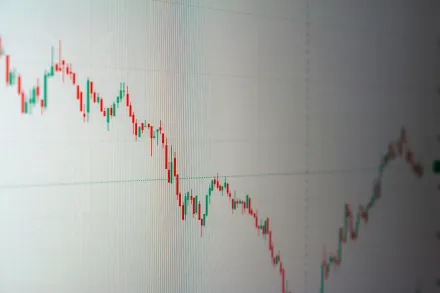
Understanding the emotional terrain of a market crash
When markets suddenly falter and drastic headlines fill the screens, the human mind reacts with a mix of fear, curiosity, and urgency. Anxiety often pushes investors toward quick judgments, such as selling positions at the worst possible moments or abandoning a plan that once seemed sound. This is natural biology at work: the brain scans potential losses more intensely than potential gains, a bias that can distort evaluation and drive impulsive actions. Yet a crash also acts as a mirror, revealing how well a person has prepared for volatility and whether there is a coherent framework that can guide decisions beyond pulse reactions. The most productive response begins with acknowledging the emotional currents and separating them from the concrete data that matter for long-term outcomes. By creating a calm, deliberate mindset, an investor can shift from reaction to analysis, from fear to strategy, and from chaos to a structured process that respects both risk and opportunity. In this moment, it is not the speed of action that matters most, but the clarity of the guiding plan behind the action and the willingness to revisit that plan as new information emerges.
Assessing your financial position after a crash
The first practical step in the aftermath of a market swoon is a candid inventory of your finances. This means knowing exactly how much liquidity you have, what your essential living expenses look like, and how long your capital can support your goals if markets stay volatile. An emergency fund acts as a shield, reducing the pressure to sell during downturns simply to cover daily needs. Debts, especially high-interest obligations, warrant attention because their cost can pop up in unexpected ways as interest rates fluctuate and credit conditions tighten. A clear picture of net worth, including investments, real assets, and liabilities, sets the stage for decisions that are not driven by fear of further declines but by a reasoned assessment of risk, return expectations, and time horizons. If you have spare cash after meeting essential obligations, you can begin to explore opportunities with intention rather than desperation, keeping a buffer for future uncertainty and ensuring that any new commitments align with your long-term trajectory rather than short-term emotions.
Redefining goals and risk tolerance
Crashes provide a diagnostic lens for evaluating whether your financial goals and the risk you are willing to endure are in harmony. Long horizons with meaningful growth targets require a different posture than near-term needs that demand capital preservation. A thoughtful reassessment should balance two questions: what are you trying to achieve, and what is the duration over which you are willing to bear the fluctuations that accompany investing? Risk tolerance is not a fixed trait but a reflection of circumstance, knowledge, and confidence. It can shift with age, life events, or changes in wealth, so it is essential to revisit it in light of current conditions. The process should consider how you react to paper losses, what kind of drawdowns you could tolerate without losing sleep, and whether you have a framework for sticking with a plan even when perceptions of risk are temporarily amplified by media narratives. When goals and risk tolerance align, the probability of sticking with a disciplined strategy increases dramatically, reducing the chance that fear will derail progress in the years ahead.
What a market crash signals about prices and value
A market crash often reflects a repricing of assets as new information arrives and investors recalibrate their expectations for growth, interest rates, and risk. Prices may fall not because the underlying businesses deteriorate in a fundamental way, but because sentiment shifts, liquidity tightens, or external shocks alter near-term cash flows. In many cases, durable franchises with strong balance sheets present opportunities precisely because their current valuations no longer reflect their long-run earning power. The challenge is to distinguish between a temporary mispricing driven by panic and a permanent impairment that justifies a more cautious stance. A disciplined approach looks beyond daily moves and asks questions about business quality, competitive advantage, management execution, and the resilience of cash generation under stress. This is not about chasing every bargain, but about identifying cases where the price adequately or attractively reflects long-term fundamentals relative to one’s time horizon and risk appetite.
Core strategies to consider after a crash
In the wake of a downturn, several time-tested strategies emerge as anchors for steady progress. One principle is to focus on high-quality growth and durable cash generation rather than chasing the hottest trends that have already borne the brunt of the selling. The emphasis should be on businesses with strong franchises, transparent financials, and disciplined capital allocation as these characteristics tend to endure through downturns and recoveries alike. Another strategy is the intentional use of diversification across asset classes and geographies to dampen volatility and reduce idiosyncratic risk. A third principle involves aligning new investments with a long-term plan, resisting the temptation to outrun risk with speculative bets that demand perfect timing. Finally, maintaining sufficient liquidity to capitalize on opportunities without compromising ongoing obligations helps keep a path forward clear. Together, these strategies offer a framework that converts fear into measured action, leveraging the crash as a chance to position portfolios for stronger recoveries while preserving stability during unsettled periods.
Asset allocation, diversification, and rebalancing
Asset allocation is the architecture of a resilient portfolio, a structure designed to spread risk rather than concentrate it in the hope of a single miracle payoff. Diversification across stocks, bonds, real assets, and cash equivalents helps cushion the impact of a drawdown in any one corner of the market. Rebalancing is the process of returning a portfolio to its target mix after market movements push it off course. This discipline can be especially potent after a crash, because falling prices often push allocations toward riskier areas, while the boat may be lifted by safer, high-quality holdings that have endured. Rebalancing is not a bet on predicting the next move; it is a commitment to maintain the intended risk profile over time. This approach also disciplines cash contributions, encouraging steady investing rather than ad hoc purchases driven by emotion or headlines. An investor who rebases risk exposure after declines can realize a smoother path toward long-term goals, even if short-term volatility remains elevated.
Evaluating investments: quality, valuation, and timing
Choosing individual investments after a crash requires a careful triad: quality, valuation, and timing in the context of an investor’s goals. Quality encompasses business durability, competitive position, governance, and the reliability of cash flows under stress. Valuation asks whether the price today reflects a rational expectation of future performance, accounting for risk and uncertainty. Timing concerns the investor’s capacity to wait for the market to unfold, rather than attempting to predict the exact moment of a rebound. Rather than relying on a single rule, it is prudent to combine quantitative screens with qualitative judgment, examining balance sheets, cash flow quality, and the potential for earnings resilience during economic headwinds. A patient approach avoids overpaying for speculative appreciation and instead seeks investments whose long-run returns are supported by durable fundamentals.
Fixed income, cash, and liquidity management
In a turbulent market environment, the role of fixed income and liquidity becomes more pronounced. High-quality bonds can offer ballast when equities swing, providing predictable income streams and reducing overall portfolio volatility. The choice of duration matters, with shorter bonds often providing greater resilience during rising rate environments, while longer-dated securities may offer enhanced yields if the economic outlook stabilizes. Inflation-protected securities and high-quality government or corporate issues can serve as essential hedges against unseen risks. Maintaining a buffer of cash or near-cash assets gives flexibility to seize new buying opportunities without resorting to forced selling of positions that you do not want to relinquish. This section underscores the importance of aligning fixed income strategy with risk tolerance and time horizon, ensuring that the overall portfolio remains coherent and capable of withstanding ongoing uncertainty.
Dollar-cost averaging, lump-sum vs gradual investing
After a crash, investors debate whether to invest a lump sum or to deploy capital gradually through dollar-cost averaging. A lump-sum approach can accelerate exposure to a recoveries when markets have fallen substantially, capturing more of the upside if a rebound unfolds rapidly. Dollar-cost averaging reduces the risk of mistiming entry by spreading purchases over time, smoothing the effect of volatility and helping maintain discipline if prices remain depressed for an extended period. The optimal choice depends on the amount of cash available, the investor’s tolerance for risk, and the expected pace of the economic rebound. For many, a blended approach—committing a core amount upfront while phasing additional investments over months—strikes a balance between seizing early opportunities and avoiding the missteps of attempting to time the market precisely. This middle course can align action with patience, enabling a controlled transition from fear to informed participation.
Tax considerations and accounts
Taxes influence investment decisions in several meaningful ways, especially after a market decline that changes the relative value of investments. Tax-advantaged accounts can shelter gains and provide a more efficient path to growth, while tax-loss harvesting can realize losses to offset gains within regulatory limits, potentially improving after-tax returns. It is essential to distinguish between short-term and long-term tax consequences and to consider how any realized gains or losses interact with your current tax bracket and future expectations. In addition, estate and beneficiary planning considerations may come into play as portfolios grow or as lifecycles shift. A disciplined tax-aware approach does not constrain the pursuit of legitimate investments but instead helps preserve more of the wealth over time, freeing capital for continued investing through a variety of market environments. By integrating tax planning with investment decisions, you can improve net outcomes without sacrificing your long-range objectives.
Case studies from history: what we can learn from past crashes
History offers a rich archive of responses to major market downturns, and these stories illuminate patterns that recur across generations. The dot-com bust of the early 2000s demonstrated that even when technology assets have compelling long-term potential, exuberance can lead to painful drawdowns that require patience and selective reentry into high-quality franchises. The 2008 financial crisis showcased the importance of balance sheet strength, governance, and systemic risk awareness, reminding investors that diversification alone is not a safeguard against cascading losses if the entire market faces a sustained shock. The COVID-19 crisis of 2020 highlighted the power of central bank support, rapid policy responses, and the value of liquidity as a stabilizing factor. By studying these episodes, investors can extract practical insights about how markets behave under stress, how recoveries unfold, and how disciplined plans withstand the test of time. The core takeaway is not to imitate specific actions from the past, but to understand the underlying principles of risk management, valuation discipline, and patient participation that consistently contribute to favorable outcomes over the long horizon.
Common mistakes and how to avoid them
Even with a clear framework, investors fall into predictable traps during and after crashes. Panic selling to prevent further losses often locks in permanent damage to a portfolio’s trajectory. Chasing performance after a rebound begins can lead to overexposure to underpriced risk or overreliance on recent winners whose fundamentals have not fully recovered. Another frequent misstep is abandoning a well-considered asset allocation in favor of imitative behavior, which amplifies concentration risk and undermines diversification. Overconfidence in one’s ability to time the market is another hazard, as is neglecting the tax implications of decisions taken during turbulent periods. A more constructive approach emphasizes humility, data-driven decision making, and adherence to a documented process. It also values patience, recognizing that recovering markets do not always rise in a straight line and that steady contributions, even if modest, compounds significantly over the long term. By acknowledging these traps and designing guardrails that prevent impulsive actions, investors can preserve the integrity of their strategies when uncertainty peaks.
Building a sustainable post-crash investment plan
A robust plan after a crash integrates goals, risk tolerance, and an evidence-based approach to asset allocation. The plan should specify how you will handle new money, how you will rebalance, and how you will adjust expectations as market conditions evolve. It should also outline your research process for evaluating potential investments, including the criteria for quality, valuation, and competitive positioning. A sustainable plan emphasizes ongoing education, deliberate diversification, and a habit of reviewing performance against benchmarks and objectives, not against the noise of daily moves. It recognizes that markets are dynamic and that a well-constructed portfolio can adapt as circumstances change while remaining anchored to long-term aims. The discipline of documenting a plan brings intentionality to investment decisions, reduces the likelihood of reactive mistakes, and builds confidence to remain invested through future cycles. The result is not merely wealth accumulation but a framework that supports steady progress toward financial aspirations with clarity and resilience.
Staying disciplined: routines, partnerships, and ongoing education
Discipline is the quiet engine that powers successful investing through storms and calms alike. Establishing routines, such as regular reviews of the portfolio against the plan, setting aside time for learning about market dynamics, and maintaining a consistent contribution schedule, reinforces healthy behavior. Partnerships with trusted advisors, mentors, or investment communities can provide valuable perspectives, help test assumptions, and prevent the isolation that can accompany market stress. Ongoing education is essential because markets continuously evolve; new products, regulatory changes, and shifting macro conditions create both risks and opportunities. A commitment to learning must be paired with a practical execution framework that translates understanding into action that aligns with long-term goals. By integrating habit, counsel, and education, investors create a durable foundation for navigating not only the next crash but the many market cycles that follow, increasing the likelihood that their portfolios endure, recover, and ultimately thrive over the decades ahead.