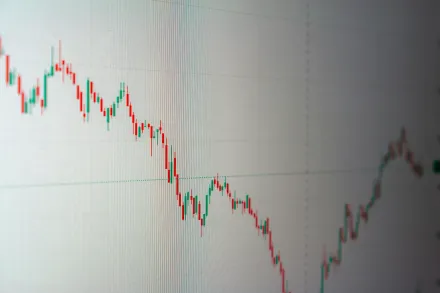
What a stock chart reveals about price action
Understanding a stock chart starts with recognizing that it is a compact diagram of traded prices over time, a graphical representation that compresses complex market behavior into a form that human perception can grasp quickly. The chart does not predict the future with certainty, but it encodes information about supply and demand, momentum, and the balance between buyers and sellers. When you study a chart, you are looking for patterns that tend to recur under similar conditions, and you are learning to read the story told by the price as it moves through time. This narrative emerges from the interaction of many participants with different objectives, constraints, and information, all converging on the price at each moment. A chart is not a crystal ball, but it is a map that can guide decisions when read with discipline and context.
The core value of a chart lies in its ability to summarize a sequence of events into recognizable features. Price movement is not random; it displays tendencies such as trends, consolidations, reversals, and breakouts. A chart also captures the tempo of the market, indicating whether activity is accelerating or slowing, which can coincide with shifts in sentiment. When you learn to observe these cues, you gain a framework for assessing risk and potential reward, rather than guessing at random. The skill of reading charts builds on patience, attention to detail, and a willingness to test ideas against price action rather than against hope or fear. In practice, you will become adept at mapping what you see on the screen to a set of hypotheses about what the market is likely to do next, while always keeping the possibility of error in mind.
To approach a chart methodically, start by noting the timeframe and the asset class, then examine the structural elements that are present across most charting formats. The price axis, usually displayed on the vertical scale, conveys how high or low the price has moved, while the time axis charts how long the price has been in motion. Movements are often composed of discrete intervals such as days, weeks, or minutes, and each interval is a snapshot of price and, in many formats, volume. The visual language of the chart is a conversation between price bars or candles, lines, or bars and the volume bars that appear below. The first impression should be clarity about the trend direction, the magnitude of recent moves, and whether buyers or sellers have controlled activity in the recent period. As you gain experience, your interpretation becomes more precise, and you can distinguish between minor noise and meaningful signals.
The habit of framing your understanding around a simple question—what is the current trend and where might it be headed next—helps prevent overanalysis. While individual candles or bars can be noisy, consistent patterns across timeframes often reveal the underlying rhythm of the market. A chart is not a single moment in time; it is a continuum of moments that, when viewed collectively, show persistence or change in behavior. This perspective helps you avoid chasing fleeting moves and instead focus on the implications for risk management and portfolio positioning. By embracing a patient, disciplined approach to chart reading, you empower yourself to combine technical insight with a sober assessment of risk, rather than relying on sensational cues that may fade quickly.
As you embark on chart reading, it is essential to develop a vocabulary that describes observed phenomena without overclaiming certainty. Terms like trend, breakout, consolidation, retracement, and momentum have precise meanings in the trading conversation, but they also require context to be useful. For example, a breakout exists when the price closes above a defined resistance level with increasing volume, yet not every breakout leads to a sustained advance. Understanding the conditions under which patterns tend to succeed or fail, including the prevailing market environment, liquidity, and time horizon, is crucial. The aim is to build a mental model that integrates price, time, and volume into a coherent assessment rather than relying on isolated glimpses of action.
Chart types and their information
The landscape of chart types includes line charts, bar charts, and candlestick charts, each offering a distinct lens on price action. Line charts connect closing prices with a continuous line, providing a smooth representation that emphasizes overall directional moves and eliminates intraday volatility. Bar charts present price data with a vertical line showing the range of high to low within the period, accompanied by horizontal marks for opening and closing prices, producing a compact but information-rich view of how price traded within each interval. Candlestick charts add a visual emphasis to inflation or contraction in momentum by rendering a filled or hollow body between the opening and closing prices, along with the high and low during the period, creating a more intuitive sense of who controlled the session. While each type highlights different aspects, all share the same fundamental purpose: to reveal how price moved during a defined window of time and to provide cues about potential future behavior based on that movement.
Line charts are particularly useful for identifying longer-term trajectories and smoothing out daily noise, which helps in recognizing broad directional bias. Bar charts remind traders of the intraday range and can make it easier to compare opening and closing dynamics, which sometimes highlight gaps or shifts in sentiment. Candlestick charts, because of their expressive visual form, are favored by many practitioners for their immediacy in signaling bullish or bearish sentiment through the color and size of the body, the strength of the wick, and the relationship between body and shadow. Regardless of format, the most important discipline is to align the chart choice with the time horizon and decision context. A chart should illuminate, not obscure, and the chosen style should support the trader’s plan for risk, duration, and check-ins.
Beyond the traditional formats, some charts include additional panels or overlays such as moving averages, volume bars, momentum indicators, or oscillators. These extras enrich the chart by quantifying aspects of price dynamics that are not always obvious from price alone. The goal is to create a composite view in which price action, volume, and derived indicators reinforce each other, enabling more confident judgments about trend strength, potential reversals, and the likelihood of further movement. When this integrated perspective is practiced consistently, it becomes a reliable part of the toolkit that supports careful decision making rather than impulsive reaction to every minor swing.
Interpreting the axes and scale
The axes of a stock chart carry essential information about measurement and comparison. The vertical axis, or price axis, conveys the numerical value of the asset at each point in time, while the horizontal axis, or time axis, discloses the chronological sequence of trading activity. The way these axes are scaled can dramatically affect the perception of movement. Some charts employ a linear scale, where equal distances represent equal price changes, while others use a logarithmic scale, which emphasizes percentage changes and can better reflect the relative strength of moves across a wide price range. Recognizing the scale is critical, because it informs how a given move should be interpreted. A small percentage move in a high-priced stock can be just as significant as a larger percentage move in a lower-priced stock, depending on the surrounding context.
In addition, the placement of major gridlines and the compression of data points on the screen influence how quickly you detect trends. A steep incline on a linear scale may look dramatic, while on a log scale the same move can appear more modest yet still indicate meaningful momentum. When reading a chart, always consider the chosen scale and, when possible, compare the asset against relevant benchmarks or peers to gauge whether the observed movement reflects company-specific dynamics or broader market forces. The objective is to separate fundamental drivers from statistical quirks that result from the way the data is plotted.
Another practical consideration is the transparency of the charting platform regarding data quality and time synchronization. Gaps, missing data, or inconsistent time stamps can distort interpretation, especially for high-frequency readers. A careful reader will verify the data source, acknowledge any limitations, and adjust expectations accordingly. In longer timeframes where the goal is to assess trend duration rather than intraday volatility, small data imperfections often have a negligible impact, but it remains essential to maintain a skeptical, evidence-based mindset about the information being presented.
Candlesticks, bars, and lines: what each represents
Candlestick charts have become a widely used convention because they convey a story at a glance. Each candle represents a single time period and displays four critical price points: the opening price and closing price, as well as the highest and lowest prices reached during that interval. If the close is higher than the open, the candle body is often colored to indicate bullish pressure; if the close is lower, the body color signals bearish pressure. The length of the body provides a visual cue about the strength of the move, while the wicks or shadows reveal the price extremes within the period. This packaging allows a reader to perceive momentum shifts, exhaustion, and potential reversals with a quick glance.
In bar charts, the same information is represented with a vertical line for the range and horizontal ticks for opening and closing prices, producing a compact, information-dense format that emphasizes intraperiod dynamics. Line charts strip away the intraperiod highs and lows, focusing solely on closing prices, which can be an advantage when you want to emphasize long-term direction without distraction from intraday noise. Each style has its own advantages, and the choice often depends on the trader’s focus and the complexity of the data they want to emphasize. The central practice is to read the core signal—whether the price closed near its high or near its low, whether many candles form higher highs and higher lows, or whether price repeatedly fails at a specific level—and to connect that signal to one’s bigger plan.
The presence of color can be informative as well, but it is important to interpret color in a disciplined way. Colors that indicate bullish sessions should not be assumed to guarantee future gains; they simply reflect positive momentum within the given interval. Bear in mind that color schemes are optional and vary across platforms, so the same candle may appear differently depending on the charting tool. The practical takeaway is to learn one consistent method for reading the visual cues and to test your interpretations across multiple periods and securities to ensure robustness.
Volume and its importance
Volume represents the number of shares traded during a particular period and serves as a crucial companion to price. When price moves in concert with rising volume, the move is typically considered more credible; when price advances on declining volume, the sustainability of the move may be questioned. Volume helps distinguish between genuine interest and speculative fervor, and it can provide early hints about momentum that may carry price further in the same direction or, alternatively, a lack of conviction that could precede a reversal. The basic principle is straightforward: price action combined with robust volume is more meaningful than price action in isolation.
Observing how volume changes during breakouts, consolidations, or pullbacks can reveal the strength or fragility of a move. A breakout accompanied by a surge in volume suggests that new buyers are entering the market with energy, increasing the probability that the breakout will sustain. Conversely, a breakout that occurs on light volume may indicate a lack of broad participation and a higher risk of a false breakout. However, it is important to interpret volume in context—during earnings announcements, for example, volume behavior can be atypical and still meaningful within the framework of future expectations.
Traders often watch for divergences between price action and volume signals. If price makes a new high but volume fails to confirm with a higher level, this divergence can warn of potential weakness or a pending reversal. Similarly, during a downtrend, rising volume on down days suggests the selling is broad-based, while shrinking volume may indicate a weakening of the trend. The practical approach is to integrate volume into your narrative of price action rather than treating it as an isolated signal. This integration provides a more complete picture of market participation and the likelihood of continuation or reversal.
Identifying trends and trendlines
Trends describe the general direction of price over a period, whether upward, downward, or sideways, and they form the backbone of most chart-reading strategies. A trend reflects the ongoing balance of supply and demand, which, when sustained, produces a recognizable slope on the chart. Drawing trendlines by connecting successive swing highs or swing lows offers a simple visual method to visualize the path of least resistance for price. An uptrend is typically characterized by higher highs and higher lows, suggesting that buyers are gradually pushing the price higher with each bounce. A downtrend features lower highs and lower lows, indicating that sellers maintain control and the push toward lower prices persists. A sideways or range-bound market shows a horizontal pattern where price fluctuates within a defined band, with neither bulls nor bears gaining clear dominance.
Trendlines act as potential support or resistance references. When price approaches a rising trendline, it may find support as buyers step in, whereas a retreat from a falling trendline can signal renewed selling pressure. The reliability of trendlines improves with the number of times price interacts with the line and with the context provided by other signals such as volume or corroborating indicators. It is important to recognize that trends can stall, accelerate, or reverse, and not every test of a trendline yields a decisive outcome. The discipline is to observe how trendlines align with other evidence on the chart and to use them as dynamic levels that help frame risk management decisions.
In more advanced practice, one can explore the slope of moving averages or the behavior of momentum measures alongside trendlines. A steep angle often implies strong momentum, but it can also precede a sharp correction if the price becomes unsustainable at those levels. Conversely, a gentle slope may indicate a more gradual drift with fewer dramatic reversals. The key is to maintain awareness of how these structural elements interact with the broader market context and with the underlying fundamentals of the asset.
Support and resistance concepts
Support and resistance are foundational ideas in chart reading that describe price levels where supply and demand historically pause, halt, or reverse the direction of movement. Support represents a price zone where demand is expected to be strong enough to prevent further declines, often coinciding with prior lows or baselines where buyers have entered in the past. Resistance is a price zone where selling pressure previously overwhelmed buying interest, typically matching previous highs where the market paused or turned lower. These levels are not exact points but bands where the likelihood of reaction increases. The practical value of support and resistance lies in their use as reference points for entry and exit decisions, profit targets, and risk management.
When price approaches a known support area, it can present a potential buying opportunity if the contextual signals align and the risk-reward profile remains favorable. If price breaks below support decisively, it may indicate a shift in market sentiment and the possibility of further downside, particularly if accompanied by increasing volume. The opposite logic applies to resistance: a break through a well-established resistance level can signal a new phase of expansion, while repeated tests that fail can reinforce the strength of the level as a barrier. The interpretation of support and resistance becomes more robust when combined with other indicators, including moving averages, momentum measures, and chart patterns.
It is also useful to consider dynamic support and resistance, which adapt as price changes, rather than fixed lines. For instance, a trendline that connects higher swing lows can evolve into a moving support level as the price advances. Traders watch for shifts in these dynamic references as potential signals of strength or vulnerability. The ultimate aim is to identify zones where a prudent decision could be made to protect capital or to participate in a favorable setup, all while acknowledging that no level is a guaranteed outcome.
Patterns and what they suggest
Chart patterns are recognizable formations that recur with some regularity across markets and timeframes. Classic patterns include things like head and shoulders, double tops and bottoms, triangles, flags, and pennants. Each pattern embodies a narrative about the fight between bulls and bears and the potential implications for future price direction. A head and shoulders pattern, for example, may indicate a shift from a bullish regime to a bearish one as the price forms a peak with a higher left shoulder, a higher head, and a lower right shoulder. A breakout from a triangle or a flag can signify the resumption of trend following a period of consolidation, often with volume confirmation that validates the move. The interpretation of any pattern should consider the context: the preceding trend, the tempo of price action, the volume pattern, and the broader market environment.
Patterns are not guarantees but probabilistic signals that gain credibility when supported by additional evidence. It is possible for a pattern to fail, especially in volatile markets, so risk management and confirmation through multiple sources become essential. An overly mechanical approach that relies on pattern recognition without regard to context tends to produce outcomes that are inconsistent with expectations. The disciplined reader treats patterns as candidates for further analysis rather than as foregone conclusions, always pairing pattern recognition with measurement of risk, potential reward, and the likelihood of alternative outcomes.
As you advance, you may encounter more complex formations such as harmonic patterns, cup-and-handle structures, or ascending and descending wedges. Each type can deliver insights about where price might head next, but their reliability varies with market conditions and the asset’s liquidity. The careful reader remains skeptical, tests ideas across multiple time horizons, and uses backtesting principles or logical reasoning to assess whether a pattern has any predictive power for the asset in question. This thoughtful approach reduces the risk of overfitting the chart to a narrative that feels intuitive but lacks durable support.
Momentum indicators and oscillators
Momentum indicators quantify the speed and magnitude of price changes, providing a counterbalance to the raw price data. Oscillators such as the relative strength index, the stochastic oscillator, and the rate of change measure whether the price has become overbought or oversold relative to its recent history. These tools can help reveal divergences when price continues to move in one direction while the momentum indicator tells a different tale, potentially signaling a forthcoming reversal. The key with momentum indicators is to interpret them within the context of the prevailing trend. In a strong uptrend, prices can stay overbought for an extended period, while in a downtrend, oversold readings may persist as sellers stay in control. The reader should avoid acting on a single indicator and instead seek convergence with price action and other evidence.
Another widely used class of indicators focuses on the relationship between price and moving averages. Oscillators lean on the concept of momentum change, whereas moving averages track the path of price and can smooth out short-term fluctuations to reveal the longer-term direction. The practitioner learns to watch for crossovers, where a shorter-term average crosses above or below a longer-term average, which can signal potential shifts in trend. However, moving average signals are not infallible and can be delayed, especially in choppy markets. A balanced approach combines these signals with price structure, volume, and risk controls to form a coherent trading or investing plan.
Moving averages and their signals
Moving averages provide a straightforward method for smoothing price action and highlighting the prevailing direction of motion. A simple moving average calculates the average closing price over a defined window, such as 20, 50, or 200 periods, and then plots that average on the chart. When the price trades above a moving average, it can suggest a bullish tilt, and when it trades below, a bearish tilt may be implied. Crossovers, in which a shorter moving average crosses a longer one, have historically been used to signal potential shifts in momentum. The interpretation of moving average signals improves when combined with other evidence, such as whether price remains above or below the average during pullbacks, the slope of the averages themselves, and the context of volume and volatility.
Longer-term moving averages tend to be more stable and reflect broad trend, whereas shorter-term moving averages respond more quickly to recent price changes and can provide timely signals in range-bound environments. The trader should avoid over-reliance on any single indicator and should consider how moving averages interact with support and resistance levels, chart patterns, and the general market regime. When used thoughtfully, moving averages help traders and investors establish a framework for assessing whether price momentum supports a continued move or requires caution due to potential mean-reversion.
Volume-based clues
Beyond the basics of price and linear indicators, volume itself can become a narrative driver. A surge in volume on a breakout often accompanies a strong conviction that the move has legs, whereas a breakout with tepid volume invites questions about the durability of the advance. In basing or consolidation phases, increasing volume on pivots or reversals can validate the significance of the price action, signaling that new participants are entering at important levels. Conversely, declining volume during a move may indicate dwindling interest and a higher risk of a reversal or a stall in momentum. Interpreting volume requires patience and corroboration with price behavior, since volume spikes alone do not guarantee a lasting trend.
Volume can also reveal shifts in sentiment during news events or macroeconomic releases. In such moments, price may react violently, but the accompanying volume might reveal whether the crowd is buying into the news or selling into the relief rally. The prudent reader approaches volume as a diagnostic tool that complements price signals, helping to establish a framework for risk management during events that can cause abrupt changes in market tone.
Timeframes and perspective
The choice of timeframe is essential because it shapes what you consider a meaningful move. Short-term traders focus on intraday charts, such as minute intervals, to capture quick opportunities, while swing traders may analyze daily charts to identify patterns that unfold over days or weeks. Longer-term investors tend to rely on weekly or monthly charts to assess fundamental alignment with price action over extended periods. Your timeframe should align with your goals, risk tolerance, and capital horizon. A chart that looks compelling on a daily scale may fail to perform when viewed through a longer lens, and vice versa. The practice of switching between timeframes helps reveal whether a signal is robust across horizons or is an artifact of a particular window of observation.
Developing a consistent routine for chart analysis across timeframes fosters discipline and reduces the likelihood of reacting to a random price blip. A methodical approach involves scanning for the current trend direction on the primary timeframe, checking for alignment on a higher timeframe, and then examining lower timeframes for entry points or risk controls. This multi-timeframe perspective is a cornerstone of robust chart reading, because it guards against overfitting a single snapshot of price action and improves the reliability of the conclusions drawn from the chart.
Practical steps to read a chart
To translate chart reading into actionable practice, adopt a sequence that emphasizes clarity and risk management. Begin by identifying the asset and the chosen timeframe, then observe the overall trend direction and whether the price is making higher highs and higher lows or lower highs and lower lows. Next, examine how price interacts with known levels of support and resistance and look for patterns that may indicate consolidation or breakout potential. The inclusion of volume provides a check on the strength of any move, and momentum indicators offer a sense of the pace of price change. Finally, compare what you see to the wider market and the asset's fundamentals to ensure that technical signals are not being misread in isolation. The overall aim is to arrive at a probability-based assessment where risk controls and a defined plan are integral to the reading process.
The practical routine should also include documenting assumptions and tracking outcomes while maintaining a healthy skepticism about overfitting. It helps to keep a simple journal of what signals existed, what actual price action followed, and how your risk parameters performed under those conditions. Such a practice not only improves pattern recognition but also builds a resilient approach to chart analysis. By treating chart reading as an ongoing skill that evolves with experience, you gradually increase the reliability of your interpretations and the consistency of your results over time.
Common mistakes to avoid
Avoid drawing conclusions too quickly from a single candle or a short sequence of moves because markets often test hypotheses before committing to a new direction. Another pitfall is overinterpreting patterns that fail to incorporate context, such as ignoring broader market conditions, sector trends, or the asset’s fundamentals. Relying on a single indicator to deliver a decision increases susceptibility to false signals, especially in volatile or choppy environments. The most reliable approach combines price action, volume, multiple corroborating indicators, and an awareness of external events that could drive change in sentiment.
Additionally, beware of letting personal preferences influence chart readings. Bias can lead to confirmation seeking, where an observer only notices signals that align with a preconceived view and discounts evidence to the contrary. A disciplined reader tests ideas against a diverse set of scenarios and remains willing to adjust or abandon a hypothesis when the evidence weakens. Finally, it is important to manage risk through clear position sizing, stop placement, and predefined exit criteria that reflect the risk associated with the observed chart patterns rather than chasing favorable outcomes after the fact.
Chart reading in a trading routine
Incorporating chart reading into a structured trading routine helps convert analysis into consistent actions. A routine might begin with an explicit market screen that filters for liquidity, followed by a quick assessment of major trend directions and prevailing market conditions. Then a deeper dive into selected symbols can include a review of price structure, pattern signals, and the alignment of price with volume and momentum. At the execution stage, a planned entry, stop loss, and profit target are defined in the context of the risk estimated from the chart and the asset’s volatility. Throughout the process, maintaining discipline and documenting outcomes are essential for growth, quality control, and the gradual improvement of your decision-making framework.
As you refine the routine, you will notice that certain assets exhibit highly repetitive, reliable patterns while others behave erratically. The ability to discriminate between these categories is a hallmark of mature chart reading. It is also valuable to maintain flexibility, recognizing that market regimes change and a previously reliable signal may lose its effectiveness. A robust routine balances adaptability with core principles, ensuring that changes in approach are purposeful and based on evidence rather than sentiment.
Integrating charts with broader analysis
Stock chart reading does not happen in a vacuum. The most effective practitioners integrate technical signals with fundamental considerations, macroeconomic context, and current news. While charts deliver insight into price dynamics, fundamentals inform the underlying value proposition and potential catalysts that can move prices in the future. Market breadth, earnings trends, regulatory developments, and industry shifts can all influence chart patterns and their persistence. A prudent reader cross-checks technical signals with those broader factors, ensuring that decisions are anchored in a comprehensive framework rather than in isolated numerical snapshots.
The synthesis of chart analysis with fundamentals requires a disciplined mindset. It involves asking precise questions about what the chart is signaling in light of earnings trajectories, revenue growth, guidance, competitive dynamics, and sector momentum. It also means being mindful of risk controls in case market sentiment changes abruptly due to unexpected events. By fusing chart reading with a thoughtful understanding of the broader landscape, an investor can position themselves to participate in favorable moves while maintaining a sober posture toward risk.