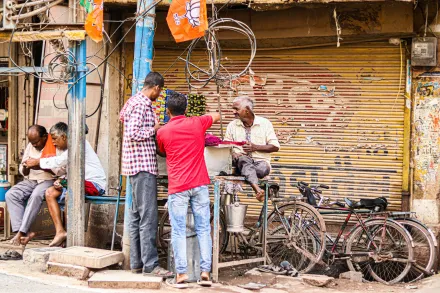
Informal lending networks represent a field of financial interaction that operates outside the formal structures of banks and microfinance institutions yet remains deeply embedded in daily life, social ties, and local economies. These networks emerge in communities where traditional credit is scarce or cost prohibitive, where trust and social capital can substitute for collateral and formal documentation, and where the pace of life and the details of a borrower’s story matter as much as a numerical score. In many places, informal lending is not merely a fallback option; it is a living ecosystem that sustains households, small enterprises, and households facing unpredictable shocks. Understanding how these networks operate requires moving beyond stereotypes and toward a nuanced view of social relationships, collective risk management, and the practical realities of accessing finance without standardized contracts or regulatory oversight. The mechanisms that govern these networks are as much about human interaction, reputation, and obligation as they are about interest rates and repayment schedules, and they often adapt quickly to changing economic conditions, migratory flows, and evolving technology. The result is a dynamic system in which money circulates through informal channels, reinforcing social bonds while simultaneously exposing participants to unique forms of risk and opportunity. In the pages that follow, the inner workings of informal lending networks are explored with attention to the structural elements, cultural drivers, and practical processes that make them resilient in some contexts and fragile in others. The aim is to illuminate how information travels within these communities, how decisions are made, and how such networks balance convenience with accountability in the absence of formal legal frameworks. This examination reveals a landscape where finance meets social life, where lending and borrowing become acts of mutual obligation, and where the line between friend, neighbor, and creditor is continually negotiated in everyday conversations and shared spaces.
Origins and cultural context
The genesis of informal lending networks can often be traced to historical patterns of reciprocity, kinship, and neighborhood cooperation that predate modern banking. In many communities, moneylending grows out of long standing customs that reward generosity and social solidarity, while at the same time enabling households to weather temporary shortages or pursue small business opportunities. Family and neighborhood networks create a reservoir of trust that substitutes for formal credit histories, collateral, or signed agreements. When a person borrows from a neighbor, there is a tacit implicit contract embedded in everyday social life; repayment becomes a signal of reliability not just to a single lender but to the broader circle of acquaintances who observe the borrower’s behavior. Cultural norms around debt, obligation, and communal responsibility shape how terms are discussed, what constitutes fair compensation for risk, and how collective memory informs future lending decisions. In many settings, the informal lender is not an institutional actor but a community member with a stake in the well being of others, which can influence the speed of decision making, the flexibility of terms, and the willingness to accommodate unexpected life events. The origin story of these networks often emphasizes place, identity, and shared experience, and that shared context provides a framework within which risk is assessed not merely in financial terms but in social terms as well. This intertwining of financial need with social belonging creates a distinctive lending culture where respect, reciprocity, and responsibility reinforce ongoing access to funds through repeated interactions and evolving reputations.
Structure and participants
Informal lending networks typically consist of a core group of participants who are connected through relationships that span family, friendship, neighborhood, or work. At the center of the network there may be a trusted organizer or elder who helps coordinate sessions, records, and repayment tracking, even if formal accounting is avoided in favor of shared memory and oral agreements. Borrowers and lenders form a web of ties in which individuals may act in several roles over time, serving as borrowers, guarantors, or lenders depending on capacity and need. Within this ecosystem, roles are fluid rather than rigid; a successful movement of funds often depends on social capital rather than legal familiarity. The network relies on a process of informal screening where personal knowledge, reputational cues, and the observation of past behavior shape whether someone is invited into the pool of borrowers or allowed to contribute as a lender. Frequent meetings, communal rituals, and regular communication channels help maintain cohesion, while the absence of formal contracts is compensated by collective memory and ongoing accountability to the group. As the network grows, subgroups may form within the larger framework, with distinct norms, timelines, and practices that preserve the sense of belonging while accommodating different risk appetites and financial needs. The resulting structure is elastic, capable of expanding when opportunities arise and tightening when difficulties threaten the collective balance of risk and reward.
Credit formation and fundraising
The capital that circulates within informal lending networks is often produced through a combination of savings, contributions, and trust based extensions of credit. Members contribute a regular amount to a common fund, which is then allocated to borrowers who meet the agreed criteria. In some configurations, the lending pool resembles a rotating savings and credit association, where a chosen member receives the entire fund at a time while others contribute until their turn arrives; in other arrangements, the pool acts as an informal line of credit extended to one or several borrowers at a time, with repayment schedules that reflect the borrowers’ capacity and local realities. In many settings, capital formation is reinforced by social loyalty; participants who consistently meet obligations are able to attract more favorable terms, while those who default or miss payments experience social pressure that can influence their access to future funds. The pool may also be enriched by outside contributions from respected community members or diaspora networks who wish to support local entrepreneurs or households. The fundraising mechanism thus embodies a blend of discipline and generosity, where the act of saving is inseparable from the act of lending, and where the strength of the fund depends as much on social trust as on financial prudence. When successful, this system creates a self reinforcing loop in which timely repayment expands opportunities for others and fosters confidence that the network can respond to unforeseen shocks without recourse to external institutions. This dynamic helps explain why informal networks can be remarkably responsive and resilient in the face of macroeconomic volatility and institutional gaps.
Trust, reputation, and social capital
Trust is the currency that underpins informal lending, and reputation is the asset that preserves it over time. In the absence of formal covenants and credit scoring, a borrower’s track record, consistency in meeting obligations, and the quality of interpersonal interactions become the central indicators of reliability. Reputational capital is accumulated through a history of punctual repayments, transparent communication about income and expenditures, and cooperative behavior in group activities beyond borrowing needs. Social capital functions as a form of collateral; lenders weigh the borrower’s standing within the community, the degree of social integration, and the likelihood that a default would ripple through the network and create collective distress. The social environment can also heighten accountability through informal sanctions, such as embarrassment, exclusion from future groups, or diminished access to the capital pool. Conversely, a strong reputation can unlock faster approvals, more favorable terms, and the ability to attract additional lenders who trust the borrower to honor commitments. Information flows through informal channels, often in the form of word of mouth, shared observations, and the concerns voiced by respected members of the group. Because information is rarely formalized, the accuracy and completeness of what is known about a borrower can vary, which makes personal discretion and communal norms central to decision making. The community’s shared narrative about past successes or failures guides future behavior, creating a living archive that informs every new lending encounter.
Procedures for lending and repayment
Without formal contracts, the procedures for lending and repayment rely on a combination of verbal agreements, mutual expectations, and documented memories. Terms such as loan amount, interest or surplus, repayment schedule, and consequences for late payments are typically discussed in a face to face setting and are anchored in the borrower’s current income trajectory and observed repayment discipline. Interest rates in informal networks are often modest, reflecting the cost of funds to the lenders and the social costs of failure, rather than a standardized payment amid legal enforcement. Repayment terms may be aligned with harvest cycles, wage days, or monthly income patterns, allowing borrowers to schedule payments in ways that minimize hardship. When a borrower experiences a temporary shortfall, the group may renegotiate terms, extend the repayment window, or allow a temporary forbearance, again reflecting the social nature of risk sharing and the flexibility that informal structures can provide. Documentation is minimal and often informal, based on memory, shared notes, or a single agreed upon record kept by a trusted member. Even in the absence of formal paperwork, the discipline of consistent follow through remains central to maintaining access to funds and the integrity of the network. The success of these procedures hinges on clear communication, mutual respect, and the willingness of participants to balance personal need with the wider health of the group.
Risk management and default handling
Risk management in informal networks emerges through a combination of social expectations, collective oversight, and adaptive responses to changing circumstances. When a borrower misses payments or signals distress, the group typically convenes a private discussion to assess the situation, explore underlying causes, and determine an appropriate course of action. Penalties may be informal, such as reduced access to future funds, temporary exclusion from the pool, or a requirement to participate in community service as a form of repayment in kind. At times, the network may appoint a mediator to facilitate negotiations, help restructure terms, or coordinate a voluntary debt relief plan that preserves relationships while recognizing the limitations of the borrower. In some contexts, the group may absorb a portion of the loss by distributing it among lenders or by shifting funds to borrowers with stronger repayment prospects, thereby maintaining overall liquidity and morale. The risk management framework also includes preventative measures, such as careful borrower screening, diversification of loan recipients, and the cultivation of a culture that values timely repayment as a sign of reliability and social responsibility. The absence of formal legal remedies heightens the importance of these soft mechanisms, making psychological and social factors the decisive elements in sustaining the network through downturns and shocks. The resilience of informal lending is thus inseparable from the capacity of the community to discuss, negotiate, and adapt without resorting to coercion or coercive debt terms.
Technology and modern adaptations
Technology has begun to reshape informal lending networks by offering new channels for communication, record keeping, and risk management while preserving the essential social fabric that makes these networks work. In many communities, mobile money platforms enable rapid transfers, even across wide geographic areas, enabling lenders to deploy funds quickly when opportunities arise and enabling borrowers to receive sums with minimal friction. Messaging apps and social networks provide a real time stream of information about income events, project progress, and repayment reminders, reducing the opacity that once characterized informal lending and allowing for more transparent coordination. Digital tools can also support informal records, with centralized ledgers or group chats that capture loans, repayments, and outstanding balances, though the trust in that record remains inherently social and subject to revision by the community. The adaptation to technology is not simply about efficiency; it reflects an evolution in how communities manage risk, communicate expectations, and maintain accountability in a context where formal legal enforcement may be limited or inaccessible. Yet technology also carries potential downsides, including privacy concerns, the possibility of digital misrepresentation, and the risk that segments without access to devices or digital literacy become further marginalized, underscoring the need for inclusive approaches that balance convenience with equity and consent.
Regulation, legality, and ethics
Informal lending operates in a gray zone that intersects with legal frameworks, consumer protection norms, and ethical considerations. In some jurisdictions, informal lenders may fall afoul of usury laws or debt collection regulations if there is coercion, misrepresentation, or the exploitative use of social ties to extract payment. Conversely, in places where formal credit remains scarce or inaccessible, informal networks can serve as a lifeline for entrepreneurs, families, and workers who lack alternatives, thereby contributing to livelihoods and local enterprise. The ethical dimension centers on consent, transparency, and the avoidance of coercive practices that undermine autonomy or exploit vulnerability. Networks that maintain clear boundaries around consent, ensure fair terms, and discourage coercive social pressure are more likely to endure and scale responsibly. Policymakers and researchers increasingly recognize the social value of informal lending when it is practiced with integrity, but this acceptance is conditional upon safeguards for borrowers and mechanisms to prevent exploitation. The regulatory conversation often emphasizes balancing the preservation of social capital and community agency with the protection of individuals from predatory practices, a challenge that requires nuanced understanding of local norms, economic conditions, and the capacity for self governance within communities.
Comparisons to formal banking and development finance
Informal lending networks occupy a distinct niche relative to formal banking and development finance, offering advantages in speed, accessibility, and personal relevance that formal institutions frequently struggle to match. The ability to secure a loan in hours rather than weeks, to navigate a credit assessment that respects a borrower’s daily realities rather than a rigid model, and to avoid the formal collateral requirements that pose barriers for many households are meaningful benefits. These networks also empower small entrepreneurs who operate in informal sectors or who lack substantial formal business plans, by providing a constellation of support beyond capital, including mentorship, market information, and social legitimacy. Yet informal networks have limitations in scale, transparency, and protection against systemic risk; they may lack the expertise to structure complex financing arrangements, struggle to enforce terms consistently across many participants, and operate with a vulnerability to social disruption that formal institutions might mitigate through regulation and standardized risk management. The most constructive view recognizes that informal networks and formal financial systems can complement each other, offering a continuum of services that increases financial inclusion without eroding the social fabric that sustains community resilience.
Global variations and case examples
Across regions, informal lending networks take on many forms molded by culture, history, and economic circumstance. In densely populated urban neighborhoods, the networks may operate as tight knit groups within apartment blocks where informal lenders are trusted neighbors worth more than their capital. In rural areas, rotating savings and credit associations may take the shape of seasonal pools that align with harvest cycles, enabling farmers to align funds with income flows. Diaspora communities often extend credit across borders, leveraging family ties and shared language to bridge gaps created by distance and unfamiliar formal markets. In some contexts, informal networks have matured into hybrid forms, where traditional social lending coexists with digital platforms that enable more rapid matching and larger pools of funds, while still preserving the social obligations and reputational features that give these networks their character. These variations illustrate how the same underlying principles—trust, reciprocity, and collective risk management—can be implemented through diverse structures that respond to local constraints and opportunities. Even within each locale, subtle differences in norms, such as how harshly late payments are judged or how openly discussions about debt are conducted, create distinctive operating styles that borrowers quickly learn to navigate if they wish to access ongoing capital.
Impact on communities and individuals
Informal lending networks can have profound effects on households and small enterprises. They often provide a fast response to immediate liquidity needs, enabling families to cover medical expenses, repair homes, or invest in small ventures when formal credit is not available. The social close ties that power these networks can also offer education about financial management, debt discipline, and cooperative behavior, which in turn can influence long term habits and community norms. On the other hand, these networks can also propagate unequal power dynamics, particularly when prominent borrowers gain outsized influence or when social pressure overrides personal choice for fear of losing access to future funds. Gender dynamics frequently color the lending landscape, influencing who borrows, who can act as guarantor, and whose voice is respected in the decision making. The net effect on communities depends on how well the networks balance opportunity with responsibility, how equitably benefits are distributed, and how well they adapt to shocks such as economic downturns, migration, or policy changes that affect household incomes. When operating with fairness and transparency, informal networks can bolster economic resilience, support entrepreneurship, and reinforce social cohesion; when they slip into coercive practices or inequitable norms, they risk deepening vulnerability and creating cycles of dependency rather than empowerment.
The evolving landscape and future prospects
As economies urbanize, migration patterns shift, and technology becomes more pervasive, informal lending networks are both tested and transformed. The future of these systems may involve more formal alignment with consumer protection frameworks, greater emphasis on transparent recording of terms, and deliberate inclusion practices that reduce the risk of exclusion for marginalized groups. Policy makers, researchers, and practitioners are increasingly interested in how to harness the strengths of informal networks while mitigating harms through education, access to safe financial products, and channels for dispute resolution that respect local norms. In parallel, technology can broaden participation by providing user friendly interfaces, multilingual support, and accessible information about borrower rights and responsibilities. Yet safeguards will be essential to prevent privacy breaches, ensure that digitization does not erase the social trust that underpins these networks, and protect vulnerable borrowers from unintended consequences in a rapidly changing financial environment. The ongoing evolution will depend on a careful balance of preserving local relevance and introducing scalable mechanisms that promote inclusion, fairness, and stability across diverse communities.
In communities around the world, informal lending networks operate as a living practice that connects financial need with social obligation, personal reputation, and collective risk management. They exist not merely as a set of rules about money but as a web of relationships that guide everyday decisions, shape opportunities, and influence how people perceive credit and responsibility. The study of these networks reveals a complex system where economic behavior and social life are inextricably linked, where trust can substitute for collateral, and where the choice to lend or borrow emerges from shared histories, mutual obligation, and the hope that reciprocity will sustain households through good times and bad. By examining the mechanics of lending cycles, sanctions for non repayment, the role of leadership within groups, and the interplay between local norms and broader economic forces, one gains a clearer sense of why informal networks endure, how they adapt, and what they reveal about the nature of money as a social instrument rather than a purely mathematical one. This understanding underscores that finance, at its heart, is about relationships as much as numbers, and that the vitality of informal networks rests on everyday acts of trust, generosity, and responsibility performed within communities that care about one another’s futures as much as their own.