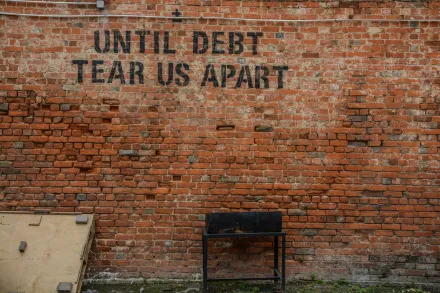
In contemporary societies debt has moved from being a private finance tool to a pervasive social condition that shapes habits, opportunities, and collective futures. The rise of consumer credit, specialized financial products, and institutionally embedded debt in households has transformed everyday life. The social fabric now bears the imprint of obligations that stretch across generations, affecting not only personal budgets but the choices people make about education, work, relationships, and community participation. When debt becomes a routine part of life, the rhythms of society begin to change in subtle and profound ways, altering what is considered normal, achievable, or desirable. Understanding this broad social impact requires looking beyond numbers and accounts to the lived experiences of millions who juggle bills, negotiate limits, and live with the consequences of heavy or precarious indebtedness. This exploration seeks to connect the personal and the public, showing how widespread debt reshapes trust, opportunity, and the very sense of social belonging that binds communities together.
Debt enters the social sphere through the daily decisions that people make under the pressure of bills and rates. When wages stagnate or rise only slowly, borrowing becomes a way to bridge gaps between what is earned and what is needed for housing, education, healthcare, and family care. The social transaction that accompanies debt is not merely a repayment schedule; it is a negotiation of social space, of time, and of priorities. The expectation that one can borrow to smooth out the irregularities of life introduces a new tempo to the community, where institutions such as banks, lenders, schools, and employers coordinate around a shared credit-based reality. In this context, debt becomes a form of social currency that can either unlock opportunities or constrain them, depending on the stability and predictability of the larger economic environment.
Historically, debt has been a tool that could empower individuals to invest in their futures. Today, when debt levels soar, the protective shield it once offered can become a source of anxiety and a potential barrier to social mobility. The social impact of widespread debt includes altered risk perceptions, as households weigh the benefits of borrowing against the potential costs of default or high interest. This recalibration may lead to more cautious or even risk-averse behavior, which in turn can slow investments in education, entrepreneurship, and community development. At a macro level, high debt levels influence policy choices, affecting the fiscal space governments have for essential public goods, social safety nets, and investments in infrastructure. In this sense debt participates in the public sphere as both a private obligation and a collective constraint, shaping the range of policy options available to sustain shared prosperity.
The patterns of debt accumulation reflect and reinforce social inequality. Access to affordable credit, favorable terms, and stable employment often varies along lines of race, gender, geography, and socio-economic background. Communities with stronger financial literacy resources, higher incomes, or more robust social networks can navigate debt more effectively, while others face higher costs of credit, predatory practices, or fewer options for refinancing. This differential access compounds existing disparities, making debt not only a financial instrument but a marker of social standing. The resulting stratification extends into neighborhood composition, schooling opportunities for children, and the capacity to weather shocks such as medical emergencies or job losses. In broad terms, the social impact of widespread debt is inseparable from questions of justice, opportunity, and the distribution of risk across different groups within society.
The media and cultural narratives surrounding debt contribute to shaping public perception and personal behavior. When debt is framed as a personal failure or as a symbol of irresponsibility, individuals may internalize stigma and delay seeking help. Conversely, when debt is normalized as a standard instrument for achieving life goals, it can encourage risk-taking or overextension that leaves people vulnerable when economic conditions shift. Cultural attitudes about consumption, savings, and responsibility interact with the real constraints of earnings and prices to shape collective mood and behavior. The social implications of debt thus reflect a complex mix of economic signals and symbolic meanings that influence how people plan their lives, what they teach their children about money, and how communities collectively respond to financial stress.
Across generations, debt weaves into family life, affecting decisions about marriage, parenting, and education. Parents may adjust expectations for their children, choosing cheaper housing, delaying college plans, or prioritizing work that offers immediate income over fields that promise longer-term social returns. This intergenerational transmission can create cycles where the burden of debt is passed down or where aspirations are recalibrated to align with attainable financial realities. When households anticipate heavy debt burdens for decades, they may invest less in community activities, volunteerism, or local economic development programs, which in turn weakens the social capital that would otherwise support resilience during downturns. The social consequences of debt are thus not only about individual balance sheets but about the strength and adaptability of communities over time.
Educational debt, in particular, exerts a sustained influence on life trajectories and social expectations. Students facing large loan obligations may choose majors with higher immediate earnings rather than fields aligned with personal interest or social contribution. The pressure to secure a job quickly after graduation can limit risk-taking, delaying entrepreneurship, or delaying the formation of long-term plans such as home ownership or family planning. When debt becomes a gatekeeper to social participation, it narrows who can afford to pursue certain pathways, which may lead to a more stratified society where gatekeeping functions through credit instead of through traditional entry points such as scholarships or stable apprenticeships. This dynamic changes how communities cultivate talent, how they allocate opportunities, and how they imagine collective progress in the long term.
Healthcare costs and medical debt illustrate a vivid intersection between private finance and public welfare. In societies lacking universal coverage or robust safety nets, medical expenses can quickly overwhelm household budgets, eroding savings, straining relationships, and triggering distress that affects mental health and physical well-being. The social ripple effects include delayed care, reduced adherence to treatment plans, and increased reliance on emergency services in crisis moments. When medical debt becomes common, it reshapes social norms around health, prompting individuals to rethink what constitutes essential care, what risks are acceptable to bear, and how much risk should be absorbed by families. The social economy around health thus becomes entangled with debt as a form of social risk management, influencing how communities prioritize health policy, provider behavior, and the design of affordability programs.
Debt, Work, and the Structure of Labor
The prevalence of debt interacts with the labor market in ways that influence job stability, career progression, and geographic mobility. When the cost of living rises faster than wages, debt can become a bridge to keeping up with necessities, but it also creates pressure to accept low-quality work, irregular hours, or job switches that do not align with long-term goals. Employers may respond to pervasive indebtedness by offering wage subsidies, flexible schedules, or training opportunities aimed at retention, yet the broader effect can be to normalize short-term fixes rather than invest in systemic improvements. This dynamic affects social organization by shaping where people live, how they commute, and how they allocate time between work, education, and family life. The resulting pattern can contribute to a more segmented workforce where mobility is constrained by debt-related trade-offs rather than purely by market demand.
Borrowing can enable entrepreneurship and innovation when individuals have access to credit under reasonable terms. The flip side is that high debt burdens reduce entrepreneurial experimentation, as individuals divert time and resources toward debt management rather than pursuing new ventures. The social effect is a reallocation of energy within communities, favoring safer, steadier income streams over higher-risk, potentially transformative projects. Over time this can influence the rate at which local economies diversify, the resilience of communities to shocks, and the capacity for social experimentation that often fuels vigorous social and economic renewal. The balance between productive use of debt and the risks of financial overextension becomes a social policy question, guiding education, consumer protection, and financial regulation debates.
The spread of debt also subtly reshapes urban life and neighborhood dynamics. Home mortgage debt, student loans, and consumer credit interact with housing markets, transportation networks, and public services to influence where people choose to live. Neighborhoods with strong access to affordable credit and stable employment may experience more stable property values and a greater sense of safety and belonging, while areas with high debt burdens can face cycles of decline that feed social fragmentation. This spatial dimension adds a geographic layer to the social impact of debt, reminding us that money owed is not merely an individual concern but a factor in shaping the character and cohesion of places where people raise families and build social networks.
Financial literacy and access to fair financial services emerge as crucial social determinants in the debt equation. When people understand borrowing costs, risk assessment, and the consequences of default, they are better positioned to make informed choices that protect rather than undermine long-term well-being. Yet literacy alone cannot eliminate structural risks such as predatory lending or exploitative terms that disproportionately affect marginalized groups. The social policy response requires a combination of education, regulation, and accessible alternatives that empower communities to participate in credit markets without sacrificing stability. In this sense, financial education becomes an instrument for social equality, expanding the set of viable life plans and reducing the coercive effect that debt can exert on everyday decisions.
Health, Stress, and the Psychology of Debt
debt carries psychological repercussions that extend beyond the ledger. Chronic debt stress can contribute to anxiety, depression, sleep disturbances, and reduced cognitive bandwidth that impairs decision-making. The social repercussions include strained family relationships, lower community engagement, and a diminished capacity to cope with other life challenges. When mental health is compromised by financial pressure, social institutions—schools, workplaces, healthcare providers—assume additional responsibility to provide support, which may or may not be adequately funded or accessible. The cumulative effect is a feedback loop in which financial strain erodes social capital, and weakened social support networks, in turn, exacerbate financial vulnerability. Recognizing this interplay encourages policies and practices that integrate financial stability with mental and physical health services as a coherent approach to well-being.
Social networks play a protective role in debt management. Friends, family, and community organizations can provide informal lending, budgeting advice, or emotional support that buffers some of the worst effects of debt. However, networks can also transfer pressures, as households resort to borrowing within their social circles, sometimes at terms that are not clearly beneficial or fair. The social economy of debt therefore depends on the health of trust and reciprocity within communities. When trust breaks down due to perceived inequities in lending or repeated experiences of financial distress, social cohesion weakens, making collective responses to economic shocks harder to mobilize. Strengthening community-based supports, including transparent lending practices and accessible financial counseling, becomes an essential ingredient in preserving social resilience amidst widespread debt.
Child development and education are sensitive to the surrounding financial climate. Debt burdens refract through families into the quality and consistency of school engagement, access to educational resources, and the availability of stable routines. When households juggle debt, parents may have less time and attention to devote to learning activities at home or to participating in school governance. Conversely, supportive school environments that recognize the stress associated with financial hardship can play a stabilizing role, offering provisions such as flexible scheduling, counseling services, and partnerships with community organizations that mitigate adverse effects. The social fabric of a community strengthens when schools become hubs not only for instruction but also for social support, financial guidance, and pathways to broader opportunity for students grappling with debt in their families.
The design of credit markets themselves contributes to the social texture of debt. Lending practices, including credit scoring, product design, and marketing strategies, influence who borrows and under what terms. When models privilege historically advantaged groups or rely on proxies that reproduce bias, the social consequences are profound, shaping access to housing, education, and entrepreneurship. Responsible lending reforms, greater transparency, and consumer protection can shift the social balance toward fairness, enabling more people to participate in credit markets on terms that support durable well-being rather than pushing vulnerable households toward precarious arrangements. The social impact of debt thus becomes a matter of governance as much as personal finance, demanding accountability from institutions and clarity about the responsibilities they bear toward the communities they serve.
Policy Tools and Social Outcomes
Policymakers face a balancing act as they design interventions to reduce the harm caused by widespread debt while preserving the legitimate role of credit in enabling opportunity. Debates about debt relief, bankruptcy reforms, interest rate protections, caps on fees, and universal access to essential financial services are deeply linked to questions of social justice and economic stability. When policy tools effectively reduce the burden on the most vulnerable, they yield dividends in health, educational attainment, and civic participation. Conversely, poorly designed measures can have unintended consequences, such as reducing access to credit for small borrowers or creating distortions in housing and labor markets. The social outcomes of policy choices depend on careful calibration, robust evaluation, and ongoing engagement with communities affected by debt, ensuring that interventions address root causes rather than merely treating symptoms.
Social protection programs that cushion households from shocks can lessen the long-run social harm of debt. Unemployment insurance, healthcare subsidies, affordable housing initiatives, and targeted cash transfers can keep families solvent during transitions, preserving social stability and the capacity to invest in human capital. When these programs are designed with input from diverse stakeholders and are adaptable to local conditions, they tend to strengthen social trust and reciprocity, enabling communities to recover from financial stress more quickly. The social logic behind such programs is not only about immediate relief but about reinforcing a shared sense of responsibility for one another and for the common good. In this sense, debt reform becomes part of a broader social project aimed at healthier, more inclusive, and more resilient societies.
Fiscal innovation can also influence the social fabric by expanding access to higher education, housing, and entrepreneurship without pushing families into unmanageable debt. Public investment in affordable, quality education and practical training, coupled with student loan reforms and income-driven repayment options, can transform life chances while maintaining fiscal prudence. The social value of such investments appears not only in individual success stories but in stronger community institutions, improved civic participation, and a more dynamic local economy. When societies align financial policy with social aims, debt becomes a more manageable instrument that supports growth and equity rather than a source of perpetual dependence or exclusion.
Global Perspectives and Interconnected Debt
Debt is a global phenomenon that threads through international finance, development, and migration. Developing countries often carry high external debt burdens that constrain public investment in health, education, and infrastructure. In some cases, debt distress can contribute to cycles of poverty, political instability, and migration pressure, creating global spillovers that affect trade, security, and regional cooperation. International institutions, bilateral lenders, and domestic reforms all play roles in shaping how communities around the world experience debt. The social impact thus expands beyond national borders, influencing perceptions of fairness, responsibility, and mutual aid in an increasingly interconnected world. Addressing these challenges requires coordinated policy, transparent lending practices, and shared commitments to growth that benefits broad swaths of the population rather than a narrow subset of creditors and investors.
In many regions, the rise of mobile banking, digital lending, and microfinance has altered the social dynamics of debt. Access to digital financial services can expand opportunities for inclusion, but it can also introduce new forms of risk if credit scoring systems rely on proxies that misrepresent borrower capacity or if interest terms remain opaque. The social implication is that technology itself becomes a mediator of trust: whether it builds confidence in financial systems or exacerbates suspicion depends on how well protections, literacy, and recourse mechanisms are designed into the platforms. The interplay between technology and debt thus becomes a central arena for social policy, requiring careful attention to equity, privacy, and the safeguarding of basic rights in an increasingly data-driven economy.
Community resilience often emerges as a counterbalance to the stress signals produced by widespread debt. When communities organize around mutual aid, savings groups, and cooperative models, they create spaces where people can pool resources, share risks, and pursue collective projects without relying solely on external lenders. Such forms of social finance can strengthen social ties and empower communities to weather financial shocks with less damage to social cohesion. The social impact of debt then includes not only the burden of repayment but the potential for solidarity and shared invention that arises when people collaborate to create more stable local economies and inclusive forms of growth. Policymakers and practitioners who recognize this potential can support grassroots financial ecosystems that complement formal credit markets and contribute to broader social well-being.
Finally, the ethical dimension of debt deserves attention as a core part of its social impact. Debates about fairness, the responsibilities of lenders, and the rights of borrowers reflect fundamental questions about how societies value risk, reciprocity, and human dignity in economic life. The social consequences of widespread debt hinge on the extent to which communities demand transparency, accountability, and humane remedies when financial arrangements go awry. When ethics informs lending practices, regulatory frameworks, and social programs, debt becomes less a source of fear and exclusion and more a bridge to opportunity, enabling people to pursue education, health, and family life with greater assurance. The social narrative surrounding debt thus evolves from one of caution and blame to one of responsibility, cooperation, and shared progress.
As societies continue to grapple with the complexity of debt in everyday life, the overarching question remains how to align individual financial realities with collective aspirations. Achieving this alignment requires a combination of prudent policy design, robust consumer protections, inclusive financial services, and a commitment to social justice that recognizes debt not merely as a ledger entry but as a lived experience that shapes choices, identities, and futures. The social impact of widespread debt is therefore not a single phenomenon but a constellation of effects that touch education, health, housing, work, and community life. In acknowledging this, societies can strive to build systems that reduce harm, expand opportunity, and strengthen the social bonds that enable all people to participate more fully in the promise of a shared future.