Origins and the metaphor of market banners
The language of flags and pennants in trading grows from a simple visual metaphor: a price surge, a rapid advance that forms a compact, flaglike shape or a shorter, converging triangle that resembles a pennant fluttering on a pole. Traders adopted these images because patterns are easier to spot than abstract statistics, and the human brain recognizes symmetrical forms with greater reliability than raw numbers. In the early days of price charts the idea of continuation patterns emerged as participants noticed that after a strong move in one direction, prices often paused briefly before resuming the same trend. The flag and pennant motifs crystallized as shorthand for that pause and subsequent push, a concise way to describe complex, multi-bar action in a single mental model. The enduring appeal of these shapes lies in their balance between structure and flexibility: they convey a disciplined expectation while accommodating a range of market textures and time horizons.
Visual anatomy and how the patterns form
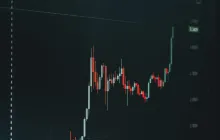
A flag pattern typically starts with a steep, decisive move known as the flagpole, followed by a rectangular consolidation that slopes against the prevailing direction. The flag portion is defined by parallel trendlines that bound the price action within a narrow corridor, reminiscent of a flag catching a breeze. A pennant, by contrast, features a small, symmetrical triangle formed by converging trendlines during a brief consolidation, signaling a temporary slowdown in momentum. Both patterns share one crucial characteristic: they occur after a strong initial thrust and precede a continuation breakout. The geometry is not random; it encodes the tug of market forces as buyers and sellers temporarily retreat and then reassert control in a more decisive wave. The crispness of these shapes helps traders decide when a trend might resume rather than reverse, especially when the breakout is accompanied by a surge in volume or a shift in volatility that confirms the renewed commitment of market participants.
Why flags and pennants emerge: market psychology at work
Flags and pennants arise from the dance between fear and greed, momentum and restraint. After a powerful move, traders who missed the initial surge often chase the breakout, while those who sold early take profits and pause. This creates a temporary equilibrium where supply and demand find a balance, producing the sideways drift of the flag or the narrowing wedge of the pennant. As time passes, a new injection of energy—perhaps a fresh piece of news, an earnings surprise, or a shift in relative strength—tips the balance once more and a breakout unfolds. The underlying psychology is about consolidation rather than reversal: the market tests whether the new level holds, and if the test is overcome, it signals that the trend has gathered new momentum. This is why flags and pennants are often treated as continuation patterns that reward disciplined traders who can stay patient through the pause while keeping one eye on the clock and the other on the price action.
Distinguishing flags from pennants and reading their nuances
The practical distinction lies in the slope and the shape. A flag usually features a rectangular, parallel-channel consolidation with a mild tilt that runs counter to a dominant move only briefly, creating a clean, flaglike rectangle. A pennant, by contrast, is a more compact structure where the converging lines form a small triangle that tightens as volume wanes. The key for traders is to observe the breakout direction relative to the prior trend: a breakout above the flag’s upper boundary after a bullish flag or above the pennant’s upper line after a bullish pennant strengthens the case for continuation. Conversely, a break below the opposite boundary may hint at a reversal or an accelerated consolidation. These subtleties matter because they influence entry timing, risk controls, and target-setting, especially in markets where noise can masquerade as signal.
Timeframe sensitivity: how longer horizons and shorter windows affect interpretation
Flag and pennant patterns are flexible across timeframes, but their reliability often scales with the duration of the pattern and the overall market context. On shorter timeframes, patterns can appear and collapse quickly, offering rapid but potentially less durable signals that require swift execution and vigilant risk management. On longer timeframes, the patterns tend to reflect underlying structural moves and can provide more robust clues about sustained momentum, albeit with longer wait times for confirmation. Traders who operate across multiple timeframes frequently use flags and pennants as aligning signals: a bullish flag on a daily chart may be supported by a bullish pennant on a four-hour chart, increasing the odds of a meaningful breakout. The art lies in balancing patience with a clear plan for how to handle subpattern noise and how to scale into positions as the momentum confirms itself.
Volume as a companion signal: validating the breakout
Volume often serves as the heartbeat behind flag and pennant breakouts. A genuine continuation typically features rising or at least sustained volume during the breakout, signaling that new buyers or sellers are entering the market with conviction. If a breakout fronts a high-volume surge, the probability of a lasting move increases, and the risk of a false breakout diminishes. In contrast, a breakout on thin or declining volume may reflect a lack of commitment among participants, leaving the pattern susceptible to a reversal or a whipsaw. Smart traders watch comparative volume against the preceding impulsive move, seeking confirmation that the breakout is supported by the market’s collective willingness to participate at higher price levels. Volume, therefore, becomes a critical filter that helps distinguish high-probability opportunities from decorative patterns that fail to translate into sustained action.
Pattern validity: duration, context, and the role of volatility
A valid flag or pennant typically forms after a strong directional move and is followed by a breakout that exceeds the confines of the consolidation. The duration of the pattern matters; too short a pause may render the shape inconsequential, while too long a consolidation can exhaust momentum and invite a trend reversal. Volatility plays a dual role: it shapes the shape itself and also frames the expected magnitude of the breakout. In calmer markets, breakouts may be modest, requiring more precise risk controls and tighter targets. In volatile environments, breakouts can be dramatic, offering substantial upside or downside but increasing the likelihood of rapid retracements if the move lacks underlying conviction. The most reliable setups integrate pattern geometry, volume behavior, and market context into a coherent judgment rather than relying on a single attribute in isolation.
The role of risk management: stops, targets, and position sizing
Effective trading of flags and pennants depends on disciplined risk management. Traders often use a stop-loss placement just beyond the opposite boundary of the consolidation or a measured distance beyond the flagpole, providing a clear limit in case the pattern fails. Profit targets are frequently set by projecting the length of the flagpole from the breakout point, a method rooted in the classic textbook approach to continuation patterns. However, modern practice acknowledges that markets vary, so many traders refine targets using a risk-reward framework, often aiming for a minimum favorable ratio such as 2 to 1 or better, while scaling into positions to avoid overexposure during the quiet part of the pattern. Position sizing should consider account equity, volatility, and the degree to which confirming signals support the setup, ensuring that a single omission or misstep does not derail the overall trading plan.
Strategic integration: combining flags and pennants with indicators
Flags and pennants rarely travel alone; traders blend them with indicators that reflect momentum, trend strength, and price momentum dynamics. A rising moving average or a breakout above a moving-average envelope can corroborate a bullish continuation, while a climactic RSI reading or a MACD cross may alert traders to the possibility of exhaustion. The art is to avoid overfitting by overloading the setup with indicators; instead, a concise quartet of signals—pattern shape, breakout direction, volume confirmation, and a momentum indicator tie-in—often yields a more robust decision. The harmony among these signals helps filter out false signals and improves the odds that the breakout aligns with the underlying market trend. This integrated approach underscores the broader principle that chart patterns function best as part of a holistic trading framework rather than as isolated clues.
Practical trading rules for bullish and bearish variants
In bullish configurations, the entry is commonly considered on a breakout above the upper boundary of the flag or the pennant, ideally accompanied by volume acceleration and a favorable macro sentiment. In bearish configurations, the entry target is the breakdown below the lower boundary, again ideally with supportive volume. Nevertheless, real-world trading teaches caution: patterns can fail, and even well-formed breakouts can turn into false signals if market dynamics shift abruptly, perhaps due to earnings surprises, geopolitical events, or macro regime changes. Therefore, prudent traders often use layered confirmation, such as a pullback after the breakout to the breakout level or the use of one or two complementary indicators that align with the breakout direction before committing full capital.
Time dilation and fast markets: how speed affects identification
In fast markets, pauses tend to be shorter, and the recognition of a clean flag or pennant requires quick recognition and rapid execution. Algorithmic tools can assist in scanning for the characteristic two-phase structure—an impulsive move followed by consolidation and a breakout—but human judgment remains essential to interpret context and to manage risk in a dynamic environment. Slippage and gaps can complicate entry and exit plans, particularly when news events surprise the market around the pattern’s footprint. Traders must adapt by using tighter stops, wider protective measures in volatile contexts, and an awareness that patterns might form and resolve in a matter of minutes rather than days. The essence remains: the pattern is a roadmap, not a guarantee, and speed must be tempered with discipline and risk controls.
Case study approach: hypothetical patterns in practice
Imagine a bullish flag forming after an aggressive 12 percent rally over several sessions in a mid-cap sector ETF. The flagpole stretches over a sharp ascent, followed by a stable, downward-sloping rectangle that tightens with each candlestick. A breakout above the flag’s upper boundary appears on high volume, and the price surges another 6 to 8 percent in the following sessions. In this scenario, a trader might place a stop just beneath the lower boundary of the flag or a bit beyond the flagpole, whichever offers clearer protection against counter-moves. The profit target could be calculated by projecting the length of the flagpole from the breakout point, aligning with the traditional expectation for a continuation move. This hypothetical illustrates how the pattern’s geometry, combined with volume and momentum, can translate into a concrete trade plan while emphasizing the practical steps of risk management and disciplined execution.
Case study two: a bearish pennant in a different environment
A bearish pennant might appear after a sharp price drop in a consumer goods stock, with the price forming a tight triangular consolidation as selling pressure remains, yet buyers intermittently attempt relief rallies. If the price breaks below the pennant’s lower trendline with increasing volume, the continuation downside may follow. Here, traders might position their risk such that they participate on the breakout with a stop above the pennant’s upper boundary, ensuring that a false breakout does not trigger a large adverse position. The target could be derived from the height of the pennant’s initial decline projected downward from the breakout level. This example demonstrates how bearish patterns can provide objective pathways to profit while demanding careful risk controls in volatile sectors or during earnings-driven cycles.
Market regimes, regime shifts, and pattern reliability
The reliability of flags and pennants is not constant across all market contexts. In trending markets with strong underlying momentum, continuations can be more consistent, and flag or pennant breakouts may deliver extended moves. In choppy or range-bound regimes, these patterns may produce frequent false breakouts or only modest follow-through. Traders who study market regimes—identifying whether the environment favors trend, accumulation, or distribution—can calibrate their expectations for flag and pennant patterns accordingly. The key is humility: acknowledge that even well-formed patterns can struggle in uncertain periods, and adapt your risk framework, position sizing, and confirmation requirements to reflect the prevailing volatility and liquidity conditions. Such adaptability is a core skill in successful pattern-based trading.
Global market differences and tool adaptations
Flags and pennants are observed across asset classes and geographies, from equities and futures to currencies and commodities. Each market carries its own idiosyncrasies in terms of typical volatility, liquidity, and reaction to news cycles. Traders operating in diverse markets tailor their scanning criteria, choose timeframes that reflect local trading hours, and adjust expectations for breakout magnitudes. In some markets, spreads can influence breakout timing, while in others, liquidity clusters around certain sessions amplify the efficiency of pattern-based entries. The principle remains universal: regardless of the instrument, a clean pattern with corroborating signals tends to be more actionable than a lone visual cue. Adapting to these differences involves careful observation, backtesting, and a willingness to refine definitions as patterns reveal themselves under new conditions.
Scanner discipline and workflow: turning pattern recognition into repeatable practice
Effective traders develop a workflow that translates observed shapes into repeatable actions. They rely on a disciplined routine: scan for impulsive moves, verify the emergence of a consolidation phase that forms a flag or pennant, assess the volume pattern, and confirm with at least one additional signal before entering. A well-structured workflow also includes predefined exit rules, both for profit targets and risk management, and a method for reviewing trades to extract lessons. The emphasis is on consistency: a repeatable process that reduces impulse, mitigates emotion, and enhances the probability of favorable risk-adjusted returns. In practice, this means maintaining a clear set of criteria for pattern recognition, ensuring that each entry passes multiple tests, and documenting outcomes to refine strategies over time.
Common misinterpretations and how to avoid them
One common pitfall is mistaking a random consolidation for a true flag or pennant, especially in markets with low liquidity or during periods of quiet drift. Another error is ignoring volume signals, which can lead to ill-timed breakouts that fail to sustain momentum. A third misstep is overfitting the pattern to a desired outcome, forcing the narrative to fit the shape rather than letting the price action guide the decision. To avoid these traps, focus on the combination of pattern shape, breakout direction, and confirmatory signals such as volume, momentum, or price relative strength. Keep in mind that even the best-looking formation can dissolve in the face of adverse macro developments, so maintain a disciplined approach to risk management, position sizing, and exit criteria. By practicing caution and maintaining a healthy skepticism, traders can reduce the frequency of false signals and improve long-term success with these patterns.
Practical steps for learning and applying flags and pennants
The journey from awareness to proficiency begins with deliberate study of historical charts to identify well-formed examples and near-misses. Practicing on simulated data or replaying historical sessions helps build pattern recognition without risking real capital. As confidence grows, incorporate a minimal set of confirmations and gradually expand to more instruments and timeframes. Document each trade in a journal that records the pattern type, the breakout direction, the level of volume, and the realized outcome. Regular review of these notes reveals biases, strengths, and gaps in the approach. Over time, this iterative learning process turns a visual pattern into a functional component of a broader trading plan that respects risk, prioritizes reproducible results, and advances capital preservation alongside growth.
Closing ideas: patterns as part of a larger trading philosophy
Flags and pennants are not magical signals that guarantee profit; they are practical representations of how price tends to pause and resume in the presence of persistent directional forces. When embedded within a comprehensive trading philosophy that values discipline, risk awareness, and continual learning, these patterns become reliable tools for identifying continuation opportunities across markets and regimes. The most successful practitioners treat flags and pennants as one thread in a woven fabric: they harmonize with volume, momentum indicators, macro context, and personal risk tolerance to form a coherent and adaptable approach. In this sense, the study of flags and pennants transcends mere chart reading; it becomes a disciplined practice of observing, confirming, and acting with intention in the ever-changing landscape of financial markets.