Value investing is a disciplined approach to wealth creation that centers on the relationship between price and true worth rather than chasing the latest trends or speculative momentum. At its heart lies a patient, methodical mindset that seeks to buy something when its price reflects less than the underlying value or when the business exhibits durable advantages that are not currently priced into the securities. This perspective does not rely on extraordinary forecasts or heroic timing; it leans on careful analysis, psychological composure, an...


The cash flow statement is a fundamental financial document that captures the actual movement of cash within a business over a defined period. Unlike the income statement, which measures profitability on an accrual basis, and the balance sheet, which provides a snapshot of financial position at a point in time, the cash flow statement focuses on the liquidity of the enterprise. It answers essential questions about where cash is coming from, how it is being used, and whether the company is generating enough cash to sustain operations, meet oblig...

A business loan is a debt instrument issued by a financial institution or specialized lender to a company in exchange for a scheduled repayment of principal plus interest over a defined term. In most cases the loan comes with a fixed amount of money that the borrower receives upfront and then repays on a predetermined timetable, which can be monthly or quarterly. The terms of these loans are often tied to the purpose of the funding, such as expanding facilities, purchasing equipment, or supporting working capital during a period of growth. The ...
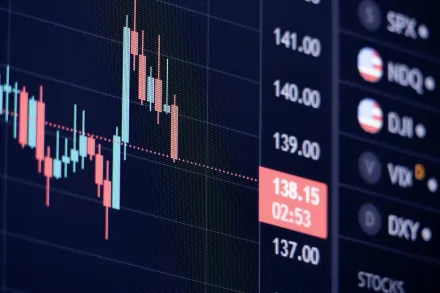
The language of price action is often expressed through the twin concepts of support and resistance, which serve as the backbone for many technical trading ideas. At its core, support is a level or zone where demand may be strong enough to pause a decline and possibly push prices higher, while resistance is a level or zone where supply could overwhelm buyers and limit further advances. These ideas are anchored in human psychology, market structure, and the observable behavior of price as it moves through time. When a stock approaches a level of...

Exchange traded funds, commonly abbreviated as ETFs, represent a class of investment funds that trade on stock exchanges just like individual stocks. An ETF typically holds a basket of assets designed to achieve a stated investment objective, which can range from tracking a broad market index to pursuing a specific sector, commodity, or fixed income strategy. The core idea behind an ETF is to offer investors exposure to a diversified portfolio with the efficiency of intraday trading, while sharing certain characteristics with both mutual funds ...

Living below your means does not mean erasing joy or turning away from comfort. It means aligning your daily choices with your values while creating space for future security. A frugal mindset starts with a quiet honesty about money: recognizing that scarcity is rarely solved by a sudden windfall, but by consistent, thoughtful actions over time. When you approach money as a tool rather than a source of identity, you begin to see opportunities where others see limits, and small, deliberate adjustments compound into meaningful freedom.

There is a dynamic shift underway in the way financial institutions assess risk, allocate capital, and decide who deserves credit. Artificial intelligence, once a niche tool used for data crunching, has evolved into the centerpiece of modern underwriting. The question isn’t merely whether AI will speed up loan approvals or improve the accuracy of risk scores; it is whether AI will reorganize the entire balance of power in lending, from the way lenders collect data to how they communicate decisions to borrowers, and how regulators oversee the pr...

Understanding your spending habits begins with a quiet, honest examination of the moments when money leaves your hands and enters the hands of others. It is not merely about tallying receipts, but about tracing the emotional and cognitive pathways that lead to a purchase. When you become aware of patterns such as purchasing on impulse after scrolling through social feeds, or choosing familiar brands when pressure mounts, you gain a map of your own behavior. This map helps you anticipate future decisions and create protective structures that kee...

Modular banking technology stacks represent a shift from monolithic, tightly coupled systems to adaptable architectures where discrete components can be developed, deployed, and updated independently. At the heart of this transformation lies the idea that a bank’s technology needs resemble an ecosystem more than a single, all-encompassing application. The modular approach embraces decoupled governance, well defined interfaces, and a clear separation of concerns so that each module can be owned by specialized teams, operate with minimal cross de...

The journey of voice interfaces in banking begins with human computer interaction in telephony, where early automated voice menus offered a static set of choices. As technology matured, banks began to replace rigid menus with conversational capabilities, enabling customers to convey intent in more natural ways. Over time, advances in speech recognition, language understanding, and secure authentication formed the backbone of what we now recognize as voice banking. The evolution embraced enhancements in acoustic models, noise robustness, and bro...