In personal finance, the ability to prioritize savings goals is the difference between progress and drift. People often have multiple targets at once, from building an emergency cushion to saving for a home, education, retirement, or a dream vacation. The act of prioritizing transforms those scattered wishful aims into a coherent plan that respects income, obligations, and future possibilities. A thoughtful approach doesn't just tell you what to save for; it clarifies how much to set aside, when to push harder, and when to maintain steady disci...


When a household budget starts to fray, the sense of control that once came from a clear plan can feel distant and unreliable. A budget can break for many reasons, from sudden life events such as medical bills or job changes to the quiet, persistent drift of everyday spending that quietly exceeds income. The first step in repairing a broken budget is recognizing that the problem is not a personal failing but a dynamic situation that can be understood and corrected with patient analysis and deliberate action. A well tended budget acts as a compa...

Tokenization of financial assets refers to the process of converting the rights to an asset into a digital token that can be traded, tracked, and managed on a distributed ledger or blockchain. This transformation is not simply about creating a fancy digital representation; it is about encoding the legal and economic rights associated with the asset into a secure, transferable unit that can be fractionalized, upgraded, and settled in near real time. In practice, tokenization seeks to lower frictions that have historically limited access to capit...

Renters insurance is designed to protect tenants from the financial impact of property loss or liability arising from incidents within a rental dwelling. A claim is the formal request you make to your insurer to reimburse or repair for covered damages, losses, or liability events. The process typically begins when you experience a fire, water damage, theft, vandalism, or other insured perils outlined in your policy, and it ends when the insurer approves compensation and the claim closes. Understanding both the coverage you purchased and the ste...

The story of digital banking platforms unfolds as a long arc that moves from simple electronic access to financial services to intricate ecosystems that blend software engineering, regulatory compliance, consumer psychology, and real time data streams. Early on, banking was primarily a set of human interactions backed by paper trails and telegraphic messages. Then came rudimentary electronic systems that let customers view balances, transfer funds, and perform basic inquiries from a terminal or an online portal. Over time, these functions would...

Bank accounts are foundational tools in personal finance, serving as the gateway through which most people handle daily money flows. They provide a secure place to store funds, a ledger of deposits and withdrawals, and access to a range of services from debit cards to online transfers. The variety of account types exists to address different needs, such as immediate spending, short term savings, long term wealth building, or specialized arrangements for businesses, families, or retirement planning. A thoughtful approach to selecting accounts ca...
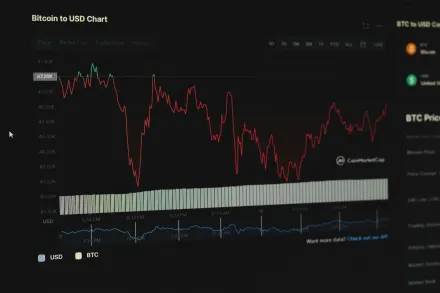
The Relative Strength Index, commonly known as RSI, is one of the most recognizable momentum oscillators in financial markets. Developed by J. Welles Wilder Jr. for use on price charts, it measures the speed and change of price movements over a defined window. RSI values oscillate between zero and one hundred, creating a framework that traders interpret as zones of overbought and oversold conditions, while also signaling potential divergences and momentum shifts. Its appeal lies in its relative simplicity and its ability to adapt across assets ...

Recovering from a financial mistake is rarely a single act; it is a process that mixes emotional management, practical decision making, and a renewed sense of control over money. The experience can feel humbling, yet it also provides a powerful opportunity to build more resilient habits, sharpen judgment, and align daily actions with larger personal values. This article explores a comprehensive path to move forward after a financial misstep, focusing not on blame or shame but on clarity, accountability, and steady progress that compounds over t...

The gift tax system in the United States operates on a principle that transfers of wealth between individuals can be subject to taxation even if the transfer is not framed as a traditional sale or income. The underlying logic is to prevent the erosion of the tax base by shifting assets through gifts while the original owner avoids estate taxes or tax on ordinary income later. In practical terms the party who generally bears the tax is the donor, not the recipient, though there are nuanced exceptions for transfers made to certain entities or in ...

In the broad arc of life, financial planning after retirement takes on a different texture than the intensity of building a career or managing a growing family. For seniors, budgeting is less about chasing growth and more about preserving stability, ensuring access to essential needs, and creating room for meaningful experiences within the limits of a fixed or slowly changing income. The realities of retirement often include a palette of predictable expenses, such as housing and healthcare, alongside variable costs that can shift with health st...