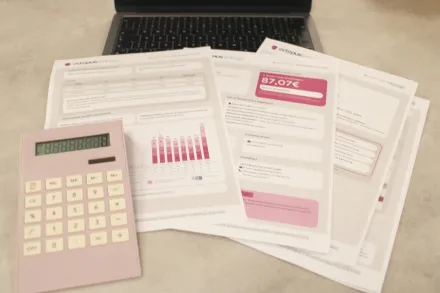
Budgeting can feel like stepping into a room where the walls are lined with numbers you never asked to meet. If you have ever pictured your finances as a locked cabinet you cannot open without a key the size of a calculator, you are not alone. Many people dread the moment a ledger or a spreadsheet appears because the act of counting money seems to demand precision, restraint, and sacrifice all at once. Yet budgeting does not have to be a grim ritual that drains your energy. It can instead become a gentle, practical habit that clarifies what you value, reduces stress, and gives you back time and freedom. The aim of this article is to offer a humane, real world approach to budgeting that respects your feelings about numbers while still giving you a clear picture of your money. You deserve a process that fits your life rather than a process that fits a textbook, and it is possible to cultivate a system that feels rational without becoming a burden. By exploring mindset shifts, simple frameworks, and smart tools, you can learn to budget with confidence even if you have historically avoided numbers or felt overwhelmed by them. The journey begins with the recognition that budgeting is more about direction than gymnastics with digits, more about everyday choices than perfect precision, and more about peace of mind than mathematical perfection.
Understanding the challenge
When money feels abstract or uncomfortable, it often starts as a pressure you carry without noticing how it shapes your days. You may have had experiences where a plan failed to match reality, and the memory of that mismatch makes you cautious or even resentful toward any new budgeting attempt. There is a feedback loop that can keep you stuck: avoidance leads to surprises, surprises trigger stress, stress makes the process feel overwhelming, and overwhelm breeds further avoidance. This is not a moral failing but a common reaction to a task that asks you to confront patterns you would rather not examine. The good news is that you can break this loop by meeting budgeting where you are, not where you wish you were. The goal is to build a system that lowers the emotional cost of handling money and steadily expands the range of choices available to you. You can begin by redefining what budgeting means in your life. Rather than a strict set of rules that punish missteps, budgeting can become a living agreement with yourself about how you want to spend your days, with money simply acting as a faithful ally to support those choices.
Many people fear numbers because they picture a ledger that demands perfect honesty, leaving little room for life’s unpredictability. In reality, a budget is a flexible map that helps you see where you are and where you might want to go, without forcing you to surrender your values or your time. If you hate spreadsheets, you can still manage money with conversations you have with yourself and with partners or family members who share responsibilities. If you dislike tracking every receipt, you can adopt a lighter touch that still provides useful feedback. The essence of understanding the challenge lies in acknowledging that the emotional discomfort around numbers is not an obstacle to be overcome by willpower alone, but a signal that you deserve a budgeting approach that respects your feelings and adapts to your life. By honoring that signal you open the door to strategies that feel sustainable rather than punitive.
Shifting your mindset about budgeting
Shifting your mindset begins with a simple reframing: money is not a punishment for enjoying life, and budgeting is not a prison sentence for spending. Money is a resource that travels through your days, supporting your responsibilities and enabling moments of connection, rest, learning, and fun. When you start thinking about budgeting as a way to protect time and choice, the process becomes less about policing yourself and more about clarifying what matters most. This mindset invites curiosity, not judgment, and invites experiments rather than obedience to a rigid set of rules. It is natural to want to see near-term wins, and it is equally natural to feel uncertain about whether a plan will survive the surprises of a month. The honest intention, however, is to create a framework that you can adjust as your life shifts, a structure that keeps you moving toward the life you want while still being kind to your habits and feelings. In practice, this means giving yourself permission to start with small, manageable steps and to treat every adjustment as a diagnostic that teaches you more about your needs and your constraints. Embracing this stance makes numbers feel less like judgments and more like a language you gradually learn.
Another facet of shifting your mindset is recognizing that budgets do not exist in a vacuum. They touch relationships, routines, and values. A budget is a conversation with your calendar, your priorities, and your future self. If you wake up with a sense of dread about money, try reframing the day as an opportunity to decide what you will allocate toward something that matters to you—whether that is a weekly coffee with a friend, a small improvement in your living space, or a shared family activity. By focusing on the life you want to enable rather than the numbers themselves you soften the edge of budgeting and allow room for pleasure, responsibility, and growth to exist together. This shift does not eliminate the need to understand where money goes; instead it places that understanding in the service of a life you value, which makes the numbers easier to bear and more meaningful when you can interpret them through the lens of your own goals and joys.
Starting with the simplest framework
The heart of a budget for someone who hates numbers can be built on a simple framework that emphasizes categories, time, and alignment with what you do every day. Begin by identifying broad life arenas that matter most: shelter, food, transportation, personal care, schooling or learning, community and connection, and a portion reserved for fun and spontaneity. The design is intentionally broad to reduce the feeling of being trapped by exact figures. In practice you can create a mental map of these arenas and assign approximate amounts to each based on what you have historically spent or what you want to allocate in the coming month. The aim is not to achieve perfect accuracy but to establish a plan you can reasonably live with, a plan that reflects your priorities and leaves room for unplanned joy. The frame invites you to set gentle targets rather than onerous quotas, and in doing so you remove much of the fear associated with numbers. When you approach budgeting as a balance between responsibility and possibility you begin to see the numbers as signposts rather than sentences, guiding you toward a day when you have more choice and less stress.
To keep the framework approachable the first step is to fix a small, predictable portion of your income for essential needs and then create a playful, flexible pool for discretionary spending. Essentials can include housing, utilities, groceries, and transport; discretionary spending can cover meals out, hobbies, and small adventures. The key is to set these pools not as rigid limits but as intentions that help you decide in real time whether a purchase supports your priorities. For example, you might decide that the groceries pool should cover nourishing food and a few treats, with any extra going toward a savings cushion or toward a future indulgence that feels worthwhile. This approach reduces the cognitive load of budgeting because you are not quoting a perfect mathematical formula; you are simply negotiating how you want to use your money in a way that aligns with your values and your life rhythm. Over time these decisions become more automatic as you get used to the feeling of knowing that a portion of each paycheck is already spoken for in a way that preserves both safety and joy.
Practical strategies that avoid tedious math
People who dislike numbers often respond positively to practical strategies that minimize arithmetic while maximizing clarity. One such approach is to anchor the budget to a few fixed reference points that do not require constant recalculation. For instance, you can select a fixed amount for essentials based on your rent or mortgage, utilities, and recurring bills, and then allocate a separate, flexible sum for groceries and other daily needs. The magic lies in keeping the fixed portion stable while allowing the flexible portion to move as life changes. You can adjust the flexible pool after a quick monthly glance at receipts and a rough sense of how the month felt in terms of spending, rather than tallying every last cent. This reduces the cognitive overhead and keeps the process from becoming a ritual of paperwork. When you notice a pattern—such as a recurring spike in a restaurant budget after a particularly busy week—you can respond by rerouting funds from a nonessential pool to cover the shortfall, all without a forced, meticulous audit of every purchase. This method emphasizes adaptability and keeps you engaged without requiring you to become a math whiz.
Another useful tactic is to pair budgeting with a ritual that you actually enjoy. If you cherish a quiet Sunday morning or a short walk after work, attach a quick budget check to that moment so it becomes a habit you anticipate rather than dread. During this moment you can list the three most important things you want to align with your budget for the upcoming period. The objective is not to generate a perfect ledger but to confirm that your actions are moving you toward your priorities. This approach can be supported by a simple watchword or cue that reminds you why you are budgeting in the first place. The cue can be a short phrase that captures your goal, such as securing time for a favorite pastime or ensuring a small buffer for unexpected costs. The more the process feels like an extension of your daily life rather than a separate task, the more sustainable it becomes.
For many, a light touch can be paired with a more structured tool that remains optional rather than mandatory. You might keep a single notebook or a dedicated note in your phone where you jot down a line of observation about each week's spending. If you prefer digital tools, you can use a simple spreadsheet with wide, clear categories and non-technical language. The crucial part is to reduce your friction by using whatever method feels most natural to you. The less you fight your instincts for simplicity, the more likely you are to keep the habit. Over time these practical strategies accumulate into a reliable practice that requires minimal mental energy while yielding a clear sense of direction. In short, the simplest framework aims to do the heavy lifting with as little math as possible, letting your lived experience guide the adjustments that matter most.
Automations and tools that do the heavy lifting
Technology can be a friend to someone who dislikes numbers when it is chosen with care and used with intention. Automating routine tasks such as bill payments, transfers to savings, or setting aside a small amount for a buffer can protect you from forgetfulness and reduce the urge to micromanage. The aim is to create a safety net that activates automatically so you do not have to remember every step. Using your bank’s automated features or a budgeting app can be practical if you select tools that present information in clear, nonintimidating formats. The best tools are those that tell a straightforward story about your money: where it comes from, where it goes, and what remains for the things that matter to you. You can hide the complexity in the background and let the user interface show you what you need to know in plain language. If you prefer analog solutions, you can also implement a weekly ritual of transferring a fixed amount to a digital savings jar or a separate account, which creates a tangible sense of progress without requiring you to perform intricate calculations. The goal is to harness automation so you can focus on meaningful decisions rather than repetitive arithmetic, while keeping enough human oversight to catch anomalies or shifts in your routine.
It is important to choose tools that empower rather than overwhelm. If a feature feels intimidating, you can disable it or replace the tool with a simpler option. The right balance looks different from person to person; some people enjoy dashboards and charts, while others find them distracting. Start with a basic setup you can maintain for a couple of months and then experiment with small, incremental improvements. The evidence of success is not a flawless ledger but a sense of relief and clarity every time you check in with your money. When automation supports your day-to-day life, budgeting becomes something you do so you can live more freely, not something you endure so you can survive another month. The practice of using tools as aids rather than as masters is what keeps the process humane and sustainable for anyone who dislikes numbers yet still wants to steward their resources.
Common obstacles and how to overcome them
Obstacles are part of any journey, and budgeting is no exception. One frequent challenge is inconsistency: you may start with great intentions and then drift away as life grows busy or stressful. The way to address this is to anchor yourself in meaningful routines rather than rigid rules. Decide what you want to protect in your life, and let that be the compass that keeps you aligned even when motivation wanes. Another obstacle is the fear of failure: if a month goes awry, you might feel tempted to abandon the entire effort. Reframe mistakes as learning opportunities rather than proofs of inadequacy. When a plan fails to fit, adjust the plan rather than abandoning it. The only true failure is giving up on the effort to live in a way that matches your values. A third obstacle is the pressure of perfection: the belief that budgeting must be flawless to be valid. In reality, budgets adapt to you and your environment. The target is progress, not perfection, and progress comes from small, repeatable actions that you can sustain over time. The easiest way to overcome these hurdles is to maintain a kind, patient relationship with yourself, recognizing that growth rarely happens in a straight line and that the aim is continuous improvement rather than immediate transformation.
Another common hurdle is misalignment with income patterns. If you have irregular or unpredictable income, you may feel that budgeting is a futile exercise because there is no stable baseline. The solution is to focus on ranges instead of fixed numbers, and to build a flexible framework that can expand or contract gracefully. You can determine a base level that covers essential needs and then create a separate reserve that can be drawn upon when income dips or expenses spike. This approach turns uncertainty into a managed risk rather than a reason to abandon budgeting altogether. It also helps you preserve your sense of agency by clarifying what you can control: your choices about spending for essentials, your ability to delay discretionary purchases, and your capacity to respond to opportunity when money arrives more reliably. A further obstacle arises from competing priorities within households. If you share finances with a partner or family, you can still budget without losing your autonomy by establishing joint goals while preserving individual spending boundaries. Clear communication about values and priorities—without judgment about each other’s preferences—can reduce resistance and transform budgeting into a cooperative exercise rather than a battleground.
Creating a budget that fits your life, not your fear
The most effective budgeting approach for someone who hates numbers is one that respects life as it is lived and creates a supportive, adaptable framework. Start by listing the core values you want to support with money, such as security, time with loved ones, personal growth, or health. Then translate those values into broad spending areas rather than rigid line items. By speaking in terms of what your choices enable rather than what you cannot do, you cultivate a positive relationship with money. This shift is essential because fear tends to narrow your options; clarity and generosity toward yourself widen them. For instance, you might decide to reserve a weekly activity that brings joy, setting aside a modest amount for spontaneous experiences. Even if a budget must cut other areas later, you will still have a reserved space to sustain what matters most. The aim is not to deprive yourself but to protect the important things from being crowded out by surprise costs or impulsive decisions. A life-centered budget anchors itself in daily rhythm and long-term wellbeing, making it easier to stay with it when temptations arise or when there is life disruption.
In practice this means embracing a nonjudgmental stance toward your spending while maintaining a clear sense of your priorities. If you discover that a certain habit drains your resources without delivering real value, you can adjust by negotiating a different arrangement that honors your preferences while preserving the larger goals. The beauty of this approach is that you can implement it gradually. You might begin with one or two adjustments—a more reliable plan for meals and a fixed amount for a monthly treat—and then expand the framework as you become more comfortable. The most important factor is consistency: showing up for yourself in a way that is gentle yet steady. When your budget reflects your life as it is, not as you fear it might be, you create a foundation that supports resilience, reduces anxiety, and makes the financial choices you face less daunting and more manageable every day.
Maintaining momentum and staying motivated
Motivation in budgeting often comes from small wins that accumulate over time. You do not need grand breakthroughs to sustain progress; you need reliable, repeatable habits that you are willing to perform day after day, week after week. A short, regular check-in that respects your energy levels can be enough to keep you on track. During this check-in you can review what worked well, what surprised you, and what you want to adjust for the next period. The aim is to collect feedback, not to punish yourself for inaccuracies. You can celebrate tiny successes—like completing a plan for the week or avoiding an impulsive purchase—without demanding perfection. By treating each month as a learning period you empower yourself to refine your approach without fear. The more you experience that budgeting is supporting your daily life rather than complicating it, the more you will want to continue. In time, a sense of mastery emerges not from flawless arithmetic but from an expanding sense of command over your financial environment and your daily choices.
To sustain motivation it can help to embed a social element into budgeting. Sharing goals with a trusted friend or partner can create accountability and encouragement without turning budgeting into a judgmental exercise. You can exchange notes about what you tried, what you learned, and what you might try next in a spirit of mutual support. If you are working alone, you can still create a supportive routine by pairing budgeting with a weekly moment of reflection, possibly accompanied by a small reward that aligns with your values. The reward is not a bribe to spend but a recognition of your consistency and a signal to keep going. A budget that is collaborative with your own life—one that honors your time, your energy, and your relationships—tends to be more resilient and more enjoyable, which makes it easier to maintain momentum even when external circumstances change.
Long-term habits and periodic check-ins
Long-term budgeting success relies on sustaining simple, healthy habits rather than chasing episodic breakthroughs. One such habit is a periodic check-in that does not require exhaustive calculation but reinforces awareness. This can take shape as a monthly or quarterly review in which you ask a few guiding questions about what happened, what felt good, what surprised you, and what you might adjust. The aim is to keep curiosity alive and reduce the fear that budgeting will overwhelm you. During these check-ins you can revisit priorities, reallocate funds as needed, and reaffirm commitments to your essential needs and the life you want to lead. The cadence is flexible to fit your schedule, but the pattern of reflection and adjustment should remain a constant. Over time, these moments become less about monitoring every penny and more about reinforcing a healthy relationship with money, one that supports growth, security, and the ability to say yes to opportunities that align with your deepest values.
A long-term habit also involves protecting your financial boundaries in a way that respects your future self. This includes gradually building a small cushion that can absorb shocks and prevent immediate worry when expenses fluctuate. The cushion should feel accessible enough to touch without triggering anxiety about scarcity. You can treat it as a rainy-day friend in your budget rather than a distant, theoretical concept. As the cushion grows, your confidence rises, making it easier to commit to plans that require a longer view—such as saving for a larger purchase, paying down debt, or investing in personal development. The growth does not require heroic effort overnight; it requires consistent, compassionate action that aligns with your life rhythm and your values. When you approach money this way, budgeting becomes a steady ally that supports sustainable progress rather than a short-term hurdle that drains energy and spirit.
Budgeting for irregular income or fluctuating expenses
Irregular income and fluctuating expenses are part of many people’s lives, and a robust budgeting approach can accommodate them without triggering anxiety. The key is to design a system that thrives on flexibility rather than rigidity. One way to do this is to create a proportional allocation model in which a fixed proportion of income is automatically directed toward essential needs, a smaller proportion toward savings if possible, and a flexible portion that can absorb variations in income. The essential aim is to keep a baseline that covers basic living costs so that even in lean months you have enough to ride through. When more money arrives, you can allocate additional funds to your cushion, debt repayment, or a discretionary pool that supports the pleasures you value. The discipline is not about squeezing every penny into a perfect mold but about preserving the capacity to choose how you want to live and to protect the things that make life feel secure and meaningful. In practice you may set up automatic transfers to savings and debt payments while keeping a discretionary budget that expands or contracts with the rhythm of your income. This approach recognizes that money moves through life in waves and that a well-designed budget makes those waves feel manageable instead of alarming.
The approach also benefits from a mindset of ongoing adjustment. You can review the incoming and outgoing amounts during the same weekly cadence you use for other budget checks, but you do not need to recalculate everything in detail. A quick glance at a few numbers, coupled with a sense of how you felt about the month, can reveal whether the framework is serving you or needs a soft recalibration. If a spike in expenses occurs, you can respond by tapping into the discretionary pool or by postponing nonessential purchases. If income increases, you may choose to allocate a portion to more substantial goals or to expand your cushion. The essential point is to keep the framework human, making space for the reality that life is not always predictable while still preserving your sense of control and dignity in handling money.
Healthy boundaries with credit and debt
Boundaries around credit and debt are crucial for a budget that feels humane. If debt is a fixture in your life, you can build a plan that emphasizes steady, attainable repayments along with a safety net that prevents emergency use of high-interest credit. The aim is to reduce the emotional burden associated with debt while avoiding starvation budgeting that erodes your wellbeing. This can involve setting modest, realistic targets for debt reduction and celebrating progress toward those targets, however small. It can also include negotiating with lenders where possible, seeking lower interest options, or consolidating balances to simplify repayment. The overarching principle is to treat debt as a solvable tension rather than a hopeless trap, and to bring it into your budget as a foreseeable obligation that you address with patience and strategy. If you have credit cards in good standing, you may choose to maintain a set monthly limit for discretionary spending while ensuring that the minimum payments are covered by a predictable portion of your income. The emphasis is on responsibility without shaming yourself for past choices. A budget that respects your wellbeing while addressing debt creates a foundation for future financial vitality rather than a perpetual sense of deficit.
Another boundary involves credit use for emergencies or opportunities. You can define a policy that you will rely on credit only when it serves a clear purpose that aligns with your values, and only if you have a plan to pay it off promptly. This rule helps you avoid the trap of chasing convenience at the cost of future security. The aim is to keep credit as a tool that supports your life rather than a habit that erodes your financial stability. By approaching debt with honesty, pragmatism, and patience you can maintain a budget that holds its ground through life’s uncertainties while preserving your sense of autonomy and dignity. The result is a more balanced, sustainable relationship with money that helps you pursue what matters most without the nagging pressure of looming debt or looming expenses.
What to do when life disrupts your plan
Life is unpredictable by design, and it will inevitably throw curveballs your way. A budget that feels alive and humane anticipates disruption by including flexibility, compassion, and a few practical contingencies. In the face of an unexpected event such as a job change, a medical bill, or a major family obligation, your first step is to pause without judgment and acknowledge what is happening. The next step is to reallocate resources where they are most needed, with attention to preserving essential needs and reducing nonessential spending. This does not require guilt or self-criticism; it requires practical problem-solving and a willingness to adjust rather than to abandon the plan altogether. A simple guideline is to maintain a small, reserve amount that remains accessible for emergencies, so disruptions do not completely derail your month. If you find yourself facing a long-term upheaval, you can restructure your framework to reflect new realities while keeping the core objective of maintaining stability and agency in your life. The comfort of a flexible budget lies in knowing that you can balance obligations and opportunities without surrendering your long-term wellbeing.
In moments of major change, it can help to keep your eyes on the larger purpose rather than on the numbers alone. Ask yourself what the change demonstrates about your priorities and what it invites you to reprioritize. You may discover that a major shift makes certain items less urgent and others more essential. By anchoring your decisions in your values and life aims rather than in a static numeric target you maintain a sense of continuity and meaning. The ability to adapt without losing your sense of self is the true skill behind a resilient budgeting practice, and it is the pathway to continuing growth even when circumstances evolve beyond your expectations.
Skills you gain beyond numbers
Budgeting that respects your feelings and life circumstances often yields benefits that extend beyond the wallet. You gain clarity about what you value, which in turn strengthens your decision-making muscles in other areas of life. You learn to set boundaries around spending while preserving space for delight, which enhances your overall wellbeing. You also build discipline in small, daily acts that accumulate into bigger changes over time, and you cultivate a healthier relationship with money that reduces shame and fear. The process teaches you how to distinguish between needs and wants in a compassionate way, and it helps you communicate more effectively with others about money in shared living arrangements or partnerships. As your confidence grows you may discover that you can pursue personal growth opportunities, invest in education or skills, or plan experiences that enrich your life without destabilizing your finances. The practical math fades into the background as you experience a sense of control and calm that comes from knowing you can navigate your finances with care and competence.
The broader skill set includes better planning for the future, improved resilience in the face of surprises, and a stronger foundation for goals such as home ownership, education, or travel. Even if numbers have always felt distant or intimidating, you can gradually close the gap by focusing on relational outcomes—how your money serves your life—not on turning yourself into a spreadsheet wizard. The outcome is a more capacious life: you gain freedom to choose, not fear of what might happen if your numbers go wrong. This transformation is a testament to the idea that budgeting is not about suppressing joy but about expanding it by ensuring that the things you care about are supported by reliable and thoughtful financial habits.
Putting it all together: a mindset-forward plan
In wrapping up this expansive approach to budgeting for those who hate numbers, imagine a plan that treats money as a companion that supports the life you want to live. Begin with a clear sense of your priorities and a flexible framework that respects your day-to-day realities. Establish a small set of essential allocations, a cushion you build gradually, and a discretionary space that allows for small pleasures without compromising security. Remove the fear by embedding simple routines that you actually enjoy and by selecting tools that make the process easier rather than heavier. Practice kindness with yourself as you learn what works, adjusting your approach when something feels off, and rewarding yourself for showing up even when you did not feel wholly inspired. The objective is not perfection but continuity: a steady practice that improves with time, remains compassionate toward your limits, and steadily shifts your financial life in the direction of your fullest values. If you can cultivate this relationship with your money, you will find that budgeting becomes less about numbers and more about intention—an ongoing conversation with your future self about how you want to live today, tomorrow, and in the days to come. This is the core message: budgeting can be humane, practical, and powerful when aligned with who you are and what you want to protect in your life.