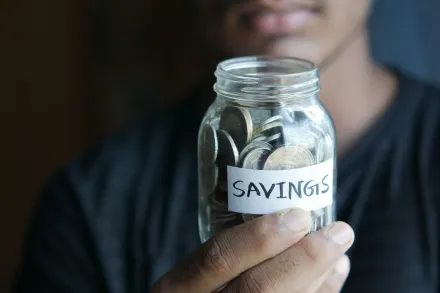
Foundations of a lasting savings habit
The journey toward a durable savings habit begins far before a single dollar is moved from one account to another. It starts with an identity shift, a recognition that a prudent financial posture is not a temporary tactic but a core part of who you are. When you tell yourself that you are someone who plans, allocates, and protects resources, the daily actions you take align with that self image. This is not merely a discipline imposed from the outside; it is an internal relationship you cultivate with your money. From this foundation, the mind becomes a powerful ally rather than a noisy obstacle. People who succeed in saving over the long term typically combine a clear sense of purpose with practical systems that automate good behavior, reducing the need for constant motivation and self-control in the moment. The result is a sustainable rhythm rather than a heroic sprint. In the long run, habit formation is less about heroic acts than about repeated, reliable choices that reduce friction and increase aroma of success whenever you glance at your bank balance. This section outlines how to anchor your savings in identity, expectations, and everyday routines that feel almost invisible yet become decisive over time.
One key idea is to tie saving to meaningful life goals rather than abstract percentages. Goals with emotional resonance—protecting a family, achieving freedom to pursue a passion, or creating a buffer that allows risk taking in business or career—tunnel the motivation into concrete daily actions. When the goal is vivid and personal, even small amounts saved regularly carry a sense of progress toward a meaningful outcome. Another foundational concept is compartmentalization: separating money into distinct pools for specific purposes so that one rainy day fund doesn’t become a sink for impulse purchases. By naming and defining each bucket, you create clarity around what you are saving for and why. This clarity reduces the cognitive load of decision making because the next step becomes a straightforward transfer or allocation rather than a second-guessing exercise. Building a durable habit thus hinges on aligning identity with purpose and structuring your money in a way that supports consistent behavior, even when life becomes hectic or unpredictable.
Environmental design plays a crucial role as well. The physical and digital spaces you inhabit shape your choices more than you might expect. If your paycheck lands in an account that you rarely access, the urge to spend is less compelling. If your savings sit behind a wall of steps to reach, you will think twice before dipping into it. The idea here is to create friction for unnecessary spending while reducing friction for saving. Subtle changes—automatic transfers scheduled just after payday, separate savings accounts with clear labels, and notifications that celebrate each milestone—can tilt behavior toward saving without requiring heroic mental effort. Importantly, the habit must feel reliable and scalable, not fragile or dependent on flawless willpower. When the system feels sturdy, the mind relaxes into saving as a normal course of action rather than a special event you attempt to execute only when motivation is high.
Finally, the social dimension matters. Sharing your intentions with a trusted person, whether a partner, a friend, or a mentor, creates accountability without shaming. The idea is not to create punitive pressure but to establish a supportive framework in which you can report progress, recalibrate goals, and celebrate wins. A culture of encouragement helps you stay consistent over the months and years. In aggregate, these foundations—identity, purpose, environmental design, and social support—give you a durable platform on which to build recurring saving behavior. Without them, momentum tends to fade when the first obstacle appears. With them, you gain resilience that endures through job changes, economic shifts, and personal life transitions.
Define a clear, compelling savings goal
A well-crafted goal provides direction for your savings effort and a yardstick by which to measure progress. The best goals are specific, measurable, achievable, relevant, and time-bound. A vague aim such as “save more money” rarely translates into consistent action. By contrast, a strong goal might be: “I want to accumulate an emergency fund of six thousand dollars within twelve months, which corresponds to roughly two months of essential living expenses.” This kind of target creates a concrete deadline and a concrete amount, which makes planning more precise and action more predictable. When you articulate the goal in this way, you invite a plan rather than hope. You can then map out how much to save each month, how to adjust for irregular income, and what constitutes a milestone worth celebrating. The process of defining a goal also clarifies the necessary trade-offs. In particular, you learn which expenses you can reduce or temporarily pause to free more room for saving, and which discretionary pleasures you are willing to calibrate rather than cut outright. The clarity of a well-posed goal lightens the cognitive load of daily decisions and invites consistency as a habit rather than a one-time behavior change.
Another critical aspect of goal setting is aligning saving targets with life stages. A single person saving for a home may prioritize different buckets than a family saving for college funds and a retirement cushion. A person nearing retirement might set a different emergency cushion than a younger professional who is far from the ages of typical large expenses. Recognizing these stage-specific needs helps keep motivation aligned with reality and avoids the trap of chasing generic numbers that do not fit your actual life. A flexible framework is helpful here: establish a baseline emergency fund you intend to reach within twelve to eighteen months, and then add additional buckets for goals such as a down payment, a vacation fund, and a retirement supplement. As life unfolds, you can adjust the sizes and timelines of these buckets without losing sight of the underlying habit of regular, intentional saving. The moment a goal is achieved, you should replace it with a new one to keep momentum alive, a practice that sustains energy and purpose over an extended horizon.
To ensure goals stay actionable, translate them into monthly or weekly saving targets. For example, if a six-month goal seems daunting, break it into weekly steps. A weekly target makes the habit tangible and easy to monitor. It also makes it possible to catch drift early and take corrective action before stress compounds. Tracking progress visibly, whether through a simple chart, a dashboard in your banking app, or a written log, reinforces the habit by creating a trackable narrative of improvement. The emotional payoff—seeing your savings rise—creates a feedback loop: success begets more discipline, which in turn produces more savings. This psychology is at the heart of durable savings, turning a numeric target into a living story of improvement rather than a distant destination you fear missing.
Automate saving and reduce decision fatigue
Automation is a powerful ally in building a savings habit that lasts. When you set up automatic transfers from your checking to your savings account on a predictable schedule, the act of saving ceases to depend on willpower in the moment. The system takes over and you benefit from the compounding effect of consistent deposits. The first rule is to automate as much as possible with minimal exceptions. The fewer decisions required in the saving process, the less mental energy you expend trying to talk yourself into doing it. This is especially important when life presents unexpected stressors or busy periods. In those moments, the automatic transfer acts as a steady, reliable anchor that keeps your savings moving forward despite external turmoil. For some people, automatic transfers tied to the payday date work best; for others, it makes sense to schedule them just after a recurring income event. The key is consistency, not perfection in the timing.
Beyond the basic transfer, automation can extend to multiple savings buckets. You can set up automatic contributions to a dedicated emergency fund, to a retirement account (such as a 401(k) or an IRA, depending on what your employer offers or what is available in your country), and to short-term sinking funds for known future expenses. Each bucket should have its own target and timeline, and the automation rules should mirror that structure. If your automatic plan feels too rigid, you can build in small, strategic exceptions—such as temporarily increasing contributions during months when you receive a raise or a bonus—yet the default should always favor automatic saving. In addition to automation, you should implement safeguards to protect your savings from impulse spending. This can include not keeping your savings in the same account as your daily spending money, using accounts with withdrawal limits, or enabling notifications that alert you whenever a transfer takes place. These protective measures help maintain the integrity of the habit and prevent small shortcuts from eroding long-term progress.
Another practical aspect of automation is to route occasional windfalls into savings automatically. Tax refunds, gifts, bonuses, or side hustle earnings can all be diverted to a savings bucket rather than immediately used for discretionary spending. This technique not only accelerates growth but also reinforces the mindset that money beyond the day-to-day needs becomes a resource to be allocated wisely. The more you automate, the less you need to rely on willpower at the moment of temptation, and the more you can protect the habit you are building from the unpredictable ebbs and flows of life. In practice, automation is most effective when combined with regular reviews that verify that the allocations still align with your goals and adjust for any changed circumstances or new priorities.
Use multiple savings buckets and sinking funds
One of the most practical ways to keep saving relevant and emotionally engaging is to create multiple savings buckets, sometimes called sinking funds, for distinct purposes. Each bucket has a clear purpose, a target amount, and a timeline. For example, you might maintain a bucket for an upcoming car purchase, another for home maintenance, one for a dream vacation, and one dedicated to a safety net beyond the emergency fund. When you treat each bucket as its own mini-goal, the act of saving for a concrete purpose becomes more meaningful. It also helps you resist the temptation to dip into funds that you intend to keep for longer-term security. Regularly evaluating the status of each bucket against its target keeps you honest about your progress and reduces the risk that you will overfund one area while neglecting another who needs attention. The psychology here is that progress in any bucket reinforces the habit: you see small victories along the way, which fuels continued effort across all categories.
Setting realistic targets for each bucket is essential. If a bucket is for a big upcoming expense, you may want to estimate the total cost and divide it by the number of months until the expense. This yields a monthly deposit target that is easy to operationalize. For ongoing expenses that recur annual or semi-annual, you can use a rolling calculation to determine how much to set aside each month so that when the time comes, the funds are ready. The act of batching contributions into dedicated buckets also reduces the cognitive load of planning for many different needs. It creates a simple mental model: money moves into specific channels with concrete purposes, and the sum of all these channels reflects your overall financial health. The simplicity and clarity of this approach make it easier to stay motivated and committed over time.
Remember to review and adjust buckets as life changes. A bucket for travel might shrink after a trip and then be rebuilt for a future excursion, while an emergency fund might grow in response to new responsibilities or changes in income. The ability to adapt without discarding the underlying habit is a mark of durability. It signals that saving is not a rigid ritual but a living system that respects your evolving priorities. By maintaining discipline within a flexible framework, you protect the habit against stagnation and ensure that it remains relevant and rewarding no matter what unfolds in your personal or professional life.
Make the habit emotionally rewarding
Habits endure when they generate positive emotion and a sense of momentum. If saving feels like a sacrifice without immediate reward, motivation can wear thin. The remedy is to build emotional reinforcement into the saving process. This can take several forms. First, celebrate milestones with non-financial rewards or by sharing the achievement with someone you trust. A small celebration, a note of acknowledgment, or a friendly message that recognizes progress can boost satisfaction and commitment. Second, design the saving process so that you frequently observe positive signals: watching a savings balance grow, reading the note from a savings app that congratulates you on a milestone, or seeing a chart trend upward. Visual feedback strengthens the habit loop by linking behavior to a visible outcome. Third, link saving to identity by affirming statements that reinforce who you want to become. For example, telling yourself regularly that you are a capable planner who protects the future through prudent financial choices reinforces the habit at a subconscious level. When saving is linked to identity and emotions, it becomes less of a chore and more of a natural extension of who you are.
In addition to internal rewards, external accountability can intensify the positive feedback. Sharing goals with a trusted partner or mentor creates a social reinforcement mechanism. When someone else is aware of your progress, you tend to follow through more consistently, and you gain encouragement when you need it most. This does not require revealing every detail or inviting judgment; rather, it invites supportive engagement that keeps you on track even during tough periods. Finally, you can use simple rituals around saving, such as a weekly review session where you acknowledge what you saved, what you cut back, and what remains to be achieved. The ritual itself becomes a cue that signals the habit is active. Over time, the ritual, the emotional reward, and the demonstrated outcomes converge to keep the savings habit alive and thriving, even as life changes in unpredictable ways.
Protect the habit from setbacks and income shocks
Life rarely travels in a straight line, and everyone experiences periods of reduced income, unexpected expenses, or emotional stress. The most durable savings habit is resilient in the face of such fluctuations. Planning for setbacks involves building buffers, creating flexible rules, and maintaining a low-cost lifestyle threshold that keeps saving feasible under duress. A resilient habit starts with an emergency cushion that is robust enough to cover several months of essential living costs. The size of this buffer depends on personal circumstances, such as job stability, family obligations, and debt levels. In any case, having a visible target for the emergency fund makes it easier to hold firm during hard times because the objective is not simply to save more, but to protect the financial safety net you and your loved ones depend on. When a sudden event occurs, the instinct to protect the long-term habit across all buckets matters as much as the immediate reaction to the moment. You may need to temporarily pause less essential savings to preserve the emergency fund and continue contributing to the core goals as soon as possible.
Second, implement flexible saving rules. For example, you can designate a percentage of any net income increase to go to savings, while maintaining a base automatic transfer for routine expenses. In times when income decreases, you might temporarily reduce contributions by a modest amount rather than stopping saving altogether, and you can time adjustments so they occur automatically rather than as a voluntary decision in the moment of stress. The key is to keep the habit intact while honoring reality. Third, monitor and manage debt intelligently because high-interest debt can erode savings momentum. If debt payments swallow a large share of income, you may choose to accelerate debt payoff as a priority for a period and then reallocate funds to savings once the debt burden is lighter. The aim is not to cling stubbornly to a single path but to maintain a viable path that preserves the capacity to save across market cycles and personal life events.
Finally, develop a plan for recovery after setbacks. If you experience a prolonged downturn in income or a major expense, use the setback as a learning opportunity rather than a reason to abandon saving altogether. Revisit your goals, adjust your buckets, and identify small, sustainable actions that can rebuild momentum quickly. The ability to recover quickly is a hallmark of a durable savings habit. It is the recognition that progress is not linear, but persistence in the face of disruption compounds over time and eventually overwhelms the friction that once slowed you down. When you approach setbacks with a proactive recovery plan, you protect not only your immediate finances but also your long-term confidence in the saving process. This resilience is a critical component of lasting success in building a savings habit that endures through many seasons of life.
Increase the depth of your habit through education and curiosity
Education matters because knowledge reduces uncertainty. As you learn more about personal finance, you become better at choosing accounts, understanding interest rates, and selecting saving strategies that fit your values and objectives. Reading about compound interest, inflation, tax-advantaged accounts, and the differences between liquid and less liquid assets gives you a richer vocabulary to describe your plan and to evaluate the trade-offs involved in saving. The aim is not to overwhelm yourself with theory but to enable smarter, more confident decisions about how to distribute your savings across time horizons. With a foundation in financial literacy, you can optimize the structure of your savings buckets, identify opportunities to increase returns within your risk tolerance, and discern when it makes sense to adjust liquidity levels for near-term needs without compromising future security. Intentionally cultivating this knowledge turns saving from a mechanical act into a thoughtful, strategic process that you understand and control rather than merely endure.
Curiosity should also extend to the tools and platforms you use. Explore different banks, accounts, and mobile apps with an eye toward features that support your habit: automatic transfers, easy transfer reversals in case of error, clear visuals of progress toward each bucket, and transparent fee structures. As you compare options, prioritize those that align with your saving rhythm and provide frictionless ways to stay consistent. You do not need to chase every feature, but you should know what matters most to your behavior: reliability, cost, accessibility, and the capacity to scale as your savings grows. By staying curious, you keep your system fresh and capable of evolving in step with your life, ensuring that the habit remains practical and appealing rather than rigid and obsolete.
To strengthen this learning process, consider documenting your insights in a personal journal or a private reflection space. Writing about why you save, what it enables, and how you feel during moments of progress can reinforce commitment. The reflection itself becomes a reinforcing loop: as you articulate your reasons, you revitalize motivation, and then you act in alignment with that motivation. Repetition of this cycle converts knowledge into practice and practice into habit. Over time, your expanded understanding becomes second nature, reducing cognitive friction and enabling saving to occur with less mental effort and more reliability. The combination of education, practical experimentation, and reflective practice forms a virtuous circle that helps you sustain your savings habit for decades, not just months.
The role of discipline without deprivation
Durable saving is not about deprivation or restraint that feels punitive; it is about creating a sustainable balance between living well today and securing a stable tomorrow. You can enjoy meaningful experiences and still build wealth if you design your strategy with intention. One approach is to separate discretionary spending from core living costs and to set explicit limits on each category. By clearly delineating what you can spend and what you must reserve, you create a structured freedom: you know what you have left after essentials, and you can plan for pleasures within those bounds. This fosters a sense of control rather than oppression, and it reduces the sense of scarcity that can otherwise undermine your progress. The habit then becomes an expression of deliberate choices rather than a reaction to impulse. The more you internalize the idea that saving funds meaningful opportunities in your future, the more you will instinctively adopt behaviors that align with that belief. You can celebrate small wins along the way and remind yourself that every dollar saved today multiplies into more options tomorrow.
Discipline also means leaving room for human variability. There will be months when you save more and months when you save less, and that is natural. The critical factor is staying committed to the overall direction and returning to the framework as soon as you can. A resilient habit accommodates fluctuations while preserving core structure. In practice, this might mean setting a minimum automatic savings floor that you never fall below, regardless of circumstances, and then intending to add extra when possible. It might involve revisiting your budget quarterly to adjust for changes in income or expenses, ensuring that the saving system continues to reflect reality. By embracing discipline as a flexible, adaptive practice rather than a rigid regime, you cultivate a saving habit that feels doable across seasons and life stages, which is essential for long-term durability.
Consistency, patience, and long-term perspective
The last pillar of a lasting savings habit is patience. Wealth builds gradually, and the compound effect is often invisible in the short term. A consistent practice, executed faithfully over years, yields a result that surpasses what sporadic effort can achieve. This requires a long-term orientation and an appreciation for the power of time. Even modest monthly contributions can turn into a substantial nest egg when allowed to grow through compounding. The key is to maintain the habit during both favorable and challenging periods, trusting that the cumulative effect of steady action will prove itself over time. In this mindset, you view occasional setbacks as part of the journey rather than as a reason to abandon saving altogether. You accept that progress comes in increments and that a steady pace, maintained over the long run, can outpace dramatic but unsustainable bursts of effort. Building a savings habit with patience also means resisting the allure of quick, high-risk bets that promise rapid returns but threaten the habit's stability. Stability is the core asset of a lasting savings practice, and patience ensures that this asset compounds, eventually delivering the security and opportunities you aimed to achieve from the start.
As you cultivate these principles, you will notice a shift in how you relate to money. Savings stops feeling like a constraint and begins to feel like a strategic resource. Your financial decisions become easier because they are anchored in a clear plan rather than an episodic struggle. This transformation does not happen overnight, but with deliberate practice, you gradually rewire your habits, perceptions, and routines. The end result is a sustainable, fulfilling saving habit that persists through job changes, market cycles, family milestones, and personal growth. The habit becomes part of your daily life, a quiet source of stability that supports your ambitions and protects the well-being of you and the people who rely on you. In this way, building a savings habit that lasts is less about mastering a set of tricks and more about cultivating a reliable system that makes prudent financial behavior natural, automatic, and deeply satisfying over the long arc of your life.