Foundations of technical analysis
Technical analysis is a way to study how prices move in financial markets by looking at charts and historical data rather than focusing on the underlying value of an asset. It rests on the idea that price tends to move in recognizable patterns and that those patterns reflect the collective psychology of market participants. For a beginner, this means learning to read charts, notice trends, and understand what indicators can tell us about the strength and direction of price movements. The foundational mindset is curiosity coupled with discipline, because the most useful insights often come from careful observation over time rather than dramatic forecasts made in the heat of a moment. This approach does not promise certainty, but it offers a framework for making informed decisions based on probability rather than guesswork.
Reading price charts and the language of candles
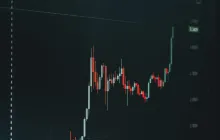
Price charts convey information in a compact, visual language. Every bar, candlestick, or tick represents a period of time during which the price moved from one value to another. In many beginners friendly charts, candlesticks reveal four key numbers: the opening price, the closing price, and the high and low reached during the period. If the closing price sits near the top of the candle, the session favored buyers and the candle tends to color as bullish, often noted with a brighter color or an empty body in some display schemes. If the closing price ends near the bottom, the session shows selling pressure and the candle becomes more bearish. Over time, sequences of candles create recognizable shapes that traders interpret as signals about sentiment and probable future moves. The goal is not to memorize every pattern but to understand the underlying forces of supply and demand that repeatedly drive price in familiar ways.
Timeframes and market structure
Timeframes give context to price action. A move that looks dramatic on a short intraday chart may only be a modest correction on a larger daily or weekly chart. Beginners benefit from starting with a broad frame to identify the dominant structure, then narrowing the lens to spot the timing of entries and exits. Market structure consists of swings, the visible waves of price rising and falling, and the trends that shape them. Recognizing whether price is in an uptrend, downtrend, or moving sideways helps a student avoid chasing moves that lack a favorable probability. A calm, patient approach uses higher timeframes to establish bias and lower timeframes to refine entry points, all while staying mindful of the context created by the larger price environment.
Trends and trend lines
Trends are the backbone of technical analysis because they reflect the balance of supply and demand over time. An uptrend shows higher highs and higher lows, a downtrend shows lower highs and lower lows, and a sideways or range price action suggests equilibrium between buyers and sellers. Trend lines are simple tools that help visualize this structure by connecting successive highs or lows. A trend line acts like a guide, and a break of that line can signal a potential change in direction, though it is not a guaranteed signal by itself. What matters is staying aware of the slope of the trend, the duration of the move, and whether price respects or decisively breaks the line. The disciplined student watches for price to respond to the line than merely test it occasionally, as consistent respect adds confidence to the interpretation.
Support and resistance concepts
Support and resistance are price levels at which buying or selling pressure historically prevents further movement beyond a certain price. Support represents a floor where demand tends to enter and stall price declines, while resistance represents a ceiling where selling pressure tends to cap rallies. These levels emerge from the collective actions of countless market participants who have stored memory of past turning points. When price approaches these levels, traders watch for signs of a revival or a break, and the risk managed approach is to adjust position sizes and stop losses based on how convincingly price interacts with the level. In practice, support and resistance are not fixed lines but zones where price is more likely to pause, bounce, or reverse, especially when confluence with other signals appears.
Volume and its significance
Volume measures how much of an asset is traded during a specific period and serves as a validation tool for price movements. A rise in price accompanied by rising volume often indicates that the move has strength behind it, because more participants are participating in the move. Conversely, an up move with weak volume can signal a lack of conviction and a greater risk that the price may stall or reverse. Volume analysis helps answer questions about the sustainability of trends, the likelihood of breakouts, and the credibility of reversals. For beginners, integrating volume into chart reading adds a layer of confirmation when evaluating patterns and trend continuations, reducing reliance on price alone as a signal.
Moving averages and trend confirmation
Moving averages smooth price data to reveal the underlying direction and to reduce the noise that appears in rapid fluctuations. A common approach is to compare a shorter moving average with a longer one; when the shorter crosses above the longer, it can be interpreted as a bullish signal, and when it crosses below, as bearish. The choice of periods matters: shorter averages respond faster but can produce more false signals, while longer averages tend to be slower but provide a steadier view of the trend. For a beginner, a simple framework might use a medium-term and a longer-term average to confirm the trend while watching for crossovers as potential timing hints rather than definite predictions. It is important to see moving averages in conjunction with price action and volume rather than in isolation.
Momentum indicators: RSI and MACD
Momentum indicators measure how quickly prices are moving and whether they show signs of exhaustion or acceleration. The relative strength index, or RSI, compares recent gains to losses to gauge whether price momentum is overbought or oversold. An RSI near extreme levels can hint at a potential pause or reversal, but it is not a standalone forecast; it must be considered with price structure and volume. The MACD, or moving average convergence divergence, combines short-term and long-term momentum and can highlight shifts in symmetry between two moving averages. When the MACD line crosses the signal line, some traders interpret it as a cue to adjust exposure. For beginners, these indicators are best used as supporting evidence rather than primary decision points, ensuring that one does not rely on a single indicator to decide a trade.
Volatility and bands
Volatility is the degree to which price fluctuates over a period. Markets with higher volatility can produce larger price swings, which means bigger opportunities and bigger risks. Bands formed around price, such as envelopes or relative bands, can help visualize normal ranges of movement and identify when price is expanding or contracting beyond typical expectations. When price travels toward the outer edges of a band, some traders look for signs of potential reversal or continuation depending on other confirmations, while price moving within a narrow band might suggest consolidation and a waiting period. The key for beginners is to recognize how volatility shapes risk and to avoid forcing trades during quiet periods that lack clear direction.
Candlestick basics
Candlesticks convey momentum and market sentiment through the body and shadows of each period. A long body indicates strong buying or selling pressure, while a small body suggests indecision. The shape and placement of wicks can hint at where price rejected certain levels. Doji, hammer, and engulfing patterns are common concepts that appear as part of the natural texture of charts. Rather than memorizing every name, beginners should focus on how these formations align with the current trend, the level of support or resistance, and the volume behind the move. The purpose is to recognize context and implement risk-aware decisions rather than to chase precise pattern names.
Chart patterns in plain language
Chart patterns describe how price tends to organize itself over time. Some patterns indicate congestion and a potential breakout, while others reveal a gradual accumulation or distribution phase. Symmetrical triangles, flags, and pennants suggest pauses that often precede a continuation of the prevailing trend. Head-and-shoulders patterns can imply a shift in momentum, whereas double tops and double bottoms reflect potential reversals at key levels. For a beginner, the descriptive takeaway is to observe whether the market is showing a stable, orderly structure or a setup that hints at a possible change in the dominant direction. It is less important to memorize every pattern name than to understand how price acts around areas of consolidation and breakouts, and to incorporate risk controls that respect the probabilities suggested by the chart context.
Practical risk management and psychology
Technical analysis works best when paired with disciplined risk management and an understanding of trader psychology. The most reliable outcomes arise from predefined losses and a consistent approach that avoids overexposure to a single uncertain move. Position sizing, stop placement, and respecting a plan reduce the impact of emotional impulses like greed or fear. The beginner’s mindset should emphasize learning from mistakes through careful journaling and review rather than chasing the next big victory. By keeping trade ideas simple, testing them in a simulated setting, and gradually increasing complexity as confidence grows, a novice can build practical competence without courting undue risk. In this way, the art of technical analysis becomes a quiet, steady practice rather than a spectacle of improbable wins.
Developing a beginner's workflow
A practical workflow begins with selecting a liquid market and a reasonable time horizon that suits the personal schedule. The next step is to inspect several timeframes to understand the trend on the larger scale while identifying immediate opportunities on a shorter scale. A beginner-friendly workflow emphasizes confirmation: a price move should be supported by volume, consistent price action with the trend, and alignment with a simple momentum signal. Documenting observations in a trading journal helps maintain consistency and reduces the noise from random outcomes. The workflow should be iterative, with periodic reviews that challenge assumptions and refine the rules based on experience rather than emotion. The right routine supports steady improvement rather than spectacular but unsustainable results.
Backtesting and practice environment
Backtesting involves applying a trading idea to historical data to see how it would have performed under similar conditions. For a beginner, backtesting should be done conservatively, focusing on simple ideas and a small dataset to avoid overfitting to past quirks. A practice environment, often simulated or paper trading, allows beginners to experience the feel of real-time decision making without risking capital. The goal is to observe how entry and exit signals behave in different market regimes and to adjust the plan to improve reliability. Patience is essential because meaningful backtests accumulate results over many cycles, and the most valuable insights often emerge from analyzing both successful and unsuccessful trades with equal attention.
Choosing a simple plan and journaling
A straightforward plan centers on a few core ideas: what constitutes a valid setup, how risk is defined, and how often the plan allows for review and adjustment. Journaling each trade with the reasons for entry, the conditions observed, and the outcomes promotes self-awareness and learning. The process helps answer questions about what signals reliably align with profitable moves and which signals tend to mislead. Over time, a well-documented history reveals patterns in one’s own decision making that might otherwise remain hidden. For a beginner, the aim is not to craft a flawless blueprint but to develop a repeatable, honest practice that yields steady improvement and a clearer sense of how to navigate different market environments.
Avoiding common mistakes
Beginners often mistake complexity for accuracy, trying to use many indicators at once or chasing every hot oscillator. Another common pitfall is trading without a clear plan, which leads to impulsive actions during moments of volatility. Relying on a single indicator or a single timeframe can also produce biased judgments that fail when market conditions shift. Overconfidence from a few lucky trades can lead to risk taking beyond what is prudent, and neglecting proper risk controls invites large losses. The antidote is simple: focus on a few robust ideas, verify signals with multiple sources of evidence, and always stay disciplined about risk management and position sizing. With time, the correct balance emerges from consistent practice rather than dramatic wins.
Progression to more advanced concepts
As a beginner grows more comfortable, it is natural to expand the toolkit by exploring additional concepts like market breadth, more nuanced volatility measures, and a wider array of chart patterns. Yet the core habit remains: interpret price action in context, confirm signals with logic and evidence, and manage risk with a clear plan. The transition to more advanced topics should be gradual and deliberate, ensuring that the learner does not sacrifice the fundamentals for novelty. A steady path toward mastery emphasizes practical application, ongoing learning, and the patience to build a robust mental model of how markets tend to behave over time rather than chasing ever-changing trends or speculative fads. In such a way, technical analysis becomes an instrument of disciplined analysis rather than a source of ungrounded excitement.