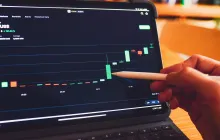
In the world of finance, the idea of practicing trading without risking real capital is a compelling promise for beginners and seasoned traders alike. The core concept rests on creating an environment where ideas can be tested, rules can be refined, and psychological habits can be built without the harsh consequences that come with real money on the line. Yet even in a risk free setting there are important caveats that every student should understand. The dream of pristine simulations can blur the distinction between theoretical success and practical viability if one forgets that markets are living systems shaped by real participants, liquidity, and evolving conditions. The goal of risk free practice is not to mimic the exact experience of live trading to perfection but to develop transferable skills such as decision making, risk awareness, and disciplined execution that translate when real capital is at stake. With that understanding, the practice journey becomes a deliberate process of learning, feedback, and gradual exposure to more realistic scenarios while maintaining a dedicated shield against actual losses.
To begin, it is essential to recognize that risk does not simply vanish in a simulated environment. There are two principal forms of risk that still matter in practice sessions: model risk and execution risk. Model risk arises when the simulated market does not faithfully capture the behavior of real markets, including price movements, correlation structures, and the likelihood of rare events. Execution risk appears when the way a platform fills orders, including slippage and delay, diverges from the experience a live trader would encounter. A robust practice plan acknowledges both forms and seeks to minimize their impact by choosing high quality data, transparent assumptions, and settings that approximate real-world frictions. A disciplined learner will actively seek to understand where the simulation diverges from reality and use those insights to calibrate expectations, rather than assuming the practice environment is a perfect mirror of actual markets.
Beyond the technicalities, the most valuable gains from risk free practice come from cultivating a mindset that aligns with long term success. This means building patience, developing a methodical routine, and incorporating structured feedback loops into daily or weekly cycles. It also means accepting losses in a controlled setting as information rather than as personal defeat. In a well designed risk free program, mistakes become data points that illuminate weaknesses in entry signals, timing, or risk controls. The learner should aim to convert every outcome, whether a win or a loss, into a clearer understanding of how their strategy behaves under different market regimes. In this way, the absence of real capital does not excuse weak methodology; it elevates practice to a rigorous laboratory where errors are the most valuable instructors and humility remains a constant companion on the path to competence.
Understanding the Philosophy of Risk-Free Practice
To appreciate risk free practice, one must first separate the different aims that trading education typically embraces. Some students focus on learning chart patterns and technical indicators, while others seek to master risk management, position sizing, and the discipline of following a plan. In a danger free environment, both strands can be pursued simultaneously without the fear of devastating losses that would erode confidence. Yet it is important to avoid the trap of chasing perfect predictions. Markets rarely offer pristine signals, and good practitioners learn to tolerate uncertainty while maintaining a consistent approach. The philosophical backbone of risk free practice is that trading success is not a one shot victory but a repeated capability: the ability to generate robust decisions across varied conditions, and to adapt those decisions as new data arrives without abandoning core principles. As learners internalize this, the practice routine becomes less about winning every trade and more about winning in aggregate over extended periods through sound process and resilient psychology.
Another pillar of the philosophy is the recognition that practice must be meaningful. A backtesting exercise that resembles a game with unrealistic costs may inflame enthusiasm but fail to transfer. Therefore, learners should demand realism in the assumptions that govern their simulated environment. Realistic practice includes credible execution costs, bid-ask spreads, and occasional price slippage that resembles what a trader would actually experience. It also includes the ability to test multiple instruments and time horizons, which helps the practitioner understand how strategies interact and compete for capital in a shared market. When practice is meaningful in this way, the lessons learned are not just about whether a signal works in theory but about how to implement a strategy in a way that endures real-world constraints and keeps risk within acceptable bounds.
Ultimately, risk free practice should be seen as a structured apprenticeship rather than a carnival of pretend profits. It is an apprenticeship that emphasizes patient skill development, disciplined habit formation, and a relentless pursuit of clarity about personal limits and strategic objectives. Traders who approach practice with humility, curiosity, and a critical eye for the mechanics of execution are far more likely to make the leap to real trading with confidence and measured risk. In this spirit, the journey through risk free environments becomes both a craft and a philosophy, one that values process as the primary driver of long term outcomes.
Setting Clear Objectives Before You Start
Before engaging with any simulated trading, it is essential to articulate clear objectives that guide every session. Without specific aims, practice can drift into repetitive repetition that feels productive but yields minimal real growth. A well crafted set of objectives includes both skill based goals and performance oriented milestones. On the skill side, you might commit to mastering a particular entry technique, improving timing on exits, or building familiarity with a specific asset class. On the performance side, you can aim to achieve consistent adherence to your risk management rules, or to realize a given win rate within a defined risk framework. The key is to frame these objectives in observable terms that can be reviewed after each practice cycle, so you can answer questions like: Did I adhere to my risk per trade? Did I follow my plan and avoid impulsive decisions? Did my educational goals translate into better decision making under pressure?
It is important to set both short term and long term targets. Short term objectives may involve completing a fixed number of practice sessions within a week or executing a certain number of trades that meet your defined criteria. Long term goals could focus on building a robust rule book that can survive across market regimes, or achieving a sustained level of consistency in simulated returns while keeping drawdowns within the limits you consider acceptable for your chosen strategy. When objectives are concrete and measurable, progress becomes visible and motivation remains sustainable. Practitioners who track progress with honesty and diligence learn to differentiate genuine skill development from temporary fluctuations in simulated results, a distinction that is vital when the time finally comes to transition to real capital with a clear plan to manage risk responsibly.
In addition to performance oriented aims, risk awareness should be embedded in the objectives themselves. You might specify that you will not permit a single trade to exceed a predefined percentage of your simulated capital, or that you will pause trading after a string of unprofitable sessions to reassess your assumptions. These safeguards help instill a professional discipline that mirrors real world expectations. Another important objective is emotional calibration: you want to observe how you react to both winners and losers in a safe setting, and to develop coping strategies that prevent overconfidence or panic from seeping into decision making. By weaving these objectives into every practice session, you create a learning trajectory that is purposeful, disciplined, and more likely to translate into durable skills when money is on the line.
Choosing the Right Tools and Platforms
The marketplace for risk free practice is rich and diverse, and selecting the right tools can dramatically influence the quality of your learning. The first criterion is data quality. Simulated trading benefits when you have access to authentic price data, intraday tick data, and a reasonable history that spans different market conditions. A platform with sparse or poorly aligned data can misrepresent the real feebs of slippage, delays, and price action, leading to a false sense of proficiency. A second criterion is execution realism. Look for platforms that simulate order fills with realistic latency, bid ask spreads, and the possibility of partial fills. The goal is to experience something close to the friction you would encounter in real trading, so your decision making can account for the practicalities of markets rather than relying on perfectly filled, instantaneous orders that do not exist in practice.
Another important factor is the flexibility of the platform. The ability to customize charts, test multiple indicators, and switch between asset classes without friction enables a broader exploration of strategies. A good platform should allow you to implement and test different risk management rules, such as fixed fractional position sizing, trailing stops, or stop loss based on volatility measures. The interface should be intuitive enough to avoid cognitive overload, because a clumsy workflow can obscure the underlying economic logic of your decisions. It is also valuable to have a robust journaling or note taking feature integrated into the platform, so you can attach context to each simulated trade and revisit it later with minimal friction. Finally, consider the learning ecosystem around the platform: quality tutorials, active communities, and accessible customer support can help you overcome obstacles more quickly and keep your practice aligned with solid educational principles.
Beyond selecting a single platform, many learners benefit from combining tools to create a diversified but coherent practice environment. You might use one source for granular intraday data to study microstructure while employing another platform to conduct longer term backtesting across multiple instruments. This blend can broaden your exposure to market behavior and prevent overreliance on a single data generation method. However, it is crucial to maintain consistency in the rules you apply across platforms. If you test a strategy on one tool with certain assumptions about costs and execution, you should replicate those same assumptions when evaluating it elsewhere. Consistency reduces the risk of drawing erroneous conclusions from platform specific quirks and keeps your learning focused on the underlying strategy rather than the peculiarities of a single tool.
Designing a Structured Practice Plan
A successful practice plan is not an amorphous collection of activities but a structured program that cycles through cycles of learning, testing, reflection, and refinement. Start by allocating dedicated time blocks for different facets of trading education. For instance, you might reserve mornings for reviewing the latest market conditions and testing new ideas in a risk free sandbox, while afternoons focus on analyzing past trades, refining your risk controls, and updating your journal. The plan should specify how many trades you intend to simulate in a given session, what instruments you will study, and what metrics will be tracked to evaluate progress. By framing your practice schedule as a sequence of deliberate experiments, you create a habit of empirical inquiry rather than rote repetition, and this habit is essential for converting practice into durable competence.
In addition to the schedule, you should establish a clear methodology for trade evaluation. Before you enter a simulated trade, articulate the rationale in a few concise sentences, identify the exact entry trigger, the planned risk per trade, and the maximum acceptable loss for the session. After the trade, record the outcome along with any deviations from the plan and the emotional state you experienced during the decision process. Over time, you will accumulate a database of trades that reveals patterns in your decision making, risk tolerance, and the consistency of your following of the plan. It is also helpful to schedule regular review sessions, perhaps weekly, where you examine your journal, redraw your strategy on a fresh chart, and adjust your practice plan to address recurring issues. A well designed structure reduces cognitive drift and keeps learning purposeful rather than exploratory in a way that offers little long term payoff.
When designing the practice plan, also pay attention to the balance between theory and practical execution. Reading and studying concepts offer the cognitive framework, but actual practice translates that knowledge into behavior. A thoughtful degree of hands on experience with simulated orders, entry and exit discipline, and risk management rules is essential. You should aim to balance study with action so that you embed knowledge into procedural memory. The most successful learners integrate concepts such as trend following, volatility awareness, and risk containment into a coherent workflow rather than treating them as isolated ideas. By maintaining this integration, your practice evolves from mere idea testing into the systematic development of a working trading process.
Developing a Flexible Trading Methodology
A robust trading methodology in a risk free setting is one that remains coherent across diverse market environments while still allowing enough flexibility to accommodate new insights. The aim is not to lock into a single magical signal but to cultivate a framework that can adapt as data changes. A practical approach is to build a modular system: separate modules for signal generation, risk management, and execution. Each module should be tested independently and in combination to understand how changes in one dimension affect the whole. As you test signals, you should also explore the sensitivity of the strategy to timeframes, instrument selection, and volatility regimes. This exploration helps you identify the core attributes that drive performance and the conditions under which the strategy tends to underperform, so you can adjust your expectations and risk controls accordingly.
In a risk free environment the temptation to over optimize must be resisted. Overfitting a strategy to a particular dataset or a narrow set of market conditions can yield impressive simulated results that collapse in real markets. A more resilient approach is to seek strategies that display robust performance across a range of conditions, rather than exceptional results in one narrow circumstance. To support this, you can implement out of sample testing within your practice: after calibrating a rule on recent data, you pause before applying it to newer data, and you examine how it would have performed in a future time window. This walk forward testing helps guard against the illusion of a winning edge that only reveals itself when past data is too closely matched to the present. The result is a methodology that remains sensible and adaptable, avoiding the twin traps of stubborn rigidity and opportunistic chasing of noise.
Discipline in methodology also means clearly delineating strategy scope. Decide in advance which markets or instruments your rule set is intended to cover, and what time horizons are appropriate. For example, a swing trading framework may perform differently from a high frequency style, and the cost structure for each will shape your risk controls. In practice, you should maintain an accessible strategy manifest—a written statement that describes entry criteria, exit rules, risk parameters, and the conditions under which you should suspend trading. Keeping such a manifest as the reference point for all exercises helps ensure that practice remains purposeful and aligned with a coherent plan, rather than a random sequence of trades driven by fancies or fleeting models.
Implementing Robust Risk Management in a Demo World
Risk management is the backbone of any trading system, and in a risk free setting it becomes the primary vehicle for learning discipline. Even when real capital is not at stake, you should treat risk management as an unyielding constraint that shapes every decision. Start with a fixed maximum risk per trade expressed as a percentage of simulated capital, and enforce a cap on overall exposure whenever you see a similar pattern across the portfolio. This approach helps build respect for risk even in a virtual environment where consequences do not bite immediately. As you grow more comfortable, you can introduce tiered risk controls such as a cap on daily drawdown, a rule to halt trading after a small aggregate loss, or a calibration of the risk per trade based on current volatility estimates. In practice, these rules cultivate a conservative default posture that remains adaptable as you accumulate experience and face more complex scenarios in your training data.
Another critical element is execution realism in risk management. Even though you are not risking real money, you can replicate the impact of slippage, order delays, and partial fills to understand how they affect outcomes. Incorporating such details into your risk model helps you assess whether a strategy that looks good on paper will still perform when friction costs are present. You should also test how your risk controls respond to extreme events, such as sudden price gaps or abrupt trend reversals, to ensure you are prepared for atypical but plausible conditions. By stressing your risk framework in this manner, you build a more robust habit of protecting capital and focusing on probability aligned decisions rather than chasing favorable outcomes at the expense of risk discipline.
Finally, risk management in a risk free setting should emphasize consistency over occasional precision. The aim is not to achieve flawless performance in every session but to engrain a reliable process that yields stable results over time. You can measure this by evaluating how often you adhere to your rules across diverse sessions, how quickly you recover from a mistake, and how well you maintain emotional equilibrium after a loss. When you treat risk management as a lived practice rather than a theoretical ideal, your long term learning gains become more durable and transferable to real life trading where the risk of significant loss can be real and immediated.
Backtesting and Walk-Forward Testing in a Simulated World
Backtesting is a powerful tool for validating ideas, but it must be used with care. In a risk free environment you can test a multitude of scenarios, yet you should remain vigilant against the temptations of data mining and overfitting. The first principle is data quality: use a clean, well labeled historical dataset that includes enough variety to reflect different market regimes. The second principle is realism: account for costs, liquidity constraints, and the actual mechanics of how trades would be executed in practice. The third principle is transparency: document every assumption, from the data source to the exact rules for entry and exit, so you can reproduce results and audit potential biases. When these elements are in place, backtesting becomes a credible proxy for prospective performance rather than a hollow embellishment of past data.
Walk forward testing is the natural successor to backtesting. After you calibrate a strategy on historical data, you test it on a forward looking subset that was not used during the calibration. This approach helps reveal whether the strategy can adapt to unseen conditions and whether its performance holds up when new information arrives. In a risk free setting, walk forward testing should be conducted in a disciplined cycle, with each pass documenting what changed, why it was changed, and how the results compare to the prior period. The objective is not to chase perpetual profitability but to confirm that the trading process remains stable and coherent when confronted with evolving market dynamics. By combining backtesting with walk forward testing, you create a learning loop that strengthens your understanding of strategy behavior under both historical and prospective conditions, and you reduce the likelihood of being misled by spurious correlations or random chance.
In addition to technical metrics, include qualitative assessments in your evaluation. Consider the reasonableness of the trades, the alignment with your strategic thesis, and the consistency of your decision making. Even in a simulated environment, trading is a story about the application of knowledge under pressure, and the narrative of your own approach matters as much as the numbers. By integrating both quantitative and qualitative checks, you ensure that backtesting and walk forward testing contribute to a well rounded and robust practice habit rather than a narrow optimization exercise.
Psychology and Consistency in Simulation
The psychological dimension of trading is acute because decisions are shaped by fear, greed, pride, and the desire for quick results. In risk free practice you have a unique opportunity to isolate cognitive biases from real financial pressure, but you should not pretend that psychology becomes irrelevant. Emotions still arise when outcomes deviate from expectations, when a pattern of losses emerges, or when a new idea proves disappointing in practice. The key is to create strategies for acknowledging and managing emotions without letting them dictate behavior. Techniques such as pre trade self notifications, mindful breathing before decision points, and a consistent pre set sequence of analysis steps can help maintain composure even when simulated results disappoint.
Consistency is built by routine. Create a ritual that signals the start of a practice session, a checklist of the steps you will perform, and a predetermined time window for analysis and execution. This ritual reduces decision fatigue and preserves cognitive resources for evaluating new ideas rather than debating the basics of what you already know. A consistent approach also makes it easier to identify when a mental pattern is shifting in response to changing market conditions or to your own learning stage. As you persist with consistent practice, you accumulate a reservoir of experience that helps you separate transient fluctuations from genuine improvements in judgment and technique. The result is a more reliable trader who can apply the same disciplined approach whether in a simulated environment or in the uncertainty of live markets.
Additionally, you should cultivate a healthy skepticism toward your own success in simulation. It is easy to feel confident when there is no real risk, and this confidence can morph into overoptimism when you eventually trade with real money. Maintain a professional distance by treating simulated results as useful feedback rather than as proof of mastery. A useful habit is to pause and re audit your assumptions after a string of winners, and to challenge yourself to test whether those winners depended on a particular market condition or on an execution detail that might not hold in real markets. This cautious but curious stance helps protect you from becoming complacent and encourages ongoing improvement and learning.
Journaling and Review Processes
A comprehensive trading journal is a cornerstone of effective practice. The journal becomes a repository for the rationale behind each trade, the observed market context, the emotional state before, during, and after entry, and the final outcome. The value of such documentation is not merely episodic memory; it is the raw material for reflective analysis that reveals patterns over time. When a trade does not meet expectations, the journal allows you to reconstruct the decision path, examine potential misinterpretations, and identify where your process diverged from your plan. Over time, this archival practice illuminates recurring mistakes, such as a bias toward chasing breakouts or neglecting risk controls after a few wins, and it becomes the most practical antidote to cognitive drift.
The structure of a robust journal should include the stated objective for the trade, the exact entry and exit criteria, the size of the position, the risk per trade, and the resulting P&L in simulated terms. It should also capture the context: what events were unfolding in the broader market, which indicators were signaling, and what news or data releases intersected with the trade. Importantly, the journal should record the emotional state and cognitive biases observed at the moment of decision making. By consistently recording these elements, you create a searchable knowledge base that helps you learn from both your successes and your mistakes. Regular review of this database, accompanied by targeted revisions to your plan, accelerates the move from naive experience to disciplined expertise, and makes you a sharper trader when you re enter the market with real capital.
In practice, you should schedule regular review sessions for your journal, during which you summarize the most important lessons from the previous week, update your initial hypotheses about market behavior, and adjust your practice plan accordingly. The review should focus on the coherence between your stated objectives, your actual decisions, and the outcomes you observed. This alignment check ensures that your practice remains connected to your personal goals and that you are not simply accumulating a large volume of trades without meaningful learning. A well maintained journal acts as the archive of your evolving trading philosophy, providing a map of your progress and a compass for future exploration.
Translating Practice to Real Markets: When to Step Up
The ultimate aim of risk free practice is to equip you with the competence, discipline, and confidence needed to begin trading with real funds in a controlled manner. Transitioning from simulation to live trading should be gradual and deliberate, not abrupt. One practical approach is to maintain a parallel track for a period in which you increase your real trading size only gradually, while continuing to rely on the risk controls and decision frameworks you developed in the simulated environment. This gradual integration helps you verify that the process you have built is robust enough to withstand the emotional and financial realities of real trading, while still preserving the safeguards that keep risk within acceptable bounds.
Before moving into live trading, ensure you have a well defined risk threshold that mirrors your personal financial situation and risk tolerance. This threshold should include a clear rule about the maximum amount of real capital you are willing to risk on a single trade, the total exposure you are prepared to accept in a given period, and the steps you will take if real market conditions diverge from your expectations. In addition, prepare for the psychological shift that comes with real money: losses feel different when they involve real funds, and the impact on decision making can be more pronounced. A prudent transition plan includes continued adherence to your established methodology, rigorous routine, and the willingness to pause or reverse exposure if the evidence suggests you are deviating from your plan. A thoughtful, staged transition minimizes the risk of impulsive behavior and supports the long term health of your trading career.
It is also wise to maintain a separate performance log for live trading that mirrors the structure of your risk free journal. Compare the live performance with simulated results to understand where the simulation under or over estimates risk and reward, and adjust your expectations accordingly. This practice fosters an evidence based view of your capabilities and helps you stay honest about the true costs and challenges of real market participation. In this way, your shift from practice to real trading remains anchored in fact, not fantasy, and you carry forward the discipline, patience, and curiosity that defined your risk free work into the next chapter of your journey.
Common Pitfalls and How to Avoid Them
Even the most well intentioned learners can stumble into familiar traps when practicing trading in a risk free environment. One common pitfall is equating simulated profitability with genuine skill. It is vital to calibrate success against the quality of your decision making and the rigor of your process rather than the raw payoff of a single trade or a short sequence of trades. A second pitfall is ignoring the friction of real markets by assuming that slippage, commissions, and liquidity limitations will never alter outcomes in your favor. Practicing with realistic costs and partial fills helps you avoid overconfidence and fosters a more honest assessment of your strategy’s viability. A third pitfall is over reliance on a single tool or dataset. If your practice depends too heavily on one platform or one type of data, you risk learning a set of behaviors that do not generalize. Diversify your practice environment just enough to reveal how robust your ideas are across different data sources and execution surfaces, while maintaining a core set of rules that remain constant under a variety of conditions.
Another risk is excessive trading within the simulated environment, which can create a false sense of competence. To counteract this, implement a rule that limits the number of trades in a session and emphasizes quality over quantity. This approach encourages careful analysis and reduces noise, enabling you to focus on decision quality rather than raw activity. A related pitfall is neglecting to review missed opportunities or unfavorable outcomes with intelligence and curiosity. A forward looking practice ethic requires systematic reflection on everything that did not go as planned, not as punishment but as data. By cultivating a habit of balanced reflection, you avoid the trap of selective memory and keep your learning trajectory honest and productive.
Patience is another virtue that can be tested in simulation. It is common to chase the latest breakout or the newest indicator because it feels exciting, but this impulse often undermines the stability of your plan. A patient approach emphasizes the validation of ideas through a process, not through a single lucky run. By resisting impulsive shifts and sticking to a tested framework, you can build trust in your approach while continuing to evolve in response to new information. Finally, be mindful of the social dynamics around learning. It can be tempting to compare yourself with others, to seek quick validation, or to adopt popular narratives without testing them rigorously in your own context. Keep your practice independent, anchored by your own data and your own objectives, and resist the pressure to perform for appearances rather than to learn for skill development.
Ethical and Practical Considerations
Even in a risk free environment, ethics matter. Practitioners should avoid misrepresenting performance or claiming guaranteed profits, because such claims distort expectations and foster unsafe behaviors in real trading. Be transparent about the limitations of the simulated environment and clearly differentiate between what is learned in practice and what remains speculative in real markets. In addition, protect the integrity of the learning process by avoiding shortcuts that bypass the discipline of method. Do not cherry pick favorable results, do not ignore losses, and do not rationalize mistakes as acceptable without analysis. These practices preserve the educational value of the experience and ensure that you graduate from the practice phase with an honest, defendable understanding of your own strengths and vulnerabilities.
Practical considerations also include data stewardship and technical hygiene. Maintain clean datasets, document data sources and version controls for any strategy you test, and keep your practice environment free from unsanctioned alterations that could bias outcomes. In addition you should ensure your practice environment aligns with relevant legal and platform terms of service, especially if you engage with real time data or simulate live trading conditions that might be subject to restrictions. Upholding ethical standards in practice not only protects you but also reinforces the professional identity you are building as you move toward real world trading opportunities.
Finally, remember that risk free practice is a means to an end, not an end in itself. The ultimate objective is to cultivate the temperament, discipline, and technical capability required to manage risk responsibly while pursuing opportunity. When you approach practice with integrity, curiosity, and a commitment to ongoing improvement, risk free sessions become a foundation for a durable trading career rather than a temporary exercise in fantasy. The path you choose today will determine how well you can translate simulations into prudent decisions under the pressures of live markets, and that translation hinges on a steady commitment to learning and a cautious, evidence based mindset.
Long-Term Path: From Practice to Professional Habits
As you sustain your risk free practice over months and years, the real transformation occurs not in the occasional profitable session but in the gradual development of professional habits. These habits include a rigorous routine, disciplined risk management, a persistent appetite for learning, and an honest assessment of progress. A durable practice framework treats each trading day as a laboratory where you test hypotheses, document results, and refine your process. It also recognizes that markets evolve, and so must your skill set. Lifelong learners keep pace by scheduling regular study blocks dedicated to theory, market context, and the interpretation of new data. They also allocate time for reflective introspection about what works, what doesn’t, and why the results differ across regimes. The most successful practitioners view practice as a perpetual apprenticeship in which the craft is refined through repeated cycles of experimentation, feedback, and disciplined adaptation rather than a finite achievement that ends when a particular level of simulated performance is reached.
Over time, these habits contribute to a personal operating system that remains coherent across markets, instruments, and time horizons. Your decision making will become more resilient under stress, your risk controls will become more precise, and your ability to communicate your approach to others will improve. The enduring payoff of risk free practice is not a string of perfect trades but a robust framework that supports credible, prudent, and adaptable trading behavior. In building this framework, you lay the groundwork for a sustainable practice that can endure the inevitable ebbs and flows of real world markets, while maintaining the intellectual curiosity and ethical compass that define a thoughtful trader.
Ultimately, risk free practice is not a temporary stage but a fundamental apprenticeship in disciplined inquiry. By embracing a rigorous approach to data, execution realism, structured planning, emotional awareness, and continuous review, you convert a simulated arena into a powerful training ground. The outcomes are not merely technical skills but a mature mindset that recognizes risk as an integral partner in opportunity, and that treats learning as an ongoing obligation rather than a finite project. When you internalize these principles, your practice becomes a quiet, steady engine of improvement, steadily translating into better judgment, steadier performance, and a higher probability of responsible success when you eventually trade with real capital.
In the end, the question is not whether risk can be eliminated from practice, but whether a structured, ethical, and thoughtful approach can make risk manageable and learning meaningful. The answer lies in the daily choices you make about how you study, how you test ideas, how you monitor yourself emotionally, and how consistently you apply a disciplined plan. If you embrace these choices, risk free practice becomes a disciplined journey toward competence, grounded in evidence, and oriented toward lasting growth as a trader.