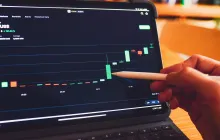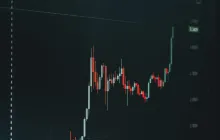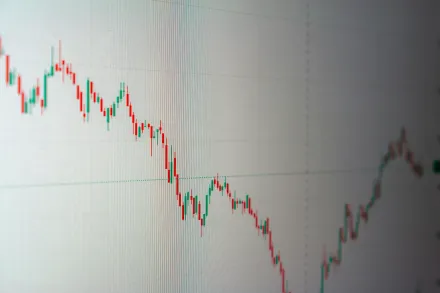
In the vast landscape of financial markets, candlestick charts have endured for centuries as one of the most accessible and expressive ways to visualize price action. Each candlestick distills a full slice of time into a compact visual package that communicates four essential numbers: the opening price, the highest price reached, the lowest price traded, and the closing price for that period. The body of the candle shows the difference between the open and close, while the thin lines above and below the body, known as wicks or shadows, reveal the price extremes touched during the interval. When many candles are lined up in time, the chart becomes a narrative about momentum, imbalance between buyers and sellers, and the evolving battle to set prices. The elegance of candlesticks lies in their ability to reveal not only direction but also the strength and context of moves, allowing readers to infer whether a rise or a fall was decisive or tentative. This article will guide you through the language of candlesticks with a steady, practical focus, weaving together theory, interpretation, and real world application in a way that stays readable across markets and timeframes.
To begin reading candlestick charts effectively, you must develop a habit of asking simple questions about what you see. Where is the current price relative to the recent range? Is the latest candle larger or smaller than its predecessors, and what does that imply about the balance of power between buyers and sellers? How do the patterns formed by several candles corroborate or contradict the prevailing trend? The aim is not to memorize a laundry list of patterns but to cultivate an eye for the mechanics of price action, the implications of the open and close, and the context in which each candle appears. As you read, you will learn to separate noise from signal, to assess the reliability of a given setup, and to translate a sequence of shapes on a chart into an actionable sense of probability and risk. This article emphasizes approach, discipline, and practical nuance over mechanical pattern matching, because in real markets, context and patience matter as much as the symbols themselves.
What Candlestick Charts Are
Candlestick charts are a time based visualization that encodes price information into a compact symbol for every selected period, whether that period is one minute, five minutes, one hour, one day, or any other trading interval. For each period the chart records four numbers: the open, the high, the low, and the close. The open and close determine the body of the candle, with the distance between them measured vertically on the chart. The high and low define the tips of the wicks, extending above and below the body to mark the extreme prices touched during the period. The color or fill of the body conveys whether the price finished higher or lower than it opened; a bullish candle closes above its open, a bearish candle closes below. Although the colors chosen by different platforms can vary, the fundamental meaning remains the same: the body shows who controlled the price during the period, and the shadows reveal how far price traveled beyond the open and close within that window. Over time the sequence of candles forms patterns that traders interpret as clues about trend strength, support and resistance, and potential reversals. The beauty of candlesticks is that they translate quantitative data into a qualitative sense of market psychology, allowing a reader to perceive momentum shifts with a single glance.
In practice, traders use candlesticks as a storytelling device rather than a rigid rulebook. Each candle is a sentence that suggests a mood at a moment in time, while the paragraph that follows is the next price action. The more you read in context—the prevailing trend, the nearby support and resistance levels, the volume accompanying the move—the more reliable the interpretation becomes. Candlesticks do not guarantee outcomes, but they encode probability in a clear, interpretable form. The ability to spot when momentum is waning, when buyers are stepping back, or when sellers are gaining the upper hand is what makes candlestick charts a cornerstone of technical analysis across equities, currencies, commodities, and futures. As with any tool, its value increases with practice, patience, and thoughtful validation against actual market behavior.
The Components of a Candlestick
Each candlestick is built from two essential components: the body and the shadows. The body represents the price movement from the opening price to the closing price of the chosen interval. If the close is higher than the open, the body is considered bullish and is often colored to reflect buying pressure; if the close is lower than the open, the body is bearish and may be shaded to emphasize selling pressure. The length of the body communicates the strength of the move within the period. A long body typically signals a decisive tilt toward buyers or sellers, while a short body suggests a period of consolidation or indecision. The shadows extend above and below the body to mark the highest and lowest traded prices during the period. The relative lengths of the shadows provide clues about rejection at extreme prices: long shadows imply that prices reached beyond the open or close but were pushed back, indicating a rejection of those extremes. A candle with very short or no shadows is often called a marubozu, signaling a strong move from open to close with little price retracement during the interval. This simple framework—the body and the shadows—underpins all more complex interpretations and patterns you will learn to recognize later, because every pattern is an arrangement of bodies and shadows across several consecutive candles.
Beyond the basic shape, it is important to be attentive to context and scale. For example, a long bullish body that closes near the top of the day’s range communicates not just strength but persistence of buying pressure throughout the period. A small body with long shadows, by contrast, can reveal a market stuck in a tug of war, with buyers and sellers meeting resistance at similar price levels. The apparent significance of a candle can shift as you examine neighboring candles, recent price history, and the prevailing market environment. While some traders fixate on the colors or the terminology of a single candle, experienced readers focus on the evolving relationship between multiple candles, the distribution of volumes, and the way price exits certain zones, which often signals whether a trend will continue or reverse. In short, a candle is not an isolated event but a piece of a larger price choreography that unfolds over time.
Reading the Body and the Wicks
When you read candlesticks, pay attention to how the body relates to the wicks and to the surrounding candles. A long body with a small or no wick suggests that price moved decisively in one direction during the period and stayed there, which is a strong sign of commitment by the market participants. A candle with a long upper wick but a close near the open indicates that buyers pushed price higher during the period, but sellers regained control and drove the close lower, revealing a rejection of higher prices at the end of the interval. Conversely, a long lower wick with a close near the high implies that sellers drove prices down initially, but buyers fought back to push the price back up by the close, signaling demand at lower levels. When both upper and lower wicks are long, the candle illustrates a wide trading range within the period, often pointing to a battle between opposing forces and a potential pivot point depending on the subsequent candles. If the body lies entirely between the wicks, the candle design communicates range contraction or a pause in momentum, which can precede a breakout or a reversal, depending on how the market chooses to resolve the lingering tension. Understanding these subtleties helps you interpret price action not as random noise but as meaningful information about the balance of supply and demand across time.
Another important aspect is the placement of the current candle within the context of recent price action. For example, a candle that closes above the high of the previous several candles can indicate a breakout event, especially if accompanied by corroborating volume and a drift in the overall trend. Conversely, a candle that closes within a narrow range after a pronounced down move may indicate a period of consolidation or temporary fatigue among sellers. The practitioner builds intuition by observing repeated occurrences of these dynamics across different market conditions and timeframes, taking care to distinguish between short term noise and sustained shifts in sentiment. In this way the candle becomes not just a snapshot but a signal whose reliability grows when it aligns with other forms of evidence, such as trend lines, moving averages, or momentum indicators that validate or question the observed price action.
Interpreting Candlestick Patterns
Interpretation of candlestick patterns begins with the simplest forms and progresses toward longer sequences that convey more nuanced messages. A single candle with a long body can be read as a clean directional signal when it occurs after a clear move, especially if it closes near the outer edge of the period’s range. Doji candles, where the open and close are very close or identical, embody uncertainty by showing that buyers and sellers are in balance. The appearance of a doji near a resistance level or after a strong up move may hint at an imminent reversal, while a doji in the middle of a trend can signal a pause or a momentary equlibrium before further action. Hammer and inverted hammer shapes, characterized by a small body and a long lower or upper shadow respectively, often suggest that price tested a floor or a ceiling but found buyers or sellers strong enough to reverse or pause the current move. When these shapes appear after a downtrend, a hammer can mark a potential bottom; seen after an uptrend, a shooting star may warn of a possible top, though the true weight of any signal depends on the surrounding candles and the overall market context. Engulfing patterns, where a smaller candle is followed by a larger candle that completely spans the body, imply a shift in control from one side to the other and gain strength when they occur in the direction of the prevailing trend but with larger volume or market participation behind them. A bullish engulfing pattern after a downtrend often signals a reversal as buyers overpower the previous sellers, whereas a bearish engulfing pattern after an uptrend can indicate a shift toward selling pressure. Morning stars and evening stars are more complex formations built from three candles that straddle directional moves and indicate potential turning points when the middle candle exhibits a small body in the gap between the larger preceding and following candles. The practical reading of patterns requires attention to how reliably they unfold given the broader price action and whether confirmation from volume or other indicators helps to increase the likelihood of a genuine reversal or continuation of the trend. The central idea is to view patterns as probabilistic signals rather than certainties, with success measured by how often they align with subsequent price action in a given market environment.
As you gain experience, the emphasis shifts from recognizing individual shapes to understanding how sequences of candles encode the rhythm of a market. A pattern might be less convincing in a choppy market or during periods of low liquidity, and it may become more powerful when it appears in conjunction with a trend line break or a momentum readout. The same pattern can perform differently across asset classes, so it is essential to adapt your expectations to the instrument you are trading and to the typical volatility of that market. The best readers treat candlestick patterns as hypotheses rather than hard rules, and they test those hypotheses by checking what happened in the subsequent candles, the reaction of volume, and whether the price manages to sustain a move beyond an initial breakout or reversal. In this way the art of reading candlesticks blends pattern recognition with disciplined risk assessment and a clear view of one’s own trading objectives.
Context: Timeframe, Trend, and Volume
The interpretation of candlesticks changes significantly with the chosen timeframe. A bullish signal on a one minute chart may evaporate on a daily chart, while the same candle pattern in a longer timeframe can reflect stronger, more persistent forces behind price action. In practice, many traders compare multiple timeframes to confirm a signal: the idea is that a move that aligns across two or more independent intervals carries more weight than a signal observed on a single scale. The trend in the larger timeframe provides the backdrop for the candles on the smaller timeframe, helping the reader decide whether to favor trend continuation or to anticipate a pullback and potential reversal. Volume adds an essential layer of confirmation. A bullish pattern that occurs with rising volume implies more conviction behind the move, whereas the same pattern on low volume suggests fragility and a higher risk of a false breakout. Market context matters as well; during earnings announcements, macro news releases, or marketwide events, patterns can misbehave relative to their historical tendencies, reminding readers to treat candlestick interpretations as conditional and context dependent rather than universal laws. By integrating timeframe awareness, trend orientation, and volume signals, you gain a richer, more reliable framework for reading candlesticks across markets and through shifting regimes.
Beyond technical signals, it is crucial to maintain a disciplined approach to chart reading that respects risk management principles. Candlesticks do not exist in a vacuum; they are one lens through which price action is observed. When combined with a well defined plan that includes stop losses, position sizing, and objective criteria for entry and exit, candlestick patterns can contribute to a coherent trading methodology rather than a haphazard pursuit of alluring shapes. The ultimate value of candlestick charts lies in their ability to reveal where the market is spending energy, how buyers and sellers are allocating their capital, and where price action is likely to pause, accelerate, or change direction. As you incorporate these insights into your practice, you will begin to notice recurring configurations that feel more meaningful because they appear under consistent market conditions and with a degree of reliability that makes them worth testing in a controlled manner prior to real capital allocation.
Reading Candlesticks in Different Markets
The basic language of candlesticks is universal, but the way signals express themselves can vary across asset classes. In equity markets, for instance, candles may reflect a clear day by day accumulation or distribution as investors react to earnings results, regulatory updates, or industry shifts. In foreign exchange markets, liquidity and session structure shape the frequency and clarity of patterns, with major sessions in London, New York, and Asia sometimes producing abrupt moves followed by periods of consolidation. In the world of cryptocurrencies, volatility is often high and price action can be impulsive, causing candlesticks to form dramatic bodies and long shadows within short timeframes, sometimes creating rapid, repeated patterns that require careful scrutiny to avoid chasing noise. Across all markets, the same patterns can behave differently depending on the prevailing sentiment, macro backdrop, and liquidity, so the reader must calibrate expectations accordingly and avoid over generalizing a pattern’s predictive value from one market to another.
Despite differences among markets, you will find consistent themes in how candlesticks convey information. The opening price marks the starting point of the battle within the interval, while the closing price signals the final result of that contest. The highs and lows record the range of struggle and the price discovery process. In markets with strong trend, candles commonly align directionally, with longer bodies supporting the idea that momentum is carrying prices in a particular way. In range bound environments, you will observe many candles with balanced bodies and longer shadows, suggesting that buyers and sellers are alternately testing areas of support and resistance. By maintaining awareness of the broader market structure and the asset’s typical behavior, you can interpret candlesticks more accurately and avoid misreading isolated candles as decisive in isolation from their environment.
Combining Candlesticks with Other Techniques
C Candlestick analysis becomes substantially richer when you integrate it with other techniques rather than treating patterns in isolation. A common approach is to overlay moving averages to capture the prevailing trend and to use candlesticks as signals for potential entries, exits, or reversals when a candle interacts with those moving averages. Momentum indicators such as the relative strength index or the MACD can help confirm or question the strength behind a candlestick signal by revealing whether price action is accompanied by growing or waning momentum. Support and resistance levels, derived from historical price peaks and troughs, provide tangible price zones where patterns may have greater relevance. Volume analysis, whether observed directly on the chart or inferred from market depth, can validate the strength behind a move suggested by a candlestick sequence. The art lies in balancing these tools so that no single indicator dominates the decision process; instead, each piece of evidence contributes to a probabilistic assessment that informs risk management and position sizing. When you practice this integrated approach, you will discover that candlesticks are most powerful not when used alone, but when they confirm and are confirmed by the broader set of market signals you rely on to guide trading decisions.
Developing a practical workflow helps in translating candlestick insight into action. Start by selecting a reliable time horizon that aligns with your trading objectives, whether that be intraday trading, swing trading, or longer term investing. Then observe a sequence of candles in the context of a defined trend, identifying moments when price interacts with established support or resistance or when a breakout appears imminent. Next, search for a confluence of evidence: a candlestick pattern that fits the direction of the trend, supported by volume and a favorable reading from an auxiliary indicator. Finally, commit to a testing process that measures how often the observed pattern would have led to a favorable outcome given your risk controls. This disciplined approach ensures that your reading of candlesticks remains anchored in pragmatic decision making rather than speculative interpretation, and it helps you cultivate a consistent, repeatable method that stands up to the uncertainties of real market action.
Practical Steps for Beginners and Mindset
For a newcomer, building skill in reading candlestick charts begins with patience and deliberate practice. Start by focusing on a single asset class and a handful of timeframes that reflect your trading goals. Observe how candles form in different market conditions and make notes about what patterns tend to occur during trending periods versus consolidations. Keep a simple mental checklist: Is the current candle counter to the immediate trend, or does it reinforce it? Are there long shadows that indicate price rejection at certain levels, and do subsequent candles confirm or rebalance that impression? As you gain experience, you will notice how patterns evolve with changes in liquidity and news flow, and you will learn to distinguish high probability setups from random fluctuations. It is important to ground your study in data by reviewing historical charts and, when possible, backtesting your hypotheses on a demo account with risk controls in place. The mindset you cultivate—curiosity tempered with discipline, skepticism balanced with openness to pattern recognition—will be the key that unlocks consistent progress and reduces the likelihood of overfitting to short term noise. Over time, your intuition will mature into a reliable gauge of when candlestick signals merit consideration within a well structured trading plan rather than an impulsive impulse driven by pattern recognition alone.
To reinforce learning, consider writing a concise narrative after observing a set of candles: describe the opening context, the key price levels touched by the wicks, the direction and strength of the bodies, and how price subsequently behaved. This practice helps convert visual impressions into a coherent story you can recall during live trading. Remember that the chart is a map of probability rather than a guarantee; every signal should be weighed against your risk management framework, your capital allocation, and the event risk that might alter price action unexpectedly. By maintaining a steady routine, embracing a structured approach, and continuously validating your interpretations against realized outcomes, you will transform candlestick reading from a casual hobby into a robust component of a mature trading process that adapts to markets rather than chasing their most seductive patterns.
Avoiding Common Mistakes
One of the most persistent errors in candlestick reading is treating patterns as magic talismans that predict the future with certainty. Markets do not obey a fixed script, and a single candle or even a three candle sequence can mislead if the broader context is ignored. Another frequent pitfall is over weighting a pattern without considering volume and trend alignment; a bullish engulfing candle that occurs on very light volume in a choppy market may fail to produce follow through, while the same pattern in a high volume environment that confirms the uptrend can be far more reliable. Traders also tend to misinterpret doji candles as universal signals of impending reversal; while a doji signals indecision, its significance depends on where it appears within the chart, whether it follows a strong move, and whether subsequent candles resolve the balance of power in a predictable way. A third common mistake is failing to adapt to market regime changes; a pattern that worked well in one period or asset class may perform poorly in another simply due to shifting volatility, liquidity, or macro context. The antidote to these missteps is systematic evaluation: require confirmation from multiple indicators, anchor decisions to probabilities rather than certainties, and always integrate a carefully defined risk management plan that governs position size and exit rules even when a promising pattern appears to emerge. By acknowledging uncertainty and building a cautious, evidence based approach, you reduce the risk of becoming misled by alluring patterns that lack robust support in the current market environment.
Putting It All Together in a Trading Plan
Ultimately, reading candlestick charts becomes most valuable when it informs a coherent trading plan rather than a collection of isolated observations. A solid plan begins with clearly defined objectives, a description of the markets you trade, and a framework for risk management that includes maximum loss per trade, location of stop losses relative to recent price structure, and a logical method for sizing positions as a function of risk. The plan should specify how you will respond to candlestick signals: what constitutes a valid setup, what timeframe and confirmation you require, and how you will handle trades that reverse or diverge from expectations. It should also account for market regimes and the possibility that certain patterns are more reliable in trending conditions than in sideways markets. A disciplined practitioner uses candlesticks as a lens to view the likelihood of different outcomes and to allocate capital accordingly, rather than chasing every signal or attempting to predict every move with perfect accuracy. As your plan matures, you will feel more composed during periods of volatility, be less prone to emotional reactions, and make decisions that reflect a disciplined synthesis of price action evidence, risk management, and personal objectives. This integrated approach elevates candlestick analysis from an interesting hobby to a practical engine for measured, thoughtful market participation.