Understanding the purpose of an economic calendar
An economic calendar is a structured timetable that lists scheduled releases of economic data, policy announcements, and notable events that can influence financial markets. Its primary purpose is to help traders, analysts, and investors anticipate periods of potential volatility, understand the underlying factors driving price movements, and organize decision making around events that can alter risk and reward. At its core, a calendar acts as a map of information flow, showing when new data will appear, which region or country it pertains to, and how market participants historically react to similar disclosures. When used thoughtfully, it becomes a tool for planning, risk management, and scenario analysis rather than a crude indicator of immediate outcomes. By studying the calendar, one can align expectations with the most relevant indicators, avoid surprises, and build a framework for interpreting the complex interactions between data releases and market sentiment.
Decoding the indicators and their categories
Economic calendars categorize events by their perceived potential impact on prices. High-impact releases might include a central bank decision, a major inflation measure, or a headline unemployment figure; medium and low impact events cover a broader range of data but tend to produce more modest moves. The category is not a guarantee of outcomes but a signal of where liquidity and volatility could concentrate. A well-rounded approach considers the context of each event, such as prevailing monetary policy expectations, the strength of the data relative to forecasts, and the degree to which a release may alter the market's assessment of risk. The calendar should be treated as a guide to attention rather than a weather vane that dictates exact directions, because actual market reactions depend on the surprise element, the prevailing trend, and concurrent news. In practice, for example, a higher-than-expected inflation figure in a country with a history of gradual tightening could spark a pronounced response in that economy’s currency and government bond markets. Conversely, an inflation miss in a context where markets already expect a neutral stance might lead to only a muted shift or a shift in pricing for a short period. The nuance matters: the same data point can trigger different reactions depending on the surrounding data, the timing of the release, and the broader macro narrative at that moment. By keeping the calendar within this interpretive frame, one can distinguish between noise and meaningful signal and avoid overreacting to every data point.
How to read forecast, previous, and actual figures
Most economic calendars present three core numbers for each event: forecast, prior, and actual. The forecast represents the consensus expectation of economists or analysts before the release. The prior shows the last reported value, which sets a benchmark for assessing whether the new release represents an improvement, deterioration, or a lack of change. The actual figure is the data as released, which may confirm or diverge from the forecast. The central question for a reader is whether the actual figure surprised the market and by how much. A large positive or negative surprise relative to the forecast can trigger rapid reassessment of risk, expectations for future policy actions, and shifts in correlations across asset classes. The magnitude of the surprise, rather than the direction alone, often drives volatility. When interpreting these numbers, it is important to consider the dimension of surprise in the context of recent data, seasonality adjustments, revisions to historical data, and the time window over which traders expect the impact to unfold.
Time zones, release times, and synchronization
Release times are anchored to time zones, and agendas may display times in a standard reference such as GMT or a local market time that can shift with daylight saving. The synchronization of time data with market session hours matters because the same release may have different effects when it coincides with liquidity peaks during a trading session versus a lull in activity. Traders often convert calendar times to their own trading hours to anticipate when the market will likely price in the new information. It is essential to verify whether the calendar uses local time or a universal standard, and to adjust for daylight saving differences that can move the effective moment of release by an hour or more. This awareness helps avoid mis-timing trades and aligns reaction windows with actual liquidity conditions, minimizing the risk of slippage and mispricing around important announcements.
The significance of high, medium, and low impact
Not all calendar events move markets to the same degree, and understanding impact levels helps with prioritization. High-impact data typically includes measures that touch on fundamental themes like inflation, growth, employment, and policy direction. These releases often imply broader implications for monetary policy, fiscal stance, and risk appetite. Medium-impact events may still matter but usually in more nuanced ways, shaping sentiment and sector-specific moves rather than broad risk assets. Low-impact data can influence micro aspects of markets or confirm existing narratives without generating dramatic price action. Recognizing this spectrum allows a reader to allocate attention and risk management resources efficiently, focusing on the moments when the likelihood and magnitude of surprises are greatest while not ignoring the informational value of smaller releases that can accumulate over time and alter trend dynamics.
How calendars influence different markets
Economic calendars affect multiple markets in interconnected ways. For example, a surprising change in a country’s unemployment rate can influence currency pairs, equity sectors, and fixed income benchmarks as investors reassess growth prospects and inflation trajectories. Currency markets often react most quickly to such surprises, given the direct link between macro data and exchange rates. Equities may respond through sector rotation if the data alters expectations for corporate profits or consumer demand. Bond markets react to revised inflationary expectations, which in turn affects yields and risk premia. Commodities traders watch inflation data and manufacturing indicators for implications on demand and supply dynamics. A seasoned reader of calendars considers these cross-market relationships, analyzing not only the isolated data point but also how shifts in one market ripple through others in the global network.
Regional and global coverage: which calendars matter
Economic calendars can be comprehensive, covering a wide array of regions, or highly focused on major economies. The most influential calendars typically include releases from the United States, the euro area, the United Kingdom, Japan, and major commodity-producing regions. Beyond these, calendars may feature data from emerging markets and regional blocs where policy changes or data revisions could alter risk sentiment, though the immediate market impact might be more nuanced. A practical approach is to map a trading plan to the calendar by identifying leading indicators for the assets you trade and then monitoring nearby events across the jurisdictions that have the strongest historical correlation with your portfolio. In doing so, one builds a navigation system that helps anticipate which releases deserve attention on a given day, week, or month.
How to use the calendar for planning trades and risk management
A disciplined routine around the calendar involves preparing before a release, managing risk during the release, and evaluating outcomes afterward. Before a scheduled release, a reader should review the forecast distribution, assess typical surprise magnitudes, observe positioning and liquidity considerations, and consider hedging strategies to protect against adverse moves. During the release, it is prudent to avoid chasing immediate moves unless the setup is unusually clear, and to remain mindful of slippage that can occur in volatile markets. After the data, one should assess the actual result against expectations, observe how price action evolved, and extract lessons for future decisions. This cycle supports a balanced approach that weighs opportunity against risk while preserving capital over the long run. By building a steady workflow, traders can transform data releases from unpredictable events into structured components of a strategic plan rather than isolated risks to be avoided.
Interpreting surprises and market reactions
A surprise occurs when the actual figure deviates meaningfully from the forecast. The market's reaction is influenced by how far the surprise is from expectations, the direction of the surprise, the historical reliability of the forecast, and the current macro narrative. A large, positive surprise might strengthen a currency if it implies stronger growth or lower risk, yet it could also trigger consolidation if the market had anticipated a larger move in the opposite direction. Market participants also consider the rate at which information is absorbed; sometimes the initial spike reverses as traders digest the broader implications for policy or liquidity. In other cases, a sustained trend develops as the data aligns with a reshaped expectation of future policy. The art lies in recognizing when a reaction is a temporary impulse versus when it signals a durable change in regime or sentiment.
Practical workflow around major releases
A practical workflow begins with a broad scan of the calendar to identify potential hot zones where data is converging with policy events or where the composition of data suggests a significant impact on probability distributions for asset prices. A trader might then drill into the specific figures that matter, study the historical distribution of surprises, and sketch scenarios for different outcomes. During the release cadence, it is important to maintain discipline, avoid overreacting to every data point, and use defined risk controls such as stop-loss orders and position sizing that reflect the expected volatility and your time horizon. After the event, one should review the performance, adjust expectations for future releases, and integrate the lessons into ongoing analysis. This structured approach helps translate calendar information into responsible, repeatable strategy rather than impulsive bets driven by short-term noise.
Common mistakes and pitfalls
Common missteps include treating forecasts as guarantees, ignoring the revision risk to historical data, and underappreciating the role of seasonality and context in interpreting numbers. Some readers focus only on the magnitude of moves without considering the direction of the surprise relative to the prevailing trend or the broader macro narrative. Others place excessive emphasis on backfilled revisions, which can distort the sense of risk if one assumes data will always move the same way as previous revisions. A further pitfall is neglecting the time dimension, such as not accounting for the exact release moment or the time zone conversion, which can lead to mis-timed entries and exits. By cultivating awareness of these biases, a reader can maintain a more accurate assessment of risk and avoid predictable traps that erode performance over time.
Case study in narrative form: a data-driven day
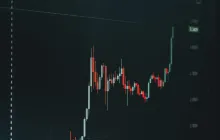
Imagine a day when economic calendars highlight a major employment report in a large economy and a concurrent central bank policy briefing. Prior to the session, a careful reader notes the consensus forecasts for employment growth, wage trends, and unemployment rate, along with the last release and a set of plausible surprises based on recent data. As the moment approaches, liquidity in the market tightens, and traders adjust their exposure in anticipation of the release, with some hedging strategies already in place. Once the actual figures are released, the chart responds with a spike that reflects the surprise magnitude and whether the surprise aligns with the prior trend. The price action may show a quick reversal as participants process the implications for policy, followed by a more extended move that reflects the revised probability of future actions. The observer studies which sectors led the move, which currencies moved most, and how fixed income, equities, and commodities behaved in tandem. This kind of narrative depicts how a calendar event unfolds in real time and illustrates the interplay between data, expectations, and market psychology.
Building a personal routine and calibration
A robust approach to calendars includes building a personal routine that balances vigilance with calm analysis. This means setting aside time to review scheduled releases, understanding the historical behavior of the assets you trade around those releases, and calibrating your models to reflect evolving conditions in the economy. Keeping a personal diary of reactions to data can help identify biases, such as overestimating the impact of a single report or underestimating the smoothing effect of long-term trends. Calibrating expectations also involves revisiting the forecast accuracy, revising your surprise thresholds, and ensuring that risk controls are adaptive to different macro regimes. The end goal is a sustainable practice that improves decision quality without sacrificing discipline, patience, or risk management standards.
The limitations of economic calendars
Although calendars are invaluable, they have limitations. They cannot capture every nuance of market sentiment, geopolitical developments, or fast-moving events that occur between releases. They may also reflect the biases of consensus forecasts, which can shift quickly as information evolves. Revisions to historical data after the initial release can complicate post-event analysis, and the calendar’s focus on scheduled events may overlook unexpected shocks that have far-reaching consequences. Additionally, liquidity conditions, technical factors, and market microstructure all influence how prices respond beyond the fundamentals of the data. Understanding these limitations helps readers rely on calendars as a guide rather than a deterministic map, encouraging a flexible approach that integrates quantitative signals with qualitative judgment and prudent risk controls.
The evolving nature of data and calendars
Economic calendars continue to evolve with changes in data collection, reporting technologies, and policy frameworks. As new indicators gain prominence or as the market treats certain data with greater sensitivity, calendars may update their classifications, timing conventions, or historical reference points. This evolution underscores the importance of staying current with how calendars present information, including any changes to how surprises are measured or how release times are synchronized across global markets. A thoughtful reader keeps an eye on these developments, updates internal procedures accordingly, and remains curious about how future data may alter the relationship between calendar releases and price dynamics. By treating calendars as living tools, one can maintain relevance in a fast-changing analytical landscape.
Final reflections on staying informed
Reading economic calendars well is less about chasing every number and more about cultivating a disciplined habit of context, perspective, and risk awareness. It involves building intuition for how different data points interact with policy expectations, learning from both successful trades and missteps, and continuously refining the process to align with personal objectives and risk tolerance. The calendar becomes a companion in analysis, helping to structure thought, anchor decisions in evidence, and reduce the instinct to act without a plan. With time, readers develop a nuanced sense of when a release is likely to matter, how to interpret surprises, and how to translate information into measured actions that support long-term goals rather than impulsive bursts of activity. This ongoing practice—rooted in understanding, discipline, and curiosity—forms the core of expertise in navigating the world of economic data and market reaction.