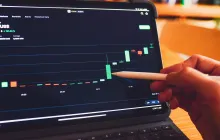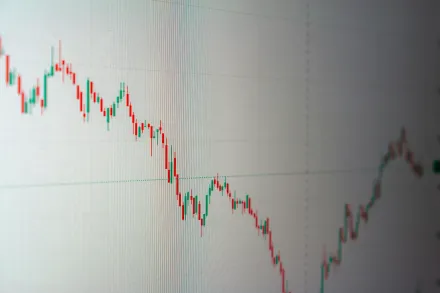
Day trading is a practice that focuses on the intraday movement of financial instruments, with traders aiming to enter and exit positions within the same trading session. Unlike investors who may hold assets for months or years in pursuit of longer-term growth, day traders seek to capture small price fluctuations that accumulate across many trades. This approach requires attention to real-time data, quick decision making, and a strong tolerance for rapid changes in market conditions. The distinction between day trading and swing trading, for example, lies primarily in the time horizon; swing traders may hold positions over days or weeks to benefit from more prolonged moves, while day traders typically avoid overnight risk. In practice, day trading relies on liquidity, volatility, and short-term order flow to identify opportunities, and it rewards those who can maintain discipline, manage risk, and execute with precision.
What day trading is and how it differs from other forms of trading
Day trading is a practice that focuses on the intraday movement of financial instruments, with traders aiming to enter and exit positions within the same trading session. Unlike investors who may hold assets for months or years in pursuit of longer-term growth, day traders seek to capture small price fluctuations that accumulate across many trades. This approach requires attention to real-time data, quick decision making, and a strong tolerance for rapid changes in market conditions. The distinction between day trading and swing trading, for example, lies primarily in the time horizon; swing traders may hold positions over days or weeks to benefit from more prolonged moves, while day traders typically avoid overnight risk. In practice, day trading relies on liquidity, volatility, and short-term order flow to identify opportunities, and it rewards those who can maintain discipline, manage risk, and execute with precision.
The potential rewards of day trading
Within the right framework, day trading can offer a number of twenty-first century advantages, including the potential for rapid capital turnover, the opportunity to learn about markets through hands-on practice, and the possibility to generate income that is independent of a traditional nine-to-five schedule. For some traders, ongoing profitability over months and years emerges from a combination of disciplined risk control, clever use of technology, and the ability to scale positions as confidence grows. When the market demonstrates clear intraday patterns, a skilled practitioner may compound gains by applying consistent methods across different assets. In addition, the flexibility to work from home or from a trading studio appeals to many who value autonomy and the ability to reallocate time to other activities as their understanding deepens.
The risks that day traders face
Day trading is not a guaranteed path to wealth; it concentrates risk in a set of intense, fast-moving dynamics that can overwhelm the unprepared. The most immediate hazard is loss of capital through frequent small losses that accumulate, especially when commissions and spreads eat into profits. Leverage, while enabling larger exposure with a smaller account size, can magnify losses just as quickly as gains, and it can trigger margin calls or forced liquidations without warning if the market reverses suddenly. The dependence on short-term price action also means traders are exposed to sudden spikes caused by news releases, macro announcements, or events that disrupt normal liquidity. Beyond the financial losses, the emotional toll of repeated adverse outcomes can erode judgment, leading to impulsive decisions that deviate from a trader's long-term plan. The complexity of market microstructure means that even experienced participants can misread signals, mismanage risk, or overfit a tiny sample of trades to recent outcomes. The cumulative effect of transaction costs, including spreads, commissions, and potential rebates, can erode a fragile edge over time if not carefully accounted for in the trading plan.
Capital requirements and leverage considerations
Starting capital for day trading varies by jurisdiction and by the specific market rules that shape account classifications and margin requirements. In many markets, traders who use margin accounts must maintain a minimum balance, and the level of leverage provided can dramatically alter both potential profits and potential losses. A small misstep in position sizing or a sudden adverse move can put a trader in a precarious position, forcing rapid risk management actions. Prudent planners emphasize that day trading is not a path to wealth from a tiny account; rather, it is a profession that typically demands substantial capital relative to the size of average intraday moves. The emphasis should be on sustainable risk management, rather than chasing outsized gains, and on ensuring that a single bad session does not erase years of practice. For many, this means setting a clear rule about how much capital can be risked on a single day or on a series of trades, and maintaining enough liquidity to cover ongoing costs and potential drawdowns.
Time commitment and lifestyle considerations
Day trading requires substantial time and attention during market hours, including the preparation before the session, monitoring price action, evaluating new information, and recording outcomes for review. This level of commitment can be a challenge for individuals with family responsibilities, other jobs, or varying schedules. The daytime discipline may also affect sleep patterns, social life, and overall work-life balance, especially for those who trade during early morning or late sessions in different time zones. Some traders structure their days by building a routine that includes pre-market analysis, a specific window for trading, and post-market reflection. That disciplined routine can reduce the cognitive load during active hours and help prevent overtrading, which is one of the common risks facing new entrants to day trading. On the other hand, some market conditions may require traders to adapt quickly, dedicating additional time during volatile periods to manage orders, monitor risk, and adjust strategies in real time.
Trading costs and the effect on profitability
Every trade carries a cost, and when multiplied across a large number of intraday transactions, these costs can have a meaningful effect on net profitability. Brokerage commissions, exchange fees, and the bid-ask spread contribute to the base expense of each trade, and certain markets also impose clearing fees or data subscription charges that accumulate over time. The impact of costs is often magnified in strategies that rely on small price movements or high-frequency turnover. Even a modest edge can be wiped out if costs are not carefully factored into the expected return. Therefore, a crucial element of any day trading plan is a transparent accounting of all recurring expenses, followed by an evaluation of whether the strategy can absorb those costs while delivering the targeted return. Traders frequently simulate strategies with costs included to understand the true break-even point and to avoid overestimating efficiency based on gross profits alone.
Risk management techniques that are commonly used
Risk management is the backbone of sustainable day trading. It begins with a clear plan that defines the maximum amount of capital to risk on a single trade, the total daily risk limit, and the criteria that trigger an exit rather than a continuation. Position sizing is a fundamental tool; it determines how many contracts or shares to buy relative to the trader's overall risk tolerance and the volatility of the instrument. Stop losses provide a structured way to contain losses, while take profits ensure that gains are realized rather than evaporated by a reversal. Many traders also use trailing stops to protect profits as a position moves in their favor, allowing for upside participation while limiting downside risk. Diversification across instruments, sectors, or timeframes can reduce idiosyncratic risk, though it also requires careful coordination so that correlations do not undermine the risk framework. The discipline to adhere to predefined rules, even when emotions push toward greed or fear, is what separates consistent performers from those who chase improbable outcomes. A well-designed risk management system emphasizes objective metrics, ongoing review, and a culture of learning from both wins and losses.
Market psychology and the behavioral dimension of day trading
Human psychology plays a central role in day trading because markets respond to the collective emotions of many participants. Fear and greed can drive rapid shifts in price, creating patterns that may tempt traders to abandon their plans in favor of impulsive bets. Cognitive biases, such as loss aversion, confirmation bias, and overconfidence after a few successful trades, can distort judgment and lead to a cycle of riskier behavior. Successful day traders build mental models that help them recognize when their impulses are influencing decision making, and they develop routines that promote objectivity, such as journaling trades, reviewing outcomes, and calibrating expectations against historical data. The disciplined trader learns to separate the signal from the noise in a sea of data, to differentiate between a genuine edge and a temporary mirage created by a few favorable trades, and to accept that losses are a part of the process rather than a personal indictment. A strong mental framework supports consistency, resilience, and the ability to recover from setbacks without abandoning a well-conceived plan.
Technology, data, and the evolving toolkit of a day trader
Modern day trading relies on an array of technology, from fast computers and reliable internet connections to sophisticated software that streams real-time quotes, charts, and order routing. The choice of broker, platform, and data feeds can influence execution speed, the precision of fills, and the visibility of market depth. Some traders emphasize direct market access to minimize latency, while others rely on high-quality charting tools, alert systems, and automation features to assist with discipline. Costs of data subscriptions and software licenses must be evaluated against potential benefits, and traders should be mindful of the risk that overreliance on technology can create a false sense of control. It is crucial to understand order types, such as market orders, limit orders, and conditional orders, and to know how different market conditions alter the likelihood of slippage or partial fills. A thoughtful approach to technology includes routine checks, backup plans for connectivity issues, and a clear understanding that tools are enablers rather than guarantees of success.
There is a spectrum of strategies that day traders may employ
Strategy in day trading often revolves around identifying consistent patterns, price levels, and moments where supply and demand intersect. Some traders favor momentum strategies that ride intraday moves on news or breakouts, while others prefer mean-reversion approaches that anticipate a reversion to a typical range after an overextension. Others use scalping, aiming for a high number of small wins with tight risk controls, while still others apply more patient intraday rotation between correlated assets. Regardless of the chosen approach, the key is to align the strategy with robust risk controls and to test it thoroughly on historical data and in a simulated environment before putting real money at risk. A mature approach also includes clear entry criteria, exit criteria, and periodic evaluation to ensure that a strategy remains effective as market conditions evolve over time.
Market conditions that influence intraday trading behavior
Intraday markets behave differently depending on whether volatility is high, low, trending, or range-bound. In trending environments, breakout and momentum ideas may perform best, while range-bound periods often reward traders who use oscillation strategies and careful support and resistance analysis. Earnings announcements, macro data releases, central bank speeches, and geopolitical developments can dramatically increase intraday volatility, creating both opportunities and hazards. Traders must calibrate their expectations to the current regime and avoid applying a one-size-fits-all approach to every session. The ability to adapt—switching between strategies or adjusting risk parameters when the environment shifts—is often what distinguishes durable performers from those who rely on luck during favorable moments. A flexible but disciplined approach helps preserve capital during transitions between market states and reduces the risk of overtrading during low-probability intervals.
Common myths and misconceptions about day trading
One persistent myth is that day trading is an easy way to become wealthy quickly. In reality, successful day traders typically require extensive practice, a deep understanding of markets, and a rigorous framework that governs risk and psychology. Another misconception is the belief that big wins are sustainable indefinitely; in markets, volatility tends to randomize outcomes, and a sequence of luck can feed overconfidence if not countered by objective analyses. Some people assume that professional brokers or sophisticated algorithms always outperform a private trader; while professional environments can offer advantages, success still hinges on disciplined methods, proper capital allocation, and an honest appraisal of personal edge. A further myth is that more screen time automatically translates into better results; in fact, quality of setup, accuracy of decisions, and rest periods can be more important than sheer hours spent in front of a monitor. Debunking these myths requires a clear articulation of the underlying edge, a practical test of that edge, and a willingness to adjust when the market changes in unforeseen ways.
Case studies and hypothetical scenarios to illustrate risk and reward dynamics
Consider a hypothetical trader who begins with a modest account, a defined daily risk budget, and a plan to trade only during specific hours when liquidity tends to be highest. In a calm session, the trader executes a handful of trades with small, controlled losses and a few modest gains, ultimately finishing the day with a positive return after accounting for costs. In a different scenario, the same trader encounters a sudden surge in volatility due to a major economic release. A misread signal or a premature exit can lead to a larger loss that exceeds the daily risk cap, triggering a pause to reassess and rebuild the risk framework. A more favorable scenario may involve a string of well-timed entries with favorable risk-reward ratios that compound gradually, reinforcing the trader's confidence and risk discipline. Across these scenarios, the common thread is that outcomes are influenced by the trader's ability to follow rules, manage exposure, and avoid letting emotions drive decisions during fast-moving markets.
Tax considerations, regulation, and long-term planning
Day trading and related activities are subject to tax treatment that varies by jurisdiction and can affect net profitability. In some regions, short-term trades may be taxed at higher rates than long-term investments, and traders must maintain careful records of all entries, exits, and associated costs. Regulatory frameworks may impose specific requirements for margin accounts, pattern day trader rules, or disclosure of trading activity, and compliance with these rules is essential to avoid penalties. Beyond immediate taxes, day traders should consider how their activity fits into a broader financial plan, including retirement savings, insurance, and estate planning. A mindful approach recognizes that trading is a dynamic activity that interacts with the overall market environment, individual goals, and the tax code. The goal is to build a sustainable practice that recognises both the potential to generate profits and the obligations that come with earnings and capital management.
Practical steps to evaluate whether day trading is right for you
For someone considering day trading, the first step is education: learn about markets, instruments, and the mechanics of order placement. Next comes a period of simulated trading or paper trading to test strategies without risking real money, followed by a careful assessment of performance, risk metrics, and the emotional impact of simulated losses. A realistic plan should set aside sufficient capital that can be risked, while leaving enough funds for living expenses and emergencies. Establishing a routine that aligns with personal life and time constraints can help maintain consistency, and journaling every trade provides a clear record for review. It is important to seek mentorship, participate in communities with disciplined practices, and rely on objective feedback rather than anecdotal success stories. Finally, one should be prepared to step back if the edge appears to fade, or if the cumulative drawdown threatens the overall financial stability of the trader and their household.
Long-term perspectives and the place of day trading within a broader portfolio
Even when practiced by disciplined individuals, day trading is usually not the sole foundation of wealth creation. Many investors use day trading as a learning tool or as a supplementary income stream, while maintaining a larger allocation in diversified investments that benefit from compounding, dividends, or long-term growth. The ability to separate short-term trading skill from long-term investment judgments is crucial; it helps prevent the erosion of capital during adverse periods and maintains a broader, more resilient financial plan. A thoughtful approach considers whether day trading complements or conflicts with other financial goals, such as saving for education, retirement, or a major purchase. The trader must decide how much time and capital to allocate to this pursuit, constantly reassessing the risk budget relative to the rest of the portfolio and the evolving personal circumstances that shape risk tolerance and opportunity cost.
Choosing the right markets, assets, and timeframes for day trading
The range of instruments available to intraday traders includes equities, futures, currencies, options, and exchange-traded products. Each market has its own liquidity profile, volatility regime, and regulatory environment, which means that success often depends on specialization rather than attempting to master every instrument at once. Traders select markets that offer reliable intraday movements, predictable spreads, and sufficient depth to absorb orders with minimal slippage. Timeframe selection is equally important; some windows are more conducive to certain tactics than others, and the choice of timeframe interacts with risk management rules and the trader’s ability to monitor price action. A prudent path starts with one or two markets and evolves toward a more nuanced understanding as the trader gains experience, while always respecting the cost and complexity of extending activity into additional assets.
Ethical considerations and the social dimension of rapid trading
Day trading, like all financial activity, exists within a social system that includes brokers, market makers, regulators, and other participants. Ethical considerations involve fair dealing, transparency about costs and edges, and the avoidance of behaviors that seek to manipulate markets or distort liquidity. The fast pace of intraday trading can tempt shortcuts, but persistent success requires integrity and a commitment to following established rules. The broader impact of trading activity on communities and financial markets is a topic that warrants ongoing reflection, as well as an understanding that access to trading technology and capital does not entitle anyone to risk others' money or to circumvent safeguards designed to protect investors. Traders who cultivate ethical standards contribute to a more stable marketplace and sustain an environment where disciplined practice can flourish over time.
Future trends and ongoing learning for day traders
In a world of changing technology and evolving market structure, successful day traders commit to lifelong learning. They track changes in market microstructure, adapt to new order types, and test new approaches in simulation before applying them to live capital. Ongoing education often involves reading research and commentary from trusted sources, analyzing fee structures, studying macro relationships that influence intraday flows, and reviewing personal trade journals to identify biases. The discipline is not only about skill with charts and platforms; it is about cultivating patience, resilience, and curiosity so that practice remains sustainable as markets evolve. The balance between risk awareness and curiosity to explore new ideas keeps traders agile while preserving prudence and focus during the heat of the trading day. Maintenance of a learning routine, a willingness to adapt, and a clear boundary between exploration and execution help sustain long-term participation in the market without eroding capital or confidence.