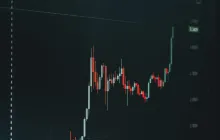
The language of price action is often expressed through the twin concepts of support and resistance, which serve as the backbone for many technical trading ideas. At its core, support is a level or zone where demand may be strong enough to pause a decline and possibly push prices higher, while resistance is a level or zone where supply could overwhelm buyers and limit further advances. These ideas are anchored in human psychology, market structure, and the observable behavior of price as it moves through time. When a stock approaches a level of prior congestion or a historically significant price, the reactions of buyers and sellers tend to become more predictable, at least in the short term. This is not a guarantee of future performance, but it is a framework that many traders use to structure their observations, manage risk, and calibrate their expectations for how price might unfold in the near term. The concept transcends any single market or instrument, appearing in equities, futures, options, and even forex markets, where the same idea is applied with nuance to different underlying dynamics and time horizons. The practical value emerges when one treats these levels not as fixed absolutes but as probabilistic zones where price reaction is most likely to occur given the historical context and the immediate market conditions present at the moment of approach. The discipline involved in recognizing and acting around these zones is as much about technical skill as it is about patience, risk control, and the interpretation of surrounding price patterns and volume signals. In this sense, support and resistance act as signposts along the price journey, guiding decisions without guaranteeing a specific outcome.
Defining support and resistance
Support can be thought of as a floor beneath the current price, a region where buyers are believed to step in with enough energy to counteract the selling pressure. Resistance, conversely, is a ceiling above the price, a region where sellers tend to outnumber buyers and price struggles to push higher. Yet in real markets these concepts rarely manifest as precise horizontal lines. They often appear as zones, regions, or fatigue points where price action slows, consolidates, or reverses. Traders frequently describe support and resistance as psychological levels shaped by collective memory. A round number such as a multiple of five, ten, or twenty becomes a focal point not because mathematics dictates it, but because it has repeatedly been seen as a magnet for turning points, stopping action at predictable junctures, and testing the resolve of both bulls and bears. A level that held as resistance in a prior rally can later serve as support after price breaks through, leading to a dynamic flip in the role of the price level. This symmetry, while not universal, is a persistent feature of price behavior across markets and timeframes. The idea that these levels are zones rather than single prices helps traders adapt to volatility and occasional false breakouts, reminding them that the price may breathe around a level before committing in a particular direction. In practice, identifying a level requires context: the proximity to recent highs and lows, the number of times price has tested the area, the speed of recent moves, and the surrounding price structure that frames the level within a broader trend. The more evidence there is in favor of a level acting as support or resistance, the more weight a trader may assign to it. In this sense, the concept becomes part of a structured approach to reading the chart rather than a vague notion guiding intuition alone.
Why these levels matter
The appeal of support and resistance lies in their capacity to organize chaotic price action into comprehensible segments. When price approaches a known support zone, buyers may interpret it as a favorable entry point, hoping for a bounce that can carry the stock to new highs. Conversely, near resistance, sellers may view it as an area to take profits or initiate short exposure, anticipating a pullback. This confluence of expectations often produces tradable patterns, including short-covering rallies around a support test or profit-taking fades near resistance. The practical significance extends beyond pure directional bets: levels influence risk management, position sizing, and strategic planning for multiple-timeframe analysis. For example, in a day trading context, a touched support may prompt a cautious buy with a tight stop, whereas in a swing trading frame a trader might wait for a clear breakout through resistance accompanied by supportive volume and momentum signals. In portfolios and longer horizons, these levels can guide how a trader constructs hedges, sets protective stops, or adjusts exposure as the market evolves. The psychological dimension matters as well because those levels reflect collective memory and crowd behavior. Traders may act not only on the mathematical proximity of price to a level but also on whether the level has been respected recently, how many times it has been tested, and whether the prevailing market sentiment supports continued reaction in the same direction. In this way, support and resistance are not mystical forces but annotated reviews of human behavior under pressure, encoded into charts and made actionable through disciplined decision processes.
Common methods to identify support and resistance
Analysts use a blend of static price points and dynamic indicators to locate potential support and resistance. Horizontal lines drawn across historical price lows and highs offer a straightforward method, with the caveat that markets evolve and the strength of a level can shift over time. Trendlines provide another layer, connecting successive peaks or troughs to reveal the slope of price and the zones where momentum may stall. Trend channels, formed by parallel lines that envelope price action, also help visualize where price might encounter friction as it moves within a bounded path. Moving averages frequently act as dynamic support and resistance, especially on larger timeframes where the moving average represents an average of price over a defined period. The 50-day and 200-day moving averages are widely watched by practitioners for the signals they generate regarding medium- and long-term contexts. When price sits above a rising moving average, that average can function as a support anchor, while price trading below a declining moving average may face systemic resistance. Beyond these traditional tools, traders increasingly consider depth of market data, volume clusters, and order flow cues to assess whether a level is likely to hold or fail. Volume, in particular, is essential because it supplies information about the intensity of buyers and sellers at a given price. A test of support with above-average volume often strengthens the likelihood of a bounce, whereas a low-volume test can leave the level vulnerable to a deeper break. Price structure matters as well; consolidation patterns, such as triangles or rectangles, often establish boundary levels that behave like supports or resistances as price moves within the structure. When price repeatedly tests a boundary and fails to close beyond it, the boundary gains credibility as a potential turning point. The application of these methods should be contextual, with consideration given to the asset’s volatility, liquidity, and the trader’s timeframe. A level that works well on a daily chart may fall apart on an intraday chart, underscoring the importance of aligning tools with the intended horizon of analysis. As a result, many practitioners use a layered approach, not relying on a single rule but combining multiple signals to improve the odds of a successful reading of the chart.
Dynamic and static levels
Static support and resistance refer to fixed price points derived from historical highs and lows that do not change unless new information materializes. Dynamic levels, on the other hand, shift with market conditions and can be captured by indicators such as moving averages or other trend-following constructs. Static levels capture the memory of the market and often highlight durable price zones born from consolidation, accumulation, or distribution phases. Dynamic levels reflect the evolving structure of price action and are particularly useful in trending markets, where moving averages can serve as adaptive support or resistance that follows the price as it advances or recedes. Skilled traders learn to interpret the interplay between static anchors and dynamic curves, recognizing when a price action is naturally drawn toward an established zone and when a trend carries price beyond a moving-average boundary. The choice between static and dynamic references depends on the asset’s behavior, the time horizon, and the trader’s risk tolerance. For some markets, a hybrid approach that acknowledges the significance of historical price clusters while maintaining an eye on the pace of the current trend yields the most reliable framework for decision making. Ultimately, the best practice is to observe how price interacts with both types of levels across several timeframes, confirming whether the signals align before acting. This cross-timeframe corroboration can reduce the incidence of false signals, especially when markets display whippy or sideways motion in which single-timeframe readings may mislead the reader about the broader context.
Volume and the strength of levels
Volume is the fuel that powers price movement, and its presence near a prospective support or resistance level adds a layer of credibility to that level. When price approaches a known support with rising volume, the case for a genuine bounce strengthens because demand appears to be materializing with conviction. Conversely, if price nears resistance on heavy volume, supply pressure is reinforced, and a breakout may require additional catalysts to succeed. The concept of volume clusters around a level helps distinguish between mere technical friction and meaningful participation by market participants. Low volume, even at a well-established level, may indicate that traders are waiting for confirmation and that the move could be more prone to a whipsaw or a shallow reversal. A key nuance is that volume on different timeframes can tell different stories. A high-volume test on a 60-minute chart may translate to a more modest reaction on a daily chart, informing the trader about the relative strength of the move. The practical takeaway is to examine volume in conjunction with price action around levels to gauge the probability of a bounce or breakout and to calibrate position sizing and stop placement accordingly. Integrating volume analysis with price levels creates a more resilient framework than relying on price alone, and it helps traders avoid overinterpreting mild price reactions that do not reflect real market consensus.
Timeframes and multiple layers
Support and resistance operate on many scales, from minutes to months. A level observed on a five-minute chart may be irrelevant on a daily chart, while a level carved into a multi-month history can influence shorter horizons. The most effective practice is to analyze price action across several timeframes simultaneously, noting where levels align and where they diverge. If a level is visible on multiple timeframes with consistent reaction, its strength is enhanced; if not, it may be a transient feature that warrants only light attention. Traders often look for confluence, where a price level coincides with a moving average, a trendline, or a prior swing high or low. Confluence increases the odds that the level will hold, and it can justify stronger commitments with accordingly sized risk controls. The multi-timeframe perspective also helps in avoiding false signals that appear appealing on one chart but vanish when viewed in a broader landscape. This layered approach mirrors the complexity of markets, where different participants operate on different schedules and where liquidity, news cycles, and macro factors can echo across time horizons. The result is a more nuanced and robust interpretation that respects both the persistence of long-range structures and the responsiveness of shorter-term dynamics.
Patterns and setups around levels
Many chart patterns interact with support and resistance to create setups that traders can recognize and potentially act upon. For example, price testing a support zone after a prolonged decline may produce a reversal pattern, sometimes accompanied by candlestick formations that reflect buyer indecision, such as doji or hammer candlesticks, which indicate potential exhaustion of selling pressure. On the other side, a test of resistance after a sustained move up may show a topping pattern or a breakout attempt that stalls, hinting at a shift in momentum. Consolidation within a range near a known level often strengthens the case for a pending breakout or breakdown, but the direction remains uncertain until price exits the cited range with accompanying volume and confidence from momentum indicators. Traders may also observe retests of broken levels: when price breaches a level and then revisits it from the other side, the level can become a new support or resistance reference, depending on the direction of the move and the duration of the return test. The interplay of patterns such as triangles, flags, and channels around established levels adds a layer of predictive value, allowing the reader to anticipate the likely next move while acknowledging that markets can defy expectations. These pattern-based insights are most reliable when supported by contextual factors such as the overall trend, the strength and speed of the move, and the availability of liquid trading opportunities that permit a disciplined risk-reward configuration. In practice, this means combining pattern recognition with level awareness to identify high-probability exits or entries that align with a broader strategic plan rather than reacting to every short-term swing in isolation.
Practical trading strategies around these levels
When approaching trades anchored by support or resistance, a practical ethos emphasizes risk management, probability, and the alignment of entries with broader market structure. A common framework is to define a plan that includes entry criteria, stop levels, take-profit targets, and a clear rationale tied to the level being tested. A bounce from support can be approached with a long entry, a stop just below the level or beneath a recent swing low, and a target set by a measured move or the distance to the next logical resistance. Alternatively, a break through resistance may prompt a long entry above the breakout candle with a stop placed just below the breakout level and a target anchored to the next significant level or to a measured move rooted in the prior range’s width. Implementing these strategies in real time requires discipline to avoid chasing moves that lack confirmation or to avoid premature entries in volatile markets. In some contexts, traders favor a cautious approach near key levels, waiting for price action to demonstrate commitment with multiple prints or confirming indicators such as momentum or volume surges before initiating a position. The liquidity of the instrument and the reliability of the data become essential considerations in these decisions, as thin markets magnify the peril of gaps or slippage. Position sizing should reflect the risk profile and the distance to the stop, ensuring that a single adverse move does not overwhelm the portfolio. It is customary to stress-test strategies across various market conditions, including trending, ranging, and high-volatility environments, to gauge resilience and adaptability. A well-constructed plan also accounts for the possibility of false breakouts, which require predefined contingencies such as waiting for a close beyond the level or seeking a secondary confirmation before committing to the trade. By integrating actionable rules with an awareness of the level’s strength, traders can convert the abstract notion of support and resistance into a repeatable process that can be refined over time through practice and careful record-keeping.
Risk management and discipline
Risk management is inseparable from any discussion of support and resistance because the edge provided by these levels is probabilistic rather than certain. Effective traders quantify risk by setting stops in relation to the level’s proximity, average true range, or the contemporaneous price volatility, ensuring that loss potential is controlled relative to the anticipated reward. Position sizing rules can use fixed-percent approaches, volatility-adjusted methods, or a combination of both, always respecting the defined risk limit per trade. Discipline means avoiding overexposure when the market environment becomes noisy or when levels lose credibility due to a persistent trend or heavy external influences such as macro announcements. It also encompasses the willingness to exit a trade when price action betrays the initial thesis, even if it means accepting a small loss rather than hoping for an improbable rebound. The art of risk management around support and resistance includes respecting gaps, which can abruptly alter the availability of a desired level, and adjusting stop placement to prevent a minor fluctuation from becoming a disproportionate drawdown. A robust approach uses backtesting to evaluate how a level would have performed under different market regimes and then uses such insights to calibrate expectations for live trading. By combining statistical discipline with a qualitative reading of price behavior, a trader builds resilience into their strategy and reduces the likelihood of reactionary decisions driven by emotion or a single, dramatic price move. The overarching aim is to ensure that the use of support and resistance enhances trading without introducing unnecessary risk or complexity, enabling steady progress over time rather than dramatic, unpredictable outcomes.
Backtesting and drawing accuracy
Backtesting is a cornerstone of quantifying the credibility of support and resistance levels. Historical data provide a canvas on which the strength and reliability of identified levels can be evaluated, revealing how often price respected a level, how large the bounce or breakout was, and how often a level failed to hold. The practice must be grounded in careful definitional consistency: what constitutes a test, how long a level is considered valid, and how to treat levels formed during periods of low liquidity. Good backtesting also considers survivorship bias, data quality, and the impact of market regime shifts. The goal is not to prove inevitability but to measure probabilistic outcomes under specific conditions so that live trading can be informed by empirical evidence. When drawing accuracy is uncertain, traders may widen the zone, require additional confirmation, or rely on corroborating signals from volume or momentum indicators. The process becomes iterative: a trader identifies levels, tests their performance across historical periods, learns where the approach breaks down, and refines the rules accordingly. The result is a disciplined methodology that emphasizes repeatability and accountability, rather than ad hoc judgments about where prices might go next. In short, backtesting transforms a heuristic notion into a testable framework, helping traders separate robust structural insights from random fluctuations that simply resemble familiar patterns in hindsight.
Psychology and crowd behavior
The human element permeates every price level. Traders collectively assign significance to round numbers, previous turning points, and zones of consolidation, and their actions produce a feedback loop that reinforces the level’s credibility. Fear and greed influence order flow, with fear often intensifying selling pressure near resistance and greed driving buyers toward a breakout near a support region when optimism is high. The psychology of levels can also manifest in self-fulfilling prophecies: enough participants anticipate a reversal at a specific price and act in a way that makes the reversal more likely. This collective behavior does not guarantee that a level will hold, but it increases its probability relative to random price movement. Understanding psychology does not require mysticism; it requires careful observation of how prices react after approaching a level, the time spent near the level, and the consistency of those reactions across different market conditions. For traders, recognizing psychological underpinnings helps explain why certain levels behave reliably while others fail, and it emphasizes the importance of situational awareness, risk controls, and humility when trading around critical zones. By exploring these human factors, one can better appreciate the limits of technical analysis and the necessity to complement chart-reading with prudent risk management and a clear trade plan.
Historical context and case studies
Historical case studies illuminate how support and resistance operate in real markets, providing illustrative examples without prescribing a universal rule. In one scenario, a stock traces a well-defined horizontal support near a prior swing low, tests it multiple times, and then experiences a decisive bounce on stronger-than-average volume, leading to a sustained move higher. In another case, price gradually inches up to a ceiling formed by a confluence of a moving average and a historical high, fails on several attempts, and ultimately breaks through only after a broader market rally provides the necessary momentum. Such examples underscore the principle that levels are not magical but contingent on market participation and the surrounding context. They also highlight the importance of recognizing when a level yields to a more significant structural shift, such as the formation of a new trend or the commencement of a prolonged consolidation phase that redefines the price landscape. By studying diverse instances across sectors, timeframes, and volatility regimes, a trader builds an intuition for when a level is likely to hold, when it is likely to be surpassed with relative ease, and when the market is at risk of a violent, rapid move that tests the resilience of existing supporters and challengers. This experiential knowledge complements formal analysis, reminding practitioners that markets are dynamic systems shaped by countless agents with complementary and competing objectives. Through thoughtful review of historical episodes, traders gain practical wisdom about the durability of levels and the conditions under which they succeed or fail, contributing to more informed and disciplined decision making in live markets.
In practice, the study of support and resistance combines theory with application. Traders who cultivate an eye for the balance of buying and selling pressure, the significance of historical price zones, and the influence of volume across timeframes can become proficient at translating chart observations into prudent trading decisions. The interplay between static anchors and dynamic indicators, the layering of time horizons, and the attention to psychology all contribute to a coherent approach that respects the complexity of markets while maintaining a clear path for action. The result is a navigational toolkit built from patterns, evidence, and rules of risk that helps traders weather uncertain conditions without surrendering to impulsive reactions. As with any area of technical analysis, ongoing practice, record-keeping, and continuous learning are essential; a single level should never be treated as a guarantee, and prudent traders continually reassess levels as new data arrive and the market environment evolves. By embracing a thoughtful, evidence-based approach to support and resistance, one can harness the insights these levels offer to improve timing, precision, and resilience in trading strategies while maintaining a disciplined perspective on risk and opportunity.