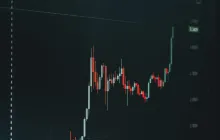
Trend lines are simple yet powerful tools used by traders, investors, and analysts to visualize the general direction of prices over a period of time. They are drawn by connecting successive price extrema on a chart, typically using the highs in a downtrend or the lows in an uptrend, and sometimes by linking pivotal turning points that seem to define a path through the noise of day to day fluctuations. The fundamental idea is that prices do not move in a perfectly random fashion but tend to exhibit a directional bias that can be exploited for estimation, timing, and risk management. A trend line is not a crystal ball but a dynamic guide that helps interpret how the market is evolving and where support, resistance, or momentum might be found as prices move forward.
In practice a trend line acts as a visual proxy for the slope of price action, providing a line that approximates where prices are likely to stall, pause, or accelerate. The lines themselves are simple mathematical constructs: a line is determined by two or more points, and when those points are drawn on a price chart they create a continuous path that prices often approach or touch again in subsequent periods. The elegance of trend lines lies in their simplicity and the way they communicate a complex series of data points in a single, intuitive image. For a market participant, this accessibility is often worth more than extremely precise numerics, because the human brain is adept at pattern recognition in visual form and can react quickly to changes in the perceived direction of a trend.
Trend lines serve a triad of functions that give them staying power in both education and everyday trading practice. First, they reveal the current directional bias of the market, whether it is upward, downward, or neutral, which helps frame expectations for future price movement. Second, they suggest regions of support or resistance where buying or selling pressure tends to intensify, potentially altering the tempo of price action. Third, they act as a reference for evaluating breakouts, pullbacks, or reversals, providing a consistent anchor to judge whether a move is meaningful or merely a temporary excursion. Taken together, these roles create a framework in which risk controls and strategic decisions can be anchored in observable price behavior rather than on intuition alone.
Foundations of trend lines
At its core a trend line is a straight line that connects two or more price points on a chart, with the slope indicating the rate of change in price over time. The more points a line touches without being dramatically violated by price action, the stronger the sense that the line captures a genuine directional bias. In an uptrend the line is drawn beneath the series of swing lows so that it acts as a rising support boundary, while in a downtrend the line sits above the swing highs to establish a falling resistance boundary. In markets that move with a more balanced tempo or where price action hovers near a center, a horizontal trend line can illustrate a persistent level around which prices oscillate. The notion of touching points is important because it lends a practical criterion: a line is considered meaningful when it has multiple contact points, which increases the probability that it represents a structural feature rather than a chance alignment.
The reliability of a trend line is influenced by how well the chart reveals a coherent pattern through different market conditions. In liquid markets with broad participation, trend lines are generally more robust because many participants respond to similar price cues, creating a reinforcing feedback loop that produces more reliable touches and fewer false signals. In thin markets, however, price movements can be erratic or dominated by news events, leading to frequent violations of a line that might otherwise look credible on a chart with more data. The pragmatic takeaway is that trend lines gain strength when they are supported by additional technical signals, such as volume patterns, momentum divergences, or corroborative indicators, rather than standing alone as a sole basis for decisions.
From a mathematical perspective a trend line embodies a simple linear relationship: price is modeled as a function of time, with an intercept and a slope that describe where the line crosses the price axis and how steeply prices rise or fall. Although real market data are noisy and do not follow a perfect straight line, the essence of the method is to approximate the underlying trajectory with a line that minimizes the deviation of observed prices from that line. This approximation strategy can be refined through different techniques, which leads to a richer understanding of how trend lines operate within broader analytical frameworks. The straight line approach balances interpretability with enough fidelity to be useful in real world chart reading and decision making, especially when integrated with price action context and other analytical tools.
Drawing a trend line: a practical guide
The first step in drawing a trend line is to identify the points on the chart where price action reveals turning points or sustained directional moves. In an uptrend the emphasis is on connecting successive swing lows that form a rising support structure; in a downtrend the emphasis shifts to linking successive swing highs that create a falling resistance line. A key practical consideration is to avoid forcing the line through outlier points that do not reflect a stable price rhythm, since a single anomalous point can distort the line and mislead interpretation. This is where the art meets the science in chart reading: the best trend lines maximize the number of touches while minimizing discordant deviations, resulting in a line that passes near or through a cluster of strategic prices rather than one or two random points.
To enhance reliability some analysts require at least two clear contact points to establish the line and a third point to confirm its validity, though many practitioners draw lines with two points and adjust as additional data arrives. The process is iterative: as new bars form, traders reassess whether the existing line continues to align with price action or whether it needs to be adjusted to reflect a new lower high or higher low. The adjustment can mean either updating the line to a more accurate path or recognizing that the market is transitioning to a new phase and that the prior line has become less relevant. In this sense trend lines are not fixed predictions but living guides whose relevance can wax and wane with time and context. The best practice is to document the line visually, keep it simple, and stay flexible about its ongoing interpretation as market conditions evolve.
Another practical dimension is the concept of line orientation and user discipline. Uptrend lines should not be drawn in a way that makes the line hug every small fluctuation at the expense of noting the broader swing lows. Conversely, a line that is too distant from price action loses its usefulness as a support or resistance reference. The discipline lies in choosing a balance between inclusivity of touches and maintainable distance from price. In addition, traders should be mindful of the time horizon they are analyzing; a trend line that captures long term dynamics may diverge from lines drawn on a shorter time frame, and this mismatch itself can carry information about differing momentum across scales. In practice, multiple trend lines can coexist, each revealing a layer of structure corresponding to different trading agendas and risk appetites.
The math behind trend lines
Beyond the visual and pragmatic aspects, trend lines are connected to a foundational mathematical concept: linear regression. A simple linear regression line attempts to minimize the squared vertical distances between observed prices and the line itself, producing a statistical best fit that provides an objective slope and intercept. Although many chartists prefer a qualitative approach that emphasizes how well the line touches points, the regression framework offers a precise method for comparing lines, estimating the rate of price change, and determining how well the model explains the observed data. The slope of the regression line conveys the average rate of price increase or decrease per unit of time, while the intercept anchors the line on the price axis when time is zero. In addition, the residuals—the differences between actual prices and the line—can be examined to assess how consistently the line captures price movements and where systematic deviations occur.
Another related statistical concept is the coefficient of determination, commonly denoted as R-squared. This metric indicates how much of the variation in prices can be explained by the trend line within the chosen sample. A higher R-squared value suggests that the line captures a greater portion of the observed movement, lending greater confidence to the interpretation that there exists a directional bias in the data. However, a high R-squared does not guarantee future accuracy, and traders must consider the dynamic nature of markets where structural shifts can alter the relationship between time and price. In practice, many traders use trend lines in conjunction with regression channels or dynamic overlays that adapt to changing conditions, thereby combining intuitive visual cues with quantitative rigor to achieve a more robust analytical stance.
Another mathematical consideration is the use of weighted or robust regression methods that place less emphasis on extreme price values that could distort the line due to abnormal trading days, gaps, or erroneous data points. The choice of method depends on data quality and the analyst's objectives. While a simple least squares approach yields a straightforward slope, more nuanced techniques may be employed when there is a reason to believe that price data contains heteroskedasticity or nonlinear tendencies. Even within the realm of standard trend lines, there is room for incorporating basic statistical checks to distinguish between a line that merely follows the action and one that truly captures an underlying structural gradient in the market. This fusion of visual interpretation and quantitative assessment often proves most practical for informed decision making.
Types of trend lines
Trend lines come in several varieties that reflect the direction and nature of price action. An uptrend line is drawn beneath rising prices, linking successive swing lows to form a support boundary that tends to hold during pullbacks. The slope of an uptrend line represents positive price momentum and conveys a sense of how quickly buyers are stepping in to push prices higher. A downtrend line, by contrast, is placed above descending prices, connecting successive swing highs to define a resistance line that prices struggle to surpass. The slope here is negative, signaling a prevailing selling pressure and a bias toward lower prices over the analyzed period. Horizontal trend lines occur when prices trade within a relatively narrow band, touching a sequence of highs or lows around a stable level, indicating a balance between supply and demand near that price point.
A related concept is the oblique trend line, which captures a trend with a slope neither steeply positive nor steeply negative, reflecting a more moderate pace of price movement that still exhibits directional bias. In many markets a single trend line may not capture the entire price action, and traders often work with multiple lines to describe distinct phases of movement. For instance, a chart can host an uptrend line that governs the longer horizon and a steeper upline that reflects a more aggressive move in the near term, while a parallel channel or a secondary line tracks the potential upper limits of price action. The interplay between these lines helps traders visualize both the floor and the ceiling of expected movement, providing a framework for entries, exits, and risk controls anchored in market structure rather than random price jitter.
It is also common to describe trend lines in terms of their touchpoints: a robust line is one that touches several highs or lows without frequent violations, creating a credible anchor for price action. Conversely, a line with only one or two touches may be considered provisional or exploratory, and it is usually treated with caution until more data validates its relevance. Market participants often differentiate between trend lines drawn for short term trading across minutes or hours and those drawn for longer term investing across weeks or months. The longer the horizon, the more pivotal the trend line tends to become, because it marks a central course of development that many participants reference when assessing risk appetite and portfolio alignment. This multi time frame perspective enriches the analyst’s understanding and reduces the likelihood of overfitting a line to a temporary patch of data.
Trend channels and parallel lines
Beyond a single trend line, many practitioners extend the logic into channels by drawing a second line parallel to the primary line to create a corridor within which prices are expected to move. A trend channel consists of a lower line in an uptrend or an upper line in a downtrend, typically created by translating the trend line by a fixed vertical distance that reflects the typical amplitude of price fluctuations. The resulting channel provides a visual representation of both the path of the trend and the potential range within which prices can oscillate while staying true to the underlying momentum. Channels can be particularly informative for identifying breakout or breakdown scenarios when prices threaten to move beyond the channel boundaries, signaling a potential acceleration in the same or opposite direction as the original trend. The channel structure also serves as a convenient reference for stop placement and risk controls, since breaches of the channel can indicate a shift in market regime rather than a mere blip within the prevailing trend.
Another related concept is the regression channel, which uses a linear regression line as the central axis and constructs two parallel lines at a distance determined by the standard error of the estimate. This approach blends statistical estimation with geometric visualization, yielding a deterministic frame for assessing whether the price action remains within expected bounds or is signaling a potential departure from the established trend. Regression channels can adapt to changing volatility by allowing the width of the channel to reflect fluctuations in the standard deviation, thereby maintaining relevance across different market environments. The practical advantage is a pair of boundaries that respond to data in a principled way, aiding in both trend confirmation and risk management as prices traverse within or beyond the channel with different probabilities over time.
Breakouts, pullbacks, and confirmations
One of the central applications of trend lines is to gauge the strength and persistence of a trend by observing how prices behave near the line. A conventional heuristic holds that as prices approach a trend line and bounce off it, the line reinforces the directional bias and provides a validation point for traders seeking entries aligned with the dominant move. A breakout occurs when prices move decisively beyond a trend line, suggesting that the prior structure may be giving way to a new energy in the market. Breakouts are more meaningful when accompanied by confirmation signals such as increased trading volume, a break of a related moving average, or a shift in momentum indicators that corroborate the move. In such cases the trend line ceases to be a floor or ceiling reference and becomes a marker of a possible regime change. Pullbacks or tests of the line after a breakout may offer safer entry points for those looking to participate in the new trend, particularly when price action after the retest shows fresh commitment in the direction of the breakout.
Conversely, a failed test of a trend line, sometimes called a false breakout, occurs when prices briefly cross the line but fail to sustain movement beyond it, quickly returning to the prior trajectory. These situations highlight the importance of context and the risk of overreliance on a single signal. In practice, traders use a combination of factors to interpret trend line breaches: the duration of the breakout, the velocity of price movement, the relative strength index or momentum readings, and the behavior of ancillary indicators. The weight given to a trend line breach often depends on the surrounding price architecture, such as the presence of nearby support or resistance levels, the alignment with other chart patterns, and the broader market environment. A disciplined approach considers trend line information as part of a broader decision framework rather than the sole determinant of action.
Trend lines across markets and timeframes
Trend lines are versatile across asset classes and time horizons, yet their interpretation must consider the unique dynamics of each market. In equity markets a trend line can reflect investor sentiment, macroeconomic news, and the gradual embedding of earnings cycles into price action. In commodity markets supply disruptions or seasonal patterns can shape the slope and strength of trend lines, sometimes producing steeper angles during periods of scarcity or more gradual drifts when supplies are ample. In foreign exchange markets the interplay between interest rate differentials, geopolitical developments, and risk sentiment can cause trends to exist for extended periods or to flip rapidly; trend lines in forex often require an adaptive approach that weighs fundamentals alongside price structure. In fixed income markets the path of yields or prices may be influenced by monetary policy expectations and inflation dynamics, which can lead to trend lines that evolve with shifts in central bank messaging. Across timeframes, longer trend lines emphasize the broad directional master trend, while shorter lines capture the immediate pacing of price action, and traders frequently use both to triangulate their view and refine their timing.
Seasonality and cycles can also interact with trend lines, producing patterns where the slope appears to tighten or widen in a recurring manner. While trend lines are not designed to predict exact turning points, they can reveal persistent cycles that influence when a trend may pause or resume. The practical implication is that traders should be mindful of the alignment between the chosen time horizon and the underlying market structure. A line derived from daily data may look different when examined on a weekly or monthly chart, and traders often adjust their analysis to the scale that best matches their strategy. When used thoughtfully, trend lines across markets and timeframes provide a coherent narrative about price behavior that helps manage expectations, calibrate risk, and structure a methodical approach to entry and exit decisions.
Common pitfalls and misuses
Even though trend lines are straightforward in concept, several common mistakes can undermine their usefulness. A frequent error is drawing lines that are too shallow or too steep given the price action, which can misrepresent the actual balance of supply and demand. Another pitfall is overfitting the line to recent history, making it overly sensitive to a short run of data while ignoring the broader context. In some cases traders rely on trend lines as if they were precise forecasting tools, expecting a guaranteed bounce or a specific target price when the market is actually subject to abrupt news shocks or regime changes. This tendency can lead to premature entries, poorly timed exits, or undue risk exposure. A related issue is neglecting the role of price gaps, where trading sessions open with large price discontinuities that render some line structures less meaningful until the gap is absorbed by subsequent action.
Additionally, the misalignment of timeframes can generate contradictory signals, with a long term line suggesting one course while a short term line hints at another. In such cases it is critical to assess the weight of each signal within the trader’s framework, determine which frame is most relevant to current objectives, and maintain a disciplined approach to risk that accounts for the potential that a trend line may fail to hold during a major regime shift. It is also important to verify data quality, avoid drawing trend lines from incomplete data sets, and be aware of look-ahead bias when backtesting or practicing on historical charts. By addressing these pitfalls with methodical checks, traders can preserve the integrity of trend line analysis and separate meaningful structure from random fluctuations.
Advanced variations and extensions
Beyond the basic straight line, several advanced concepts extend the idea of trend lines into more nuanced analytical tools. Linear regression channels overlay a central regression line with parallel boundaries that adapt to estimated volatility, providing a quantitative scaffold that complements the visual appeal of traditional trend lines. Polynomial trend lines attempt to capture curvature in data by fitting higher order polynomials, which can reveal turning points and shifts that a simple line would miss. However, polynomial fits are more sensitive to overfitting and can become unstable as new data arrive, so they require careful interpretation and validation. Exponential trend lines, which emphasize growth rates, are particularly relevant in markets where compounding effects dominate, such as technology stocks or booming commodities, and they offer a different lens for assessing the pace of ascent or descent relative to a constant rate assumption.
Anchored trend lines present another practical variant by fixing one end of the line to a specific price or date while allowing the other end to adapt as new data come in. This approach is useful when an investor wants to measure how a trend evolves relative to a known reference point, such as a major support level or a significant earnings event. Trend lines can also be integrated with moving averages to produce hybrid tools that blend structural and momentum signals. For instance, a trend line that aligns with a rising moving average can reinforce confidence about the sustainability of the direction, while divergence between the slope of the line and momentum indicators may warn of weakening momentum. The overarching message is that trend lines are part of a broader toolkit and their power grows when combined with complementary methods and disciplined rules of engagement.
In addition, the concept of trend lines can be extended to futures curves, options markets, and even synthetic data sets used for educational purposes. Across these contexts the same logic holds: a line that captures the directional tendency, supported by a framework of tests and corroborations, provides a practical anchor for interpreting price action and organizing a plan for risk management. The ability to adapt trend line thinking to different markets and instruments is a hallmark of mature technical analysis, reflecting an understanding that the shapes of price action share common elements even as the underlying drivers diverge. This adaptability ensures trend lines remain relevant in evolving markets where volatility regimes, liquidity profiles, and participant behavior continuously reshape price structure.
Practical workflow for practitioners
A reliable workflow for working with trend lines begins with defining the goal of the analysis and selecting an appropriate time frame that aligns with the trader’s horizon and risk tolerance. The next step is to scan the chart for obvious swing highs and lows that define potential anchor points, then draw a line that touches multiple points while keeping a modest distance from prices to avoid overfitting. After establishing the initial line, practitioners monitor its stability as new data arrive and consider adjustments only when the action clearly violates the line without immediate retracement. The decision to redraw should be grounded in a disciplined set of criteria, such as a sustained break with accompanying volume or momentum signals that confirm a structural shift rather than a brief event. This procedural approach helps maintain consistency and reduces the risk of subjective bias guiding every adjustment.
Documentation is an often overlooked but important part of a robust workflow. Recording why a line was drawn, which points it touched, and under what conditions it was modified creates a living history that can be revisited to understand how the market structured price action over time. This archival practice supports learning, backtesting, and transparent communication with stakeholders. When applying trend lines in a live environment, it is essential to couple line interpretation with risk controls such as position sizing, stop placement relative to the line, and clear criteria for exit strategies if the line breaches. A disciplined framework that integrates trend lines with other signals, a well defined plan, and consistent execution will yield more durable outcomes than ad hoc interpretations based on a single line alone.
Finally, education and ongoing practice play vital roles in developing proficiency with trend lines. Novices should start by observing large, simple structures on broad timeframes and gradually incorporate more details as understanding deepens. Experienced practitioners continually test their assumptions against new data, refine their line drawing principles, and adjust for changing market dynamics while resisting the urge to chase every new pattern. The journey toward mastery with trend lines is incremental, involving deliberate study, disciplined application, and a willingness to revise beliefs in light of evidence, which ultimately enhances the trader’s ability to read the market’s ongoing dialogue and participate more effectively in its rhythm.