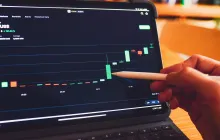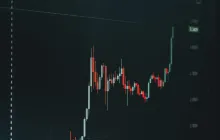
Day trading is a style of market participation where traders aim to open and close positions within the same trading day, seeking to profit from the intraday movement of assets. Unlike investors who hold for weeks, months, or years, day traders privilege speed, liquidity, and precision in entry and exit. The core idea is to avoid overnight risk by not leaving positions open when the market closes, although some patterns may involve holding positions over a portion of the session for tactical reasons. The practice requires a disciplined approach, a clear plan, and the ability to adapt as price action unfolds.
Foundations and definitions
Day trading is a dynamic form of market participation that emphasizes rapid decision making, disciplined risk controls, and the ability to translate short term price fluctuations into realizable gains. It often hinges on liquidity to ensure fills occur close to the intended price, and on volatility to provide price movement within the trading day. A strong foundation for this approach includes a solid understanding of order types, market microstructure, and the practical realities of fees and slippage. By definition, the day trader seeks to avoid holding overnight positions, thereby removing the overnight gap risk that can erase a day’s profits or magnify losses. Yet this constraint also requires a readiness to act quickly and to manage the emotional and cognitive pressures that arise when trades unfold in real time. The combination of timing, precision, and risk discipline creates a distinctive practice that can produce meaningful returns for those who invest effort in building it.
What makes day trading distinct
Day trading stands apart from longer term strategies because it relies on rapid decision making and tight risk controls. Traders watch for small price moves amplified by the volume and volatility of the market, using leverage to magnify returns while simultaneously decreasing the number of trades to manage exposure. The work is labor intensive, with constant attention to charts, news flow, order flow, and the microstructure of markets. Importantly, day traders typically close all positions by the end of the session to avoid overnight gaps and to preserve capital for the next day. The day trading approach rewards patience in waiting for clear setups and discipline in exiting trades at predefined targets or protective stops, rather than chasing every fleeting opportunity. This combination of selective entry, controlled risk, and the avoidance of overnight exposure differentiates day trading from other trading styles and from traditional investing.
Markets and instruments commonly traded
In modern markets day traders frequently operate in highly liquid instruments such as large cap equities, exchange traded funds, futures contracts, and in some venues the foreign exchange market. The common thread across these instruments is reliable liquidity, tight bid ask spreads, and predictable intraday behavior under ordinary conditions. Some day traders also experiment with options and micro futures to express directional or volatility bets, but these tools require a deeper understanding of how options premia and gamma interact with rapid price changes. Regardless of instrument, the goal remains to capture small, frequent gains while controlling downside risk. The choice of instrument will often reflect the trader’s capital, risk tolerance, and the costs associated with each product, including commissions and financing charges that can erode marginal profits if not accounted for in the plan.
Trading sessions and timing
The rhythm of a day trading session is driven by the opening and closing phases of major markets, as well as by economic releases and corporate earnings when they occur during the day. Early sessions often offer the best liquidity as participants from around the world react to overnight developments, while the latter hours can show reduced volatility and subtle price shifts. Successful day traders learn to adapt to changing conditions, recognizing when the market is exhibiting true momentum, when it is chopping sideways, and when volatility is failing to materialize. A structured routine helps in filtering noise and focusing on high-probability setups. Understanding the typical intraday patterns, such as morning bursts and afternoon consolidations, helps a trader align expectations with the market’s actual pace and avoid overtrading in quiet periods.
Order types and execution basics
Understanding how orders work is foundational for day trading. A market order executes immediately at the best available price, which can be attractive when speed matters but risky in thin markets due to slippage. A limit order lets a trader control the exact price at which an order is filled, trading certainty of price for the possibility that the order does not fill at all. Stop orders add a protective layer by triggering a sale or purchase when price reaches a predetermined level, which can help limit losses or protect gains. Traders also consider bracket orders or trailing stops in some platforms to manage exits more autonomously during fast moves. Execution quality and latency can meaningfully impact results, so many day traders place emphasis on brokers and platforms that deliver reliable fills and transparent cost structures that reflect the true price movement during the trading session.
Core principles of risk management
Risk management is the compass that guides every day trade. Position sizing, risk per trade, and maximum daily loss thresholds together determine how aggressively a trader behaves in the market. A common discipline is to risk a small fixed percentage of trading capital on any single idea, ensuring that a string of unsuccessful trades does not erode the overall account. Stop losses provide a hard floor on downside, while take profits help lock in gains when markets move in the predicted direction. The combination of disciplined sizing and protective stops helps preserve capital through the inevitable periods of drawdown that define any active trading approach. Responsible risk management also means accounting for costs such as commissions and borrowing fees, which can compound over time and undermine profitability if ignored. The objective is not to avoid risk entirely but to manage it in a way that protects the trading bankroll while still allowing for growth across a sequence of trades that fit the plan.
Strategies live in practice
Among the strategies that day traders employ, scalping aims for rapid profits from tiny price moves, often requiring very quick order execution and a high win rate to overcome trading costs. Momentum trading seeks to ride strong intraday moves that occur after breaking news or large order flow imbalances, with a focus on maintaining a position only while the trend persists. Breakout trading watches for price crossing well-defined levels of resistance or support, hoping to capture the move as liquidity expands. Mean reversion looks for overextended moves that may revert toward a short term average, seeking to exploit temporary mispricings that revert toward the mean. Each approach demands different skill sets, risk profiles, and time commitments, and many successful day traders blend elements from multiple strategies depending on market conditions. The practical reality is that no single method guarantees success, and the most durable performers adapt their strategies to evolving market dynamics while staying faithful to their core risk controls and planning discipline.
Technology, data, and workflow
Day trading relies on a combination of speed, information, and discipline. Traders typically use dedicated trading software with real time data feeds, charting tools, and the ability to place orders with minimal latency. Customizable screens help highlight price patterns, volume bursts, and order flow signals that signal potential entries or exits. Data analysis is not only about price, but also about context such as volatility measures, implied liquidity, and the credibility of the current price move given the day’s news cycle. A robust workflow includes a pre market review, a trading plan for the session, and a post trade review to extract lessons from both wins and losses. The ability to stay focused and avoid overtrading becomes as important as the timing of a single trade. Technology also enables the replication of successful patterns across different market conditions, although it must be used with discernment to avoid overfitting and chasing historical performance that does not translate into future results.
Ethics, regulation, and practical considerations
Ethical trading requires truthful execution, avoidance of manipulation, and compliance with the rules of the trading venue and jurisdiction. In many markets, individuals who actively trade with lax risk controls may face higher margin requirements or restricted access if their behavior is deemed risky or abusive. The pattern day trader rule in the United States, for instance, imposes minimum capital requirements for accounts that execute four or more day trades within five business days, ensuring traders have enough capital to weather intraday volatility. Beyond regulatory considerations, prudent traders keep a sharp eye on brokerage practices, such as order routing quality, potential conflicts of interest, and the transparency of costs including commissions, spreads, and financing charges. Advocating for orderly markets, responsible risk taking, and continuous learning helps protect both the trader and the broader market ecosystem.
Getting started: building knowledge and a plan
Entering day trading begins with a foundation of education, hands on practice, and the development of a clear trading plan that outlines entry criteria, exit rules, risk controls, and personal limits. The path often starts with a thorough study of market mechanics, order types, and basic technical analysis concepts such as support and resistance, trend identification, and volatility assessment. Simulated or paper trading provides a low risk environment to test ideas and refine execution without risking real money, while a gradual transition to real capital helps build experience and confidence. Choosing a broker, setting up a workstation, and ensuring reliable data feeds are practical steps that support a sustainable practice rather than a speculative impulse.
Psychology and discipline inside the trading day
The mental aspect of day trading is as important as the technical skill. Traders confront a spectrum of emotions from excitement and optimism to fear and frustration, all of which can distort judgment and lead to impulsive decisions. Recognizing cognitive biases such as overconfidence after a win, or loss aversion after a setback, helps in maintaining consistency. Routine rituals, strict adherence to a plan, and the willingness to take a break after a loss are often more effective than chasing the next quick opportunity. A disciplined routine includes pre market checks, focused trading only during certain hours, and a post session review that translates experience into improved rules for the next day.
Performance metrics and continuous improvement
Effective day traders track a set of performance metrics to understand profitability and risk. These measures include win rate, average gain, average loss, risk reward ratio, and the distribution of returns across trades. By examining the testing of ideas in different market regimes, traders learn which strategies align with their temperament and capital. The process of continuous improvement also involves reviewing trading logs for patterns such as repeated misreads of certain setups, moments when slippage eroded expected profits, or times when emotional fatigue led to poorer decision making. A mature practice treats performance analysis as an ongoing discipline rather than a one time audit.
Common myths and realities
There are many misconceptions around day trading that can mislead newcomers. Some believe that day trading is a route to fast wealth with minimal risk, which is not accurate given the exposure many traders face and the costs of frequent trading. Others assume that high priced securities are inherently easier to profit from because liquidity is greater, when in fact the dynamics of price movement and spread costs can be more complex. The myth that one needs expensive software or institutional access also fades when a dedicated individual with a well crafted plan and solid risk controls can achieve meaningful results using accessible tools. The reality is that day trading requires time, discipline, capital, and a cautious approach to risk management, especially during periods of high volatility or abrupt market shifts.
Future directions and evolving markets
Looking ahead, the landscape for day trading is shaped by advances in technology, data availability, and opening access to global markets. Algorithmic and high frequency traders contribute to faster price discovery, while individual day traders can leverage user friendly platforms with optional automated features to reduce routine tasks. The growth of fractional shares and diverse asset classes expands the universe of opportunities beyond traditional equities, enabling traders to experiment with different risk profiles and strategies. As markets continue to evolve, a patient, educated, and disciplined approach remains essential for sustainable participation rather than chasing improbable wins.
Case studies and practical takeaways
To illustrate how ideas translate into trades, imagine a trader following a momentum setup during a period of company news that causes a burst of buying pressure. Entry occurs on a breakout above a defined resistance level with a tight stop below the breakout zone. The trade unfolds with volatility providing the fuel for a quick gain, but risk controls cap the loss if the breakout fizzles. In another scenario a trader identifies a rapid pullback after an overextended move and takes a fade position, exiting as price approaches a moving average or a defined mean. These case studies reinforce the principle that success in day trading depends as much on execution discipline and risk management as on anticipating price directions. Real world performance, including fees and slippage, will determine net profitability over time, and the most reliable improvements come from careful note taking and consistent adherence to a plan, not from chasing every perceived opportunity.
Education and ongoing learning
Education in day trading is a continuous process that blends theoretical understanding with practical experience. Readers and aspiring traders benefit from systematically studying price action, order flow, and the impact of macro events on intraday behavior, while also dedicating time to practice, backtesting ideas in a simulated environment, and gradually introducing real capital. The journey includes reading market commentary, watching how seasoned traders handle risk, and learning how to tailor a personal routine to reduce distractions during critical moments. As markets evolve with new products and changing regulatory landscapes, a commitment to lifelong learning becomes the most durable advantage for a trader who aims to grow their skill set while maintaining responsible risk practices.
Closing reflections on the day
Day trading is a craft built on repetition, feedback, and thoughtful risk taking. It rewards preparation, clear rules, and the humility to accept that not every day will yield profits. The most resilient practitioners treat each session as a fresh opportunity to refine their plan, test a new idea in a controlled way, and learn from outcomes rather than forcing trades in a crowded market. The discipline to maintain focus, document results, and continuously adjust to changing market conditions is what distinguishes persistent, capable day traders from those who chase short term luck. In the long run, the blend of rigorous risk controls, continuous learning, and steady execution creates the foundation for sustainable participation in fast moving, highly competitive markets.