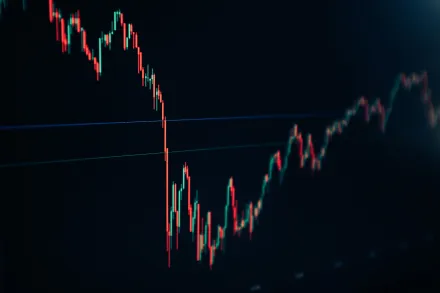
Market volatility is a dynamic signal that reflects how vigorously prices move within a given period, and it is both a description of price behavior and a driver of investor sentiment. At its core, volatility captures the speed and magnitude of changes in asset prices, whether those moves come in a single trading session or unfold over weeks and months. This characteristic distinguishes markets where prices drift gradually from those where headlines, earnings surprises, or macro surprises trigger rapid reassessments. When volatility rises, traders feel pressure from larger swings and risk management becomes more active; when it falls, the environment can feel steadier, but it can also lull participants into complacency before a renewed bout of turbulence arrives. Understanding volatility is therefore essential for anyone who places money at risk because it shapes expectations, informs trading strategies, and influences decisions about leverage, position sizing, and time horizons.
Defining volatility
Volatility is a statistical concept that describes how widely returns or prices are dispersed around an average. In plain terms, it measures how much prices tend to wander away from a central trend or mean. This dispersion can be quantified in several ways, with historical volatility focusing on past price movements, and implied volatility reflecting the market’s expectations about future moves embedded in option prices. The idea behind volatility is not to predict a single direction but to quantify the potential magnitude of future moves, which helps investors gauge uncertainty and set guardrails for risk-taking. By framing volatility as a property of distribution rather than a directional forecast, market participants can separate the question of where prices will go from how much they might move.
Measuring volatility
Measurements of volatility rely on mathematics that translate price data into interpretable signals. The standard deviation of returns is a common starting point, offering a numerical sense of how far daily, weekly, or monthly returns typically deviate from their average. Historical volatility uses past price data to compute this dispersion, providing a retrospective fingerprint of how volatile a market has been. Realized volatility extends this idea by examining actual price changes over specific horizons, while probabilistic models may describe expected future dispersion. Together, these tools paint a picture of how stable or unstable an asset or market is likely to be in the near term and how much movement can be anticipated in different scenarios.
Implied versus realized volatility
Implied volatility and realized volatility describe two different aspects of uncertainty. Realized volatility arises from observing what actually occurred in the market, feeding back into the historical record as a measure of past risk. Implied volatility, on the other hand, is derived from market prices of options and reflects what traders expect the level of future volatility to be. The most famous practical proxy for future volatility is the VIX index, which aggregates options on a broad market benchmark to infer the pace and breadth of expected moves over the coming months. Implied volatility often moves ahead of realized volatility, acting as a barometer of fear or complacency that surfaces in option markets before price action confirms it.
Why volatility matters to investors
Volatility matters because it roils portfolios, reshuffles risk, and changes the costs of capital for participants in the market. For a given level of return, higher volatility typically implies greater risk and, therefore, the need for more cautious position sizing or protective hedges. For traders, volatility provides both opportunity and danger: larger swings can yield bigger gains for those who navigate them skillfully, yet the same swings can quickly erase capital. Long-term investors also care about volatility because it interacts with compounding, tax considerations, and the probability of drawdowns that test a plan's resilience. In short, volatility is not an optional curiosity; it is a central factor in every financial decision that involves risk and reward.
Volatility regimes and market cycles
Markets do not stay equally volatile forever, and the tempo of price changes often follows regimes or phases. A calm regime is characterized by orderly trading, narrow price bands, and lower sensitivity to headlines, while a turbulent regime shows wide price swings, sharp reversals, and heightened sensitivity to macro news. These shifts may be triggered by changes in macro policy, geopolitical events, or liquidity dynamics within financial systems. The study of volatility regimes helps investors calibrate expectations: in a calm phase, default assumptions about stability may be reasonable, whereas in a turbulent phase, risk controls and hedging might need to be intensified. Recognizing that regimes change can prevent overconfidence during quiet periods and under-preparedness during storms.
Managing volatility in portfolios
Effective volatility management blends defensive structure with tactical flexibility. A diversified portfolio across asset classes and geographies is a fundamental approach, because different markets do not move in lockstep. Investors also consider hedging strategies that can dampen losses when volatility spikes, such as options-based protections or volatility-sensitive instruments, while maintaining exposure to long-term growth opportunities. Time horizon and liquidity are essential ingredients: longer horizons can smooth short-term fluctuations, while sufficient liquidity prevents distress in stressed markets. A disciplined approach to rebalancing, avoiding emotional reactions to headlines, and clearly defined risk budgets help convert volatility from a source of anxiety into a measurable, manageable component of portfolio construction.
Volatility across asset classes
Different asset classes exhibit characteristic volatility patterns that reflect their underlying fundamentals and market structure. Equities often display higher short-term volatility tied to earnings, guidance, and macro sentiment, while bonds may show lower price swings but can experience significant volatility during shifts in interest rates or credit conditions. Commodities react strongly to supply shocks and geopolitical events, currencies respond to policy differentials and risk appetite, and real assets carry volatility linked to demand, inflation expectations, and macro growth. Understanding these patterns helps investors design cross-asset strategies that balance potential rewards with the exposure to price swings in each market. The cross-asset perspective also reveals how volatility can travel from one market to another via risk sentiment, funding conditions, or correlated liquidity cycles, sometimes amplifying stress in a transmission chain that tests even well-constructed portfolios.
Historical episodes and lessons
Histories of market volatility are punctuated by episodes that test the resilience of models and the discipline of investors. The late 2000s crisis underscored how quickly correlations can rise and liquidity can dry up, turning seemingly diverse assets into correlated risks. The Covid period brought a unique combination of economic disruption and policy response, triggering a rapid swing in inflation expectations, monetary policy path expectations, and risk appetite. More recently, episodes tied to geopolitical shocks or sudden shifts in policy have reminded participants that volatility is not simply a statistical property but a narrative about fear, uncertainty, and the pace at which information travels through financial systems. From these episodes, investors learn the importance of adaptable risk frameworks, the limits of models that assume normality, and the value of liquidity as a strategic asset during stress events.
Behavioral and market structure drivers
Volatility is as much about human psychology as it is about numbers. Fear can accelerate selling during drawdowns, while greed can fuel overextension during rallies, creating feedback loops that intensify price movements. Market microstructure, including the behavior of market makers, high-frequency traders, and liquidity providers, shapes how quickly and deeply volatility expresses itself at different times of day and in different assets. News flow, sentiment shifts, and surprises in earnings or macro data all act as accelerants, re-pricing risk in ways that feed into future volatility. A nuanced view of volatility therefore requires attention to both the behavioral tendencies of market participants and the structural features of the markets that either amplify or dampen those tendencies.
Practical steps for individual investors
For individual investors, translating volatility into practical decisions begins with a clear sense of risk tolerance and time horizon. Building a plan that accounts for potential drawdowns, setting rules for rebalancing, and avoiding overreliance on short-term signals are essential habits. Emphasizing low-cost diversification, aligning portfolio risk with personal objectives, and using disciplined methods for addressing volatility—such as automatic rebalancing or phased exposure adjustments—can reduce the influence of emotional reactions. It is also wise to maintain adequate liquidity for emergencies and to remember that volatility is a feature of markets, not a bug to be eradicated; the goal is to navigate it with a steady plan rather than chase every fleeting move.
Global influences on volatility
Volatility does not arise in a vacuum; it is shaped by global forces that include macroeconomic trends, policy shifts, and geopolitical developments. Central bank expectations about interest rates and inflation sentiment can cause rapid repricing across asset classes. Fiscal policy, trade tensions, and geopolitical events can introduce surprises that ripple through markets, altering risk appetite and liquidity conditions. The interconnected nature of modern finance means that events in one region can quickly influence volatility elsewhere, creating a tapestry of drivers that market participants must monitor to understand the evolving risk landscape. A holistic view that considers both domestic conditions and global linkages provides a more robust framework for interpreting volatility signals and preparing for potential shifts in market mood.
Looking ahead, market volatility remains an inherent feature of finance, reflecting the perpetual tension between risk and reward, information flow and uncertainty, and the human impulse to extrapolate from available data. By cultivating a disciplined approach to measurement, interpretation, and response, investors can transform volatility from a source of fear into a structured element of risk management. The key lies in balancing humility about what cannot be predicted with clarity about what can be controlled: a well-articulated plan, appropriate diversification, and a willingness to adapt as conditions evolve. In this sense, volatility becomes not a foe to be defeated but a continental weather system to be observed, understood, and navigated with prudence and patience.