Introduction to paper trading
Paper trading refers to the practice of simulating buy and sell trades using virtual money rather than real capital. It is a controlled environment where a trader can test ideas, refine strategies, and learn the mechanics of the market without risking actual funds. The key feature of paper trading is the absence of financial consequence for mistakes, which creates a space for experimentation that would be unacceptable in live trading. Yet the experience is not merely a game; it is a serious educational tool designed to build discipline, improve decision making, and cultivate a routine grounded in analysis rather than impulse. A well constructed paper trading setup aims to mirror the conditions of real markets as closely as possible, including the availability of price quotes, the existence of bid and ask spreads, and the presence of fees or commissions that can influence profitability. As learners progress, paper trading can provide a bridge to live trading by offering a rehearsal space where the trader can translate knowledge into action, observe how their plans perform under varying market scenarios, and gradually escalate commitment with increased confidence. The appeal of paper trading lies in its accessibility and its potential to reduce the anxiety that accompanies real money trading, especially when a trader is still acquiring technical skills or testing a new approach. By simulating the emotional and cognitive demands of trading without the immediate pressure of real losses, paper trading can help individuals build a durable framework for evaluating risk, timing decisions, and managing capital over time.
How paper trading works
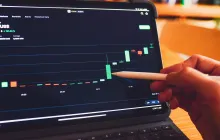
In a typical paper trading setup, a trader creates a fictional portfolio using virtual funds and enters orders that are processed as if they were real, often using the same trading platform that would be used for live trading. The process involves tracking price movements in real time or with a slight delay to verify how a chosen strategy would perform under actual market conditions. Traders execute orders such as market orders, limit orders, and stop orders, and the platform records fills and portfolio changes accordingly. Important aspects of the simulation include the replication of transaction costs such as commissions, exchange fees, and bid-ask spreads, although some simulations may simplify or omit certain frictions to emphasize strategy mechanics rather than bookkeeping. The fidelity of a paper trading environment depends on how precisely it reproduces market liquidity, slippage, and timing, because these factors can dramatically influence outcomes when real money is at stake. A thoughtful simulator might also incorporate features like order routing logic, partial fills, and the possibility of price slippage on large orders, thereby increasing realism. For learners, the most valuable experiences come from the continuities between the simulated and real markets, where decisions and their consequences can be analyzed with clarity, and where repetition helps to internalize rules like risk management thresholds and tactical exit criteria.
Historical context and evolution
The practice of paper trading has roots that extend far back into the history of markets, where aspiring investors relied on mental models and handwritten trade ideas rather than any automated system. In the modern era, the advent of online brokerages and sophisticated trading platforms popularized virtual accounts that could mimic real trading with virtual money. Early adopters used these tools to explore trends, test strategies, and develop a sense of market rhythm before risking capital. Over time, the concept matured into a structured educational resource, evolving to include more accurate data feeds, realistic order execution models, and comprehensive performance analytics. The development of paper trading coincided with a growing emphasis on evidence-based approach in finance, where traders are encouraged to document outcomes, review decisions, and iterate on methods rather than relying on luck or anecdote. As technology advanced, the capacity to simulate complex instruments such as options, futures, and forex with realistic pricing and risk metrics expanded the scope of paper trading, enabling deeper exploration of strategy design, risk controls, and the psychological components of trading behavior. The historical arc of paper trading demonstrates a trajectory from exploratory practice to a mature discipline that can support serious study, experiential learning, and measured progression toward live trading under well prepared conditions.
Key concepts in paper trading
At the heart of paper trading lies the idea that learning to trade is a blend of skill, discipline, and informed judgment, all of which can be cultivated through deliberate practice. A core concept is the alignment between a trader’s plan and their actions under pressure, which requires clear entry criteria, defined exit rules, and rules for risk management that govern position size and stop losses. The simulated framework typically tracks unrealized and realized gains, keeps a running total of the virtual account balance, and records the performance of each trade for later study. The bid-ask spread remains a fundamental reality in most markets, and even in a simulated environment its presence matters because it can affect the price at which a trader can enter or exit a position. Risk management in paper trading mirrors live practice, emphasizing diversification, adherence to predetermined risk per trade, and a thoughtful approach to leverage and margin where applicable. Another important concept is the difference between backtesting and forward testing: while backtesting uses historical data to gauge a strategy’s potential, paper trading in real time tests the strategy under current conditions, including the trader’s ability to respond to changing news, volatility, and liquidity. The educational value of these concepts becomes clear as a trader builds a personal playbook that couples analysis with execution and monitors results to identify what works and what does not.
Setting up a paper trading account
Setting up a paper trading account involves selecting a platform that offers a realistic simulation environment and then configuring the account to reflect one’s educational goals. A careful setup begins with defining the scope of the practice, choosing the markets to simulate, and deciding whether the emphasis will be on stocks, options, futures, or foreign exchange. It also involves selecting the level of data fidelity, such as using real time quotes or delayed feeds, and deciding how faithfully the platform will replicate fees, taxes, and other costs that influence outcomes. The next step is to construct a starting capital that feels meaningful yet safe, and to establish a set of trading rules that will govern the simulation. These rules typically cover how capital is allocated, how risk is controlled on each position, how much time a plan allows for a trade to develop, and how performance will be measured and reviewed. A robust setup includes a method for recording trades with detailed notes that explain the rationale behind each decision, the approach to risk, and the lessons learned after the trade is closed. While the process is straightforward in principle, the quality of the learning depends on how rigorously the participant follows the plan, how honestly they document outcomes, and how consistently they apply feedback to future decisions. A thoughtful setup also anticipates potential gaps between simulated and live trading, encouraging practitioners to address these discrepancies as they graduate toward real fund usage.
Strategies and risk management in a simulated environment
In a simulated arena, a wide range of strategies can be explored, from trend following and mean reversion to breakout approaches and volatility-based methods. The absence of real capital pressure in the early stages allows a trader to concentrate on the mechanics of execution, the timing of entries and exits, and the coherence of a plan across different market regimes. It remains essential to anchor each strategy in disciplined risk controls, including limiting exposure per trade, capping total exposure, and employing stop loss or conditional exit rules that define the point at which a trade should be closed. Practical risk management in paper trading also involves recognizing when a strategy becomes overfit to a particular timeframe or market and resisting the temptation to overtrade merely to chase performance. The simulated environment gives the opportunity to stress test ideas by subjecting them to sudden shocks, varied liquidity conditions, and regime shifts, which helps to surface scenarios that might not have appeared in casual observation. The best practices blend clear rules with ongoing evaluation, where performance metrics, drawdown patterns, and consistency are examined over extended periods to determine whether the approach has enduring merit or needs adjustment. In this way paper trading can function as a laboratory for refining risk appetite, trade sizing, and the discipline needed to preserve capital when markets move against expectations.
Psychology and trader behavior in simulation
The psychological dimension of trading is often the most challenging aspect to simulate accurately, because real money adds emotion, urgency, and personal risk tolerance to every decision. In paper trading, a trader might experience a tilt when a trade moves in an unfavorable direction, or a sense of overconfidence after a string of successful ideas, which can lead to deviations from the plan once live capital is involved. The simulated setting helps minimize the fear of losing real money, but it cannot fully erase the thrill of potential gains or the discomfort of losses that are tangible to the trader in real life. A mature practitioner treats the simulation as a rigorous exercise in decision making, where biases such as overreaction to news, recency effects, or random win streaks are recognized and corrected through structured reviews. Logging rationales for each decision, maintaining a calm and objective posture during drawdowns, and adhering to predefined rules are crucial habits that the simulation encourages. The deeper benefit is cultivating a consistent process that remains applicable when real funds are at stake, ensuring that psychological factors become a support rather than an obstacle to long term growth. In this sense paper trading serves not only as a tool for skill development but also as a training ground for the emotional and cognitive resilience required to navigate complex markets.
Choosing instruments and markets for paper trading
When selecting instruments for a simulated portfolio, a learner weighs the characteristics of each market, such as liquidity, spread size, volatility, and the complexity of the instrument’s mechanics. Stocks may offer straightforward exposure and familiar pricing, while options introduce an additional layer of complexity with considerations like time decay, implied volatility, and the interaction of multiple Greeks that affect pricing and risk. Futures markets can illuminate the effects of leverage and margin requirements, but they demand careful attention to contract specifications and rollover dynamics. Foreign exchange pairs bring a different set of drivers, including macroeconomic data, central bank actions, and cross currency correlations, which challenge a trader to interpret global factors alongside micro level price action. In a well designed paper trading plan, a learner may gradually broaden their focus from one asset class to several, ensuring that each new instrument is studied with the same level of diligence and that performance across instruments informs a broader understanding of market behavior. The choice of markets also influences the type of data and analytics used; for example, certain markets may require a closer look at order flow and liquidity depth, while others emphasize trend lines and chart patterns. The goal is to create a diversified, realistic practice environment that remains aligned with the trader’s goals and capabilities while avoiding overcomplication that can obscure learning outcomes.
Limitations and common pitfalls
Despite its many advantages, paper trading has intrinsic limitations that must be understood to avoid misinterpreting results. One primary concern is the mismatch between simulated fills and real world fills, which means that a strategy may appear profitable in a simulator yet perform poorly when real liquidity and slippage are present. Another limitation is the absence of real capital at risk, which can distort risk assessment and lead to overconfidence or risk taking that would not be acceptable with genuine funds. The absence of taxes, borrowing costs, and the psychological pressure of actual losses can create an idealized environment that does not fully translate to real trading conditions. Data quality is another concern; a simulator relying on delayed quotes or simplified price feeds can misrepresent the speed and precision of execution, causing a trader to misjudge the viability of timely actions. In addition, the learning effect itself may bias results: as a trader adapts to a platform or a strategy during the simulation, they may become accustomed to its quirks, which can create a detached sense of mastery that does not carry over into real life. Finally, there is the risk of overfitting a strategy to a specific set of simulated parameters, such as a particular market regime or dataset, which reduces its robustness when confronted with new, unseen conditions. Recognizing these pitfalls helps a learner maintain healthy skepticism about results and approach paper trading as a step in a broader, more comprehensive education rather than a flawless predictor of future performance.
Practical steps to start today
To begin a serious and productive paper trading journey, a learner should first articulate clear learning objectives and quantify them in terms of skills to acquire, such as mastering a particular strategy, improving risk control, or learning to interpret market microstructure. Next comes the selection of a platform with features that align with those goals, paying attention to how closely the simulated environment tracks real world execution and what costs are modeled. After setting up a balanced starting capital, it is essential to define a set of rules that govern the operation of the simulated account, including the maximum percentage of capital allocated to any single trade, the allowable time in a trade, and the conditions under which a trade should be closed or scaled. The practice should be structured and deliberate rather than casual; regular review sessions where each trade is examined for its rationale, execution quality, and adherence to the plan are crucial for progress. Documentation plays a central role, with a journal that records not only outcomes but also the thought process behind each decision, the emotions experienced, and the lessons drawn from successes and failures. A disciplined approach also requires simulating a realistic routine, such as setting aside a fixed amount of time for market analysis, planning, execution, and review, mirroring the cadence of a real trading day. As proficiency grows, a practitioner can gradually scale the difficulty by incorporating more complex instruments, testing multi leg strategies, or introducing dynamic risk controls that respond to evolving market conditions, always with the aim of reinforcing transferable competencies that will have value once live trading begins. The journey is not instantaneous; it unfolds through consistent practice, careful analysis, and a willingness to adjust methods in the face of evidence collected during the simulated experience.
Future of paper trading and how it integrates with live trading
The future of paper trading is likely to be characterized by increasing realism, more sophisticated analytics, and tighter integration with live trading environments. Advances in data feeds, order execution models, and the ability to simulate complex instruments with high fidelity will help reduce the gap between simulated outcomes and what can be achieved with real capital. Platforms may offer more granular representations of slippage, latency, and market impact, enabling traders to conduct more rigorous stress tests and scenario analyses. The integration with live trading could take the form of seamless transitions from paper to real funds, with progressive onboarding that ensures a trader retains the discipline, strategies, and risk controls honed in the simulated setting. This evolution can also bring enhanced educational resources, such as guided simulations that adapt to a learner’s progress, feedback that highlights cognitive biases in real time, and comparative dashboards that benchmark performance against peer groups and established benchmarks. For individuals who view trading as a long term learning pursuit, the ongoing refinement of paper trading tools will support continuous improvement, allowing practitioners to experiment with new ideas in a safe space while maintaining a robust framework for risk management and accountability. In this sense paper trading is not a temporary stepping stone but a dynamic component of a broader educational and professional development pathway that can accompany traders across different markets and career stages.