When you deposit money into a bank, you initiate a partnership that blends personal finance with the machinery of the broader financial system. The moment your funds cross the threshold of the branch counter, the teller or the digital system records the transaction and increases the balance of your account. But behind that simple update lies a complex choreography that involves regulators, central banks, payment networks, and the bank’s own balance sheet. You may imagine that your money just sits there awaiting your next withdrawal, yet in real...
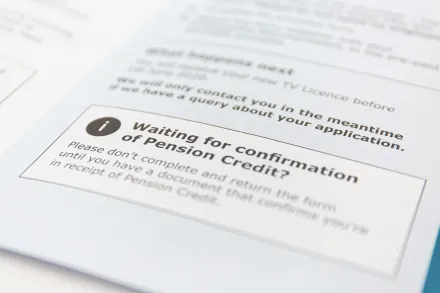

Product liability insurance is a cornerstone of risk management for companies that design, manufacture, distribute, or sell goods. It is designed to absorb some of the costs that arise when a product causes harm to people or property. The legal and financial exposure from product-related claims can be substantial, and even careful businesses can face expensive lawsuits, recalls, and regulatory investigations. By transferring part of that risk to an insurer, a company gains a cushion that can preserve cash flow, protect brand value, and support ...

The term bounced check describes a payment instrument that cannot be processed by a bank because the funds in the payer's account are insufficient or unavailable at the moment the bank attempts to honor the check. When a person writes a check to pay for goods or services and the recipient submits it for payment, the bank checks whether the funds are available in the account. If the funds are not there, the bank returns the check unpaid, sometimes labeled as NSF for non-sufficient funds, and the payment fails. This event is not just a minor bank...

An insurance policy is more than a catalog of benefits; it is a formal contract that determines what is protected, under what conditions protection applies, and how complaints or losses are resolved. When you begin reading a policy, you are tracing a chain of promises that the insurer makes to you, the insured, and you are learning how those promises translate into real-world protection for your family, your home, your car, or your business. The everyday value of a policy emerges only when you understand the structure, the defined terms, and th...

Building lasting saving habits is less about sheer willpower and more about shaping a daily environment that nudges you toward prudent choices, even when temptations appear. The path to consistent saving often begins with understanding why money discipline matters, not just how to cut expenses. People who stay the course tend to build routines that align with their values, anticipate life changes, and cultivate patience for long term gains. When you view savings as a tool for security, opportunity, and freedom rather than as a temporary restrai...
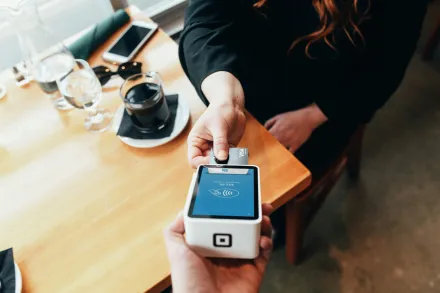
In the digital age, contactless payments have emerged as a convenient, fast, and secure way to complete transactions without swiping a card or inserting a chip. At its core, contactless payment is a way to exchange payment data using short range wireless technology, usually near field communication, so that a merchant's reader can recognize a payment account when a device is brought close to it. The idea is simple in principle, but the underlying technologies, standards, and security practices are layered and sophisticated, designed to protect ...

Financial therapy is a discipline at the intersection of psychology, financial planning, and behavioral science. It recognizes that money problems are rarely just about numbers; they are lived experiences shaped by emotions, beliefs, habits, and social contexts. When people struggle with debt, their patterns of thinking and feeling about money—patterns that may have formed long before the first loan was taken—often contribute to ongoing cycles of overspending, avoidance, or insufficient repayment. Financial therapy helps individuals and couples...

Retirement planning hinges on how your money is taxed now and how it will be taxed later, a distinction that lies at the heart of Roth and traditional retirement accounts. In broad terms, traditional accounts let you defer taxes until you withdraw funds in retirement, when many people expect to be in a lower tax bracket. Roth accounts, by contrast, require you to pay taxes on your contributions upfront, while withdrawals in retirement are generally tax free. The choice between these two models is not a single moment decision but a long-term str...

Blockchain technology presents a fundamental shift in how banks perceive trust, data, and sequence of actions across a network. It introduces a shared ledger that is verifiable by multiple parties without relying on a single centralized authority, enabling a common source of truth that can be accessed with appropriate permissions. This concept challenges traditional silos where information is replicated across databases owned by different institutions and reconciled through a cascade of intermediaries. In practical terms, the promise is not mer...
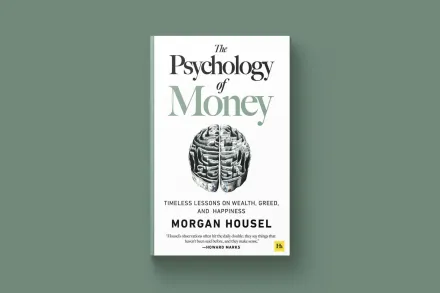
Overspending is not simply a failure of willpower or a flaw in character. It is often the outward sign of a complex internal landscape where the mind continually negotiates between immediate rewards and long term welfare. The human brain is wired to seek pleasure and avoid pain, and purchases can act as quick catalysts for relief, relief that is felt as a surge of dopamine when a desired item or experience is acquired. This neurochemical response can create a feedback loop where the act of spending itself becomes a source of reassurance, even w...