In recent years the rapid advance of artificial intelligence, distributed ledger technologies, and sophisticated data analytics has begun to reshape the way money moves, risk is priced, and decisions are made in financial markets. Autonomous finance describes a shift from manual control to systems capable of sensing, deciding, and acting with minimal human intervention, governed by programmable rules and evolving models. The promise is a more efficient, transparent, and adaptive financial ecosystem that can respond to changing conditions with s...
Financial Technologies


In recent years a familiar promise has dominated online trading platforms: zero commissions on many trades, empowering everyday investors to buy and sell securities without paying a per transaction fee. This model has reshaped the street-level financial landscape, turning trading into an activity that can be engaged with at a lower upfront cost. Yet a closer look reveals a sophisticated ecosystem where the absence of explicit commissions does not mean the absence of costs. The platforms that offer zero commission employ a carefully balanced por...

Algorithmic investing refers to the use of rules encoded as computer programs to execute trading decisions with minimal human intervention. For retail users, this means turning a defined strategy into a sequence of instructions that a software system can follow to buy, hold, or sell assets. The core appeal lies in speed, discipline, and the potential to remove emotional bias from decisions that are prone to fear and greed. When properly designed, an algorithm can systematically apply a tested approach across many securities, timeframes, and mar...

Low-code and no-code platforms have emerged as a defining force in modern software development, and their impact on financial technology is particularly pronounced. No-code tools offer a visuals driven approach that enables business teams to assemble functional applications by arranging prebuilt components, while low-code platforms provide a programmable layer that accelerates development through reusable blocks, model driven design, and automation. In fintech, where speed to market must be balanced with rigorous controls, these approaches can ...
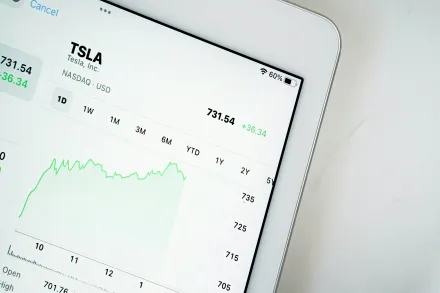
Data monetization in financial platforms refers to the strategic transformation of information assets into revenue generation, value creation, or competitive differentiation. It encompasses the systematic collection, processing, and packaging of data from transactional systems, customer interactions, market data feeds, and risk indicators, then offering those insights under carefully designed licensing, access models, or value-added services. In modern finance, data is not merely a byproduct of activities; it is a strategic resource that can in...

Regulatory sandboxes are carefully calibrated environments that allow financial innovations to be tested under the watchful eye of regulators while protecting consumers and maintaining financial stability. They function as a bridge between the fast paced world of technology driven finance and the traditional requirement to operate within established rules. In practice a sandbox grants a time bound flexibility, offering temporary permissions, tailored oversight, and a controlled testing ground where firms can explore new products, services, or b...

In the evolving landscape of finance, the convergence of distributed ledger technology and traditional banking systems is not a speculative promise but a tangible pathway toward more efficient, transparent, and inclusive markets. Interoperability between blockchains and banks refers to the ability of different distributed ledgers and centralized financial networks to exchange information, settle transactions, and align on common standards in real time. This synergy aims to unlock new business models, reduce friction in cross border payments, en...

Bitcoin and Ethereum stand as the two most influential pillars of the public blockchain ecosystem, yet they were designed with distinct incentives, architectures, and goals in mind. The technological divergence between them is not a matter of superficial features but a reflection of deep choices about data models, consensus security, execution environments, and the way programs and value interact on chain. A close look at these differences reveals why Bitcoin is often described as a digital gold store and why Ethereum is frequently portrayed as...

In the rapidly evolving world of digital commerce, behavioral analytics has emerged as a powerful lens for understanding how people interact with payment channels. Fraudsters adapt quickly to traditional rules that rely on static thresholds, device fingerprints, or known blacklists. Behavioral analytics seeks to capture the dynamic patterns that accompany legitimate payments and distinguish them from anomalies that indicate risk. By focusing on how a customer acts, rather than only what they claim, institutions can improve detection precision, ...

The fusion of natural language processing with financial software has transformed how institutions, advisors, and individual users interact with data, make decisions, and manage risk. In modern finance apps, language is not merely a medium for human communication; it becomes a rich signal embedded in news articles, earnings calls, regulatory filings, chat interactions, and social media. The challenge and opportunity lie in converting that signal into structured, actionable intelligence that can be consumed by automated systems and human decisio...