In the financial technology ecosystem, the arrival of powerful quantum computers promises a transformation that extends beyond speed to the very foundations of how data is protected. The core concern is not merely faster calculations but the potential to break widely used public key cryptosystems that have secured digital identities, transactions, and sensitive records for decades. When a sufficiently capable quantum computer emerges, algorithms such as those based on integer factorization and discrete logarithms could render current key exchan...
Financial Technologies
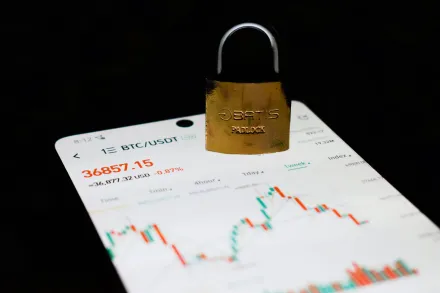

Artificial intelligence has moved from a theoretical concept to a practical engine that shapes how organizations summarize financial dynamics, communicate performance, and make decisions. AI-generated financial reports are not merely fancy dashboards; they combine data pipelines, linguistic generation, and governance controls to produce documents that read with clarity, precision, and accountability. In this exploration, we will unfold what these reports look like, how they are constructed, the benefits they deliver, and the responsibilities th...

Open Banking arose as a deliberate policy move designed to unlock the wealth of data held by banks and to channel it through secure, permissioned interfaces that would empower third party developers to build new financial experiences. The underlying idea is straightforward yet transformative: when customers authorize access, financial institutions grant standardized, auditable entry points to account data and payment initiation capabilities. The intention is not merely to expose data for its own sake but to catalyze a healthier, more competitiv...

Supply chain finance technology represents a convergence of financial services, data science, and digital platforms designed to optimize how money moves through the networks that connect suppliers, manufacturers, distributors, and retailers. At its core it seeks to improve liquidity for suppliers while preserving or even enhancing working capital discipline for buyers. The technology layer that underpins these capabilities includes cloud based platforms, integration through APIs, secure data exchange, and intelligent automation that together cr...
Smart contracts operate as autonomous programs deployed on blockchain networks, executing preprogrammed instructions with little to no human intervention once deployed. This architectural choice yields tremendous benefits in terms of transparency, trustless execution, and programmability, yet it also concentrates risk in a relatively small, unforgiving surface area. When a contract holds value, a single flaw can morph into a systemic failure that drains funds, corrupts data integrity, or triggers cascading effects across interconnected protocol...

The emergence of real estate tokenization marks a turning point in how property assets are accessed, owned, and traded. At its core, tokenization translates the ownership of tangible real estate into digital representations on a blockchain, creating a bridge between traditional asset classes and modern financial technology. This transformation is not merely about digitizing records; it is about reimagining the liquidity, accessibility, and governance of real estate assets. For investors, tokenization promises the possibility of fractional owner...

In recent years, the rapid expansion of digital markets has intensified the debate over how quickly securities and related assets can be exchanged for value and risk transferred to the appropriate settlement counterparties. The term T+0 refers to settlement of trades on the same calendar day the trade occurs, effectively delivering securities and funds instantly or within hours rather than the traditional T+1 or T+2 timeframes. While the historical norm in many jurisdictions has been a delay between trade and settlement to allow for trade match...

In the modern dialogue about climate action, carbon credits have emerged as a core instrument for directing financial resources toward projects that reduce or remove greenhouse gases. The concept of tokenization adds a digital layer that changes how these credits are tracked, traded, and verified. Tokenized carbon credits refer to a digital representation of a real world emission reduction or removal that exists on a distributed or centralized ledger, enabling easier transfer, fractional ownership, and transparent provenance. This introduction ...

In the rapidly evolving arena of financial technology, the principle of zero trust has moved from a theoretical ideal to a practical mandate that underpins daily operations, product design, and customer trust. At its core zero trust rejects the assumption that any actor or device is trustworthy by default, regardless of location within a network perimeter. This stance aligns naturally with the risk profile of FinTech, where sensitive payment data, account information, and transaction workflows traverse a constellation of cloud services, partner...
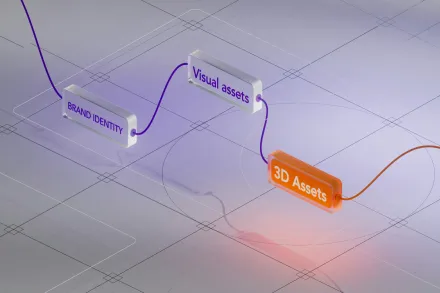
In the evolving landscape of digital payments, three dimensional secure authentication, commonly known as 3D Secure, has emerged as a cornerstone of trust between shoppers, merchants, and financial institutions. This technology framework, augmented in recent years by progressive privacy and risk management controls, is designed to mitigate unauthorized use of payment cards while preserving a smooth purchasing experience for legitimate customers. At its core, 3D Secure creates a layered defense during card not present transactions, where the ris...