Telematics in insurance pricing introduces a shift from traditional, tariff based models to data driven, behavior oriented systems that observe how a vehicle is used and how it is driven. This approach relies on the collection of real world data through devices or software that monitor speed, acceleration, braking, cornering, mileage, time of day, and sometimes even environmental conditions. By translating these measurements into a risk profile, insurers can calibrate premiums to reflect the actual lived experience of a driver rather than relyi...
Financial Technologies


In the evolving landscape of mergers and acquisitions, buyers, sellers, and their advisors increasingly turn to digital deal rooms to manage sensitive information, streamline due diligence, and coordinate across borders and time zones. Digital deal rooms, sometimes called virtual data rooms, are specialized secure platforms that host documents, communications, and workflows associated with an M&A process. They replace traditional physical data rooms and even earlier digital storage approaches with a cohesive environment designed for controlled ...
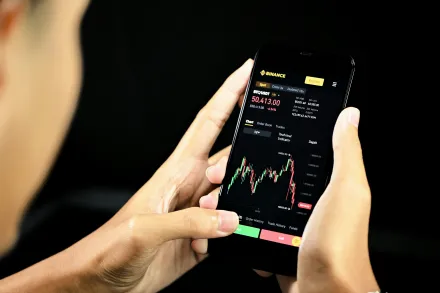
The super app model represents a shift in how financial services are conceived, built, and experienced by users. It envisions a single, integrated digital environment that weaves together a range of financial and nonfinancial services into a cohesive journey. In such a design, a user does not navigate from one siloed product to another, but rather experiences a continuous flow that blends payments, lending, insurance, wealth management, identity verification, and even lifestyle and commerce features within a unified interface. The essence of th...

In the modern financial ecosystem, instant currency conversion is not simply a feature of a payment app or a banking platform; it is a complex orchestration of real time market data, high performance computation, secure messaging, and resilient settlement rails that together transform the way value moves across borders and platforms. At its core, instant currency conversion hinges on the ability to observe rapidly changing exchange rates, select the most favorable path for a given transaction, and complete the transfer with speed and precision ...

Blockchains face an enduring paradox between decentralization and throughput. The core networks prioritize security and censorship resistance, yet the same design choices that protect the base layer often constrain the number of transactions that can be processed in a given time. Rollups emerge as a compelling approach to resolve this tension by shifting most of the computation and data handling off the base layer while preserving a trustworthy link to the underlying settlement. In this sense rollups serve as a bridge between the high assurance...

Modular banking technology stacks represent a shift from monolithic, tightly coupled systems to adaptable architectures where discrete components can be developed, deployed, and updated independently. At the heart of this transformation lies the idea that a bank’s technology needs resemble an ecosystem more than a single, all-encompassing application. The modular approach embraces decoupled governance, well defined interfaces, and a clear separation of concerns so that each module can be owned by specialized teams, operate with minimal cross de...

The journey of voice interfaces in banking begins with human computer interaction in telephony, where early automated voice menus offered a static set of choices. As technology matured, banks began to replace rigid menus with conversational capabilities, enabling customers to convey intent in more natural ways. Over time, advances in speech recognition, language understanding, and secure authentication formed the backbone of what we now recognize as voice banking. The evolution embraced enhancements in acoustic models, noise robustness, and bro...

In the digital economy, subscription billing is the skeleton structure behind many services. From streaming to software as a service, businesses rely on recurring revenue streams that need to be precise, reliable, and scalable. FinTech provides the engines that power these recurring payments, the data fabric that records every transaction, and the governance that keeps compliance and cash flow in balance. The evolution from manual invoicing to automated recurring settlements has been driven by advances in payments infrastructure, data science, ...

Stablecoins occupy a unique space in the crypto economy, serving as a bridge between traditional fiat currencies and decentralized financial protocols. Among the diverse designs that populate the stablecoin landscape, two broad families stand out for their contrasting philosophies and risk profiles: asset-backed stablecoins and algorithmic stablecoins. Asset-backed coins anchor their value to collateral, reserves, or a basket of assets, aiming to preserve parity with a reference fiat like the US dollar through conservative reserve management an...

High-frequency trading has grown from a niche capability into a defining force in modern financial markets, where speed, precision, and resilience dictate which participants can consistently capture fleeting opportunities. At its core, this field combines advances in low-latency networking, specialized hardware architectures, optimized software pipelines, and sophisticated data analysis methods to transform nanoseconds into measurable outcomes. The story of this technology is not simply about faster computers; it is about how a carefully design...