When economies slide into recession, the instinct to preserve capital often overrides the urge to chase growth. The core challenge for investors becomes clear: how to sustain purchasing power and weather the storm without surrendering long term goals. In a climate where earnings can contract, liquidity tightens, and market volatility spikes, the prudent approach blends discipline, research, and a clear understanding of one’s own risk tolerance. This article offers a narrative journey through strategies that help shield portfolios from the worst...


Investing amid economic uncertainty demands a disciplined approach that combines prudence with a readiness to adjust as fresh information arrives. In times when growth looks fragile, inflation persists, and policy moves ripple through markets, the instinct to rush toward dramatic bets can be strong yet dangerous. A balanced strategy begins with clarity about one’s own goals, time horizon, and the amount of risk one is willing to bear. It then extends to understanding the macro landscape well enough to inform choices without surrendering control...
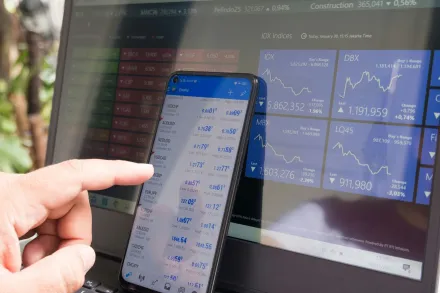
In any trading app the heartbeat of operation during volatile times is the ability to ingest and process real time data with minimal delay, because every millisecond can translate into an executed order or a missed opportunity. Modern platforms pull data from multiple venues and data suppliers, harmonize different price feeds, and present a coherent state of the market despite rapid shifts in sentiment and price. This involves a combination of direct feeds, standardized contracts, and time synchronized clocks that align quotations from exchange...

A Suspicious Activity Report, commonly abbreviated as SAR, is a formal document filed by financial institutions and certain designated entities when they detect activity that may involve money laundering, fraud, terrorist financing, or other criminal conduct. The SAR serves as a mechanism to alert regulators and law enforcement agencies that a particular account or transaction warrants closer scrutiny. Though the exact content of a SAR is kept confidential and is not publicly disclosed, the existence of the report itself signals that an institu...

Estate tax and inheritance tax are two distinct mechanisms designed to collect a portion of wealth that passes from one generation to the next, but they operate on different parties and at different moments in the transfer. An estate tax is assessed on the overall value of a deceased person’s estate as it transfers the property to beneficiaries, with the responsibility to file and pay resting on the estate itself or its executor. By contrast, an inheritance tax is levied on the recipients who receive property, and the tax is calculated based on...

In the world of finance, the idea of practicing trading without risking real capital is a compelling promise for beginners and seasoned traders alike. The core concept rests on creating an environment where ideas can be tested, rules can be refined, and psychological habits can be built without the harsh consequences that come with real money on the line. Yet even in a risk free setting there are important caveats that every student should understand. The dream of pristine simulations can blur the distinction between theoretical success and pra...

Life insurance is a contract between an individual and an insurer that provides a financial safety net for the people who depend on that person when they are no longer there to provide income or support. At its core, it is about risk management rather than quick gains. For someone just starting to think about personal finances, the idea might feel distant, but the impact of not having protection can be immediate and lasting for families, small businesses, or households carrying debt. In simple terms, life insurance pays a sum of money to chosen...

Mutual funds are collective investment schemes that bring together the money of many individual investors and invest it in a diversified portfolio of stocks, bonds, and other securities. The core idea is simple: by pooling resources, investors gain access to professional management, broad diversification, and economies of scale that would be difficult to achieve on their own. A mutual fund is managed by one or more fund managers who study markets, assess risk, and select securities in an attempt to meet the fund’s stated objective. The fund’s a...

When the idea of retirement budgeting first enters the conversation, many people assume that the best time to begin is after a few major life events, such as paying off debt or reaching a peak income year. In reality, the optimal moment is often several years before those events arrive, because the act of planning itself changes how money flows through daily life. Beginning early creates a frame of reference where small, consistent adjustments compound over time, and those adjustments tend to be less disruptive than large overhauls later on. Th...

In the modern landscape of venture capital, decision making is increasingly influenced by machine-assisted processes that can scan, synthesize, and model uncertain outcomes across a diverse array of startups. Robo-underwriting refers to the architecture, methodologies, and organizational practices that encode risk assessment, investment thesis validation, and portfolio construction into automated, data-driven workflows. This article explores how automated underwriting can complement human intuition, how models are built and validated, and how v...