Business property insurance is a foundational tool for owners who depend on physical assets to generate revenue, serve customers, and sustain daily operations. It is designed to protect the tangible elements of a business—the building itself if owned, the contents housed within, and often the personal property that supports daily activity such as machinery, furniture, inventory, and signage. In many policies, coverage extends to improvements and betterments made by tenants in leased spaces, recognizing that these investments are part of the bus...

Legal insider buying refers to the purchase of company stock by individuals who already hold a position of control or access to sensitive information within the issuer, such as executives, directors, or significant shareholders, under conditions permitted by securities laws. When insiders decide to buy, they do so within a framework that demands disclosure, timing, and often preauthorization through trading plans or specific corporate governance channels. The phenomenon sits at the intersection of finance, law, and behavioral psychology, becaus...

Dividend reinvestment stands as a disciplined, long horizon approach to growing wealth through the power of compounding. It is not about chasing quick gains or chasing the hottest stock tips, but about steadily acquiring more ownership in profitable enterprises, and letting the cash returned as dividends be used to purchase additional shares rather than spent on immediate consumption. The result over years and decades can be a steady, accelerating growth in the value of a portfolio, even in markets that experience cycles of volatility and drift...

Money market accounts and savings accounts represent two of the most common options for people who want to keep money accessible while earning interest. They are both designed to offer a safe place to store funds, typically insured by the FDIC when held at insured banks in the United States, and they both aim to provide a balance between growth and liquidity. Yet they differ in subtle and not so subtle ways that can affect how a person uses them over time, depending on goals, spending patterns, and the need for access tools such as checks or de...
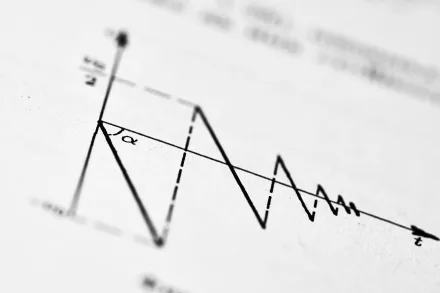
Impermanent loss is a concept that sits at the intersection of automated market making, liquidity provisioning, and the dynamics of token prices. In plain terms it refers to the potential reduction in value that a liquidity provider may experience when supplying a trading pair to a decentralized exchange that uses an algorithmic price mechanism. The key phrase here is impermanent, because the loss is not realized until the liquidity is withdrawn; if prices revert to their original relationship before withdrawal, the loss can disappear. Yet in p...

Value added tax is one of the most pervasive forms of consumption taxation in modern economies, designed to be a neutral instrument that taxes the value created at each stage of production and distribution. When the system operates as intended, it funds public services, infrastructure, and welfare programs while remaining hidden from everyday life and business unless a consumer purchases goods or services that carry the tax. Yet this quiet reliability invites schemes that exploit loopholes, gaps, and the friction between national rules and cros...

Cryptocurrency systems operate at the intersection of finance, technology, and human behavior. The phrase how crypto hacks occur captures not just a few bright technical exploits but a broad spectrum of vectors that attackers combine to steal funds, manipulate markets, or exfiltrate sensitive information. In recent years, the frequency and sophistication of hacks have grown as the industry expands, the value locked in protocols climbs, and developers introduce new features at a rapid pace. Understanding how hacks happen is not only about knowin...

Position sizing is one of the cornerstone practices of disciplined trading and prudent portfolio management. It is not simply a numeric rule or a casual aside; it is the mechanism by which risk is translated into tangible exposure to the markets. When a trader opens a new trade, the size of that trade determines how much capital is at stake and, crucially, how the normal ebbs and flows of price movement will affect the overall account equity. The process combines an understanding of risk tolerance, market volatility, stop loss placement, and th...

In a world saturated with choices, advertising, and rapidly shifting prices, making spending decisions that feel deliberate and aligned with personal values is both an art and a disciplined practice. The challenge is not merely about saving money in the short term but about cultivating a way of engaging with money that reduces the emotional charge of shopping, minimizes regret, and leaves room for the things that truly matter. This is not about austerity or denying yourself small pleasures, but about creating a framework that allows you to allo...
Trading bots have moved from the fringes of finance into the mainstream of many investment strategies, drawing interest from professional traders, hedge funds, retail enthusiasts, and institutions that run algorithmic programs. These software agents operate in markets around the clock, absorbing vast streams of price data, liquidity information, and order book dynamics in order to make decisions at speeds and with a precision that human traders cannot match. The basic premise is straightforward: convert rules, statistical insights, or learned p...