Every day presents a stream of choices that can accumulate into a substantial impact on personal finances over months and years. The scale of these decisions ranges from the mundane to the consequential, yet what matters most is not the grand gestures but the steadiness of daily actions. When you bring intention to ordinary moments such as whether to borrow, what to buy, or how to save the next paycheck, you begin to tilt the financial odds in your favor. The key lies in building a practical framework that works in real life, a framework that r...


High-yield bonds, often colloquially referred to as junk bonds, occupy a unique niche in the fixed income universe. They are debt instruments issued by companies with lower credit ratings, typically below investment grade. The basic premise is straightforward: borrowers with weaker balance sheets or more uncertain earnings prospects pay higher interest to entice investors to take on greater risk. For many investors, this risk premium translates into what looks like a compelling starting yield, potentially attractive income streams, and the poss...

When people think about owning a car, they often focus on the sticker price or the monthly loan payment. Yet the real burden of ownership stretches far beyond the purchase price. Depreciation, insurance premiums, financing charges, fuel expenses, maintenance, tires, routine inspections, taxes, registration fees, and even the costs associated with parking or tolls accumulate over time. A practical approach begins with acknowledging that a car is not a one-time expense but a dynamic ongoing obligation that changes with your usage, life stage, and...
Building a personal finance system that can run itself begins with a clear understanding of what you want your money to do for you over time. It starts with a philosophy about autonomy and responsibility, a recognition that automation is not magic but a carefully designed sequence of decisions, triggers, and safeguards. In practice this means defining the outcomes you care about, such as freedom from debt, steady accumulation of savings, predictable cash flows, and room to invest in meaningful experiences. It also means making peace with the id...

Dividend income represents a steady stream of cash or additional shares that investors receive from owning equity in corporations or funds. This income arises when a company distributes a portion of its earnings to shareholders, typically in the form of cash payments or sometimes additional shares of stock. The way these distributions are taxed depends on multiple factors, including the type of dividend, the residency and filing status of the investor, the account in which the investment sits, and the country in which the investor files taxes. ...
DeFi promises programmable finance without intermediaries, but smart contracts at the core rely on data from outside the blockchain. Oracles perform the crucial role of feeding real-time price information, event outcomes, and other external signals into on-chain applications. Without reliable oracles, a DeFi protocol that depends on an external price could suffer adverse liquidations, incorrect collateral calculations, or failed settlements. In practice, the architecture of DeFi has evolved to treat oracles not as a single source of truth, but ...

Bridge financing, in its essence, is a temporary funding arrangement designed to cover a gap between the need for capital and the availability of longer term financing or cash flow. This form of lending is typically expressly short term, ranging from a few weeks to a year, and is often used to propel a project forward while a more permanent funding solution is pursued. While the immediacy and flexibility of bridge loans can be attractive, the fundamental risk is that the capital is contingent on swift execution, precise timing, and favorable ma...

In the vast landscape of equity investing, two broad categories attract persistent attention from analysts and investors alike: cyclical stocks and non cyclical stocks. The nomenclature signals a fundamental distinction rooted in how a company’s earnings and cash flows respond to the ebbs and flows of the economy. Cyclical stocks are often tied to the rhythm of macroeconomic activity, showing pronounced sensitivity to expansions and contractions in gross domestic product, consumer confidence, and business investment. Non cyclical stocks, by con...
A DAO, or decentralized autonomous organization, is an organizational model that seeks to remove or minimize centralized authority by embedding governance processes into software rules that run on a blockchain. In this structure, decisions are made collectively by participants who hold stake in the project, and the enforcement of rules is carried out automatically by smart contracts rather than by a human executive. The result is a system in which funding, strategy, and policy are determined through on chain processes, with transparency, audita...
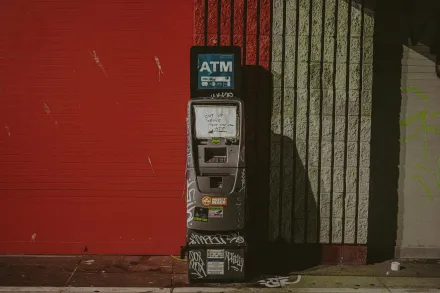
When you travel, the cost of accessing cash can be surprising if you do not understand how fees are applied. In most scenarios you encounter two broad charges. The first is a withdrawal fee charged by the local ATM operator, which is the fee the machine asks you to pay for the service itself. The second is a surcharge that your home bank or card issuer may levy for international withdrawals. A third consideration is the currency conversion decision presented at the moment of withdrawal, which can influence the effective exchange rate you receiv...