Stock screeners are powerful tools that help investors filter the vast universe of equities to identify those that fit specific criteria. They work by implementing user defined rules across a database of stocks, extracting real time or near real time data, and presenting a curated list that satisfies those rules. The core idea is to transform a broad market into a focused subset that aligns with your strategy, whether you are seeking growth, value, momentum, income, or a combination of factors. A well crafted screen can save hours of manual res...


Whale manipulation is a broad phrase that people use to describe the ways in which behavior, physiology, and ecological patterns of whales are influenced by internal biological processes, social structures, and external forces. In this article, we explore manipulation not only as a deliberate act by humans or predators, but also as a natural phenomenon that emerges from the anatomy of cetaceans, their communication systems, and the cultural transmission that characterizes many whale populations. To understand manipulation, we must define the sp...

In the world of options trading, the term strangle refers to a strategic setup that seeks to profit from significant moves in the price of an underlying asset while downplaying the direction of that move. The idea hinges on volatility rather than a specific forecast about whether the asset will rise or fall. A strangle involves purchasing or selling options with different strike prices but the same expiration, creating a payoff structure that becomes favorable when the price movement becomes large enough to overcome the costs or risks embedded ...
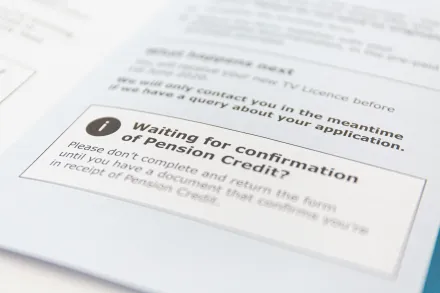
The landscape of consumer lending stands at a crossroads where technology, data, and human-centered design converge to redefine what it means to borrow money in the modern era. Across the globe, financial institutions, startups, and fintech ecosystems are reimagining the lending experience from the ground up. The core promise is not merely faster approvals or lower fees, but a set of capabilities that can unlock financial access for a broader spectrum of people while maintaining prudent risk management and sustainable profitability. In this evo...

Insurance is a product of risk assessment, and every price tag attached to a policy is a careful calculation of the likelihood and cost of future claims. When you explore ways to reduce what you pay, you are effectively asking your insurer to reframe risk in your favor through information, prudent choices, and smarter coverage. The journey to lower bills starts with understanding how pricing works across different lines of insurance and then aligning your personal situation with strategies that legally and ethically reduce the risk the insurer ...

The subject of whistleblowing in the realm of taxation sits at the intersection of civic duty, professional responsibility, and the mechanics of state capacity. Whistleblowers are individuals who disclose information about illicit or unethical conduct within organizations or government bodies, and in the context of tax enforcement they often illuminate schemes that undermine public finances, distort competition, or erode the legitimacy of the tax system itself. The landscape surrounding whistleblowing in taxation has evolved through a combinati...

When two people decide to share their lives, money becomes more than currency; it becomes a reflection of values, priorities, and the trust they place in each other. The first step in managing money as a couple without fighting is to recognize that disagreements are rarely about numbers alone. They often stem from different upbringings, different risk appetites, and varying beliefs about security and autonomy. To move forward, couples need to cultivate a space where these beliefs can be named and examined with curiosity rather than judgment. Th...

Choosing a fund manager is a decision that reaches far beyond a snapshot of past performance or a glossy brochure. It represents an ongoing partnership in which the manager assumes responsibility for allocation decisions, risk controls, and the articulation of a clear investment philosophy that matches the goals and constraints of an investor. The process of evaluation blends quantitative scrutiny with qualitative judgment, recognizing that markets evolve, teams change, and a successful long term relationship rests on trust, transparency, and d...
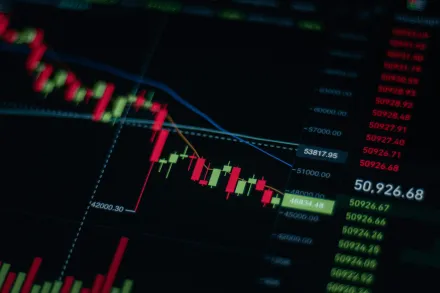
Pre-market trading is a segment of the financial day when participants can place orders and see price movements before the official market session opens. It functions as a bridge between after-hours activity and the regular trading day, allowing information to be absorbed, synthesized, and acted upon as new data becomes available. For many investors, pre-market activity provides a glimpse into how stocks might respond to earnings, macroeconomic reports, or company-specific news released overnight. Understanding the mechanics of this time window...

Passive investing and active investing represent two distinct philosophies for how to build wealth in financial markets. In its essence passive investing seeks to capture broad market returns by owning a representative slice of the market, usually through low cost index funds or exchange traded funds that mimic a benchmark. Active investing, by contrast, relies on skilled judgment, research, and timely decisions to try to outperform the benchmark. The tension between these approaches has shaped investment practices, product design, and guidance...