Banks operate in a complex ecosystem where safety, compliance, and customer service intersect in daily practice. They block certain transactions not to punish individuals but to protect the integrity of the financial system, prevent crime, and minimize risk for themselves and their clients. The reasons behind a block can be multifaceted, ranging from formal regulatory obligations to instinctive risk assessments built on historical data and evolving patterns in the payments industry. When a transaction is blocked, it is typically the result of a...
Banking

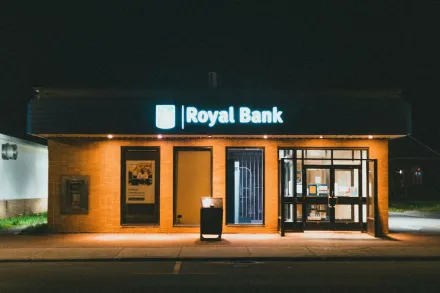
Banking loyalty is not a single tactic but a continuous discipline that intertwines trust, value, service quality, and a sense of partnership with customers. In modern markets, loyalty emerges when customers feel understood, secure, and empowered to reach their financial goals without friction. Banks cultivate this sense through a combination of thoughtful product design, consistent experiences across channels, and a culture that places the customer at the center of every decision. The result is not a short term promotion but a durable relation...
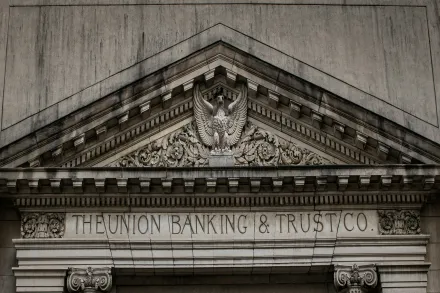
The distinction between commercial banks and investment banks has deep historical roots that trace back to the emergence of modern financial systems. Commercial banks arose as institutions that held consumer deposits, offered basic payment services, and extended loans to households and small businesses. Their core mission centered on facilitating everyday economic activity by transforming short‑term liabilities, such as customer deposits, into longer‑term assets like mortgages and business loans. This transformation process required prudent liq...

Credit reports are a hidden engine in the modern banking system, translating a borrower’s financial history into a numerical assessment that helps lenders decide whether to extend credit, how much to offer, and at what terms. Banks rely on these reports not merely as a snapshot of past behavior, but as a risk signal that integrates into sophisticated decisioning processes. While consumers may see credit reports when applying for a loan or a card, the underlying value for banks is the ability to infer future behavior from patterns in payment his...

In the rhythm of everyday money management a bank statement stands as a concrete record that links what you thought happened with what actually happened in your accounts. It is not merely a monthly document filled with numbers; it is a narrative that traces the flow of funds through your life, showing earnings, spending, fees, interest, and miscellaneous adjustments in a structured format. Reading a bank statement with patience transforms abstract balances into a detailed account of your financial activity, illuminating patterns that can guide ...
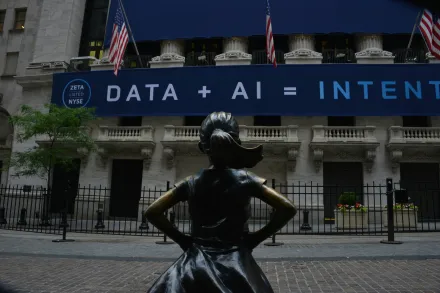
The modern financial landscape is saturated with streams of information that flow from countless points of contact, from the moment a customer touches a mobile banking app to the moment a transaction settles in a clearinghouse. Banks have embraced big data not as a fashionable buzzword but as a fundamental capability that reshapes risk assessment, customer understanding, and operational resilience. In this expansive environment, data is not merely a byproduct of activity; it is a strategic asset that, when harnessed correctly, can illuminate pa...

Check fraud is a broad term that describes a range of deceptive practices aimed at obtaining money or value through checks that are not legitimately authorized or valid. It encompasses acts that manipulate the payment system, misrepresent a writer’s intent, or misappropriate funds that belong to someone else. At its core, check fraud thrives on gaps between perception and reality: a party believes a check is legitimate when in fact it is not, and that mismatch between belief and truth yields financial loss for individuals, merchants, and instit...
The management of inheritance accounts by banks stands at the intersection of estate planning, regulatory compliance, and client service, weaving together traditions of fiduciary care with the innovations of digital banking. Inheritance accounts are not single, uniform products; they are a family of arrangements designed to preserve assets, ensure smooth transfer to beneficiaries, and maintain continuity of financial responsibility across generations. Banks approach these accounts with a framework that includes careful documentation, clear auth...

The modern banking landscape often presents its users with a document that seems ordinary at first glance yet holds a surprising amount of information, nuance, and practical value. A bank statement is a formal record issued by a financial institution that chronicles the flow of money into and out of an account over a specified period. It is more than a ledger of numbers; it is a historical snapshot that reflects daily life, financial commitments, patterns of spending, and the interplay between income and expenses. For a reader who takes the tim...

Bank accounts are foundational tools in personal finance, serving as the gateway through which most people handle daily money flows. They provide a secure place to store funds, a ledger of deposits and withdrawals, and access to a range of services from debit cards to online transfers. The variety of account types exists to address different needs, such as immediate spending, short term savings, long term wealth building, or specialized arrangements for businesses, families, or retirement planning. A thoughtful approach to selecting accounts ca...