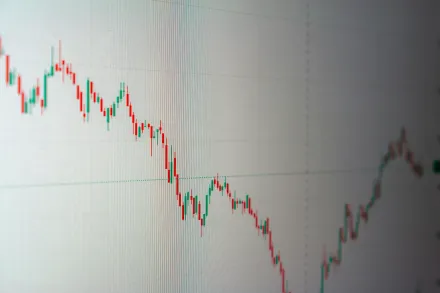
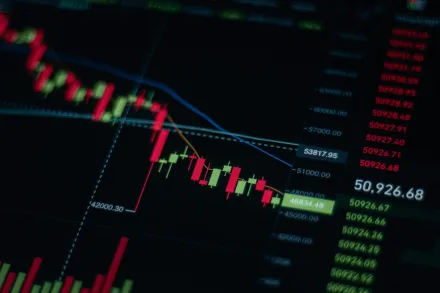
In the vast landscape of financial markets, candlestick charts have endured for centuries as one of the most accessible and expressive ways to visualize price action. Each candlestick distills a full slice of time into a compact visual package that communicates four essential numbers: the opening price, the highest price reached, the lowest price traded, and the closing price for that period. The body of the candle shows the difference between the open and close, while the thin lines above and below the body, known as wicks or shadows, reveal t...
Stock Market & Trading
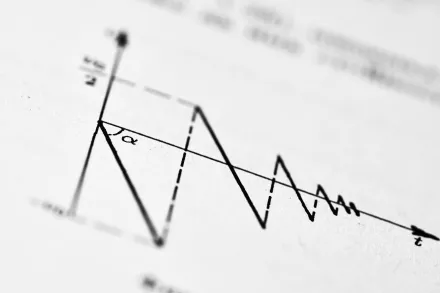
In the world of options trading, the term strangle refers to a strategic setup that seeks to profit from significant moves in the price of an underlying asset while downplaying the direction of that move. The idea hinges on volatility rather than a specific forecast about whether the asset will rise or fall. A strangle involves purchasing or selling options with different strike prices but the same expiration, creating a payoff structure that becomes favorable when the price movement becomes large enough to overcome the costs or risks embedded ...
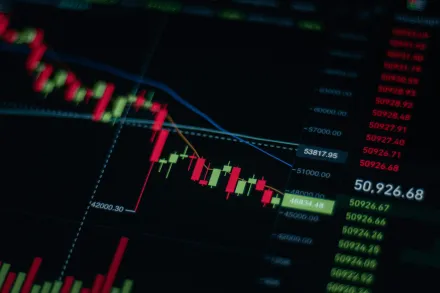
Pre-market trading is a segment of the financial day when participants can place orders and see price movements before the official market session opens. It functions as a bridge between after-hours activity and the regular trading day, allowing information to be absorbed, synthesized, and acted upon as new data becomes available. For many investors, pre-market activity provides a glimpse into how stocks might respond to earnings, macroeconomic reports, or company-specific news released overnight. Understanding the mechanics of this time window...

Diversification is often described as the only free lunch in investing, a premise that has withstood decades of market turbulence and academic scrutiny. At its core, diversification seeks to spread risk across different assets, geographies, and strategies so that the poor performance of one component does not derail the entire portfolio. In practice, diversification does not guarantee profits or eliminate all risk, but it tends to reduce the variability of returns over time and can improve the odds of achieving a smoother path toward long term ...

The Tulip Mania of the 1630s stands as one of the earliest and most enduring anecdotes about speculative fervor, and it remains a vivid reminder that prices can detach from intrinsic value when confidence becomes contagious. In a prosperous Dutch Republic, where speculative energy coursed through urban economies and traders gathered in coffeehouses to discuss prices, tulip bulbs emerged as coveted assets that could be traded with remarkable speed. Prices ascended on the basis of rumor, rarity, and the belief that new arrivals would unlock an en...
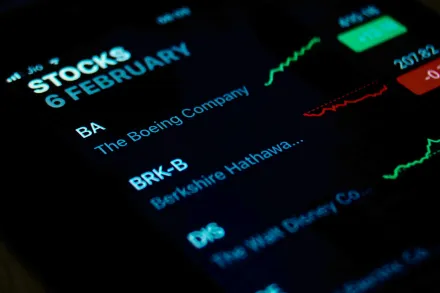
In the world of equity investing, two broad categories often anchor many portfolios: common stock and preferred stock. They share a broad label of ownership in a company, yet they behave in markedly different ways under the surface. The common stock you hear about in headlines and earnings reports represents ordinary ownership with potential for capital appreciation and a voice in governance. The preferred stock, by contrast, behaves more like a hybrid instrument that leans toward steady income with a higher claim on assets in the event of dist...
In the world of investing, the term portfolio rebalancing describes a deliberate process designed to restore a portfolio to its intended mix of asset classes after market moves have caused it to drift away from the original target allocation. The idea is not merely to chase gains or to punish losses, but to manage risk in a disciplined way. Rebalancing acknowledges that asset prices swing in unpredictable directions, yet an investor’s risk tolerance, time horizon, and financial goals remain comparatively stable. Through a measured adjustment th...

After hours trading refers to the buying and selling of securities outside the standard, widely used market session. In practical terms, it is the period when investors can place orders and execute trades after the regular market closes for the day. This arena operates on electronic networks and relies on specialized venues that connect buyers and sellers when the normal trading floor may be closed. For many traders and investors, after hours trading represents a bridge between the day’s events and the next day’s developments, a space where inf...
Copy trading represents a distinctive approach to market participation that blends social interaction with investment execution. It allows investors to mirror the trades of more experienced or specialized traders, thereby creating a mechanism where skill and decision making can be translated into proportional exposure within one’s own portfolio. In practice, individuals select a signal provider or a group of providers whose trades are automatically replicated in their accounts, often with adjustable parameters such as the amount allocated to ea...

Capital gains arise when an individual or a business sells an asset for more than its adjusted cost basis. This category of assets can include stocks, bonds, real estate, businesses, collectibles, and certain rights or licenses. The core idea behind taxing capital gains is that a party profits from ownership that increases in value over time, and the government seeks a share of that appreciation when the asset changes hands. The tax is not charged merely for owning an asset; it is triggered by a transaction that crystallizes a gain. This distin...