A trading plan is more than a set of rules or a checklist. It is a coherent framework that connects your personal ambitions with the practical realities of market behavior. A robust plan translates your aspirations into addresses on a calendar, your risk appetite into concrete position sizing, and your analysis into repeatable actions that can be audited over time. The value of such a plan lies not in perfection, but in consistency, discipline, and a disciplined process of learning. The plan should be treated as a living document that evolves w...
Stock Market & Trading
In the arena of equity investing, two broad philosophies have persistently shaped portfolios, strategies, and academic debates: growth stocks and value stocks. Each approach rests on a distinct view of what drives a stock’s intrinsic value and how market prices reflect or anticipate those drivers. Growth stocks are typically associated with rapid earnings expansion, reinvestment into the business, and the promise of future dominance in a given sector. Value stocks, by contrast, are often characterized by prices that appear to understate fundame...

In the broad world of investing, exchange traded funds and mutual funds stand as two distinct yet often overlapped vehicles that help investors access diversified portfolios. Both vehicles share the fundamental goal of pooling money to buy baskets of securities, and both can be built around index strategies or active management, but they diverge in structure, trading mechanics, cost architectures, tax implications, and the ways they interact with the investor’s time horizon and liquidity needs. Understanding how an ETF and a mutual fund operate...

The language of options trading is rich and precise, yet it often feels abstract to newcomers because it relies on a concept that sounds simple but has far reaching consequences in pricing and strategy: moneyness. Moneyness describes the relationship between the strike price of an option and the current price of the underlying asset. This relationship determines how much of the option’s value is already built into an immediate exercise payoff, known as intrinsic value, and how much is left to be captured through time and volatility, known as ti...
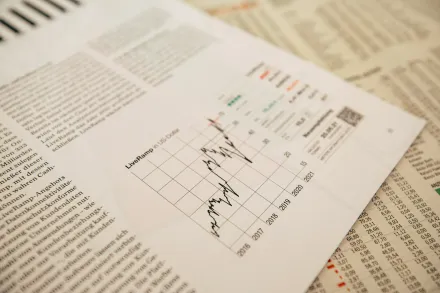
In the world of investing, the mechanics of taxation are as important as the strategies that guide which stocks to buy or sell. Taxes on stock trading influence the timing of trades, the selection of securities, and the ways investors organize their portfolios. While many people focus on charts, earnings, and dividends, tax rules determine how much of the gains or income actually remains in the investor’s hands after the annual filing is complete. This article aims to explain the core ideas behind stock trading taxes, outlining the basic taxabl...

Trading is not merely a technical activity driven by charts and numbers; it is a human practice grounded in feelings, perceptions, and the unpredictable nature of financial markets. Emotional control in trading means cultivating a calm, purposeful state of mind that can observe the market without being swept away by its noise or by personal fear and greed. In this exploration, we will examine why emotions arise during trading, how they shape decisions, and how a disciplined approach can transform volatile moments into measured actions rather th...

When individuals confront a sudden windfall, a career milestone, or the need to allocate savings toward long term goals, they often face a foundational question about how to deploy money in markets. The choice between making a single, substantial investment and spreading that investment over time is not a simple yes or no decision. It sits at the intersection of opportunity, risk, psychology, and practical constraints. The idea of lump-sum investing carries the promise of instant market exposure, the potential for immediate growth, and a clean ...
A stock index is a statistical measure that tracks the performance of a chosen basket of stocks, representing a segment of the financial market. It functions like a thermometer for market sentiment, offering a shorthand gauge of how investors collectively value a group of companies over time. An index does not hold itself to pay dividends or to make profits directly; instead, it aggregates the price movements, or in some cases total returns, of its constituent securities to provide a single, interpretable number or series of numbers. For a broa...
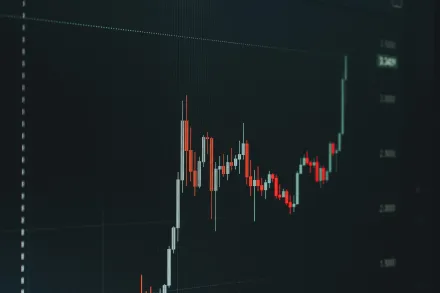
Volume in trading refers to the quantity of an asset that changes hands over a given period, offering a concrete measure of activity that accompanies price movements. In stock markets, volume is usually expressed as the number of shares traded during a particular session. In futures markets, traders might measure volume in the number of contracts exchanged, while in some foreign exchange environments, tick volume or contract counts are used when direct transaction counts are not readily available. The fundamental notion behind volume is simple ...

In the realm of options trading, the straddle stands out as a distinctive instrument designed to capture volatility rather than to bet on a specific direction. At its most basic form, a straddle involves acquiring a call option and a put option on the same underlying asset, with identical strike prices and the same expiration date. The elegance of this arrangement lies in its symmetrical exposure: if the price of the underlying moves sharply either up or down, the gains on one side can potentially offset the cost of the other, producing a profi...